


I’m a sim racer and amateur racer with a passion for Motorsport, good racecraft and the technical and setup aspect of sim racing.
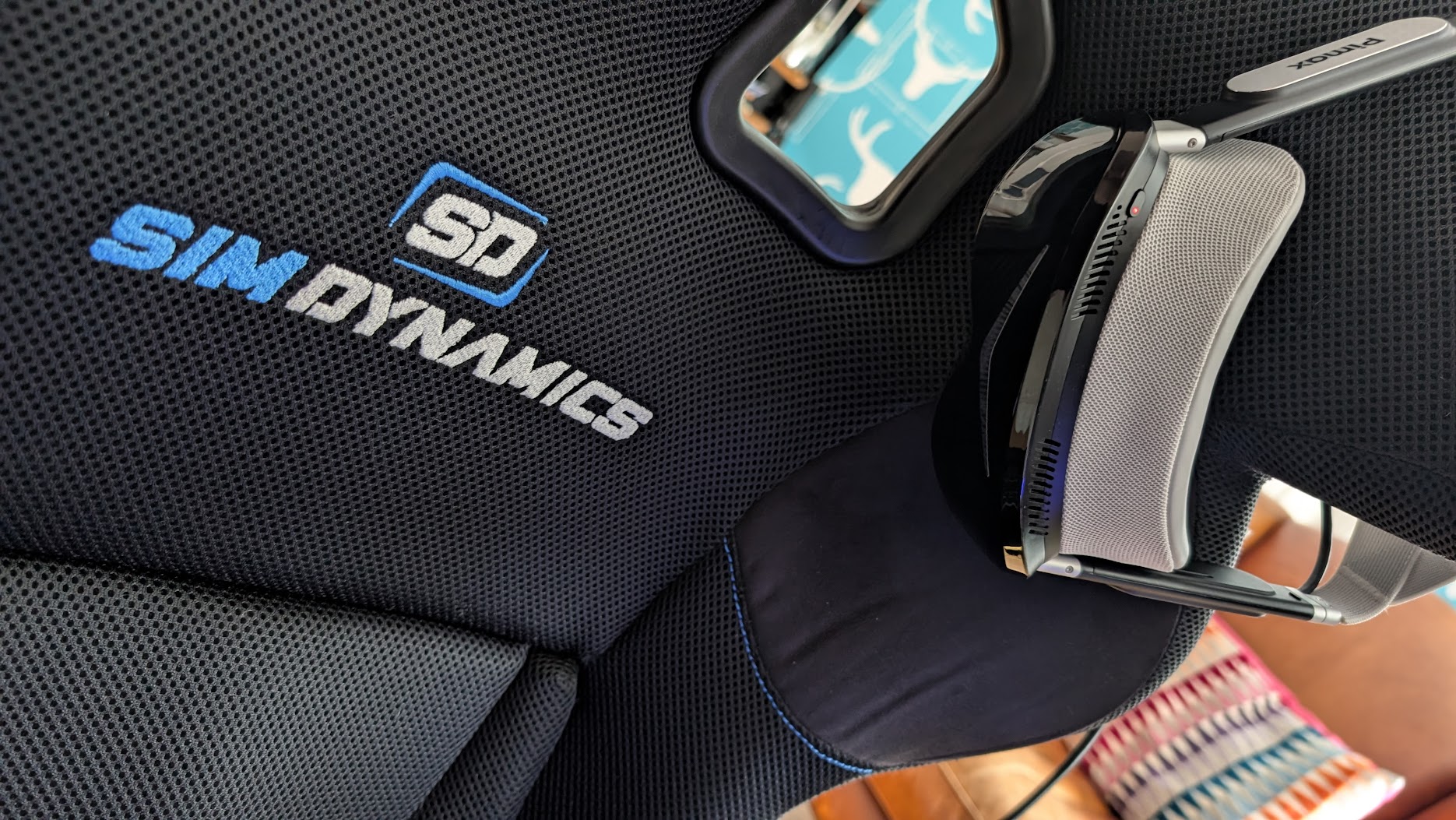
Featured image: my sim racing setup with my Sim Dynamics seat
The typical GT-style seat is what you come across most often in sim racing setups, and I’ve used a few different ones. Without knowing what you’re looking for, it’s pretty easy to spend too long looking for the right seat for your simulator. In this guide, I aim to help you with the otherwise lengthy task of choosing a seat that will fit your body shape, match the comfort or sportiness you’re looking for, and fit your budget. I’ll go over what sort of mounting solutions you’ll need, what you should look for when you’re ready to buy, and the seats I’ve picked that are worth the money. If you’re looking for an actual sim racing rig that includes an integrated seat, frame and base, then be sure to check out my other guide to the best sim rigs on the market, or my F1 cockpits guide, as today I’ll purely be focusing on stand-alone seats to go with a cockpit you’ve purchased without the seat.
Quick Navigation
Jump directly to what you’re looking for:
How to choose |
Seating positions |
Any seat fits |
The seats to buy |
Mounting |
Final thoughts
How to choose a sim racing seat
The biggest thing to remember when picking a racing seat is that the process will have a certain amount of personal relevance. There are a few things that I’d consider to be cardinal buying rules, such as something that caters to both comfort and the practical side of sim racing, but otherwise, it all depends on your budget and preferences.
Probably the most important thing you should consider before committing to any particular model is whether or not your seat will fit you. It’s good practice to measure yourself much like you would for new clothing, and have these sizes handy when you’re browsing online for a new seat.
I raced my MX-5 in the BRSCC MX-5 championship for a few years, and it had a proper FIA-approved race seat in it. I honestly can’t remember which seat it was, but basically I liked it because it was a really good snug fit to my waist, without me having to squeeze myself into it. There was little to no lateral movement for my hips, and my lower back was well supported, which is quite important to me. My Radical SR3 RSX had a composite plastic moulded seat that almost completely surrounded you up to your sides – very comfortable, and similar to a Tillett carbon seat today. And for what it’s worth, the seat that came with my Sim-Lab P1X (there’s a review on the site) matched all of those parameters very well.
Of course you’re going to enjoy the more motorsport look and feel, with the nice headrest and the holes in the back for the seat belts – not that I wear a seat belt in a sim racing cockpit, but it’s that look. Then there are the bolster cushions and definitely the sides – they call these bucket seats because they enclose you, they wrap around you almost. In the real world that’s to keep you safe in the case of a side impact. But in sim racing, actually, these seats aren’t a chore to sit in. They’re incredibly comfortable. It’s a real nice-to-have, and quite a privilege, to be able to have an FIA-approved racing seat, because you know you’re paying more for it, but it’s been developed over a very long period of time by people who really have studied driver ergonomics – making sure not only that you’re safe, but that you’re comfortable and able to compete as an athlete for hours at a time. We do get pretty hot in these seats, so ventilation is quite important too. But you don’t have to spend a huge amount of money to get a similar look and feel. You just have to feel comfortable.
So, to recap: good side support, and not being able to move from side to side, so the seat’s got you – you’re not working to hold yourself in position, because that’s an absolute disaster. And comfort, of course, is king. You’re probably going to be sitting in one of these seats for a couple of hours a day, so I think it’s really important to choose carefully.
When you start your search for a new racing seat, here is a quick checklist of items to keep in mind:
- Frame and shell materials (steel, fibreglass, carbon fibre)
- Upholstery materials
- Ergonomic and adjustable design
- Lumbar support
- Secure mounting system
- Seating position (formula, GT or touring)
- Price
A collection of brands that I always consider trusted and worth their salt within the seat market are Sparco, Recaro, and OMP. They all offer a wide variety of products at various price points. Of course, there are a lot more companies out there producing great seats, and I’ll cover a couple of them here, but you can’t go wrong with a seat from one of these three reliable brands.
The seating positions: formula, GT or touring
There are three seating positions to choose between. The formula position is the lowest and the most reclined of them, with your legs raised out in front of you and the pedals sitting higher than the seat. The GT position sits you more upright than formula, and your legs aren’t raised as high. A touring car position is the most upright of the three, and it’s much like sitting in a fast road car.
I like quite an upright posture with my wheel extension on, so my arms aren’t too extended, which means you can just relax, you’re not stretching yourself out too far, and you can put maximum strength through the wheel. Whichever of those positions you end up in, the key thing with a racing seat is support, and you need lots of lower-back support. I actually have a separate cushion that’s covered with the same mesh as my seat. Sometimes I have it underneath me for a little bit of extra height and support, and sometimes I sit even lower and have it just at the base of my spine. It really just depends how I feel, but it’s good to be able to customise it that little bit for longer sessions.
Of course, some people are happy to play sim racing games from an office chair, but if you’re looking to step up your immersion levels, you can’t beat a proper bucket seat for the bolstering hip support they can provide, which is especially important if you race for more extended periods. It will pay dividends, in the long run, to invest in a good seat.
Almost any race seat fits your rig
I’ve never come across a race seat that doesn’t fit a rig. They all have the same base and mounting dimensions, which is super handy. So if you’re running an 8020 aluminium-profile rig, all you need is a pair of decent seat brackets, and basically you’re ready to go.
Because the dimensions are shared, you’re not only limited to sim racing brands. You have the option of selecting real racing seats from the likes of Sparco and OMP, built for use in real-life race cars, and they can be bolted onto a frame with the right seat mount.
The seats I’ve picked that are worth the money
If you mostly race GT or touring cars, or you just like sitting a bit more upright, these are the seats I’d look at. I’ve gone for reasonably high-end buckets with good side bolstering and proper support for your back. The prices below are what each retailer showed on 28 September 2026, and they do move, so check the table under each seat before you trust a figure in any article, mine included.
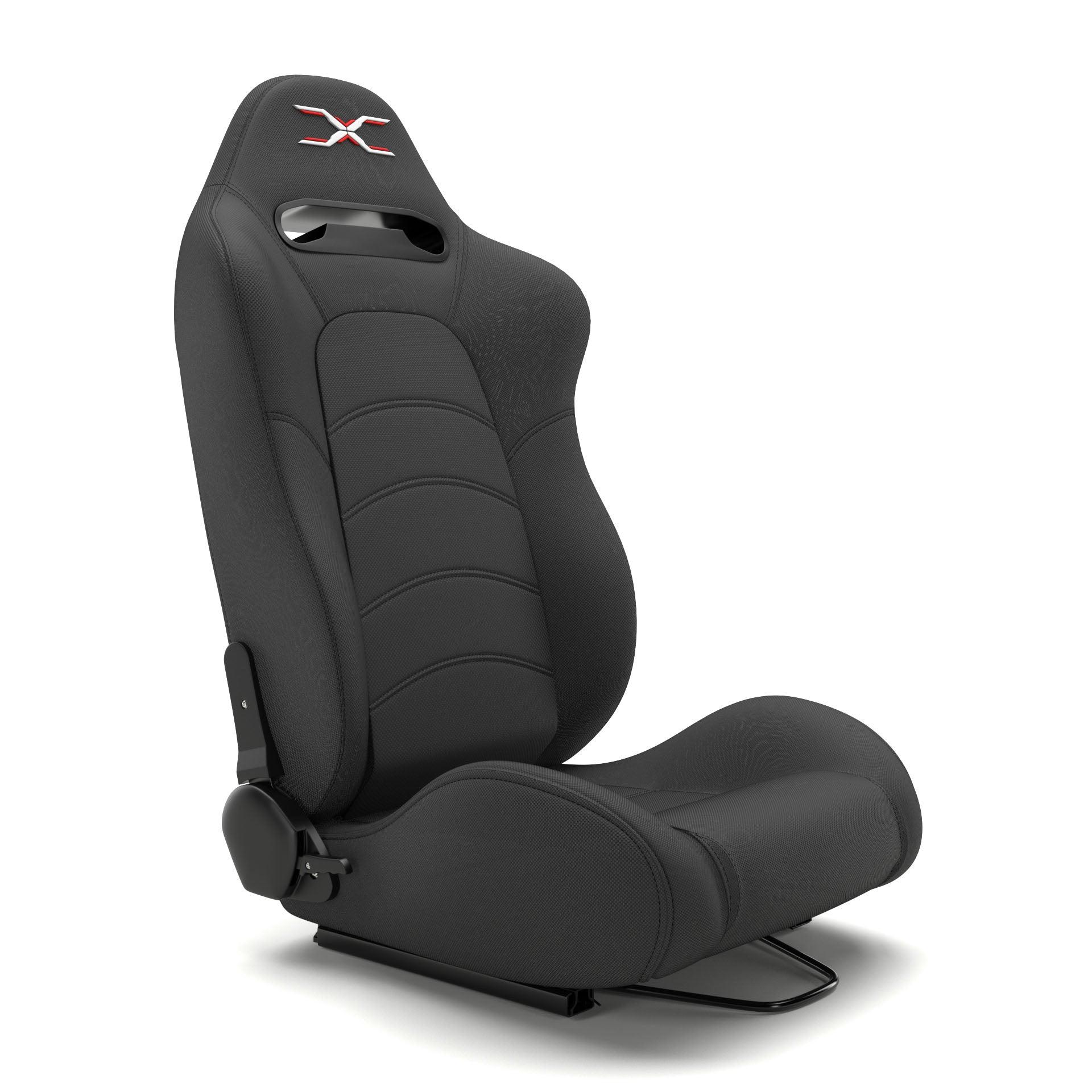
Extreme Simracing Compact Seat
The Extreme Simracing Compact Seat reclines and has a double slider built in, which means you can adjust the seat distance without buying separate runners. It’s $349 USD at simsportgadget.com, and it’s rated to 140kg. Extreme Simracing say it fits their own Chassis 3.0 and many other sim racing rigs.
Trak Racer GT Pro
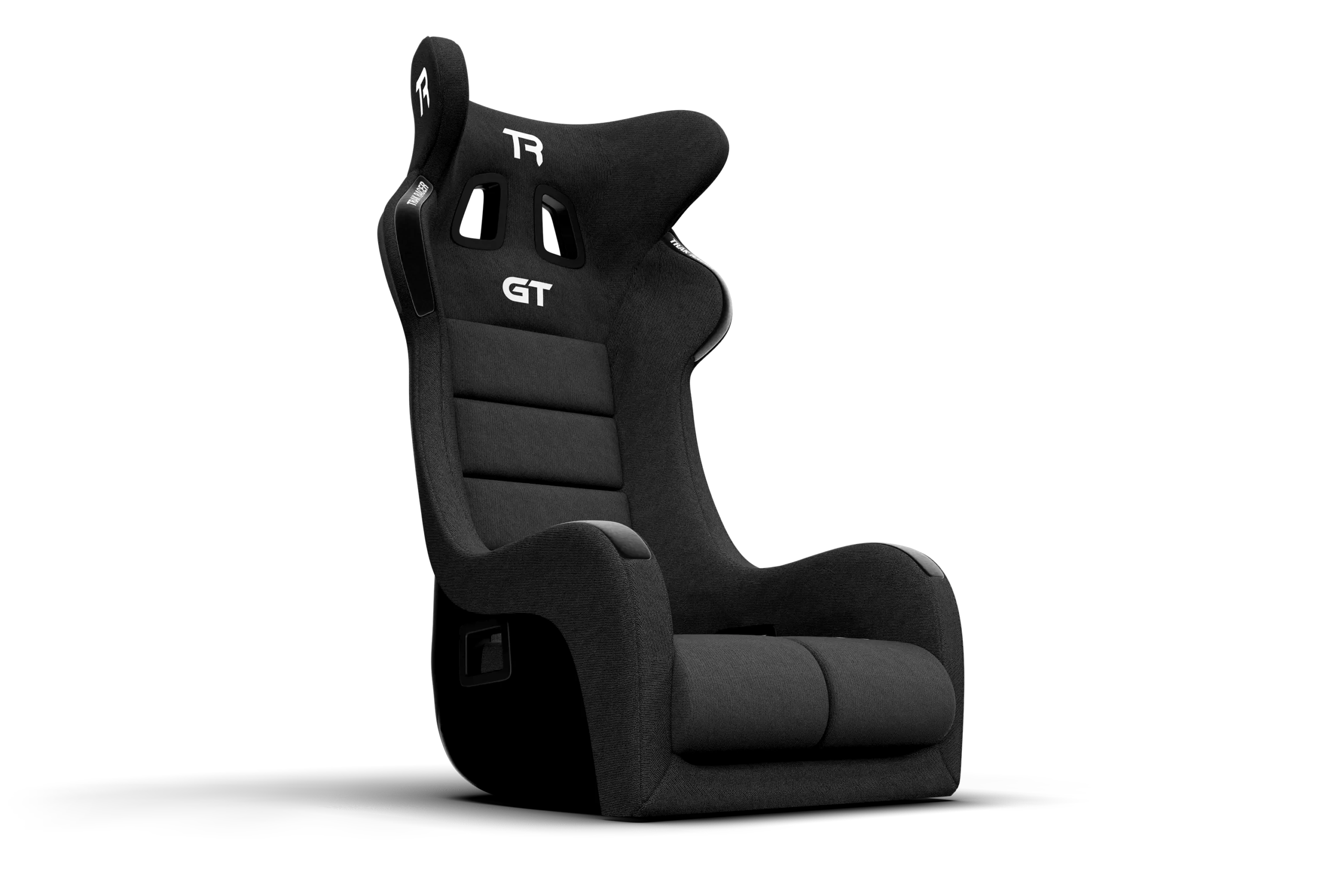
The Trak Racer GT Pro is a fixed-back GT bucket with deep side bolsters, and Trak Racer recommend it for a waist of about 28 to 44 inches. In black fibreglass it’s $349 USD. You can buy it with or without the side-mount brackets, and the seat sliders are sold separately. The fibreglass shell has a wear-resistant coating, and Trak Racer give you two years of warranty on the shell and one year on the upholstery. It’s also rated for D-BOX, Sigma Integrale and Qubic motion platforms.
Fanatec GT Cockpit Seat
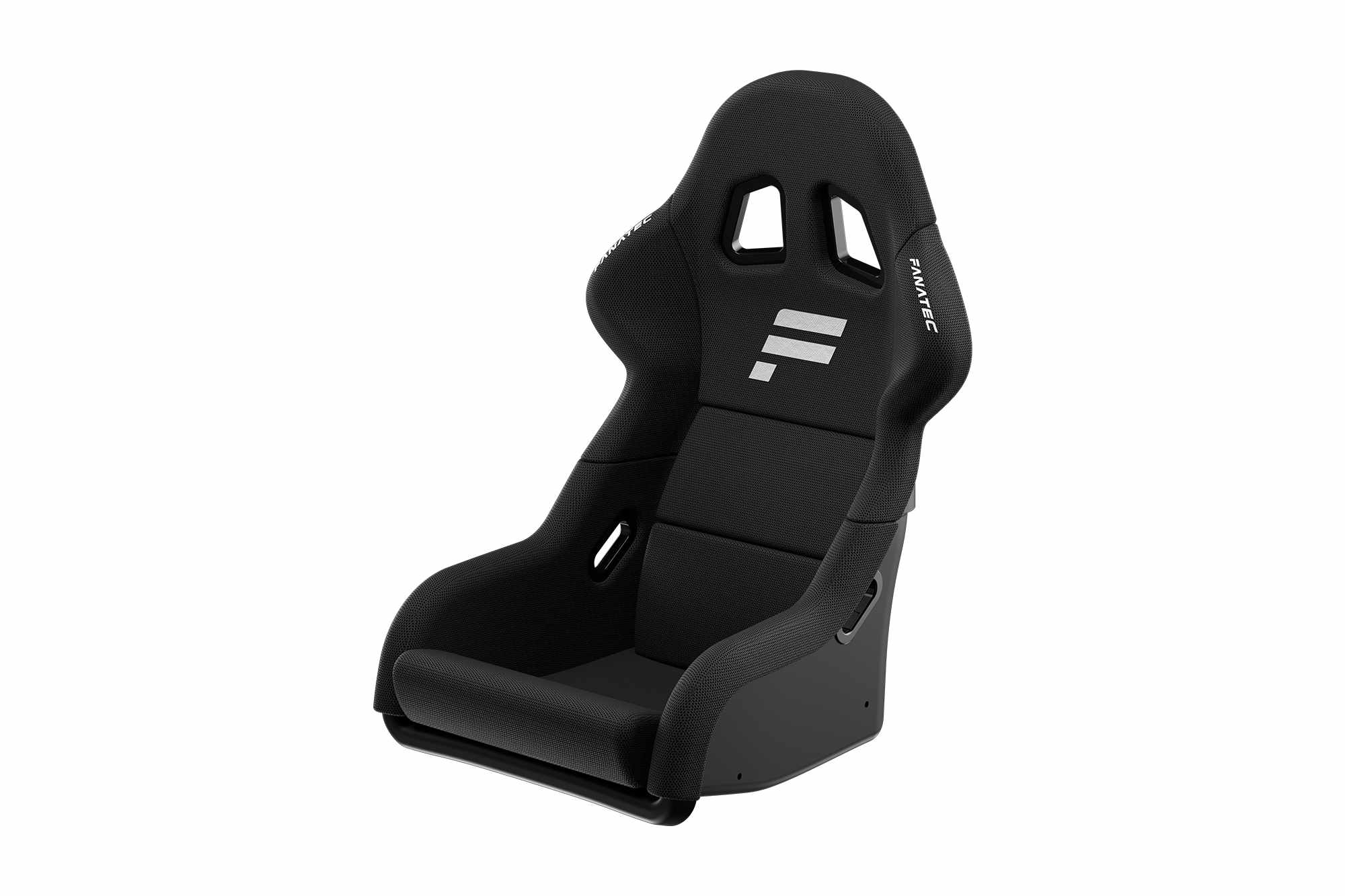
The Fanatec GT Cockpit Seat leans more towards comfort, with padded, ventilated fabric over a fibre-reinforced plastic shell. It’s $349.99 USD, and Fanatec list it as usually shipping within 3 to 5 business days. The bolt pattern is 290mm, it weighs 12.5kg and you can have it in black or white. If you want something a bit softer for long evenings in the rig, this is the one I’d pick.
Fanatec discount code: use SIMRACINGCOCKPIT5 at checkout for 5% off at fanatec.com.
Advanced Bucket Seat
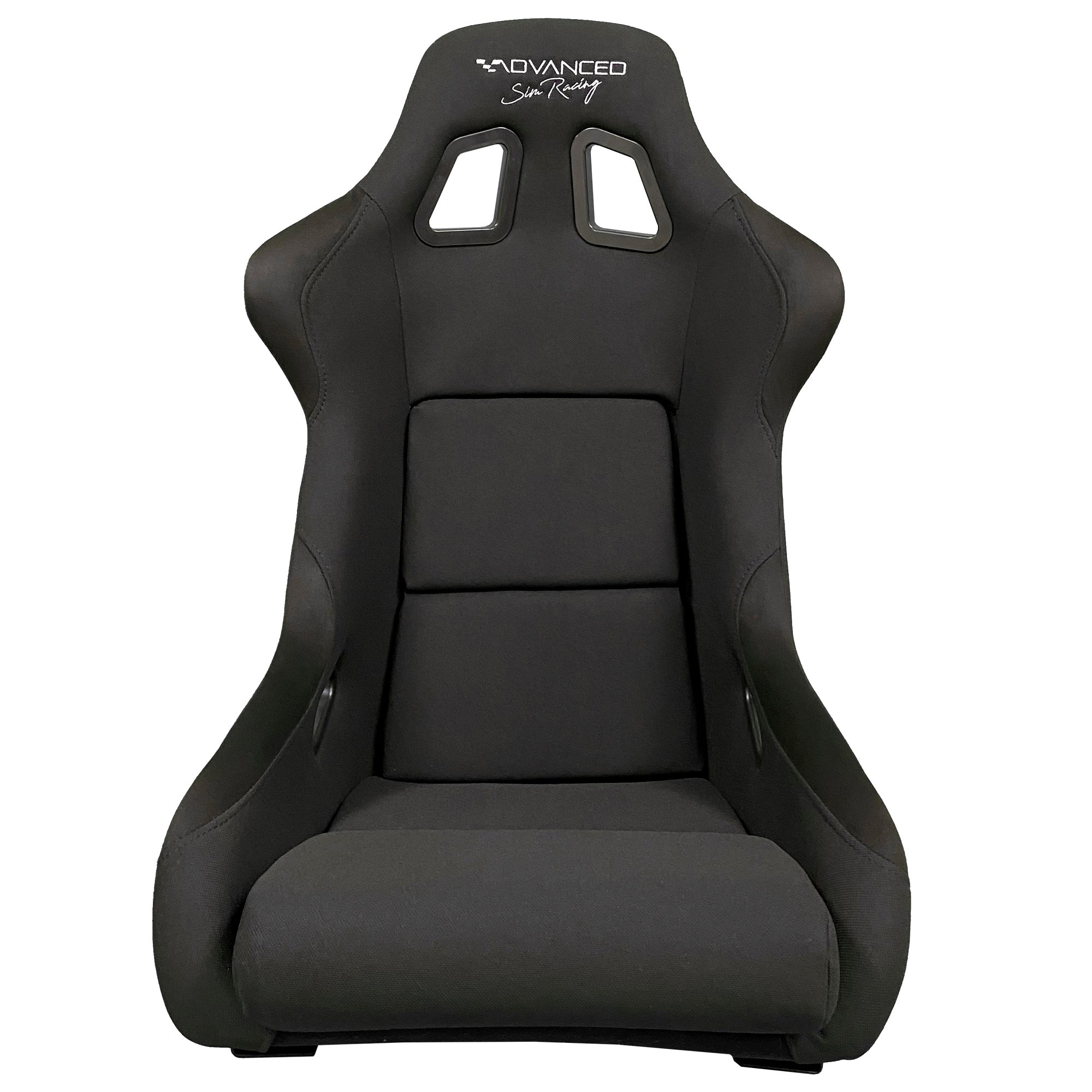
Advanced Sim Racing’s Bucket Seat comes with two side brackets in the box, made for their own chassis, and it’s $399.99 USD. The shell is fibreglass with a breathable front, and the padding lifts out if you want to sit lower. If you already run an Advanced rig it’s the easy choice, because the seat and the brackets come from the same place. It’s only sold in Large (533mm across the shoulders, 356mm at the lower back, 406mm at the thighs and an 889mm backrest), so measure yourself first.
Sparco EVO L QRT
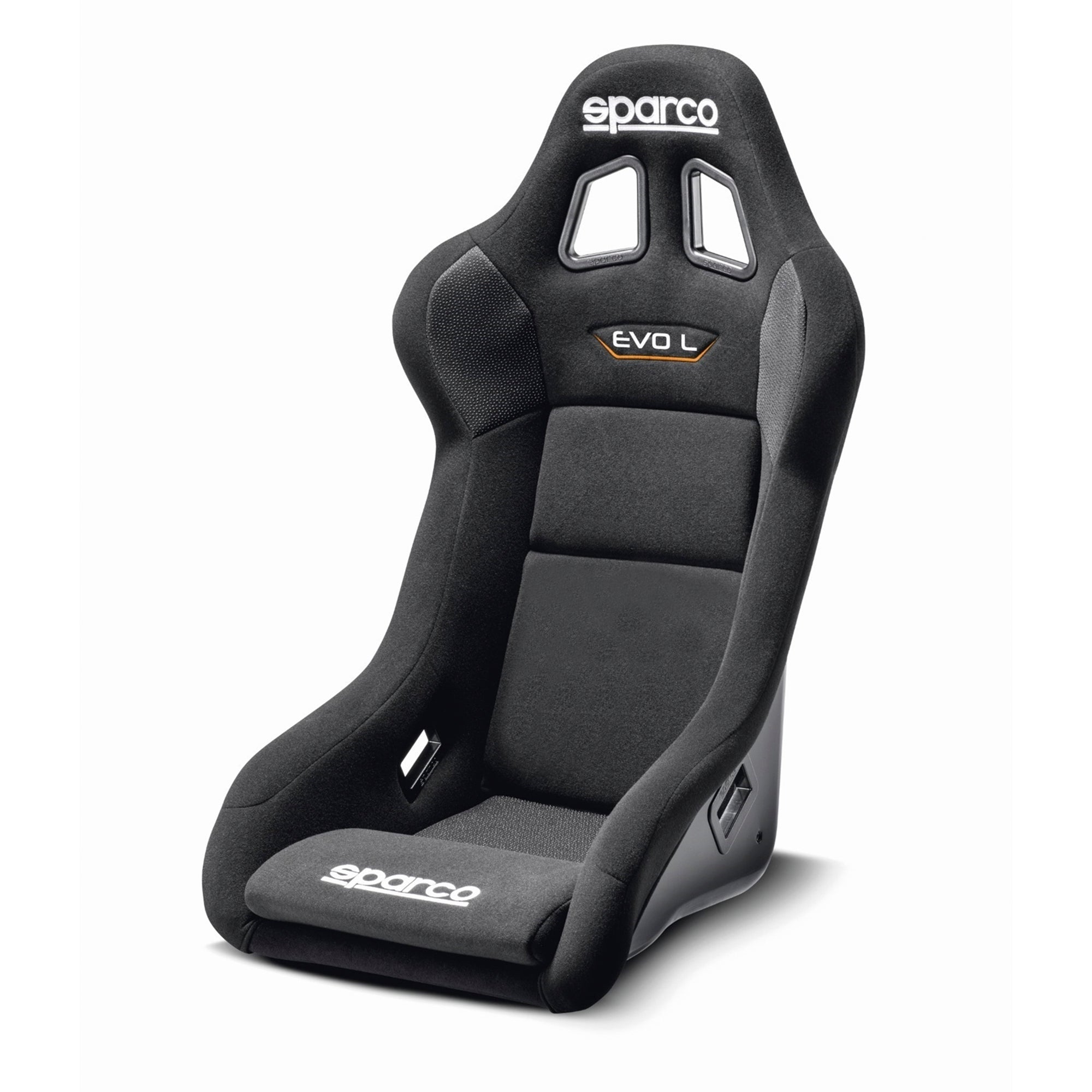
The Sparco EVO L QRT fits a waist up to 36 inches, and if you’re a larger driver the Sparco EVO XL QRT goes to 38. Sparco give it the most back-angle rake of any seat in their range. It has a fibreglass composite shell, and it weighs 7.7kg in Sparco’s motorsport catalogue. This is the Gaming edition, which is $949.99 USD from Advanced Sim Racing and isn’t FIA-approved. The FIA-approved Racing edition of the same seat is $1,139.99 USD, and it was out of stock when I checked.
Sparco and OMP, being motorsport manufacturers, make really top-grade seats, and if you’re lucky enough to have the money, go have at it.
If it’s the reclined formula position you want, that’s covered in the F1 sim racing seats and cockpits guide.
How to mount your sim racing seat with sliders and brackets
There are a few different ways you can mount your seat to your rig, and generally it is recommended to buy mounts from the same retailer as the seat to ensure compatibility.
The three most common ways to mount a seat are side mounts (fixed position), runner kits (adjustable), and base plates (fixed position). Depending on the brand of your seat, you may be able to choose between any of the three choices, or you may be forced to choose one. It’ll also be dependent on what type of cockpit you’re using, so before you click to buy, make sure you’ve covered all your bases.
Steel side mounts
Sparco’s steel side mounts are multi-drilled to provide lots of scope for adjustment, allowing you to position your seat in the most suitable position.
Seat runners and sliders
Seat runners are universally designed to give shell seats some adjustability. They sit between the standard steel mount (mentioned above) and will mount on an 8020 style aluminium rig easily.
Sim-Lab discount code: use SIMRACINGCOCKPIT at checkout for 5% off at sim-lab.eu.
Final thoughts
If you’re still building the rig, my best sim rigs guide is the place to start. Good luck, and let me know how you get on in the comments!
Related Articles
Should Sim Racers Wait for the Pimax Crystal Pro, or Buy Today?
Sim Racing Wheel Stands and Folding Cockpits: Why I’d Skip One, and What to Buy Instead
The Best Direct Drive Sim Racing Bundles (2026)
Best Thrustmaster Wheel and Pedal Mods (2026)
ButtKicker and Tactile Feedback for Sim Racing: The Highest-ROI Upgrade You Shouldn’t Skip (2026 Beginner’s Guide)
Sim Racing Motion Platforms: A Beginner’s Guide to Adding Motion to Your Rig (2026)
Topic: Sim Racing Cockpits
One thought on “The Best Sim Racing Seats – Buyer’s Guide”
Comments are closed.
Great article, Ryan.
I have a Motordrive seat in my MX-5. Fantastic bit of kit – I sat in all the major manufacturer’s offerings at the Autosport Show and they were the best for me. And that was before they measured me and provided cushions that made it perfect.
If anyone is looking to get a seat, I would recommend going and trying a few first.