
I’m a sim racer and amateur racer with a passion for Motorsport, good racecraft and the technical and setup aspect of sim racing.
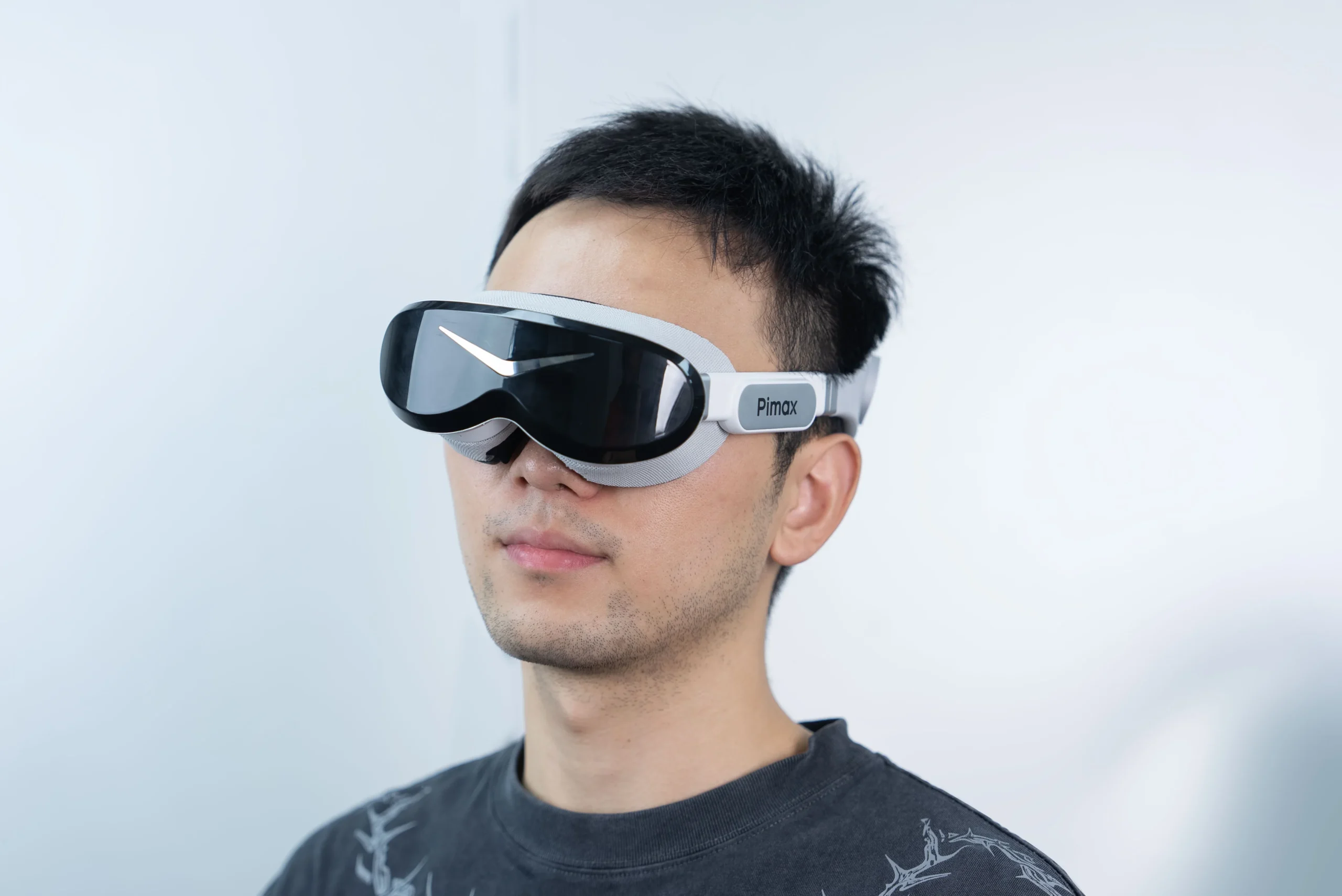
Pimax is the VR brand that sim racers either swear by or swear at. Since 2015, their engineers have chased the widest field of view and highest pixel density in consumer VR – and they haven’t stopped. If you’ve read our VR headsets for sim racing guide, you’ll know Pimax sits at the premium end of the market – and from everything I’ve read, there’s good reason for that.
You’re looking at $899 to $2,699 across the current lineup, and none of it is what you’d call plug-and-play. If easy setup matters more than visual quality, grab a Quest 3 and you’ll be racing in ten minutes. Still here? Good – the sharpest, widest view in consumer VR is worth the faff.
Quick Navigation
Jump directly to what you’re looking for:
Why Pimax? |
Flagship Products |
VR Headsets |
Compare by Investment Level
This guide covers the current Pimax lineup for sim racing – the Crystal Super family, the Crystal Light, and the Dream Air. I’ve broken down what each headset actually does differently and who it’s best suited for, with pricing so you can see where the money goes. For the broader VR landscape including Meta and HP, see our VR headsets buyer’s guide. And if you already own a Pimax Crystal, don’t miss our Pimax Crystal settings guide sorted by GPU.
Discount Code: Use code simracingcockpit at pimax.com checkout for 3% OFF all Pimax gear.
Why Pimax?
Pimax started in Shanghai in 2015. The 2017 Kickstarter for the 8K headset pulled in millions on a single promise: ultra-wide field of view VR, wider than anything on the market. The delivery was bumpy – the original 8K was upscaled rather than native 8K per eye – but the 5K+ that followed became a genuine favourite among sim racers who cared about peripheral vision.
What sets Pimax apart technically is the canted display design. Angling the screens outward gives peripheral vision that no other consumer headset touches. Then there’s the Crystal Super’s interchangeable optical engine system – QLED 50PPD, 57PPD narrow, ultrawide, Sony 8K Micro-OLED – four configurations you can physically swap. Nobody else does this, and it’s the single biggest reason the Crystal Super gets recommended so often in the community.
Eye tracking powers Dynamic Foveated Rendering – essential when you’re driving panels this demanding. Local Dimming 2.0 with 1,000 zones per eye on the QLED engine gives you contrast that competes with OLED in dark scenes. And the Dream Air uses ConcaveView pancake lens technology to keep the form factor compact.
Community Sentiment
I’ve spent a fair bit of time watching the YouTube coverage on these – SimRacing Arnout’s 200-hour Pimax comparison and Sim It Studios’ Crystal Light review being the standouts. The takeaway from pretty much everyone who’s used one seriously? Distance clarity is on another level. One reviewer put it simply: “Once you’ve experienced it, it’s really hard to go back.” The wide FOV and high PPD genuinely change how you read the track. You trust what you’re seeing more, and that translates directly to faster, more consistent lap times.
The honest caveat: Pimax isn’t for everyone. PiTool and Pimax Play have a reputation for needing work – firmware tweaks, per-game settings, occasional crashes. Earlier hardware had QC issues. Support tickets have taken weeks, sometimes with awkward translations in the replies. And you need serious GPU horsepower – we’re talking RTX 4080 minimum for the Crystal Super, realistically a 4090 if you want to run native resolution without heavy foveated rendering.
Honestly, if you just want to strap a headset on and go racing, the Meta Quest 3 does that brilliantly. Pimax is for the sort of person who’ll happily spend a whole evening tweaking per-game profiles and SteamVR settings to squeeze out that last 10% of visual clarity – and genuinely enjoy doing it.
Pimax Flagship Products
Crystal Super
The Crystal Super is the headset that put Pimax back on the map for enthusiasts. The defining feature is the interchangeable optical engine system – you can swap between four different display configurations depending on what you prioritise. The QLED 50PPD engine gives you the best balance of clarity and FOV for most sim racing. The 57PPD engine narrows the view but pushes far-sight clarity to a level that, as SimRacing Arnout put it after 200 hours of testing, “is something else entirely.”
Then there’s the 8K Micro-OLED engine using Sony panels – true blacks, incredible contrast, the kind of visual quality that makes night racing genuinely atmospheric. And the Ultrawide engine for those who want maximum peripheral coverage. The Golden Bundle at $2,699 gets you both the QLED and Micro-OLED engines, which is where the real value sits if you can afford it.
- Interchangeable optical engines (QLED 50PPD, 57PPD, Ultrawide, Micro-OLED)
- Local Dimming 2.0 – 1,000 zones per eye (QLED engine)
- Sony 8K Micro-OLED panels (Micro-OLED engine)
- Integrated eye tracking for Dynamic Foveated Rendering
- Pimax Play 2.0 software platform
- Starting at $1,799 (QLED) / $2,199 (Micro-OLED) / $2,699 (Golden Bundle)
Crystal Light
The Crystal Light at $899 is Pimax’s entry into the more accessible end of premium VR. It doesn’t have the interchangeable engines, but the core display quality is still well above the Quest 3. Sim It Studios ran a direct comparison and called it straightforwardly: “The Crystal Light is fantastic as a sim racing headset.” Dashboard text, distant apex markers, dark scene handling – all noticeably better than what the Quest 3 delivers.
It’s still not as easy to live with as a Quest 3 – the setup is more involved, the software requires more patience, and you’re tethered to your PC. But for dedicated sim racing where the headset stays on your rig, that trade-off makes sense. SimRacing Arnout put 100+ hours into his Crystal Light and said simply: “These headsets, they just perform for me.”
- Fixed optical system (no swappable engines)
- Higher PPD than Quest 3 / Quest Pro
- Eye tracking included
- PC VR only (tethered)
- $899
Dream Air
The Dream Air is Pimax’s take on a lightweight, high-clarity headset using ConcaveView pancake lens technology. At $1,999, it sits between the Crystal Light and the Crystal Super in pricing, but the design philosophy is different – this is about comfort and form factor as much as raw specs. The pancake lenses keep the headset compact and lightweight compared to the Crystal Super.
There’s also the Dream Air SE at $899, which is currently on pre-order. At half the Dream Air’s price with the same pancake lens tech, the SE could be a genuine sweet spot – assuming it ships and the reviews hold up. One to watch.
- ConcaveView pancake lens technology
- Lightweight, compact form factor
- Eye tracking included
- Dream Air: $1,999 / Dream Air SE: $899 (pre-order)
All Pimax VR Headsets
Below is the full current Pimax range. No wheelbases, no pedals, no peripherals – just VR headsets. Pimax picked a lane and stayed in it.
Compare by Investment Level
Entry point ($899) – Crystal Light or Dream Air SE: The Crystal Light is the proven option here. It’s been out long enough that the community has validated it, and the reviews are consistently positive for sim racing specifically. The Dream Air SE at the same price is on pre-order, so there’s less real-world feedback. Choosing today? Crystal Light. If you can wait and the SE reviews are strong, that could be the better bet for comfort and form factor.
Mid-range ($1,799-$1,999) – Crystal Super QLED or Dream Air: The Crystal Super QLED at $1,799 is where the interchangeable engine system starts, which is genuinely unique. The Dream Air at $1,999 offers the pancake lens advantage. For sim racing specifically, I’d lean Crystal Super QLED – the ability to swap to the 57PPD engine for tracks where you need to read distant braking markers is a genuine competitive advantage.
No-compromise ($2,199-$2,699) – Crystal Super Micro-OLED or Golden Bundle: The Micro-OLED engine with Sony 8K panels is the flagship visual experience. True blacks, incredible contrast, night racing that actually looks like night racing. The Golden Bundle at $2,699 gets you both the QLED and Micro-OLED engines. If you’re spending at this level, honestly just get the bundle. SimRacing Arnout put it well after his extensive testing: “If I needed to bet all my money on it, I would just go for the normal 50PPD.” In practice that means the QLED engine handles most racing situations best, but having the Micro-OLED option for night races and dark conditions is a proper luxury if you can stretch the budget.
One thing worth noting: whichever Pimax headset you choose, budget for the GPU to drive it. A 4070 Ti will handle the Crystal Light. Drive the Crystal Super at full resolution and you need a 4080 minimum – a 4090 if you want to skip heavy foveated rendering. And don’t forget to use code simracingcockpit at checkout for 3% off – it’s not a huge discount, but on a $2,699 bundle that’s $80 back in your pocket.
Racing Cockpits Buyer’s Guide
Best VR Headsets for Flight Simulation
Fanatec ClubSport Steering Wheel GT3 for Xbox Review
Simagic Sim Racing: The Complete Buyer’s Guide (2026)
Corsair for Sim Racers: Ecosystem Buyers Guide 2026
Flight Sim Gear for Sim Racers: The Complete Buyer’s Guide (2026)
Topic: VR Headsets