
I’m a sim racer and amateur racer with a passion for Motorsport, good racecraft and the technical and setup aspect of sim racing.
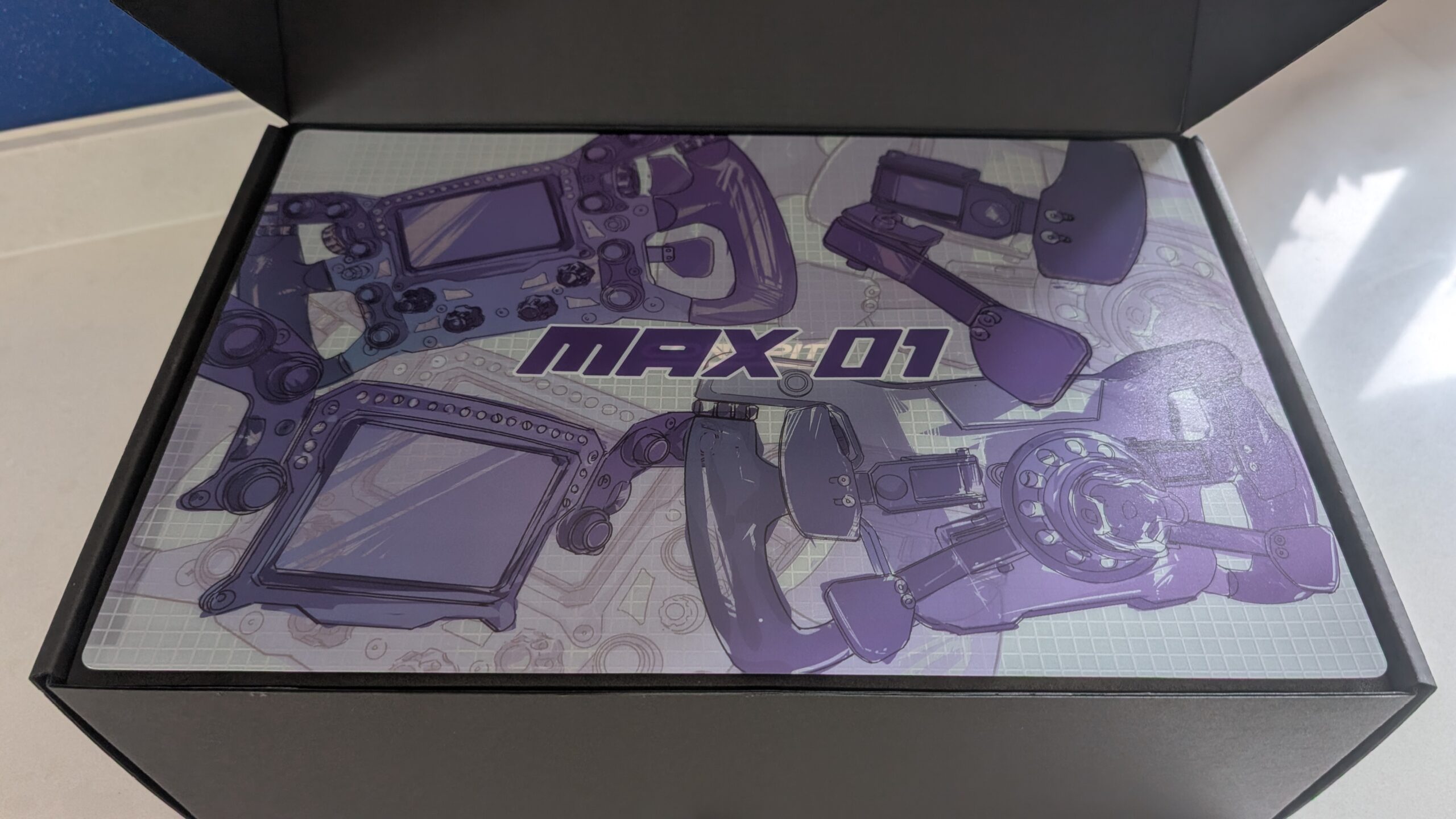
Today I’m doing a bit of a roundup on one of my favourite emerging sim racing manufacturers, Conspit. Specifically their 300 GT, the 290 GP and the Max 01 GT from their Formula and GT wheel family. The spoiler: If you’re choosing your next wheel, my pick is the 290 GP. The range splits cleanly once you’ve had your hands on them: the 290 GP is the quick, sharp formula wheel; the 300 GT is the value all-rounder that does most of what the others do for a lot less; and the Max 01 is the flagship that handles both formula and GT. I already run Conspit pedals on my actual racing sim, and it’s been fun taking a closer look at the wheel range.
Quick Navigation
Jump directly to what you’re looking for:
Why Conspit | What separates them | 300 GT | 290 GP | Max 01 | Which to buy
Why I find Conspit so compelling
When I spoke to Jay at Conspit, what stuck with me was that their engineers had worked on and designed real EV brake pedals – actual road-car pedals with proper brake feel – which is the kind of background tells you how they think about the engineering behind a bit of kit. It’s why I run their pedals on my real racing sim: the brake pedal is the best-feeling one I’ve used.
They’re smaller and more Motorsports focused compared to Moza, Fanatec and even Cube Controls, but, the equipment is decent and the QA is good: product built on familiar, proven parts – magnetic Hall paddles, TPU grips, a 70 mm PCD, a direct USB connection. And, they’re sim racers themselves, which you don’t always get at this end of the market, and, it’s that closeness to the actual racing that shows in the kit. The Apex 310 I reviewed earlier is a good budget round rim, so next, it’s time to take a closer look at their Formula / GT brethren.
What separates the three
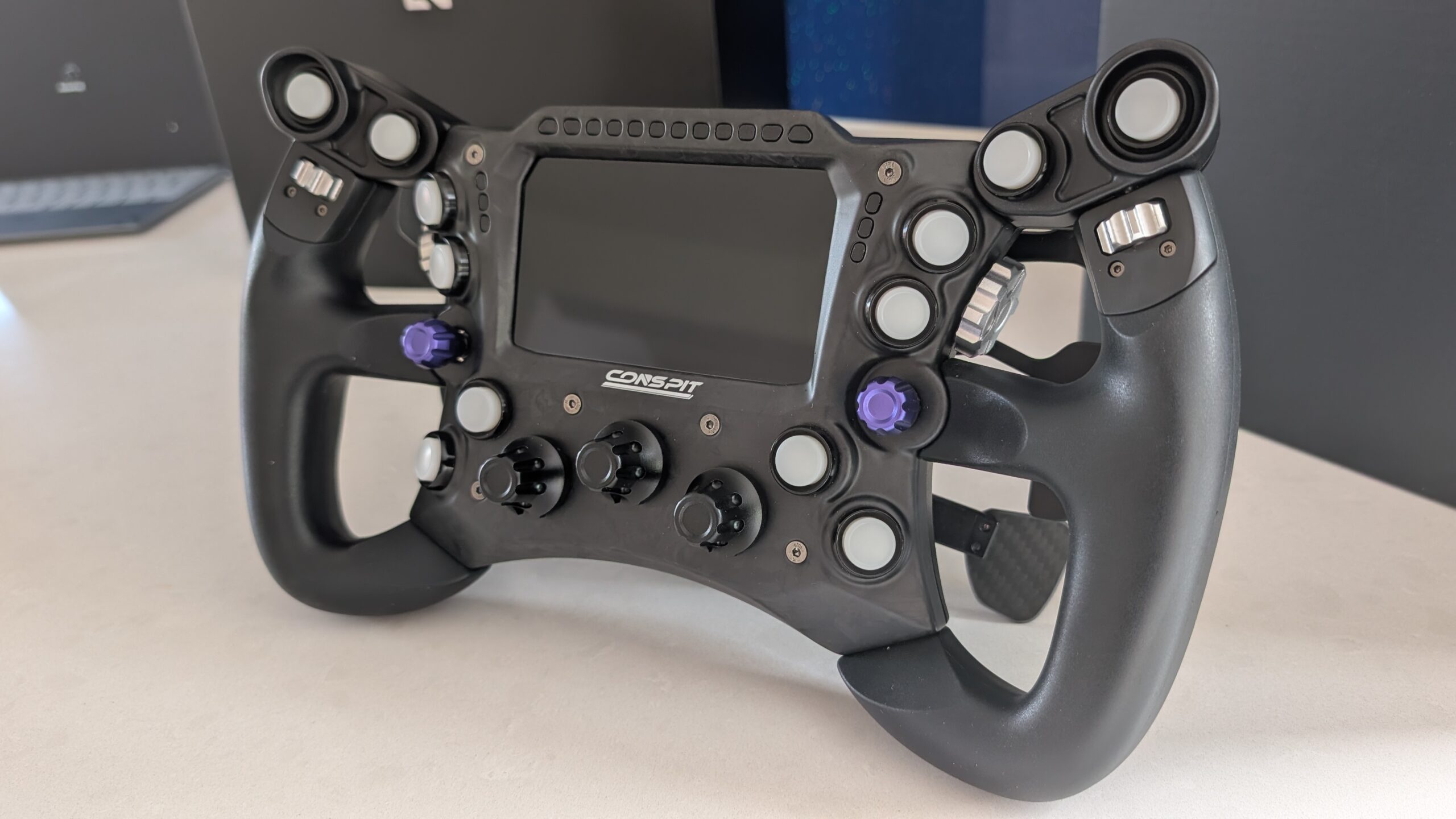
Firstly, what separates these three is rim size. The 290 GP is a 290 mm rim: quick, sharp, and happiest in high-downforce formula and open-wheel cars where you want a small, fast wheel and short movements at the hands. Put it in a slower, heavier GT car and it can feel a touch nervous, because you’ve less rim to lever against. The 300 GT swings the other way with a 300 mm GT rim and sits as the value all-rounder. The Max 01 lands in the middle at 304 mm, and that middle ground is the point of it – it covers formula and GT alike.
Then there’s the feel, and it’s where my pick earns its place. The 290 GP has lovely low rotational inertia: the mass sits close to the rotation centre, so you don’t feel the weight as you turn it. It isn’t the lightest wheel here – it’s about 1.4 kg, the same as the Max 01 and heavier than the 300 GT – but it doesn’t feel it in your hands. The 300 GT’s low weight gives it crisp, un-muddied force feedback. The Max 01 carries its heft the other way, with more of that solid, Ascher-style mass you feel loading up through a corner.
On the screens, the split matters if you live in SimHub. Only the Max 01’s screen is SimHub-native, and it carries the richest dashboard of the three. The 290 GP and 300 GT run Conspit’s own dashes on their screens for now, though the buttons and rev lights talk to SimHub on all three.
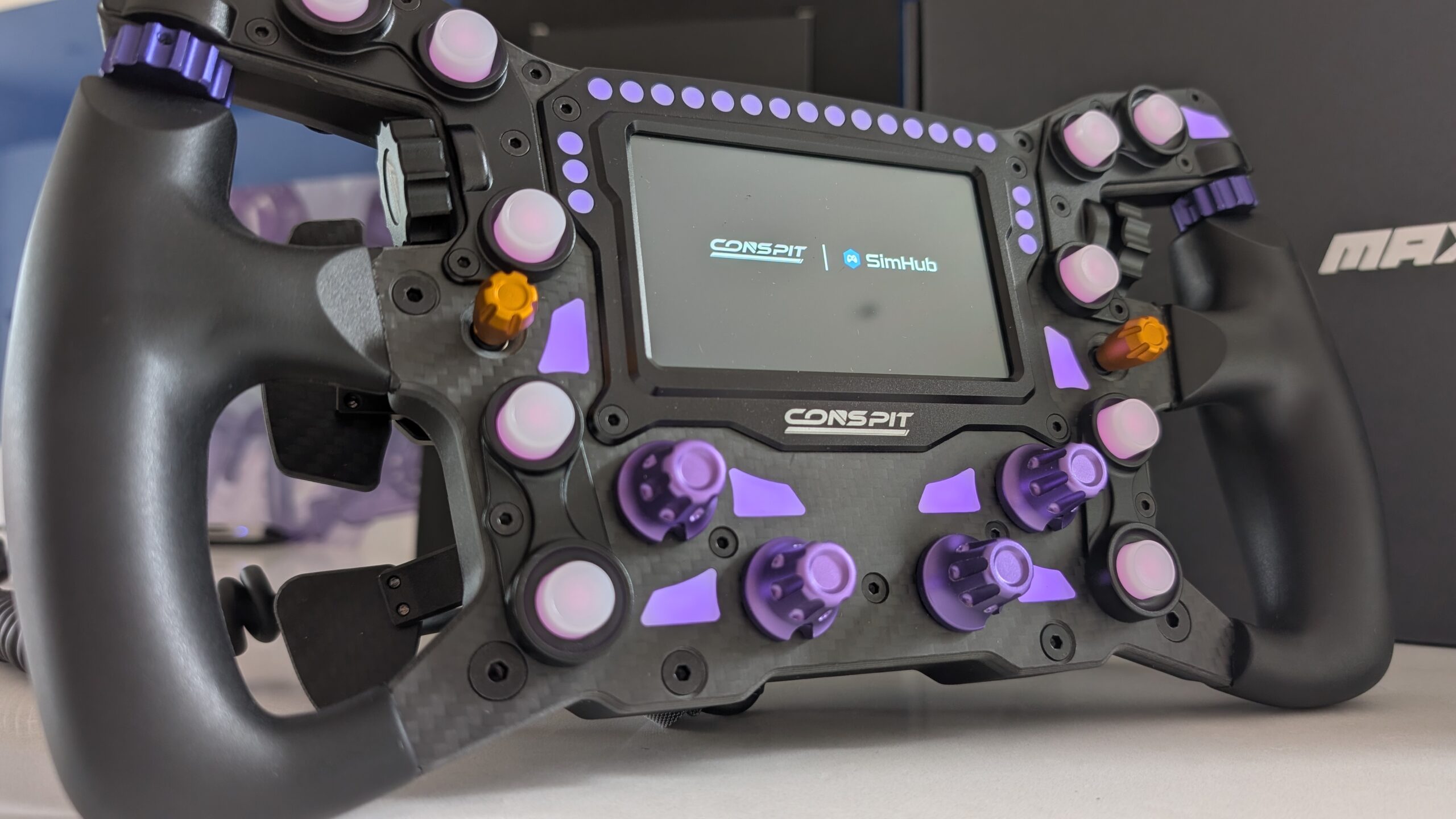
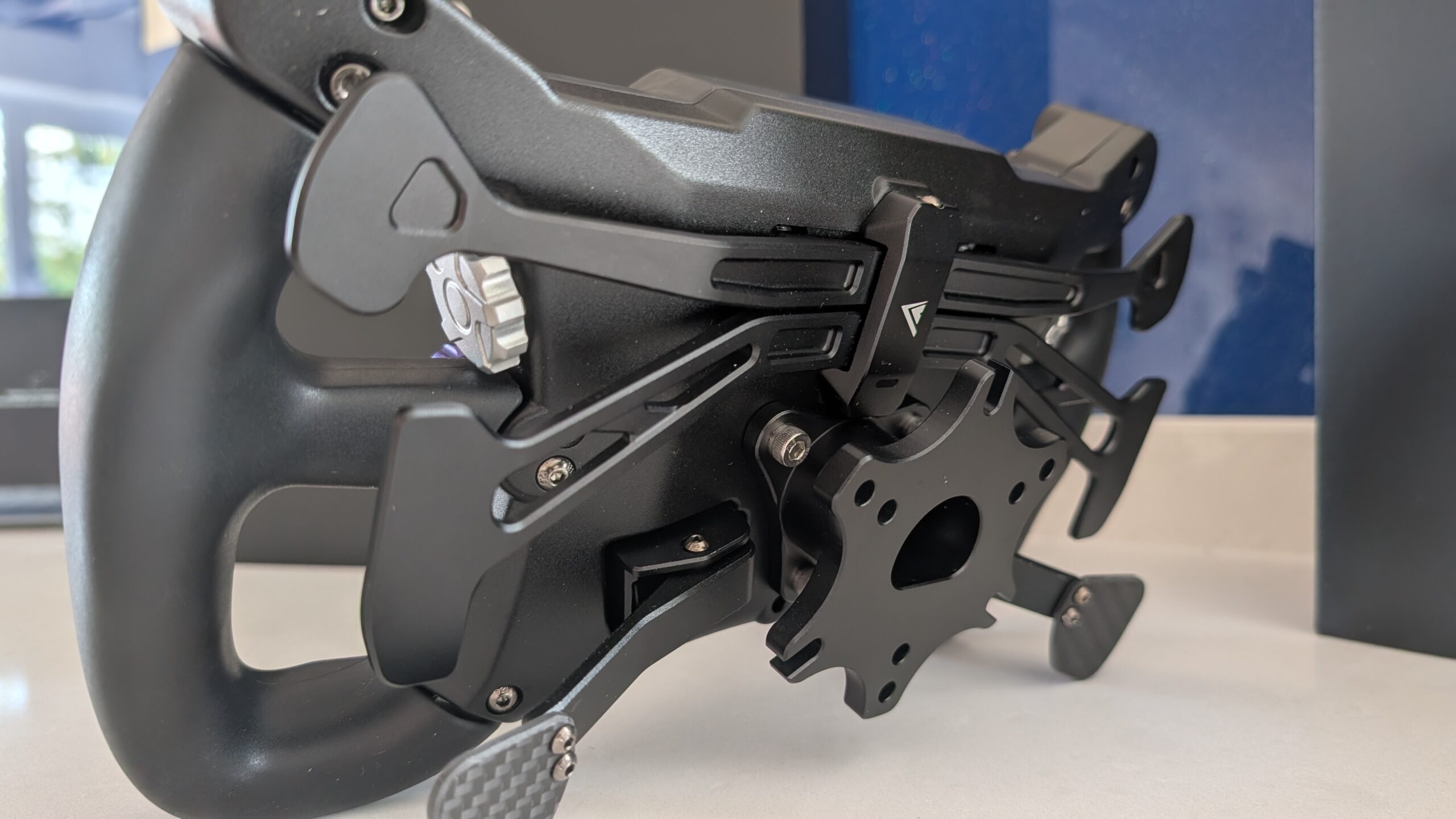
All three use real carbon over an aluminium body – actual layered carbon, not a carbon-look plastic – and there’s no flex anywhere. They all run standalone on any base off the included 50/70 mm adapter, with a Conspit quick release an extra ~$90 if you’re on a Conspit base. And the grips are firm across the board, so wear gloves. Here are the specs:
| Spec | 300 GT | 290 GP | Max 01 |
|---|---|---|---|
| Best for | Value all-rounder | Formula / high-downforce | Formula and GT both |
| Rim diameter | 300 mm | 290 mm | 304 mm |
| Body | Carbon front, aluminium | Carbon front, aluminium | Carbon front, aluminium |
| Weight (no QR) | 1,150 g | ~1,400 g | ~1,400 g |
| Display | 2.99″ (800×268) | 4.3″ LCD (800×480) | 4.0″ touchscreen (800×480) |
| Rev / RGB lights | 12 RPM LEDs | 12-LED rev strip | 15 rev + 21 RGB dash |
| Shifter | Magnetic paddles | MagFlip magnetic | Magnetic Hall paddles |
| Connection | USB | USB | USB + CAN bus |
| SimHub – screen | Conspit dash for now | Conspit dash for now | Native |
| SimHub – lights | Yes | Yes | Yes |
| Quick release | 50/70 mm adapter incl. | 50/70 mm adapter incl. | 50/70 mm adapter incl. |
The 300 GT: the value pick
The 300 GT is the value pick, and it sits a clear step below the 290 GP for me – not because it’s cheap, but because the ergonomics and feel don’t quite reach the 290 GP’s. What it does for the money is remarkable. It’s the cheapest of the three by a distance, around $399 as I write this, and the lightest at 1,150 g, and that low weight gives it the crispest force feedback vibe of the range. You get real 12-layer carbon on the front, magnetic shifters with swappable magnets, and a small 2.99″ dash I’m quite fond of – it’s a relief to have a simpler, less complicated screen!
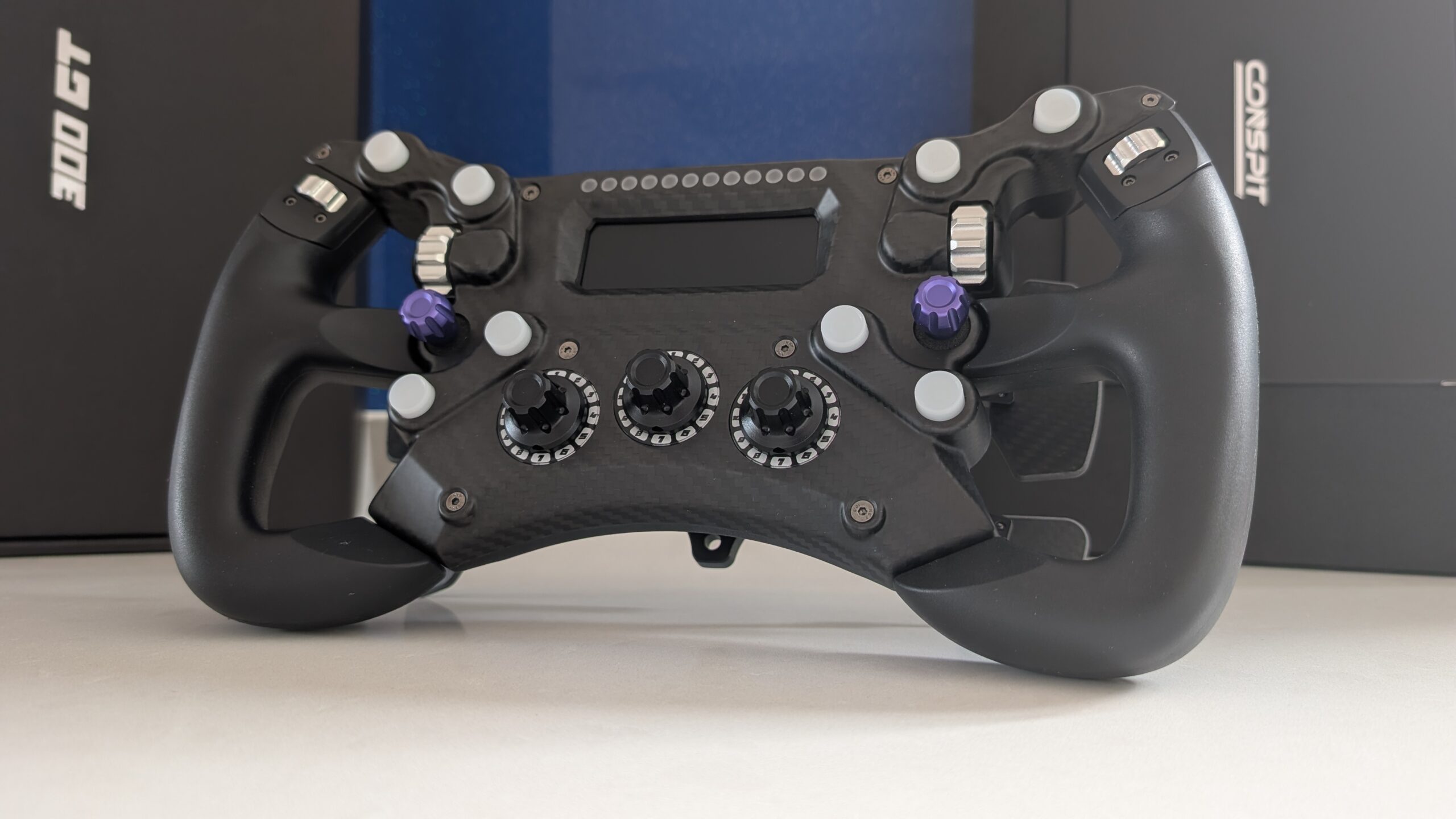
Who’s it for? Anyone who wants the most function for the least money:
The 290 GP: my pick
So, my view on the 290 GP:
“Out of the 4 Conspit wheels we tested the 290 GP is definitely my favourite – it’s the superior ergonomics that works for me, and of course the composite body – which I’m always a bit of a fan of. The display screen isn’t overwhelming nor are the controls – of which there are many – Conspit Link takes configuration in its stride and it just worked for me out of the box. The grip compound is quite hard on all 3 wheels so I recommend gloves as always especially if you’re driving with high torque levels.”
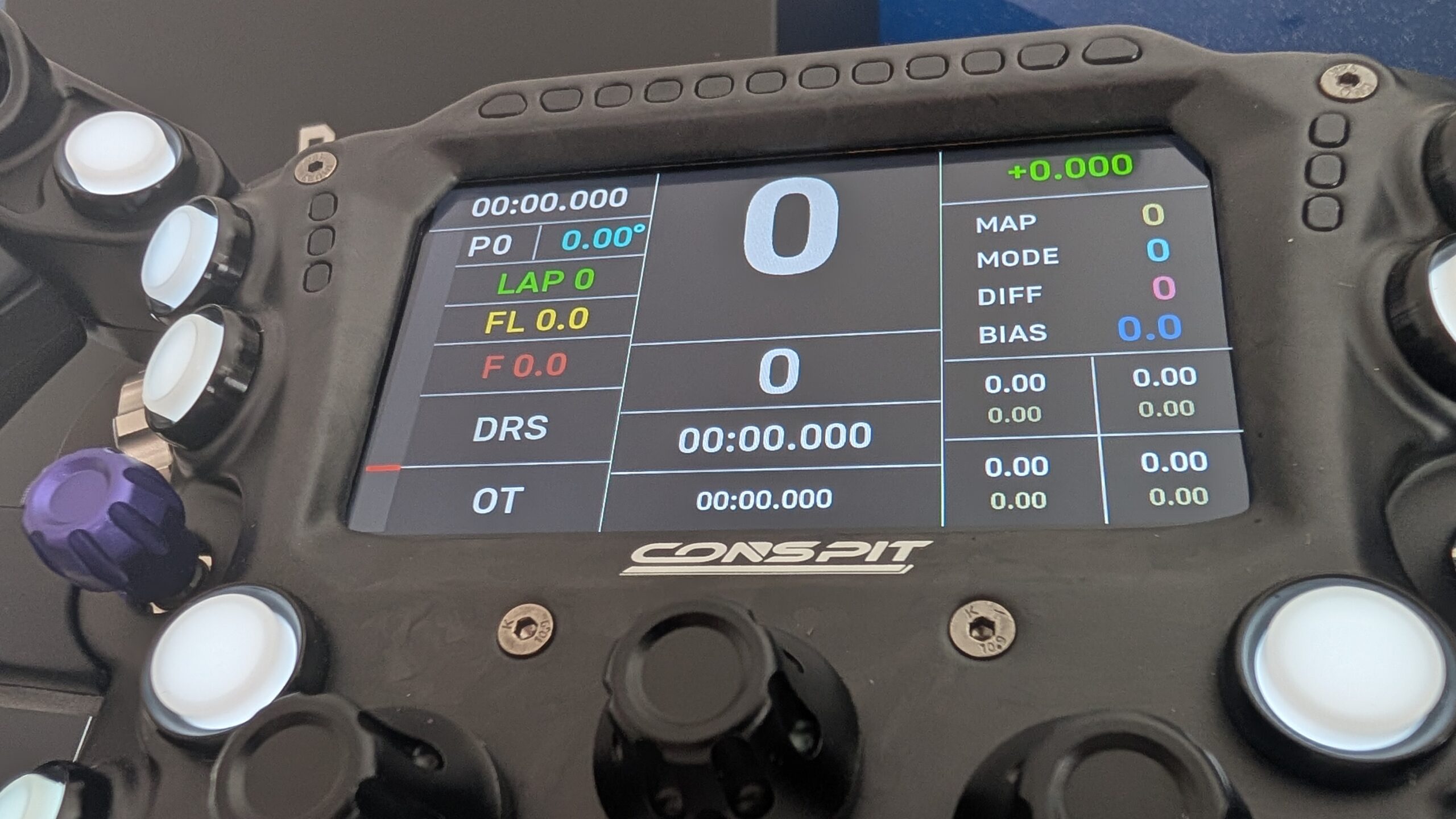
The 290 mm rim gives this wheel some real character. It’s quick and it suits formula cars, and the ergonomics are where it pulls ahead: the buttons are angled towards your thumb so the inner ones fall to hand without moving your grip, and the rim is scalloped so you can push on the outer edge for a bit more lock on a long stint without cocking your wrists. And the feel – that low rotational inertia, the mass sitting near the centre, so it stays light in the hands even though the scales say otherwise. The 4.3″ LCD tells you what you need without shouting about it, and Conspit Link had it running the way I wanted straight out of the box. If I’m honest, the funky switches feel a shade below the rest of the wheel, though they work perfectly well.
The Max 01: the flagship
The Max 01 is the flagship, and on paper it’s the most wheel of the three. What keeps it behind the 290 GP for me is purely feel: it’s heavier, with more aluminium in it, and it carries that Ascher-style mass and higher rotational inertia I feel less keen on.
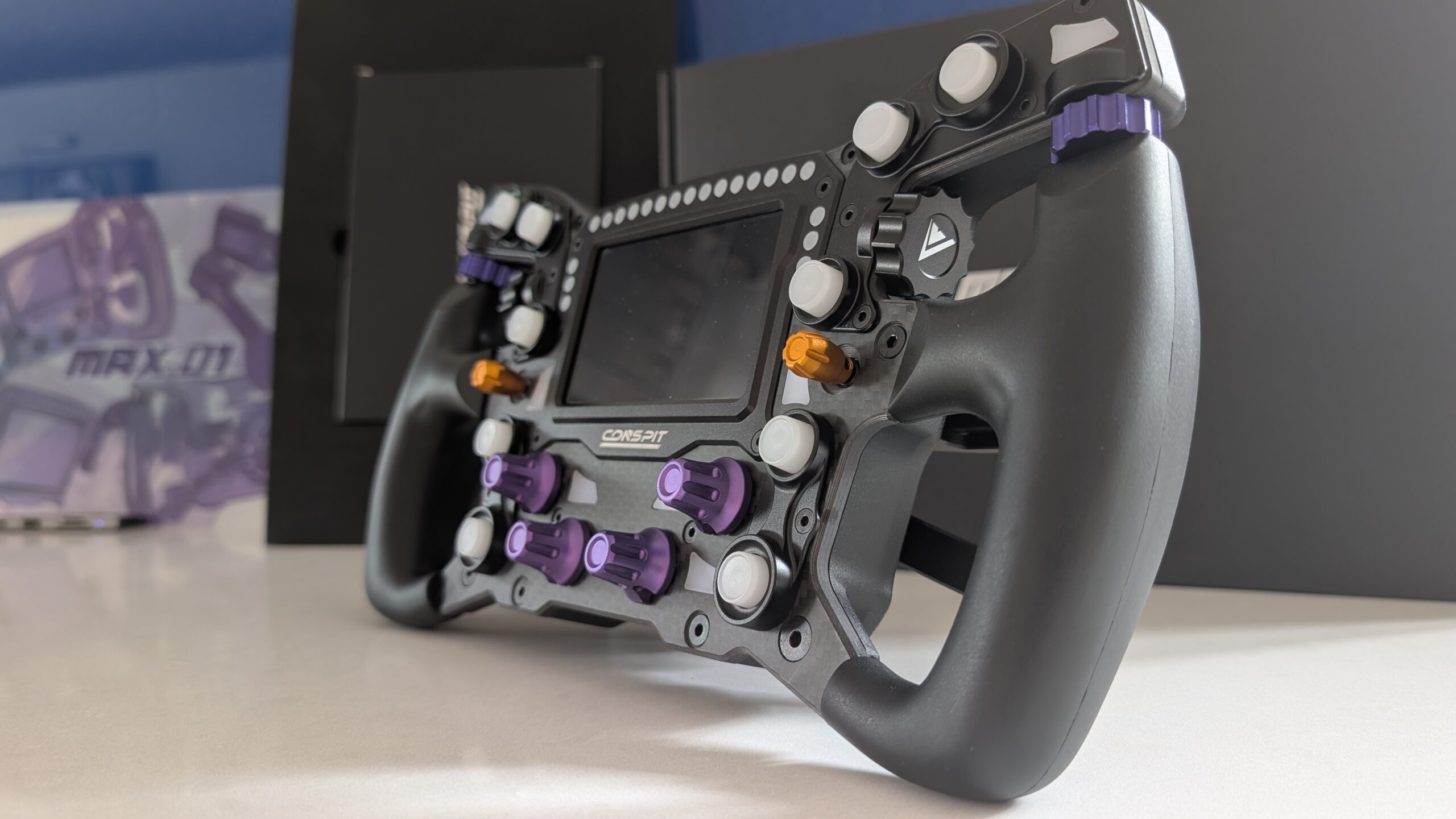
It handles both formula and GT, so a mixed garage can run this one wheel and be done. It has the biggest screen at 4.0″ and it’s a touchscreen, the richest lighting of the range at 15 rev lights and 21 RGB, the CAN bus connection that the entire range uses (reminds me of my Radical days), and it’s the only one of the three that’s SimHub-native on the screen itself.
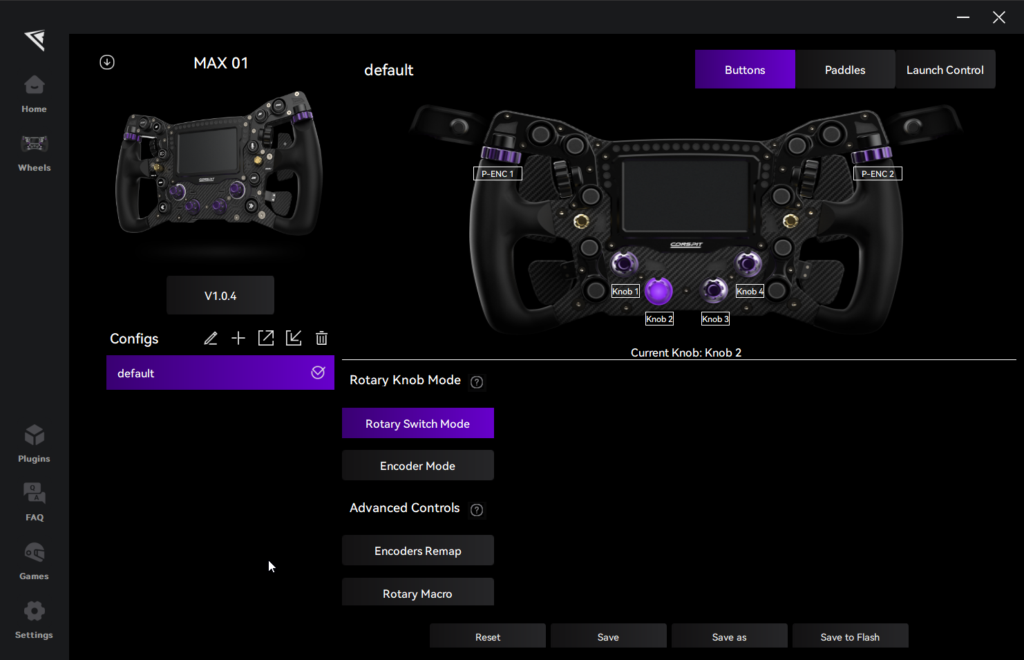
The build is a step up again – a thick carbon faceplate, aluminium shrouds, LED diffusers with no hot-spots. If you want the most dashboard, native SimHub and one wheel for a mixed garage, this is the one, provided the weight and the price don’t put you off. The open-face thumb encoders sit proud enough that you can catch one by accident when you’re driving hard.
So which should you buy?
So, which one? It comes back to the rim and what you drive. The 300 GT gives you the most function for the least money, and if you mostly want features per pound, it’s a lot of wheel. The 290 GP is my pick – the best ergonomics of the three and that low-inertia formula feel that I enjoyed more each session, which is exactly why it’s the one I’d put on my own base. The Max 01 is for the mixed garage: both disciplines, the fullest dashboard and native SimHub on the screen.
Whichever you land on, buy a pair of gloves with it – the grips are firm on all three and you’ll thank yourself an hour into a stint. These are proper wheels from a company that’s still racing, and it shows. See you out on track.
Related Articles
Conspit 310 APEX Review: Getting Back to a 310mm Wheel
MOZA FCS Farming Control System Review
Fanatec CSL Steering Wheel GT3 Review: The McLaren V2 Replacement That Delivers
Moza R21 and R25 Ultra Review: High-End Direct Drive Wheelbases Tested
Fanatec Podium DD Review