
I’m a sim racer and amateur racer with a passion for Motorsport, good racecraft and the technical and setup aspect of sim racing.
I’m very lucky to have the full Dream Air and its SLAM edition here at the office and, having reviewed both, my initial thinking was the cheaper Dream Air SE might be a bit of an underwhelm by comparison. When I first completed my testing, my advice at the time was blunt: if you can stretch to the Sony panelled OLED version of the standard Dream Air, you should. Well, the SE has now been on my rig, and I’d change how I put that. The SE isn’t a cut-down Dream Air at all – it’s a much less power-hungry micro-OLED headset from $899, and it turns out to be a great introduction to high-end PC VR without the giant overhead of the full-fat Dream Air.
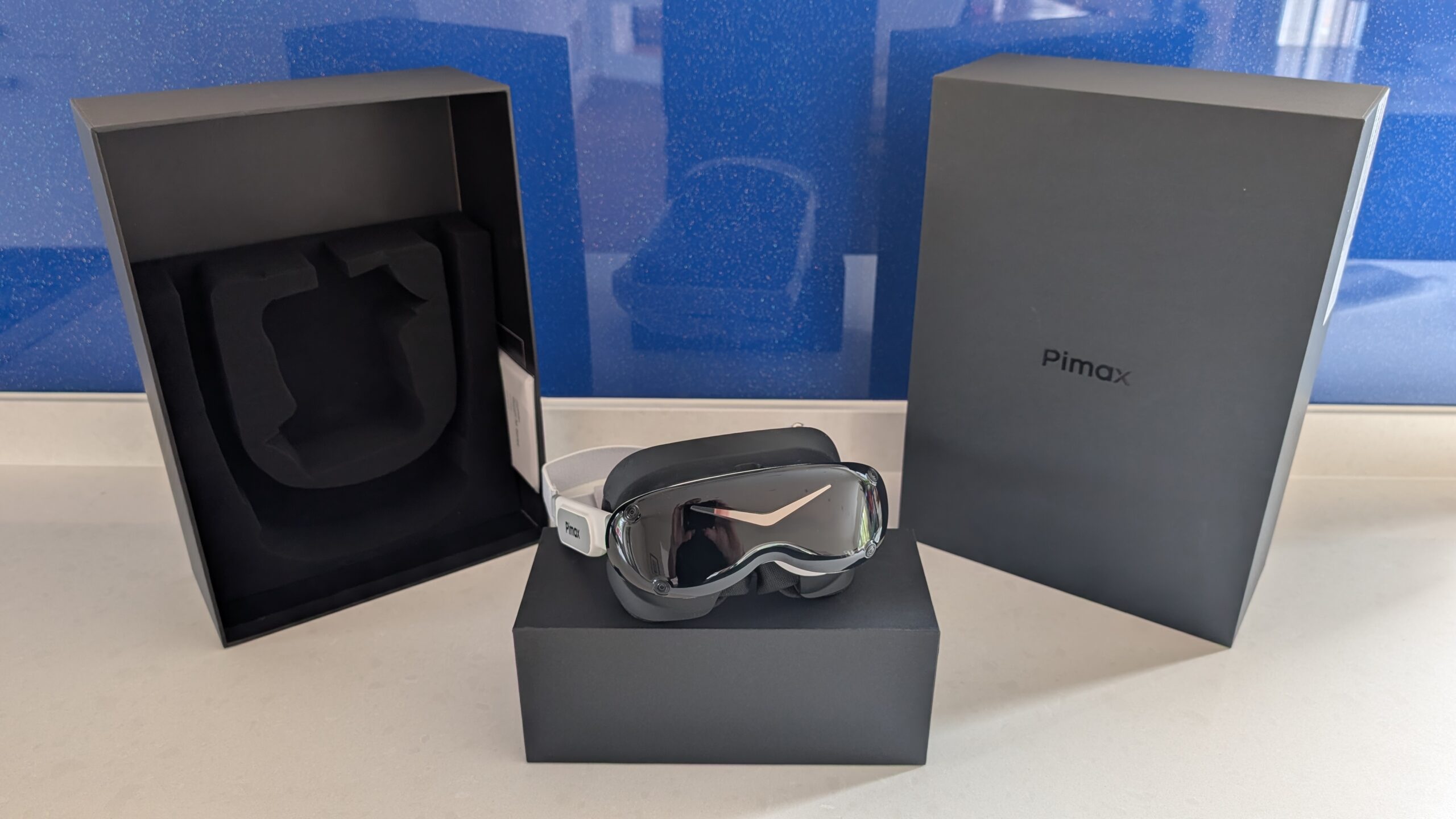
Firstly, let’s start at the conclusion. Does the Dream Air SE make sense for a sim racer? Yes – but not as a replacement for the Sony OLED Dream Air. They’re two different headsets where the difference is the panel. The SE is the easiest, cheapest way for a driver to get into high-end PC VR when you’re not sitting on a top-end graphics card. The serious racer who can stretch to the standard Dream Air should (ideally) get that one. But, most people reading this aren’t necessarily in the mood to drop almost $/£2k on a VR headset. They’re on a good gaming PC and they want the picture on their face to just work, and work well. For them the SE is the cheaper answer.
Pimax Dream Air SE
From $899 (headset) / $1,199 with SLAM tracking and controllers.
Check it out at PimaxUse code SIMRACINGCOCKPIT for 2% off, or SIMRACINGCOCKPIT25 for $25 off.
Quick Navigation
Jump directly to what you’re looking for:
What it is |
Cheaper Dream Air? |
On track |
Your graphics card |
SLAM tracking |
Weight & comfort |
The quirks |
Who it’s for |
Verdict
What is the Pimax Dream Air SE?
The Dream Air SE is the cheaper of Pimax’s two Dream Air headset variants. It’s a compact, wired micro-OLED PC VR unit – no standalone mode, it plugs into your PC over DisplayPort and runs off your GPU, just like they all do. The optical unit comes in under 140g, which (as I like to keep saying) always catches me when I pick it up. Light, comfortable and easy to work with.
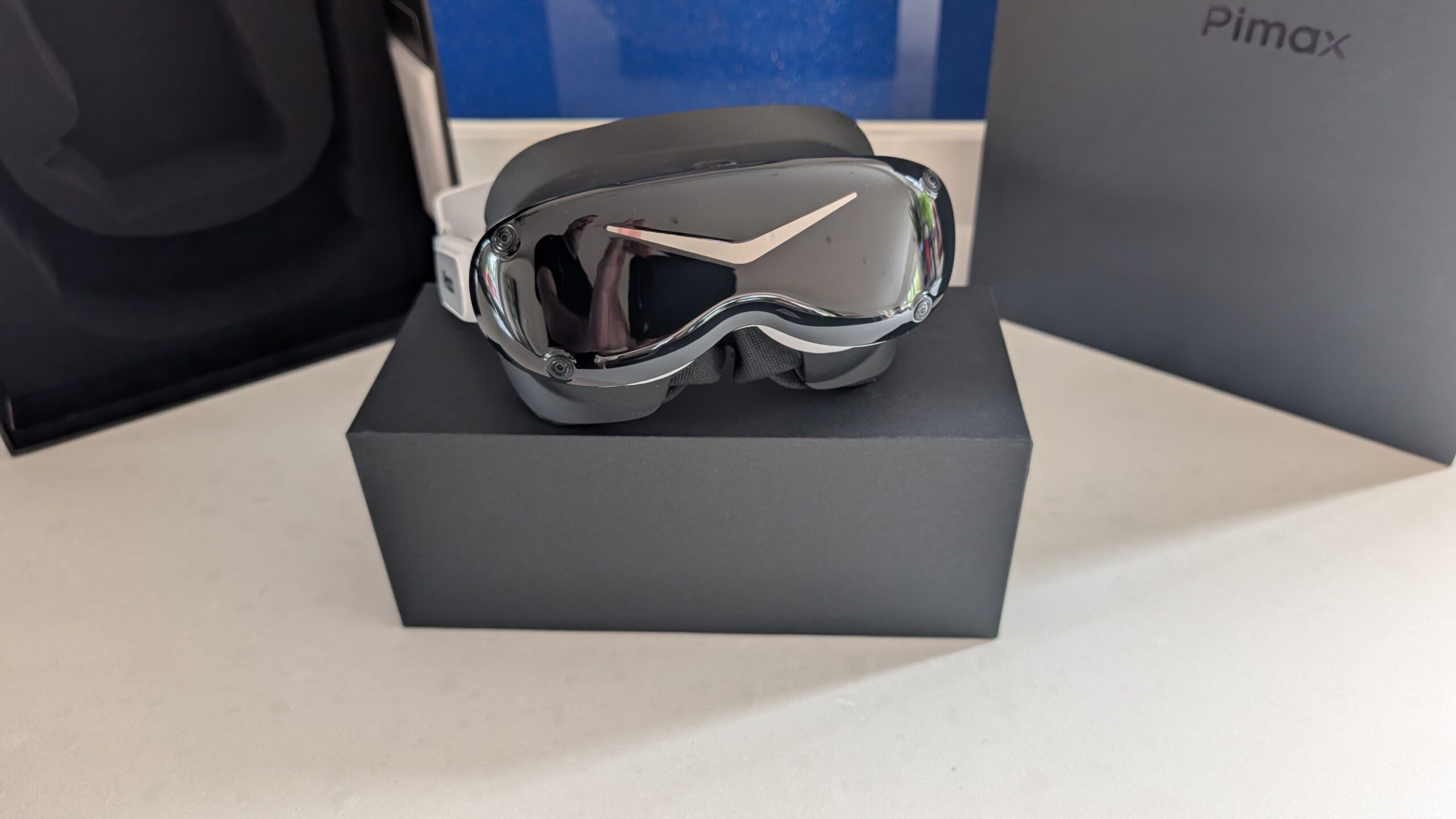
With the Dream Air, You choose between two tracking flavours. The SLAM version I’ve had on the rig uses four onboard cameras and no base stations at all, and it ships with a pair of 6DoF controllers. The Lighthouse version wants SteamVR base stations for tracking. There’s Tobii eye tracking baked in, which feeds dynamic foveated rendering, and it runs through Pimax Play like the rest of the range. Pricing sits at $899 for the SE on its own and $1,199 for the SLAM package with the controllers in the box.
Is the SE just a cheaper Dream Air?
No, the Dream Air SE is not the same product with a smaller price sticker. Under the skin, it’s a different optical engine.
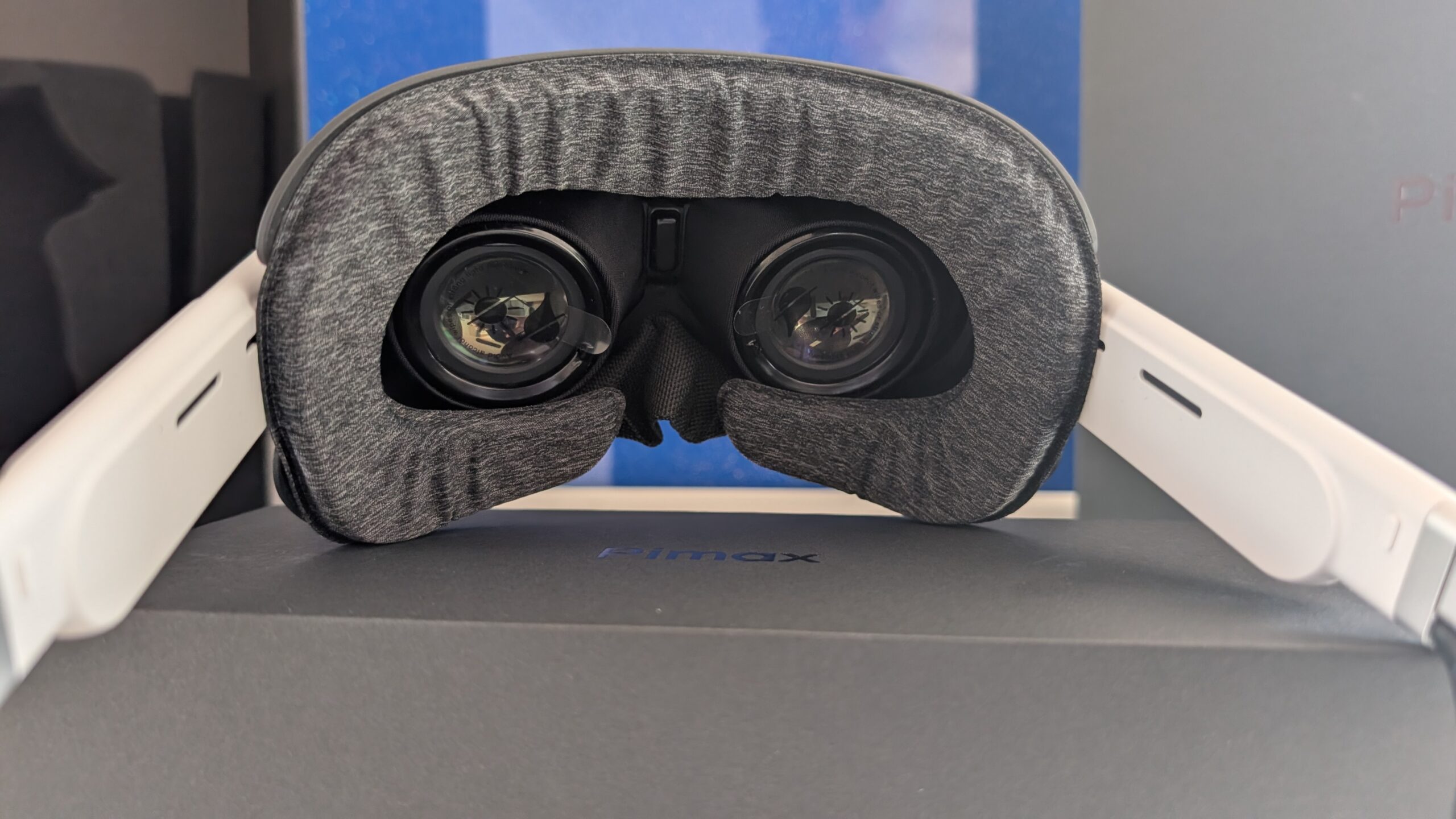
The standard Dream Air runs a Sony micro-OLED panel through Pimax’s ConcaveView pancake lenses – the type of panel you find in the Apple Vision Pro class of device. The SE runs a SeeYa micro-OLED panel, the same one and much the same optics as the Bigscreen Beyond 2, through a standard pancake lens. The resolution difference is: 2560 x 2560 per eye on the SE, roughly 6.55 megapixels, against 3840 x 3552 and about 13.6 megapixels on the Sony panel. Call it roughly half the pixels to play with.
So, when someone lines the two up spec-for-spec and calls the SE a compromised Dream Air, they’ve got the framing wrong. It’s a different panel and different glass in the same tiny body, built to a different price for a slightly different buyer. Rather than comparing the SE to the other Dream Air variants, compare the SE against everything else you can buy at $800 to $900. Judged in that part of the VR gaming ecosystem, it looks a lot healthier:
Dream Air SE vs Dream Air
| Spec | Dream Air SE | Dream Air |
|---|---|---|
| Panel | Micro-OLED (SeeYa – as the Bigscreen Beyond 2) | Premium Sony Micro-OLED |
| Resolution per eye | 2560 x 2560 (5K) | 3840 x 3552 (8K) |
| Lens | Standard pancake | Pimax ConcaveView pancake |
| Field of view (official) | 105° horizontal | 110° H / 120°+ diagonal |
| Optical unit weight | under 140 g | under 170 g |
| Tracking | SLAM inside-out (Lighthouse optional) | SLAM inside-out (Lighthouse optional) |
| Eye tracking | Tobii, dynamic foveated rendering | Tobii, dynamic foveated rendering |
How the Dream Air SE looks on track
The headline is the micro-OLED picture, and specifically the blacks. This is what a good OLED does that an LCD can’t get away with faking – proper blacks and real contrast, right where sim racing or your everyday gaming lives. Night racing, a dark GT cockpit, the dashboard lit against the gloom, kerbs and mirrors that stay sharp when a lesser panel would smear them into a dark grey. That’s the whole reason to buy into micro-OLED, and despite the loss of the Sony spec OLEDs, the SE copes perfectly well.
Visit Our Sponsors
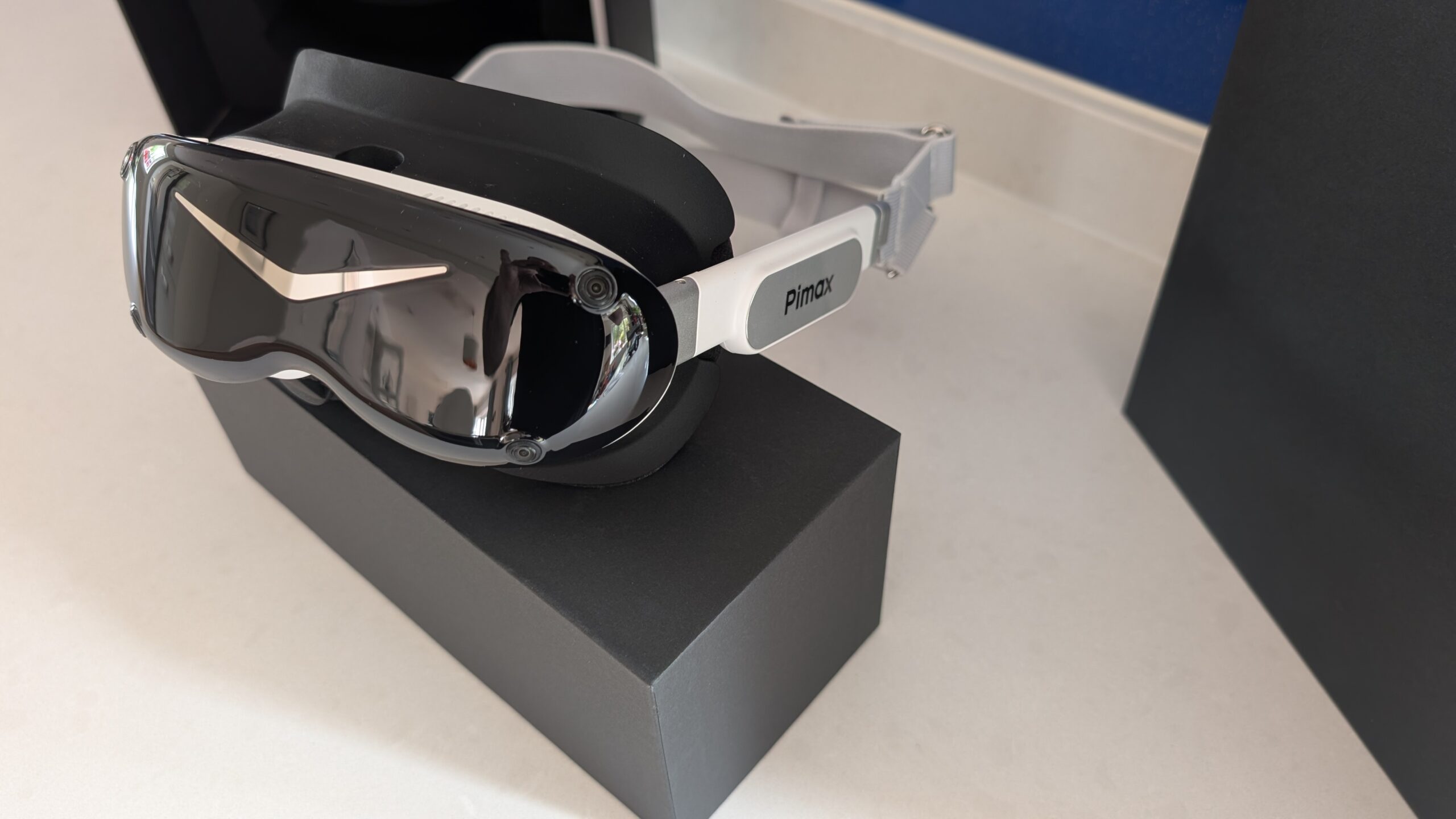
Yes, 2560 x 2560 is lower than the Sony panel. As a driver, rather than a reviewer, though, the question I keep coming back to is what you use the resolution for. You read a corner, place the car, check a mirror. For that, this is more than enough. And the drop that reads so alarming on paper is one a Quest 3 owner is very unlikely to notice, because the SE out-resolves a Quest 3’s LCD – a step up in sharpness from where most upgraders are coming from.
The field of view is the narrowest in the Dream Air lineup at 105 degrees on paper. I care less about that than the people who test headsets for a living. Think about real life, for a moment. You’re sat in a car, often in a helmet, and you don’t see much in your periphery anyway – you look where you’re going. Because the SE is so light, you naturally move your head into a corner the way you would on a real circuit, and the picture comes with you. We know that looking into the corner is standard driver best practice – so I’d argue that the tracking is just as, if not more important in the simulator than pure FOV.
Much easier on your graphics card
The Dream Air SE renders roughly half the native pixels of the full Dream Air, and the eye tracking drives dynamic foveated rendering on top of that, so the machine only spends its effort on where you’re looking. The upshot: a micro-OLED headset your PC can run.
Pimax’s own minimum spec tells an important spec story: They list an RTX 2070, a 3060 or a 4060-class card as the floor for the Dream Air SE which, is modest for a headset putting an OLED picture this good on your face. Suddenly buying the headset doesn’t trigger a flurry of searches for new GPUs. Pimax’s recommended tier GPU for the SE is a 3080 or a 4070 Super among some of the most common, if a little unexotic GPUs folks use for gaming.
SLAM tracking for a driver
I told you in a previous review to steer clear of the SLAM edition, on the grounds that inside-out tracking was the wrong sort for a cockpit. Having had the SLAM and Lighthouse units on the same rig, I don’t think that holds up the way I put it, and I’m glad to have been wrong in a direction that makes the decision easier rather than harder.
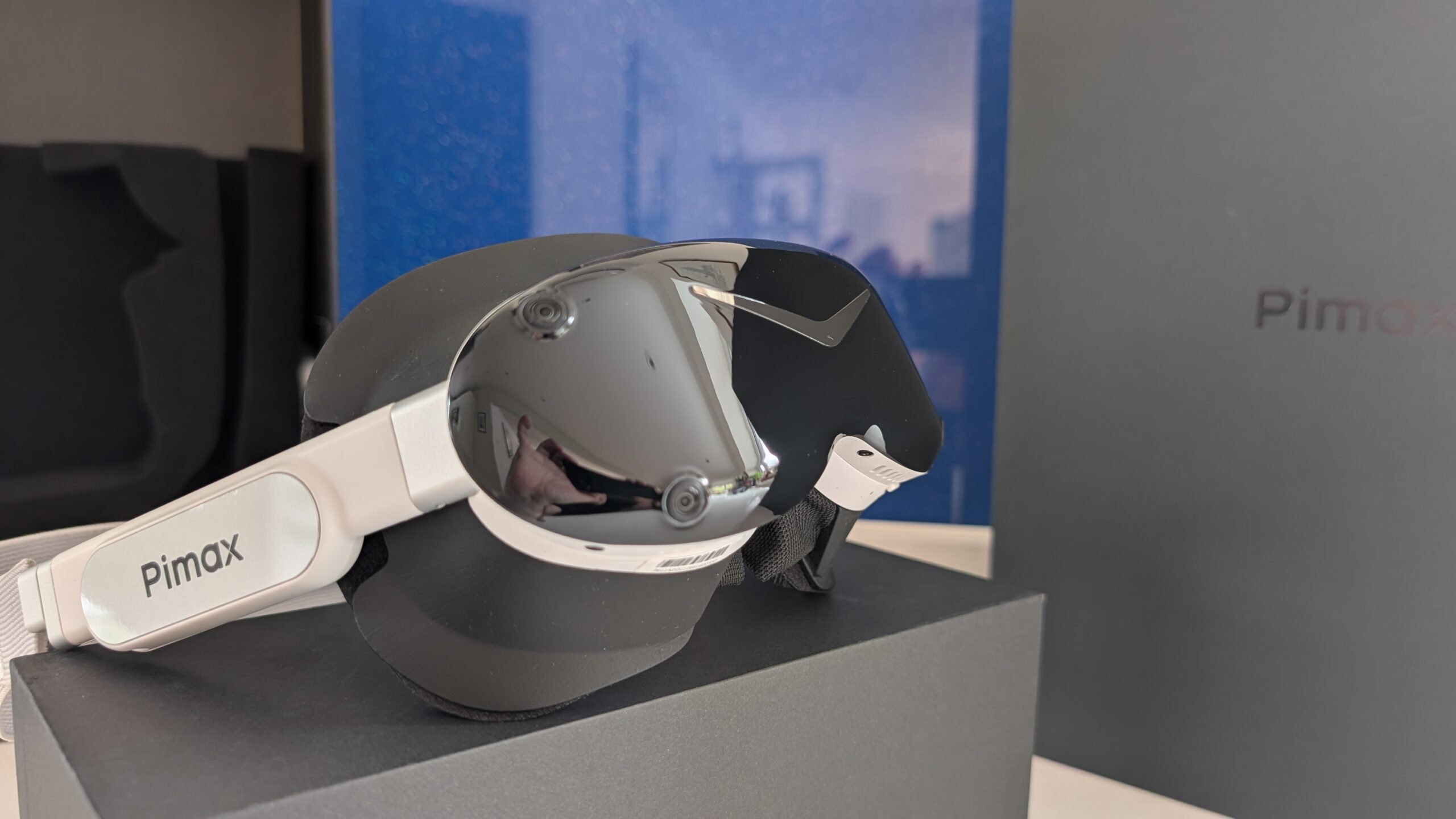
The wobble everyone warns you about with SLAM is in the controllers, not the head tracking. For fast controller games, where your hands are flying around at the edges of the cameras’ view, it’s a fair criticism. But if you’re a driver, your controllers live in that drawer, powered down. What the tracking has to do is keep your head locked while you sit still and turn to look through a corner, and seated head tracking on the SE is solid. No base stations to mount, nothing screwed to the walls. For sim racing, the SLAM version runs happily.
Weight, heat and the facial interface
The weight is the thing I love about this whole class of Pimax headset, and the SE is the lightest of the lot at under 140 g for the optical unit. Much less mass against your face means less heat, and heat is what gets to you an hour into a race – a big headset traps it, you get sweaty, and eventually the lenses fog. There’s so little of the SE sat against your face that it just doesn’t build up the same way.
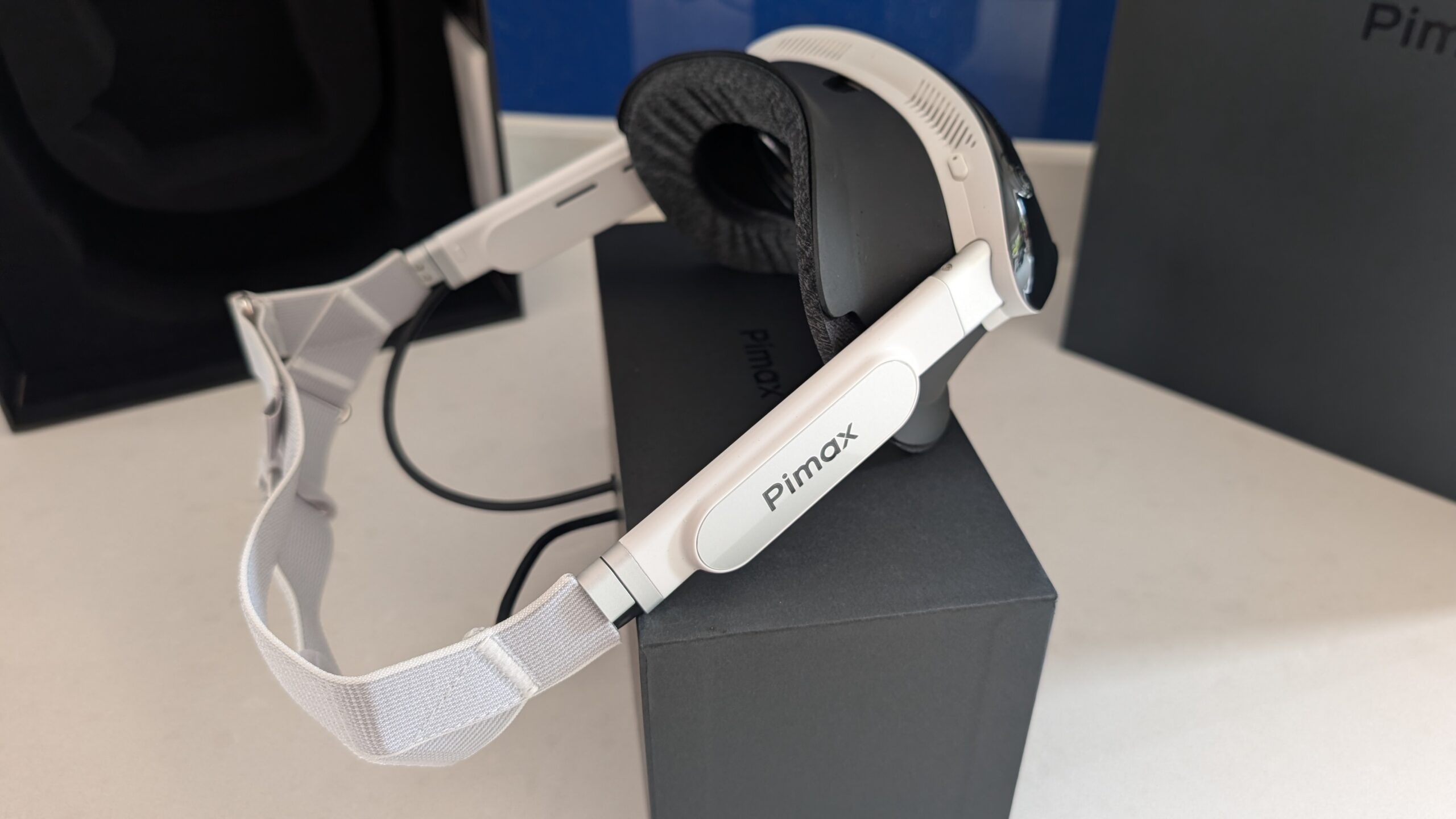
The SE now ships with Pimax’s new ProFit facial interface as standard. It’s a direct answer to the complaint the first testers had – the old stock interface was poor out of the box and hurt both comfort and field of view. So if you read an early review grumbling about the face gasket, that’s the piece that’s been fixed, though a better DMAS hardstrap exists if you want to go further. I won’t tell you it’s transformed a three-hour stint for me, because that’s not a claim I’ve put the miles in to make – but the ProFit is the Pimax answer, and the people who logged real hours in it say the same.
The quirks
On the rough edges (because nothing is ever perfect). 3 issues come up, but each has a fix.
Motion blur, or persistence, can turn up with head movement. It’s a trait of pancake lenses with micro-OLED, but, you can pull it back with OpenXR tweaks and a touch less brightness. In bright scenes, there’s some glare low in the display; and dropping that brightness down to around 80 per cent takes most of it out. Eye strain might catch you out (just with any other headset) which requires a 0.1 vertical eye-offset in Pimax Play to help you along. None of that, to me at least, is a dealbreaker – it’s just the sort of small settings faff you’d expect getting into serious PC VR, and once it’s sorted, it’s sorted.
Who the Dream Air SE is for
Let me break the buyer down the way I think about it, because the SE is more about what sort of gamer you are than what the spec sheet or the high-end community says.
First, your graphics card. If you haven’t got the latest high-end 40 or 50-series RTX card, the SE is the micro-OLED headset that’ll run at a framerate worth having. That’s the single biggest reason it exists – (I do have a suspicion that the SE may actually be the prototype of the flagship Dream Air platform, but, I don’t have the insight to confirm it).
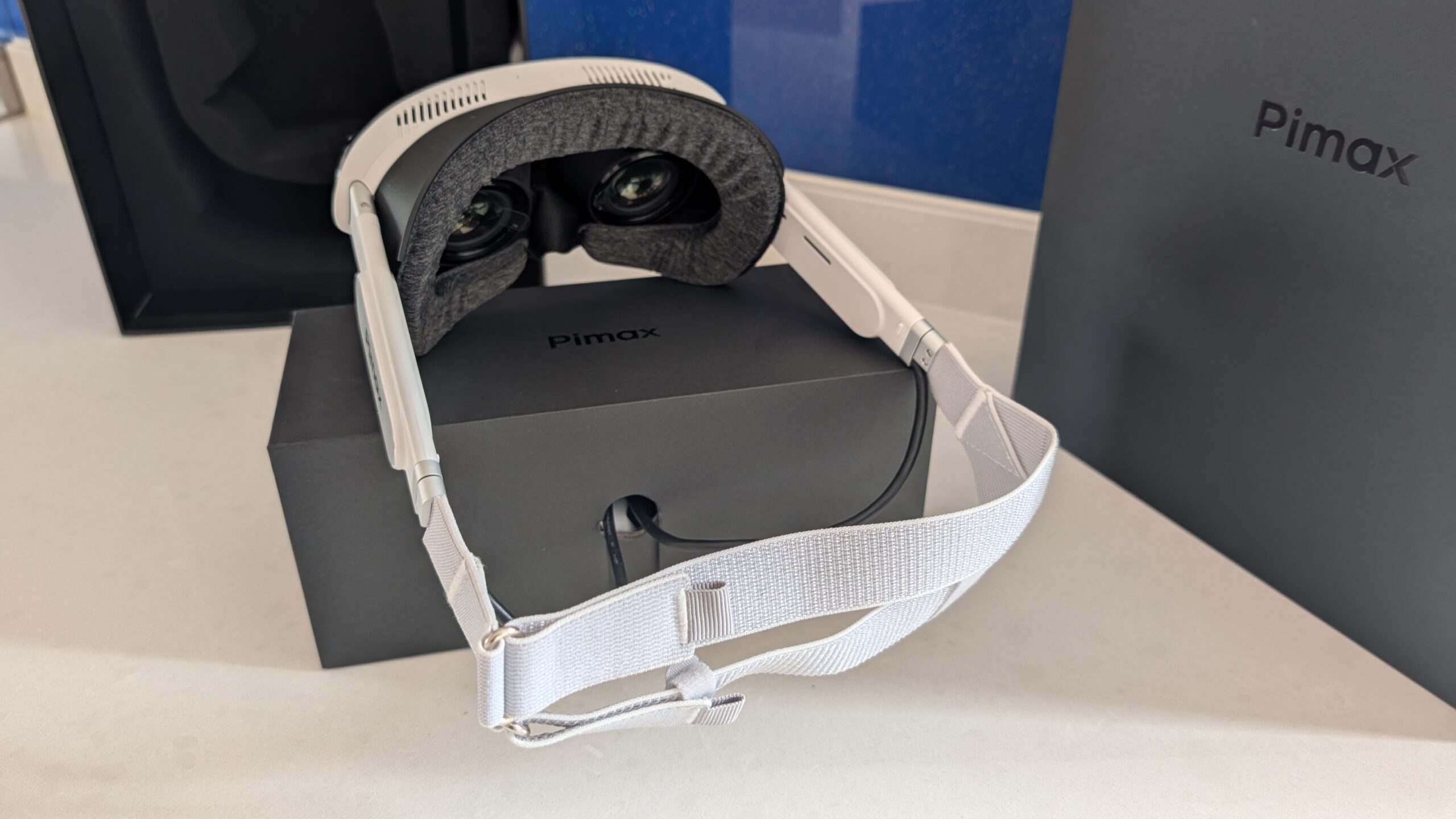
Second, how far into VR are you, really? If this is your first proper VR headset you don’t need the Sony panel to be delighted – you’ll be delighted anyway. One caveat: the SE rewards a tinkerer more than someone who wants pure plug-and-play, so if fiddling with settings sounds like a chore rather than part of the fun, factor that in.
Third, what you’re coming from. If you’re on a Quest 3, this is an easy step up – the SE has better panels, better blacks.
Who isn’t it for? The serious racer who can stretch to the Sony panelled version of the Dream Air. The way I think of this is that the SE is the comfortable middle ground – between sticking with your Quest 3 and throwing something like $2,000 at the highest-end headset on the market. Until now, nothing really lived there.
Pros
- The micro-OLED picture, and night-racing blacks a Crystal’s LCD can’t touch
- Light – under 140 g on the face, so less heat and no fogging deep into a race
- Far easier on the graphics card than the Sony Dream Air, minimum spec down at RTX 2070 / 3060 / 4060
- SLAM tracking needs no base stations – nothing screwed to the walls
- The cheapest way into high-end PC VR, from $899
Cons
- Lower resolution than the Sony panel – real, even if a Quest 3 upgrader won’t spot it
- Narrowest field of view in the Dream Air lineup
- The known quirks want a little settings fiddling before they’re right (but there’s a lot of settings and support for this online).
- SLAM bundle includes controllers a sim racer will never use – but you may be a more all round gamer in which case that’s no big deal
- A proper strap upgrade costs extra on top – probably the most common current complaint for Pimax owners.
Final thoughts
So no, the Dream Air SE doesn’t replace the Sony panelled Dream Air, and it isn’t trying to. It represents two different propositions for two different types of sim racer, and it’s a mistake to read one as a discount version of the other. If you’re the serious racer who can stretch, you already know where I’m sending you.
But if you’re on a decent gaming PC without the top-end 40 or 50-series card, and you want into high-end PC VR without the overhead, the Dream Air SE is the one. At $899 it undercuts everything I’d otherwise recommend at that money.
Right – a micro-OLED picture on a GPU you already own. I’ll see you out on track!
Related Articles
MOZA Mustang GTD Wheel Review: Ford’s Licensed Sim Wheel on the Bench
CONSPIT 280 FR Review: A Very Good All-Rounder for Formula and LMP2
CONSPIT 310 APEX Review: Getting Back to a 310mm Wheel
MOZA FCS Farming Control System Review
Fanatec CSL Steering Wheel GT3 Review: The McLaren V2 Replacement That Delivers
Moza R21 and R25 Ultra Review: High-End Direct Drive Wheelbases Tested
Topic: Pimax Dream Air