
I’m a sim racer and amateur racer with a passion for Motorsport, good racecraft and the technical and setup aspect of sim racing.
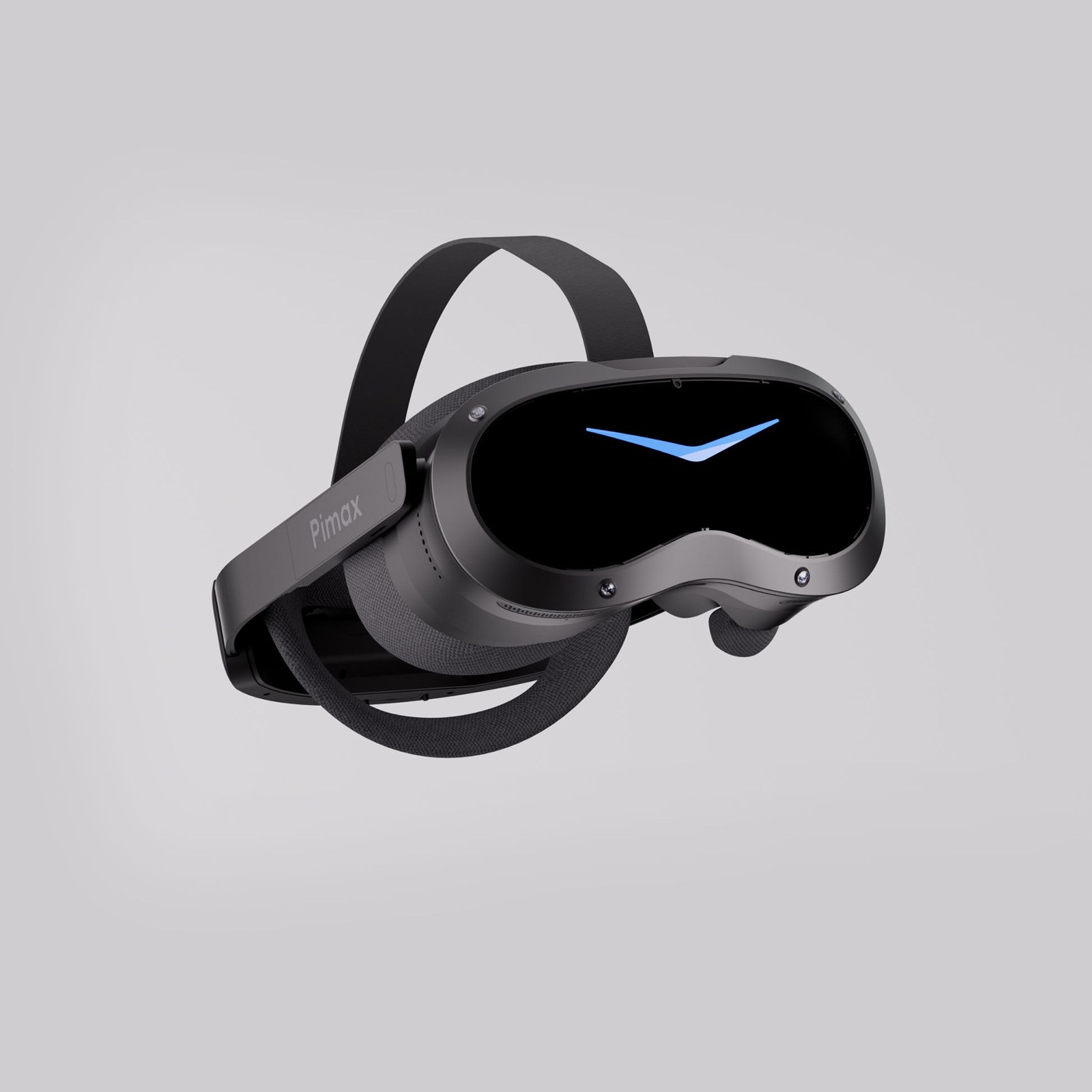
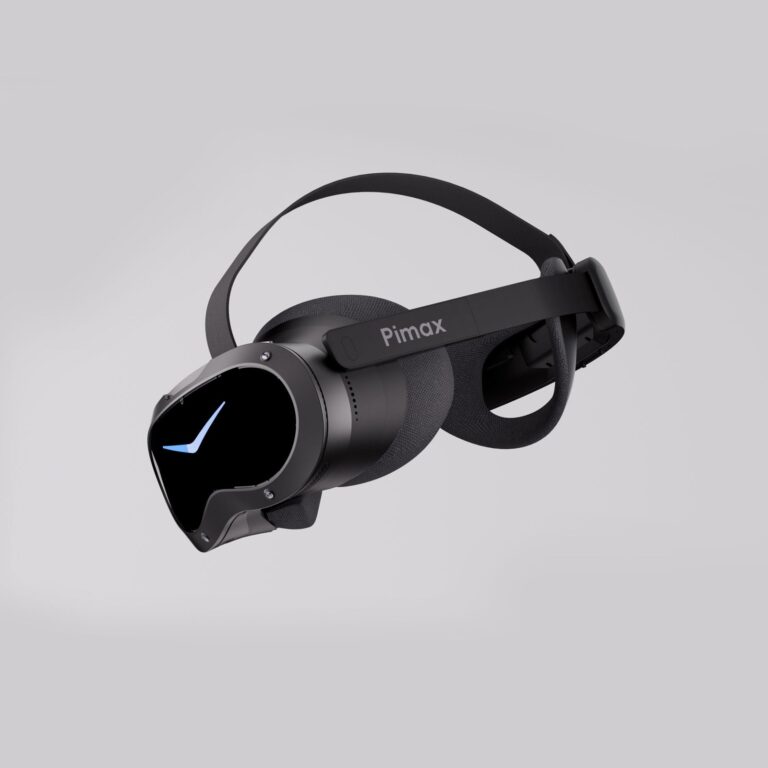
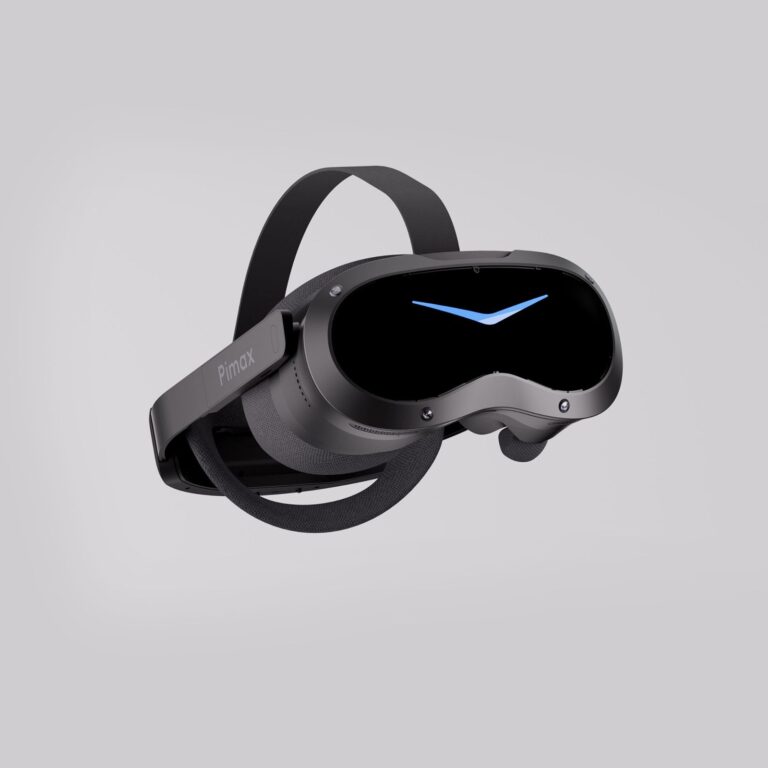
Featured image: the Pimax Crystal Pro (image: Pimax)
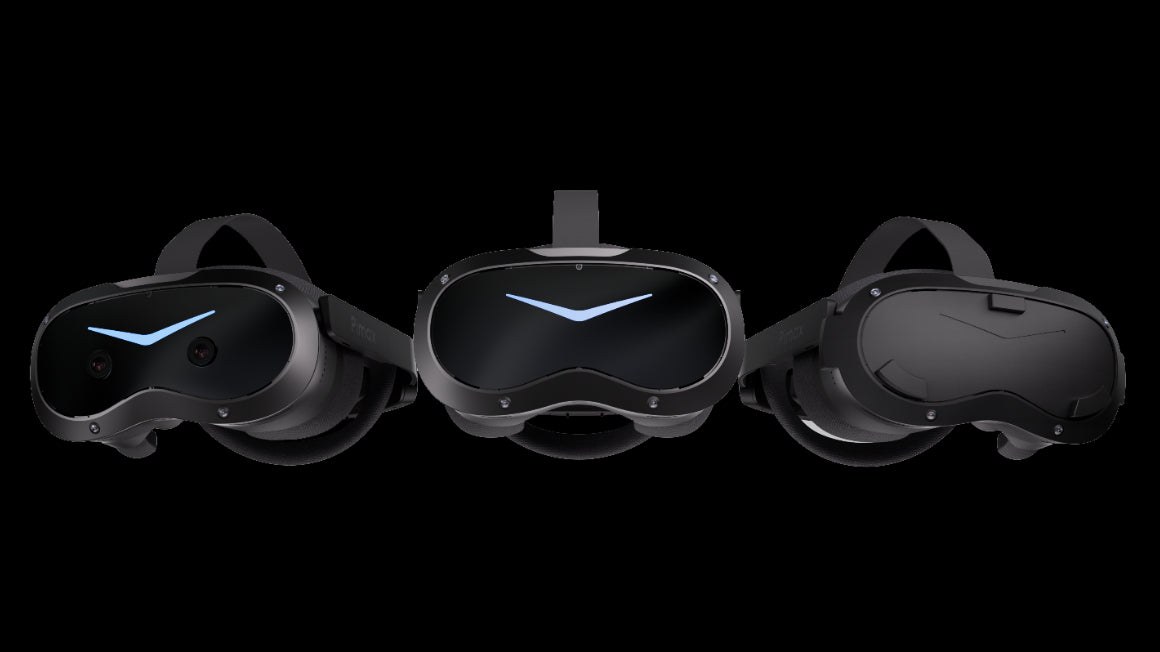
Pimax has just announced the Crystal Pro, a wireless PC VR headset in the Crystal family, at Frontier, its launch event on 6 October 2026. It’s priced at $1,399 (USD), you can reserve one today for $1, and shipping starts in 2027. I race a Dream Air on an RTX 4090 and I haven’t seen a Crystal Pro, so today we’re taking a closer look at everything Pimax has said so far, what’s confirmed and what isn’t, and what it means for a sim rig. On paper, it’s the Crystal Light’s picture (the same published resolution, pixels per degree and field of view) made wireless, with eye tracking added. Nobody outside Pimax has reviewed one yet.
On price, the Crystal Pro sits between the Crystal Light and the QLED Crystal Super, and you’ll find both of them in the table below – prices move, so check what it says at the checkout before you buy.
Pimax discount codes: use SIMRACINGCOCKPIT for 2% off, or SIMRACINGCOCKPIT25 for $25 off, at pimax.com.
Quick Navigation
Jump directly to what you’re looking for:
What is the Crystal Pro? |
Price and release date |
Panels and lenses |
Wireless and 120Hz |
Tracking and battery |
What PC does it need? |
vs Crystal Light and Dream Air |
What we don’t know |
What I’d want fixed |
Should you reserve one?
What is the Pimax Crystal Pro?
The Crystal Pro is a wireless PC VR headset that streams over Wi-Fi as standard, with a Wi-Fi 6E adapter in the box. For a better wireless picture you can add the optional third-generation 60G AirLink kit, which enables what Pimax calls Native Foveated Streaming. If you’d rather plug in, there’s an optional DisplayPort 1.4a cable.
The Crystal Pro also has a standalone mode, which means it runs without a PC at all. A Snapdragon XR2 Gen1 chip in the headset handles Android apps and OpenXR mobile titles. Tracking is SLAM 2.0, with a swappable faceplate if you want Lighthouse instead, and power comes from an external battery pack.
Pimax lists the Crystal Pro beside the Crystal Light and the Crystal Super and hasn’t said it replaces either of them. Don’t confuse it with the “Crystal Light Pro” from 2024, which was a Crystal Light sold with Pimax’s Pro Experience Kit (DMAS headphones and a Lighthouse faceplate). Pimax also showed new Ringless controllers and a Spation mini-PC at Frontier, with prices to follow.
Price, the $1 reservation and when it ships
Pimax has priced the Crystal Pro at $1,399 for the headset, or $1,899 with the third-gen 60G AirLink kit, and the kit on its own is $599 (all USD, from Pimax, 6 October 2026). Pimax’s EU store lists €1,299 and €1,779, and its UK store data shows £1,099 and £1,499 (read the same day).
You can’t actually buy the Crystal Pro yet. What’s on sale is a $1 reservation, which gets you $20 off the headset at launch or $50 off the bundle, and Pimax’s listing says it’s non-refundable. Hands-on demos start in Q4 2026 and shipping starts in 2027, with no month given.
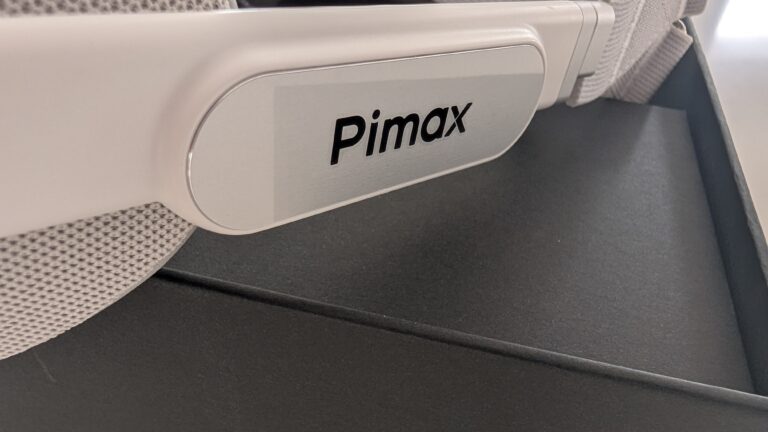
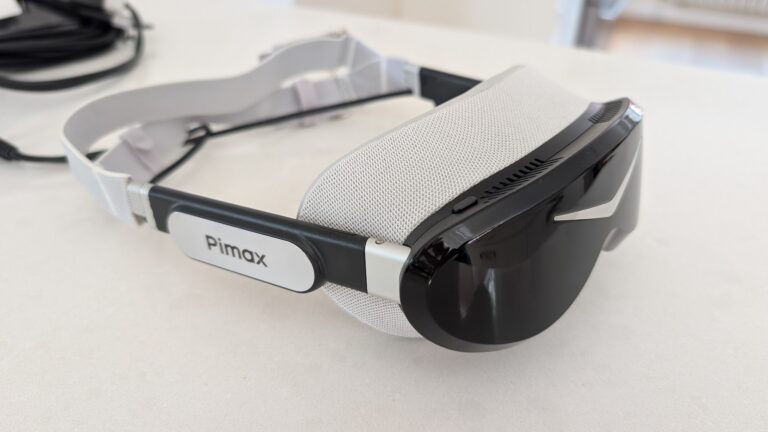
Pimax Crystal Pro
It’s a wireless Crystal with eye tracking, announced on 6 October 2026. Shipping starts in 2027, and the $1 reservation is non-refundable.
Image: Pimax
Pimax discount codes: use SIMRACINGCOCKPIT for 2% off, or SIMRACINGCOCKPIT25 for $25 off, at pimax.com. Pimax hasn’t said whether the codes apply to the $1 Crystal Pro reservation or stack with its launch discount (as of 6 October 2026).
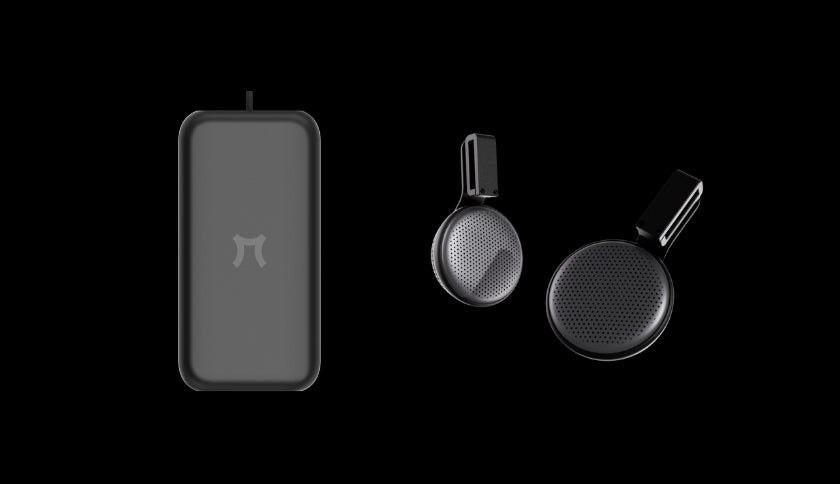
In the box you get two ringed SLAM controllers, the external battery and the Wi-Fi dongle. The DisplayPort cable isn’t included, so you’ll need to buy one if you want to run the Crystal Pro wired.
Panels, lenses and local dimming
The Crystal Pro’s panels are QLED (a quantum-dot LCD), at 2880 x 2880 per eye, which is about 17 million pixels in total. PPD (pixels per degree) is the number that tells you how sharp the image will look, and the Crystal Pro’s is 35 across a 110-degree horizontal FOV (field of view). Refresh runs at 72, 90 or 120Hz.
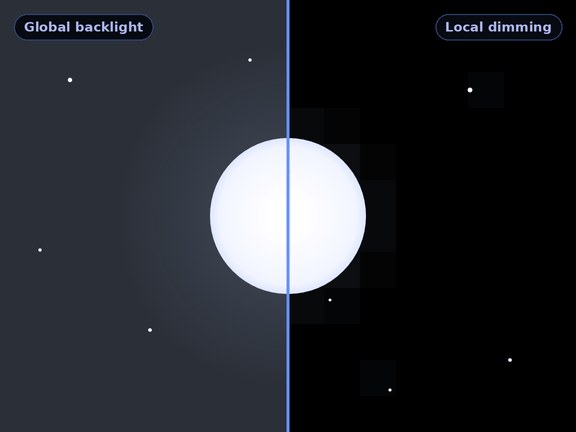
There’s a Mini-LED backlight behind each panel, with local dimming across 576 zones per eye. Each zone dims on its own, so the dark parts of the image go darker while the bright parts stay bright. Pimax quotes 200 nits of brightness.
The lenses are glass aspherics carried over from the Crystal, Crystal Light and Crystal Super, paired with what Pimax describes as a new QLED panel built for this headset. Pimax says pancake lenses lose at least 85% of the light, where its glass aspherics lose under 1%. The eye-tracking cameras sit inside the lens housing, eye relief adjusts if you wear glasses, and prescription inserts are on the way.

For a sim racer, the resolution, PPD and FOV are the Crystal Light’s published numbers, so you know roughly what clarity to expect, although Pimax says the panel itself is new.
How the wireless works, and where you get 120Hz
There are three ways to get a picture into the Crystal Pro.
The first is the Wi-Fi in the box. In Pimax’s own words, the Crystal Pro “streams over Wi-Fi like any other wireless headset”, which means the image is compressed. It’s Steam Link 2.0 compatible, and Wi-Fi is also the fallback if the 60G link drops.
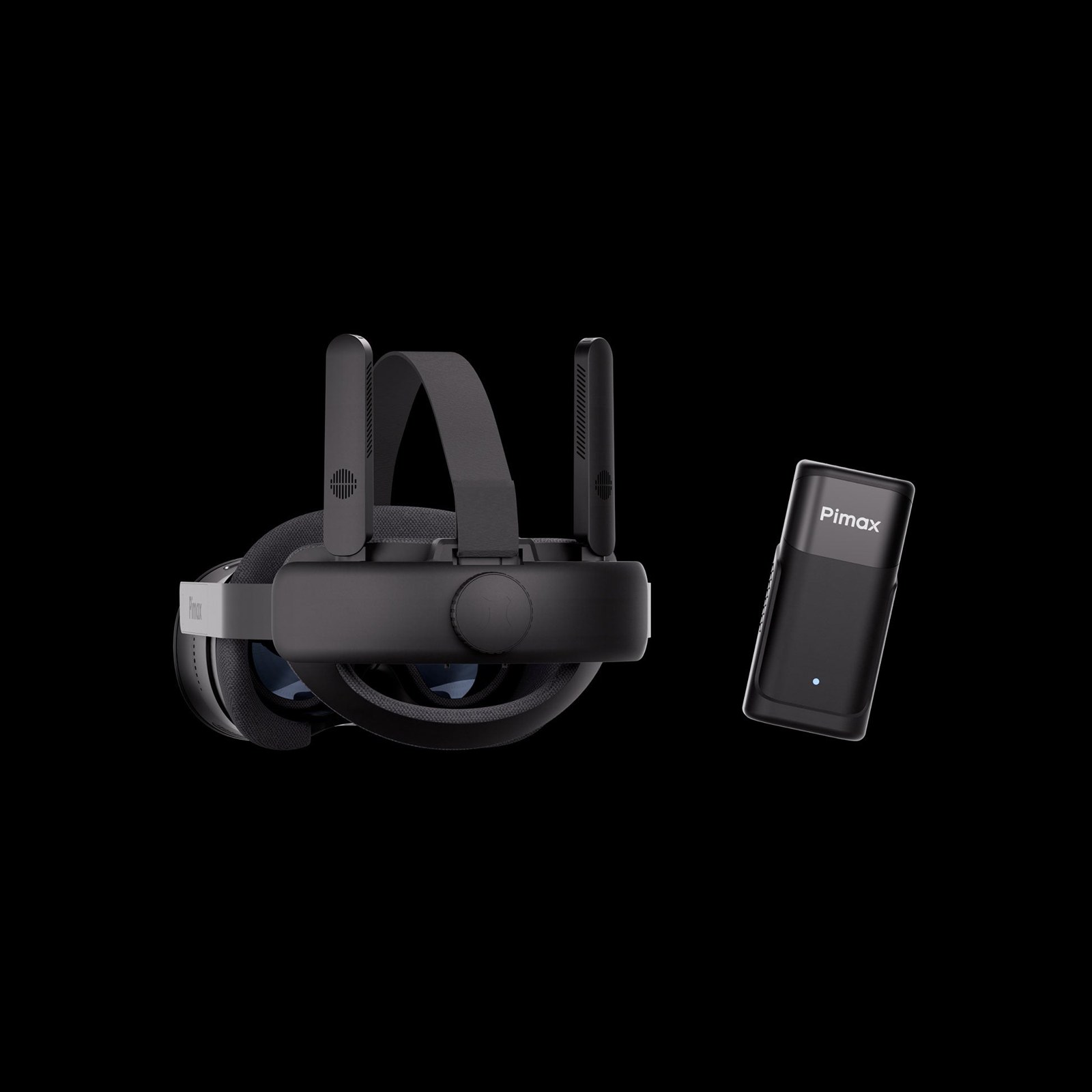
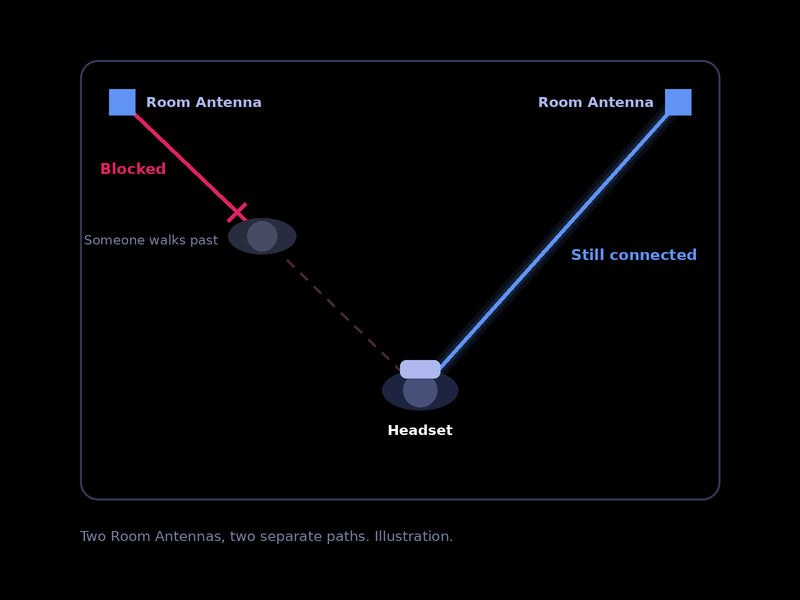
The second is the optional 60G AirLink kit. Two Room Antennas go up in the room and talk to the headset over 2×2 MIMO (two antennas each way), for up to 6 Gbps. The eye tracking works out where you’re looking, and that part of the view, which Pimax calls the focus area, comes straight from the GPU with no video encoding. That’s the equivalent of 2880 x 2880 per eye, at up to 90Hz. Pimax says the rest of the view is “streamed more efficiently”, and that’s what it means by Native Foveated Streaming.
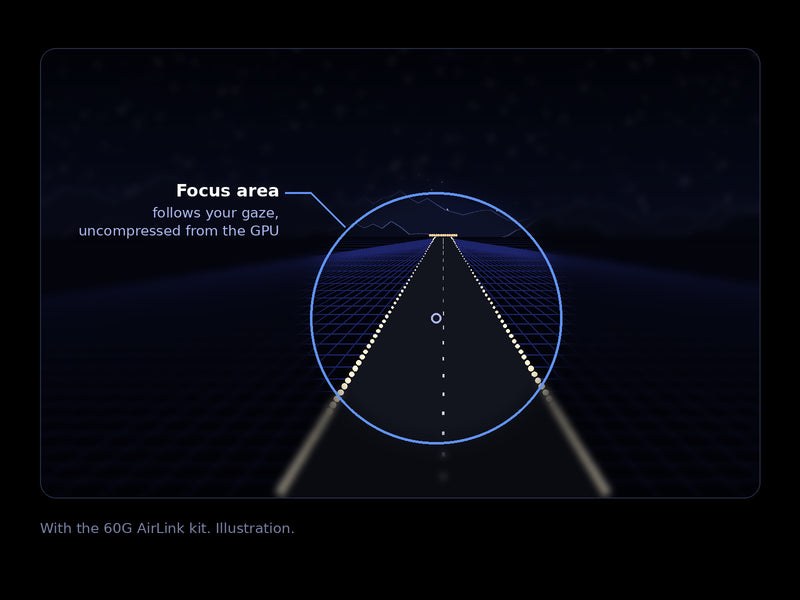
Pimax quotes under 2ms of added latency, and talks about a five-by-five-metre playspace “with the right setup”. A 60GHz signal doesn’t pass through walls, and Pimax said at the event that earlier generations of its 60G AirLink had “occlusion and coverage issues”. The two antennas are its answer, each one covering for the other if it gets blocked.
The third is a DisplayPort 1.4a cable, which Pimax’s FAQ says runs the panels “at their full 120 Hz”.
Nobody has tested the Room Antennas in a cockpit yet, so we don’t know how they cope with a rig’s uprights, a wheel and a set of screens sat in the way.
Tracking, faceplates and the battery pack
The Crystal Pro tracks with SLAM (inside-out tracking), so its own cameras watch the room and you don’t need anything mounted on the walls. SLAM 2.0 uses four cameras, a motion sensor and infrared illumination, which Pimax says means tracking no longer depends on how well lit your room is. Hand tracking is supported too.
The Crystal Pro’s faceplate also swaps, and Pimax has shown two alternatives so far. Lighthouse tracking uses base stations placed around the room, and with a Lighthouse faceplate fitted, the Crystal Pro tracks off them while still working wirelessly over AirLink. Pimax calls the Crystal Pro “the only wireless headset on the market with Lighthouse support”. An MR (mixed reality) faceplate adds full-colour passthrough with LiDAR depth sensing. Neither faceplate has a price yet.
There’s no battery in the headset. An included 16,000mAh pack goes in your pocket or jacket, and when you plug in the DisplayPort cable, Pimax says it takes over the power. The battery isn’t something I need; I stay connected and static in my racing seat.
The rest of the build is a rigid backstrap, a magnetic facemask, active cooling, three remappable buttons and off-ear speakers, with DMAS 2.0 earphones as an option.
What PC does it need?
For PC VR, Pimax lists an RTX 2070 or above as the Crystal Pro’s minimum and recommends an RTX 3080 or RTX 4070 or above. CPU, RAM, storage and OS are all listed as “TBD” for now. None of it applies in standalone mode.
The eye tracking also drives DFR (dynamic foveated rendering). In a game that supports it, DFR renders full detail only where you’re looking and less everywhere else, which takes some of the load off the graphics card. For reference, Pimax lists the Crystal Light at a minimum of RTX 2080, with RTX 3070 and higher recommended.
Crystal Pro vs Crystal Light, Crystal Super and Dream Air
| Spec | Crystal Pro | Crystal Light | Crystal Super (57 PPD) | Dream Air |
|---|---|---|---|---|
| Panel | QLED, Mini-LED local dimming (576 zones per eye) | QLED + Mini-LED, local dimming optional | QLED + Mini-LED local dimming | Sony micro-OLED |
| Resolution per eye | 2880 x 2880 | 2880 x 2880 | 3840 x 3840 | 3840 x 3552 |
| PPD | 35 | 35 | 57 | – |
| Horizontal FOV | 110° | 110° | 106° | 110° |
| Refresh | 72 / 90 / 120Hz (120Hz wired) | up to 120Hz | 72 / 90Hz | – |
| Eye tracking | Yes (DFR + foveated streaming) | No | Yes (DFR) | Yes (DFR-ready) |
| Tracking | SLAM 2.0; Lighthouse faceplate | Inside-out; Lighthouse faceplate | Inside-out; Lighthouse faceplate | SLAM or Lighthouse versions |
| Connection | Wi-Fi (in the box), 60G AirLink (optional), DisplayPort 1.4a (optional) | DisplayPort | DisplayPort | DisplayPort |
| Headset weight | Not announced | 815g | – | Under 170g |
| Status (6 Oct 2026) | $1 reservation; ships 2027 | On sale | On sale | On sale |
Specs from Pimax’s product and store pages, read 6 October 2026. A dash means Pimax doesn’t list it on that page.
I ran a Crystal Light before I moved to the Dream Air, and it’s the obvious one to hold the Crystal Pro up against. It was $899 on 6 October, and its published picture numbers are the same as the Crystal Pro’s, although its local dimming is listed as optional. It’s wired over DisplayPort, the headset weighs 815g, and there’s no eye tracking; Pimax lists fixed foveated rendering instead. It already has inside-out tracking from four cameras. So the extra $500 for the Crystal Pro buys the wireless, eye tracking with DFR, the standalone mode, local dimming as standard and the battery pack.
The Crystal Super with the QLED 57 PPD engine was $1,599 on 6 October. At 3840 x 3840, 57 PPD and 106 degrees it’s sharper on paper, but it’s wired and tops out at 90Hz, where the Crystal Pro reaches 120Hz on the cable.
The Dream Air is $1,999 for the Lighthouse headset on its own, or $2,299 for the SLAM version with controllers (Pimax store, 6 October). It uses Sony micro-OLED panels at 3840 x 3552 per eye with a 110-degree FOV, and the headset weighs under 170g. It’s the headset I race on, and I’ve reviewed it.
The wireless is the draw if you play room-scale or mix your sim racing with other PC VR games, but in a fixed cockpit you can still plug in the DisplayPort cable and get the full 120Hz.
What we still don’t know
As of 6 October 2026, there are still a few things Pimax hasn’t told us:
- the Crystal Pro’s weight
- battery life
- the IPD range
- the refresh rate and resolution over plain Wi-Fi
- the ship month
- the CPU and RAM requirements
- prices for the Lighthouse and MR faceplates
- whether the third-gen AirLink works with the Crystal Light or Crystal Super
On that last one, Pimax’s FAQ says the Wi-Fi dongle works with the original Crystal but not with the Crystal Light or Crystal Super, which doesn’t settle the AirLink question either way.
What I’d want the Crystal Pro to fix
This is what I’d want to see fixed, going by what people already complain about in the Pimax headsets I know, set against what Pimax has published so far. Weight and comfort come first, because they were the focus of my own notes on the Dream Air.
Weight and the strap
The Dream Air is a lot lighter and more comfortable than the Crystal series, and that’s the gap I’d want the Crystal Pro to close. Pimax hasn’t announced a Crystal Pro weight, and it conceded at the event that the Steam Frame is lighter. It says the battery stays off the head and that the rigid backstrap spreads the weight better than a soft one in a long session. Those are the two things I’d look at first, and both are Pimax’s claims, so how the weight balances with the pack in your pocket is unknown.
I don’t love the headstrap on the Dream Air – I can live with it, but in a year or so I can see it needing a change, a clean (it’s a fibre material) or a replacement. A proper strap upgrade costs extra on top – probably the most common current complaint for Pimax owners. Pimax says a DMAS backstrap is in preparation, with no price or date. Whether that backstrap or the Crystal Pro’s rigid one beats the Dream Air’s strap is unproven.
The graphics card
The Dream Air is a bit GPU intensive, although it handled iRacing well on my RTX 4090. The Crystal Pro is 2880 x 2880 per eye and the Dream Air is 3840 x 3552, which is roughly 8.3 million pixels per eye against roughly 13.6 million. Pimax publishes no frame rates, and fewer pixels isn’t proof a headset runs easier. The Crystal Pro’s eye tracking also drives DFR, but Pimax lists the Dream Air as DFR-ready too, so that’s an edge over the Crystal Light and not over the Dream Air. What I’d want is a card that has an easier time than it does with the Dream Air.
The picture and the lenses
On paper the Dream Air wins on the picture, with its Sony micro-OLED panels. For the Crystal Pro to interest a Dream Air owner in a dark cockpit, its local dimming has to behave. The YouTube channel immrchris reported local-dimming haloing at night on the Crystal Super, which is QLED with Mini-LED dimming like the Crystal Pro. Pimax’s “no glare no godrays” for its glass aspheric lenses is a marketing line nobody has tested.
On the lenses, another YouTube channel, VR Accomplice, found the edges warp when you move your head on the Dream Air headsets, which the Crystal Super’s aspheric glass didn’t show. Pimax says the Crystal Pro’s glass aspheric lenses are carried over from the Crystal Super and the rest of the Crystal series, so I’d hope for no warping, but nobody has checked a Crystal Pro for it.
Wireless, the cable and Pimax Play
Wireless is the Crystal Pro’s headline, but for the same reason I don’t need the battery pack, I wouldn’t count it as an improvement for my own racing. Against the Crystal series, I very much appreciate the slimmer cables the Dream Air uses – they’re a lot less distracting. Pimax says the wired Crystal Pro connects over DisplayPort and a single USB cable, the same way as the Crystal Light and Crystal Super, so I’d want to see how that cable compares with the Dream Air’s.
Pimax Play is the software that handles pairing and firmware. Every Pimax headset that’s come through my office takes its time to start up, and nothing Pimax has published about the Crystal Pro mentions start-up time, so I’d want the Crystal Pro to be quicker than they are.
Should you reserve one?
For a dollar, the reservation holds $20 off the headset at launch, or $50 off the bundle. It’s non-refundable, though, and the Crystal Pro won’t ship until some point in 2027.
The $1 reservation doesn’t answer the weight, the strap, the load on the graphics card or how the picture holds up in the dark, and those are what I’d want settled before I paid $1,399. Pimax can answer the weight with a figure, and the rest has to wait for the hands-on demos it says start in Q4 2026. In the meantime, the Crystal Light and Crystal Super are on sale. If weight is what you want, the Dream Air is a lot lighter than the Crystal Light.
Good luck, and enjoy the wait!
Related Articles
Should Sim Racers Wait for the Pimax Crystal Pro, or Buy Today?
Pimax Crystal Pro: Everything We Know So Far
Bigscreen Beyond 2 for Sim Racing: What to Know in 2026
Pimax Dream Air vs Dream Air SE: Which Should a Sim Racer Buy?
SteamVR Base Stations for Sim Racing: Lighthouse vs SLAM on the Pimax Dream Air
How to Install the SBoys3 Driver on the Pimax Dream Air Lighthouse
Topic: VR Headsets