

I’m a sim racer and amateur racer with a passion for Motorsport, good racecraft and the technical and setup aspect of sim racing.
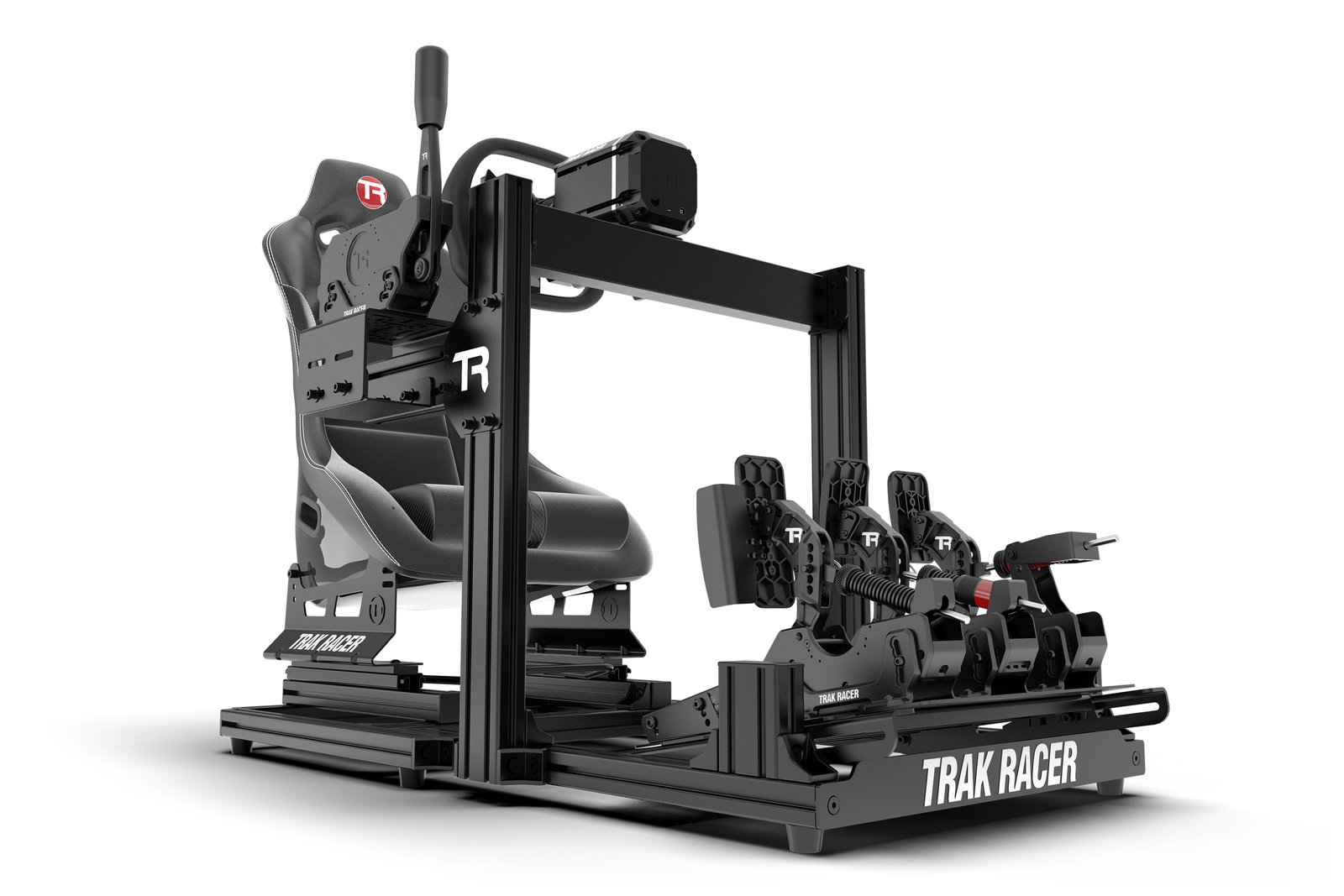
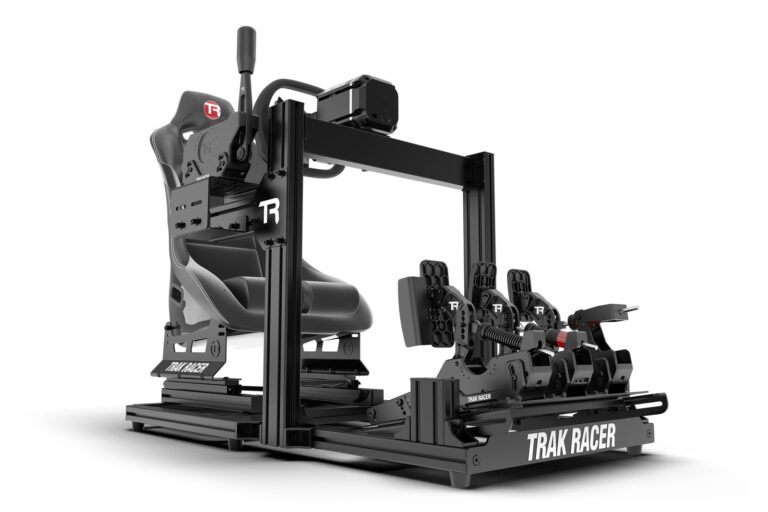
Featured image: the Trak Racer TR40S, an aluminium profile frame (Image: Trak Racer)
I’m not at all for wheel stands and flimsy cheap cockpits. It ruins the feel of the gear. If you’re short on space or budget and about to spend a couple of hundred on a stand or a folding cockpit, skip it and buy a rigid aluminium profile rig (that’s the slotted, extruded aluminium bar these rigs are bolted together from). If you really must fold your kit away, the compromise is further down. My old RSEAT RS1 cockpit flexed under my Heusinkveld Sprint pedals, and I’ve since moved over to aluminium profile. At the moment I race on a Sim Dynamics cockpit and test on a Sim-Lab P1X Pro. Trak Racer’s aluminium profile frames, in the table below, are the place to start.
Quick Navigation
Jump directly to what you’re looking for:
Why they disappoint |
What the makers say |
Trak Racer TR40S and TR80S |
Sim-Lab GT1 Evo |
RCP Cockpit PRO |
If you must fold it away |
Short on space? |
Wheels, pedals and consoles
Why do wheel stands and folding cockpits disappoint?
Above all other things, rigidity is crucial. Higher-end wheelbases and pedals tend to create far higher forces, and this can create what we refer to as flex, the unintended movement of the rig itself under duress. On a stand or a folding cockpit, force feedback (FFB) twists the wheel deck as the car loads up in a corner or steps sideways, and stamping on a load cell brake pushes your chair back from the pedals, or lifts the front of the rig. A load cell measures how hard you press the brake, not how far it travels.
Wheel stands tip and the chair rolls
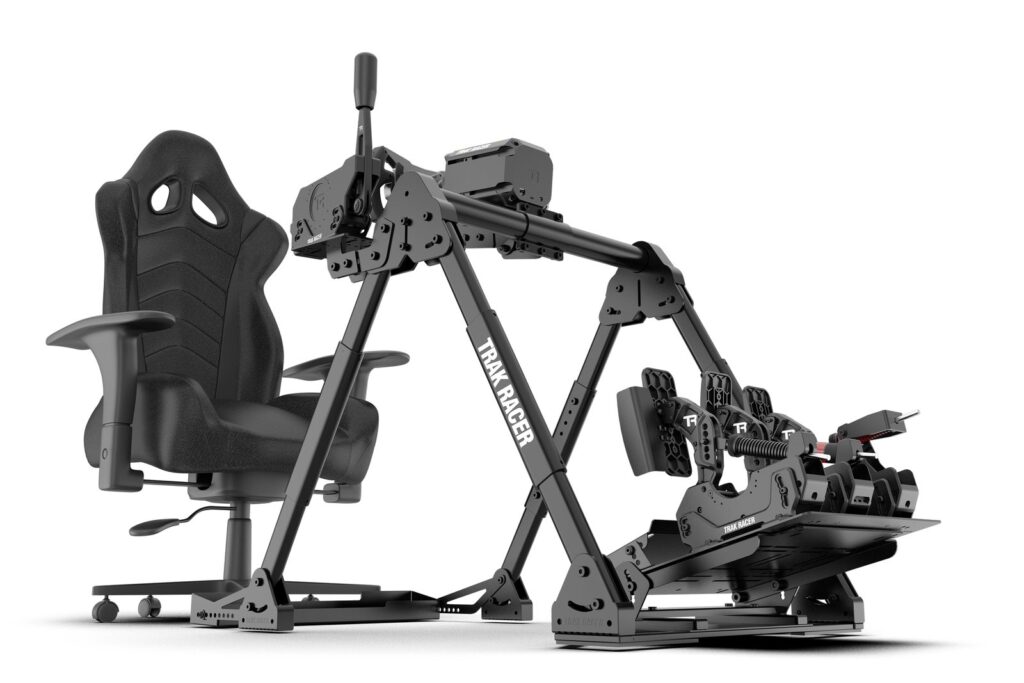
The better wheel stands barely bend – it’s the whole stand and your office chair that move instead. Karl Gosling ran a Fanatec CSL DD at 8 Nm on a GT Omega DD-X and saw no visible flex in the frame, but he could lift the front of the stand with two fingers. Nm (newton metres) is the unit for the twisting force a wheelbase can put through the wheel. A direct drive base has the wheel bolted straight onto the motor shaft, with no belt or gears. By Karl’s reckoning, a 30 Nm base would lift the stand the same way his two fingers did. He also had to cap his load cell brake at about 60 percent, or his chair lifted backwards out of the stand’s chair link.
Danny Lee ran a 20 Nm VRS DirectForce Pro at full power on the same stand and felt “virtually zero wobble” while driving, though his camera did pick some up. The chair twisting was the real limit, so he turned his brake down from 80 to 50 percent. Ermz was a lot blunter about a Fanatec DD1 on the original Next Level Racing Wheel Stand. It felt rubbery, the whole assembly flexed on counter-steer, and he pushed his chair back under braking. His verdict was “don’t do it”.
Folding cockpits flex at the fold
A folding cockpit has the seat built in, so the weak point moves to the fold. Sim Tourist lined up the Playseat Challenge DD, the GT Omega Sprint and the Playseat Challenge X, and found the Challenge X’s wheel holder flexes mainly through its folding mechanism, which gets frustrating with a mid-range direct drive base like the Logitech RS50. Under hard braking he lifted the front feet of the Sprint and, less so, the Challenge X. In another of his videos he found the wheel holders on the Next Level Racing GTLite Pro and the Challenge X both flex “quite a lot”, from the mechanism that lets you get in and out.
The Challenge DD was the most rigid of his three, and even that one moves under a hard enough brake. OverTake ran one with an 8 Nm base and 100 kg load cell pedals, and full braking pushed the whole seat up off its wheels. In OverTake’s words, the tension clamp on the wheel deck “will never be 100% stiff”. Playseat doesn’t recommend direct drive on its Challenge and Challenge X models in the first place.
What flex does to the feel
I measured the flex of my old pedal base (attached to an RSEAT RS1 cockpit), and it was around 4 degrees at a 25kg brake force. Frankly, my Heusinkveld Sprint pedals could handle more load than the pedal base on that rig was designed for, which is why it was flexing. But if I’d been using Thrustmaster or Logitech pedals, there’d have been no flex at all, because the brake force would be perhaps a fifth of the brake forces required for the Sprints.
It’s the same for your wheelbase mounting. If your rig is not robust enough to handle the forces a direct drive wheelbase puts through it, the frame that supports the wheelbase will flex too. Flex takes away the mechanical feeling of the equipment and the feedback you get in return. It seems the manufacturers have kind of got that message, and they’re building much stiffer rigs now.
What do the makers say a stand can handle?
Most of the makers publish a torque rating for each stand or cockpit, or say plainly that they don’t recommend direct drive on it, and we’ve set them out in the table below.
| Stand or rig | Type | Folds? | The maker’s own torque guidance |
|---|---|---|---|
| Trak Racer FS3 V2 Wheel Stand | Wheel stand | Yes | 0 to 5 Nm recommended |
| Next Level Racing Wheel Stand 2.0 | Wheel stand | Yes | No Nm figure; turn high-torque bases down if they vibrate |
| GT Omega APEX | Wheel stand | Yes | 12 to 15 Nm |
| Playseat Challenge / Challenge X | Folding cockpit | Yes | Direct drive not recommended |
| Playseat Challenge DD (F1 Edition) | Folding cockpit | Yes | Direct drive support claimed, no Nm figure |
| Next Level Racing F-GT Lite | Folding cockpit | Yes | CSL DD 5 and 8 Nm listed; DD1, DD2 and the bigger Moza bases not recommended |
| Trak Racer TR40S | Aluminium profile frame | No | 0 to 10 Nm |
| Trak Racer TR80S | Aluminium profile frame | No | 0 to 16 Nm |
| Trak Racer TR120S V2 | Aluminium profile frame | No | 0 to 30 Nm and up |
| Sim-Lab GT1 Evo | Aluminium profile frame | No | No Nm figure; “more than enough rigidity for most wheels” |
| RCP Cockpit PRO | Aluminium profile frame | No | No Nm figure; Fanatec DD1 and DD2, Simucube 2, VRS and OSW bases supported |
Where the makers give a number at all, the stands and folding cockpits in the table top out somewhere between 5 and 15 Nm. Trak Racer rates its aluminium profile frames from 10 Nm up to 30 Nm and beyond. None of the makers or reviewers we’ve read publishes a measurement of how far these rigs deflect, so the ratings and the reviewers’ findings are what we have to go on.
Without wanting to dwell too much on flex, you do need to consider whether you’re going to upgrade your pedals. If the answer is yes, you need to decide if you’ll upgrade the rig at the same time, or just buy the stiffer rig now and save the hassle later on. The indisputably best material to prevent flex is extruded aluminium, the square, boxy-looking material. It might not look as pretty to the untrained eye, but the experienced sim racer will go for it every time. Trak Racer, Sim-Lab and RacingCockpits, below, all build with it.
Trak Racer TR40S and TR80S – best value
The Trak Racer TR40S is the cheapest of the rigid frames we’d recommend instead, so if you’re coming off a stand, it’s the first one to look at. It’s an aluminium profile frame you bring your own seat to, Trak Racer rates it for 0 to 10 Nm, and it covers 660 x 1200 mm of floor. At the time of writing, in October 2026, it’s USD 349.
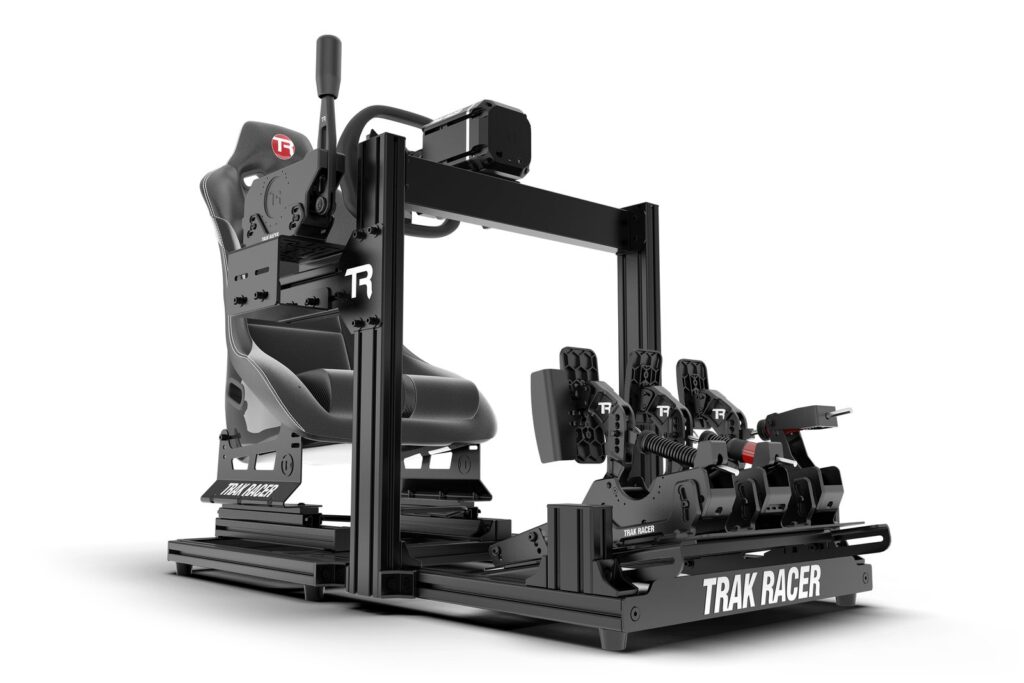
If your base is over 10 Nm, or will be after your next upgrade, the Trak Racer TR80S moves up to 80×40 profile on the same footprint and is rated for 0 to 16 Nm. For a big direct drive base, the TR120S V2 steps up again to 120×40 profile, comes with a seat slider kit and is rated for 0 to 30 Nm and up. The rest of the range is in our Trak Racer buyer’s guide.
We couldn’t find anyone who’s reviewed the TR40S or the TR80S. OC Racing did test a similar rig, the 6Sigma 6S-Slim (a cheap 40-series aluminium profile frame), with a 12 Nm base at full output. He saw only relatively minor flex, and reckoned it’s probably the best performance for the money against the foldables. For lower budgets, it’s still better to go with an 8020 style extruded aluminium chassis if you can!
Sim-Lab GT1 Evo – a high-end rig on a tight budget
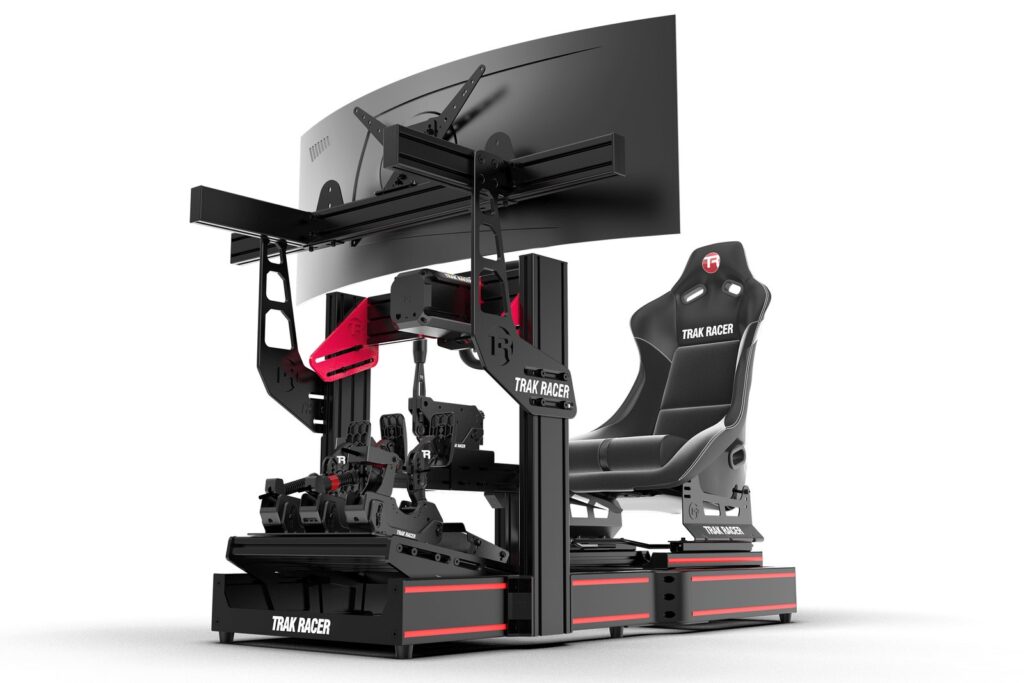
The Sim-Lab GT1 Evo is an aluminium profile rig with the seat as an option, and the less expensive sibling of the P1X Pro. We recommend it when you’re building a “high-end” rig on a tight budget, mostly because you probably won’t need to replace it with higher torque equipment!
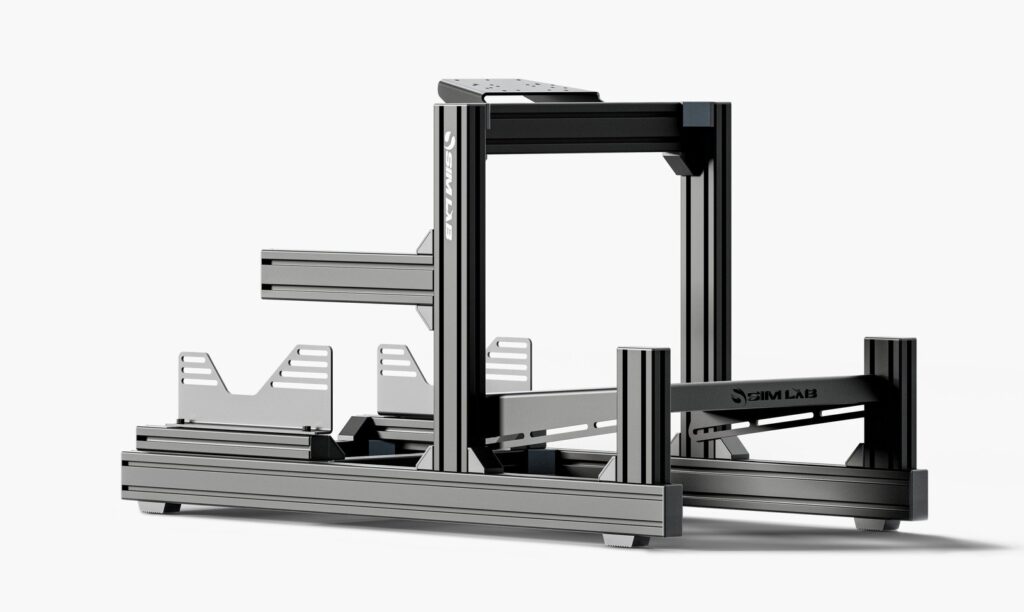
Sim Tourist found that everything on it “feels very solid”, the pedal base doesn’t move at all, and flex at the wheelbase holder is negligible. Sim-Lab doesn’t publish an Nm figure for it, only that it has “more than enough rigidity for most wheels”. Its direct drive upgrades, like the Front Mount EVO, are sold separately. If you’d rather have a front-mount bracket in the box, the GT1 Pro is the step up.
My own test rig, where review kit gets bolted on, is Sim-Lab’s P1X Pro. I’ve said before that if budget is less of an issue, the original P1-X is probably going to be the last cockpit you need for a very long time. Our Sim-Lab buyer’s guide covers the full range.
Sim-Lab discount code: use SIMRACINGCOCKPIT at checkout for 5% off at sim-lab.eu.
RCP Cockpit PRO – for the bigger direct drive bases
The RCP Cockpit PRO is the rig here for someone already running a big direct drive base, or saving for one. It’s built from 8020 aluminium extrusion, with the wheel deck and the pedal plate in A572 steel. Before you look at that pedal plate and think “that looks thin” – trust me, it will not flex!
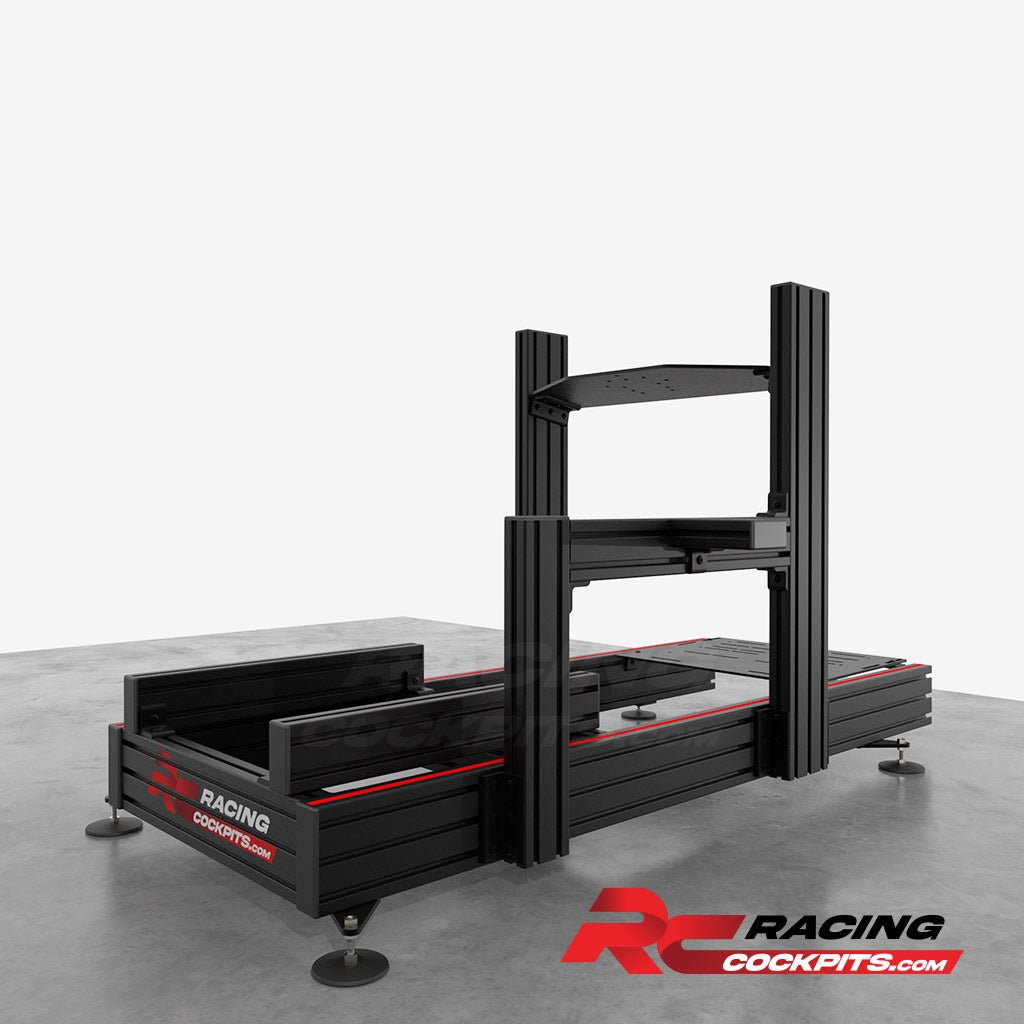
RacingCockpits lists it for Fanatec DD1 and DD2, Simucube 2, VRS and OSW bases. There’s no published Nm rating for the frame itself. You can buy it on its own, or with a racing seat if you’d rather not source one separately. Overall we really like RCP and the way they look after their customers.
RacingCockpits discount code: use SRC15OFF at checkout for 15% off at racingcockpits.com.
If you must fold it away
A stand is a compromise, and it suits a belt or gear-driven wheel, or a direct drive base run at around 5 Nm. If that’s you, the Trak Racer FS3 V2 Wheel Stand folds, with a tray for the office chair’s wheels and three height stages. Trak Racer’s own table recommends 0 to 5 Nm for it, and we’d take the maker at its word on that.
For a folding cockpit with a direct drive base, the Playseat Challenge DD came out the stiffest in Sim Tourist’s three-way test above. Next Level Racing lists the Fanatec CSL DD at 5 and 8 Nm as compatible with its F-GT Lite, but says Fanatec’s DD1 and DD2 and Moza’s R16, R21 and R25 Ultra “can mount but not recommended”.
Reviewers who lived with a stand made it work by holding the chair still and backing the brake off. Danny Lee would strap the chair in for longer sessions, and The Simpit belted his chair to the stand after his hydraulic brake slid it back. To be fair to the stands, ADAPT Network tested the Next Level Racing Wheel Stand 2.0 with a Thrustmaster TX, found little flex, and thinks a 5 to 8 Nm CSL DD should be fine on it if it isn’t turned right up.
Short on space? Rigid rigs that fit
The Trak Racer FS3 V2 stand covers 584 x 895 mm of floor, and you still need room for the chair behind it. The Trak Racer TR40S covers 660 x 1200 mm, and the Sim-Lab GT1 Evo 580 x 1350 mm. A Next Level Racing F-GT Lite folds down to 750 x 400 x 870 mm, but in the GT position you drive in, it covers 750 x 1750 mm. So a folding rig saves you cupboard space when it’s put away, not floor space while you’re driving.
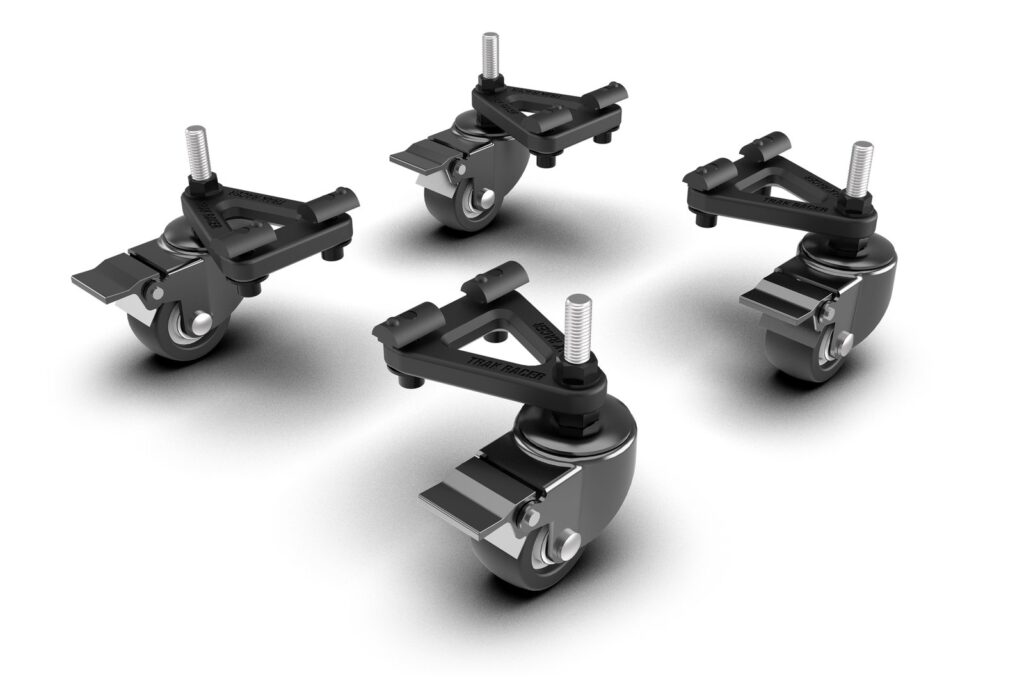
If the real problem is that the rig has to live against a wall between sessions, castors are another way round it. Trak Racer sells a braked castor kit (four castors, each rated to 60 kg) that fits its aluminium frames, the TR40S, TR80S and TR120S included, so the rig can roll to the wall and lock in place. As far as we know, no reviewer has put a castored rig through a flex test yet.
Which wheels, pedals and consoles suit a stand?
Whether a stand will cope with your kit mostly comes down to the brake, for the same reason my old RS1 would never have flexed with Thrustmaster or Logitech pedals. A belt or gear-driven wheel on its stock pedals is fine on a stand, and so is a direct drive base kept inside the maker’s rating in the table above.
Once you’re on load cell pedals or a direct drive base above about 10 Nm, it’s time for a proper rig. Trak Racer only rates the TR40S to 10 Nm, so past that it’s the TR80S or bigger. The Trak Racer frames don’t come with a seat, and it’s an extra on the GT1 Evo too, so budget for one. There’s plenty to choose from in our seat guide. As for consoles, the rig doesn’t care whether the wheel is talking to a PS5, an Xbox or a PC. If you’re racing on a PlayStation, our PS5 sim racing buyer’s guide covers which wheels work with a PS5.
If you can hold off for a few weeks, it may be worth waiting for Black Friday. Trak Racer ran 15 percent off all its own products through November 2024 and had a Black Friday collection again in 2025, and Sim-Lab ran 11 percent off site-wide last Black Friday. RacingCockpits’ code works all year. Nobody had announced anything for 2026 at the time of writing, and our Black Friday page is where it’ll go when they do.
Our full sim racing cockpit guide covers the wider range of rigs. I’ll see you out on track!
Related Articles
Sim Racing Wheel Stands and Folding Cockpits: Why I’d Skip One, and What to Buy Instead
Sim-Lab P1-X Pro Cockpit Review: First Impressions
The Best Sim Racing Cockpits: Our Ultimate Rig Comparison
What are the Best F1 Cockpits and F1 Sim Rigs?
Testing the RSR-21 Cockpit from Rock Solid Rigs
Topic: Sim Racing Cockpits