

I’m a sim racer and amateur racer with a passion for Motorsport, good racecraft and the technical and setup aspect of sim racing.
Featured Image: Pimax Dream Air SE SLAM
We’re all waking up to the news about Steam’s newest VR headset – the Steam Frame. So today I’m going to look at what the wider community has to say about it, a compilation of all the discussion, set against my current favourite: the Dream Air. I feel fortunate to have owned the Valve headset some years ago; at the time it felt like a huge leap forward on the specifications and comfort levels we now take for granted.
So, what have Steam been up to, does it compare to the Dream Air, and on reflection am I still happy with my now well-tuned Dream Air? I’ll grab all the specs and come to my own conclusion. The short answer, before we start: the Frame hasn’t moved me off it. These are different tools for different buyers.
Quick Navigation
Jump directly to what you’re looking for:
The short version | What is the Steam Frame? | Where the Dream Air sits | The picture | Wireless or wired? | Weight and comfort | Price and who it’s for | So, am I switching?
The short version
The Steam Frame is a Steam-ecosystem device for gamers who want mobility. That battery, that untethered freedom – it isn’t something I need. I stay connected and static in my racing seat, and I have done for years. For a Quest 3 owner who’s more into general gaming and VR applications, the Frame is the high-end upgrade to reach for, and I can see the appeal clearly enough. But for what I do it doesn’t change the maths. I’m sticking with the Dream Air: better picture, lighter on the head, and now so well embedded in my simulator that pulling it out would feel like a step backwards.
What is the Steam Frame?
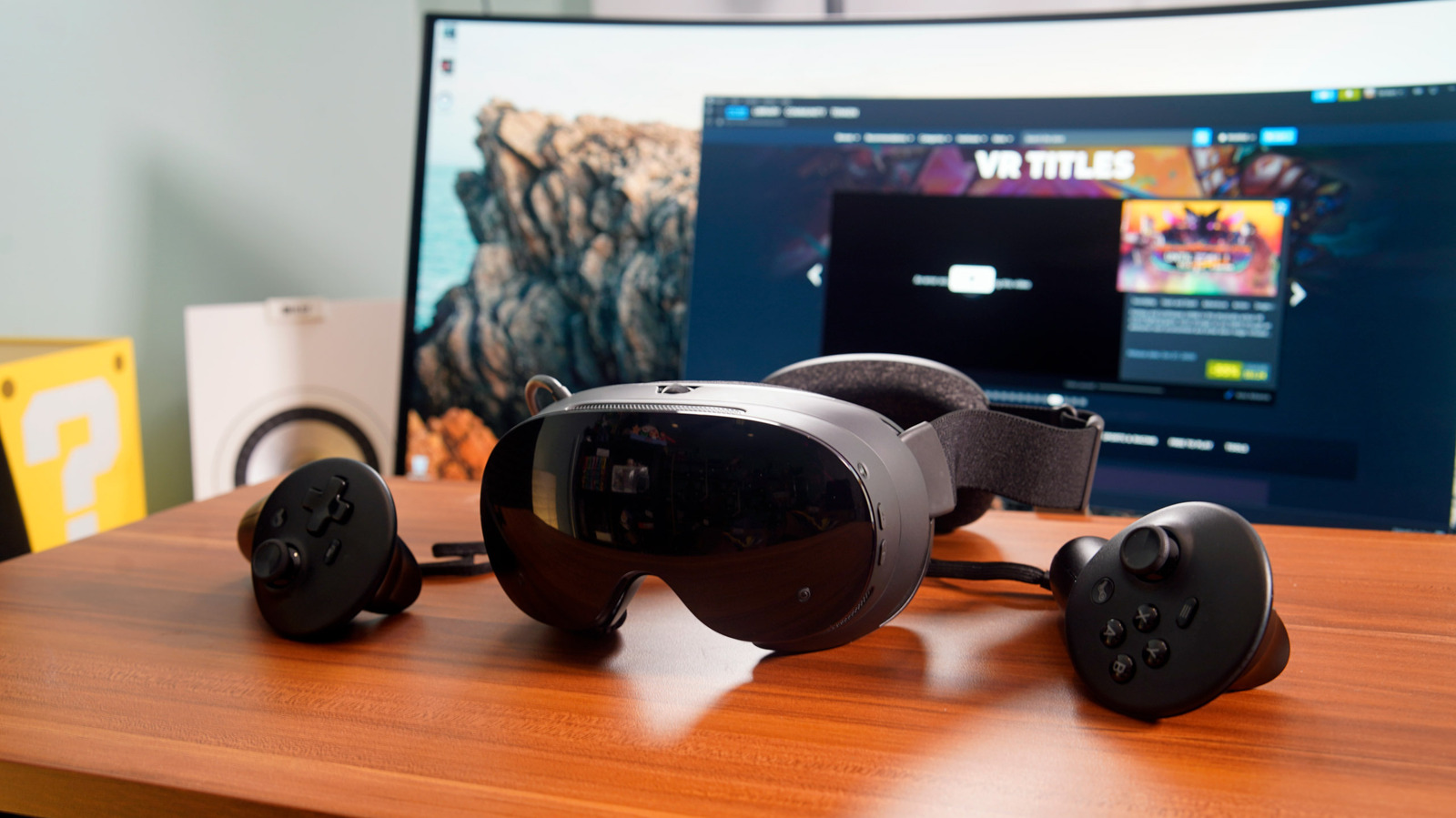
The Steam Frame is a streaming-first standalone headset – SteamOS running on a Snapdragon 8 Gen 3 with 16GB, so it can play lighter titles off its own chip, then stream the heavy PC games over a dedicated 6GHz Wi-Fi dongle. The panels are LCD at 2160×2160 per eye through pancake lenses, 72 to 144Hz with the top end flagged as experimental. There’s eye tracking driving foveated rendering and, more interestingly for us, foveated streaming. It weighs 440g assembled, though the visor itself is a slight 185g with the rest in the strap and battery. Roughly two hours on a charge, less under load. Passthrough is black-and-white. Half-Life: Alyx is in the box. It starts at $1,059 for 256GB and $1,299 for a terabyte.
The reception has been mixed, and it’s worth reading before you spend the money. Engadget scored it 6.5 out of 10 and called a $1,059 headset today “madness”. Gamers Nexus landed on “good at everything, best at nothing”. CNET framed it as “frustrating and fascinating”, an experiment in progress. Linus and the LTT crew were lukewarm too: ghosting, chromatic aberration, awkward controller buttons, and that monochrome passthrough as the biggest letdown, with a general sense the thing has arrived a little late. The one thing nearly everyone praises is the wireless streaming. It works.
If the Frame is the headset for you, it sells through the Steam hardware store.
Where the Dream Air sits in my rig
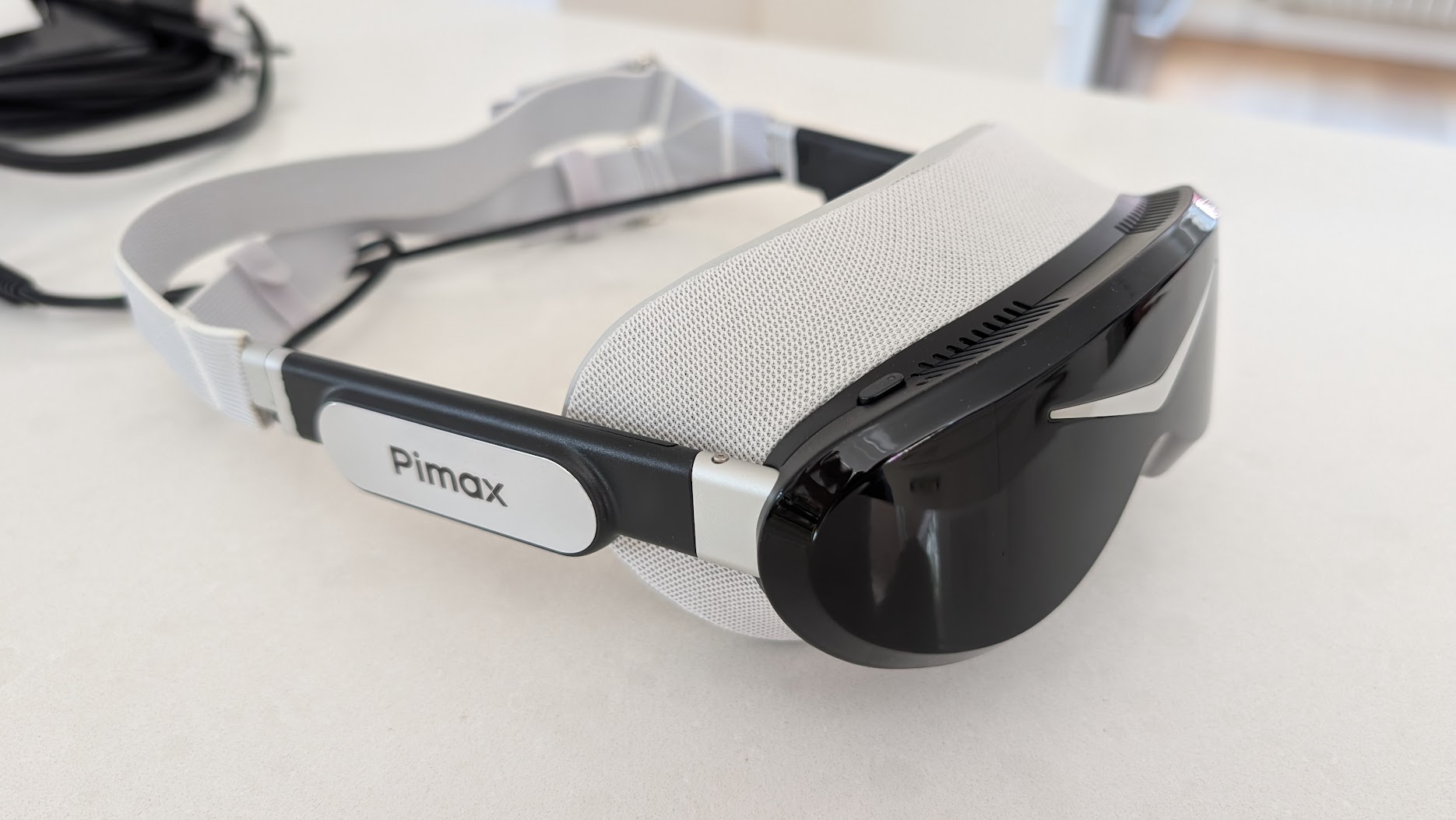
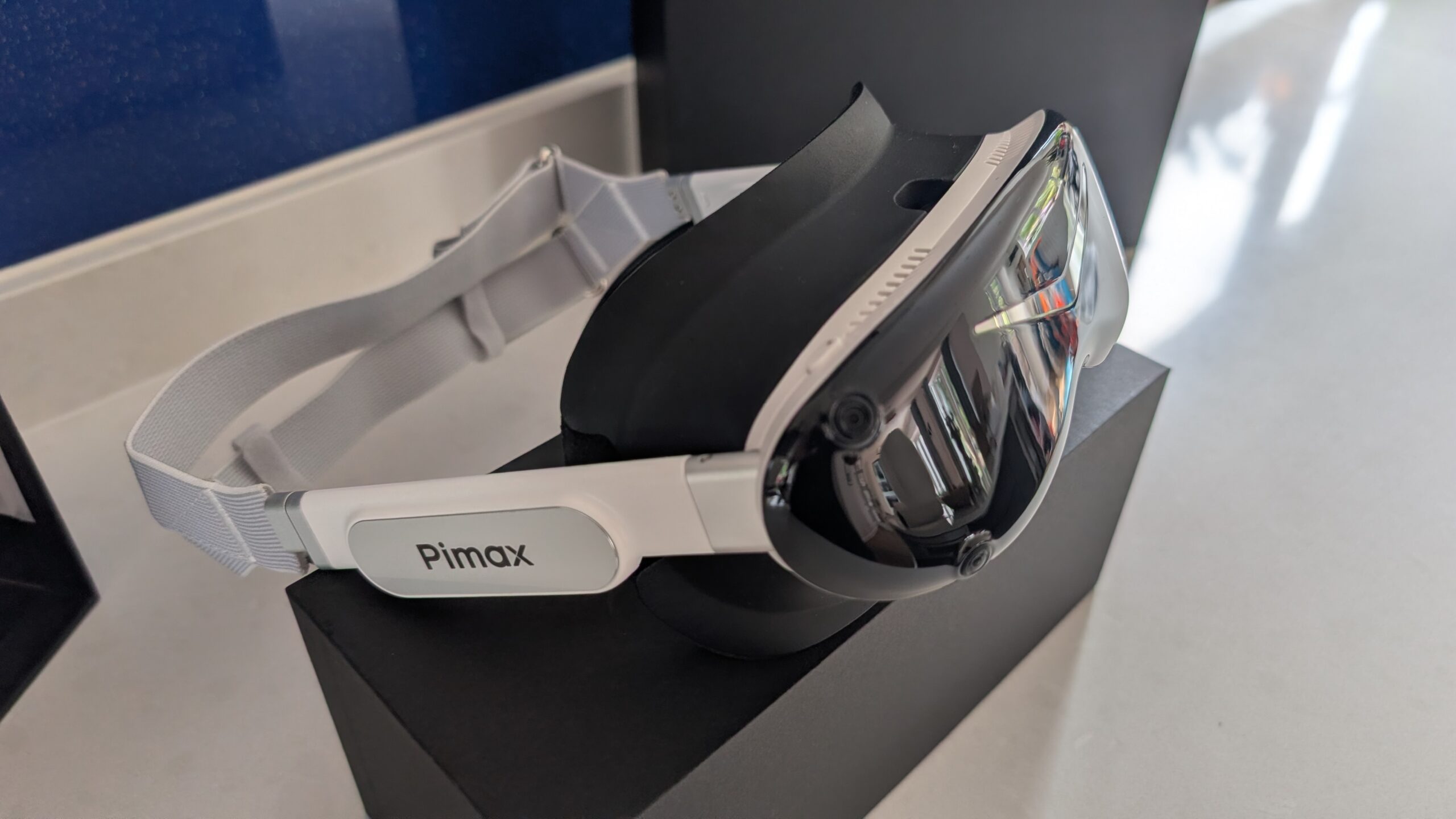
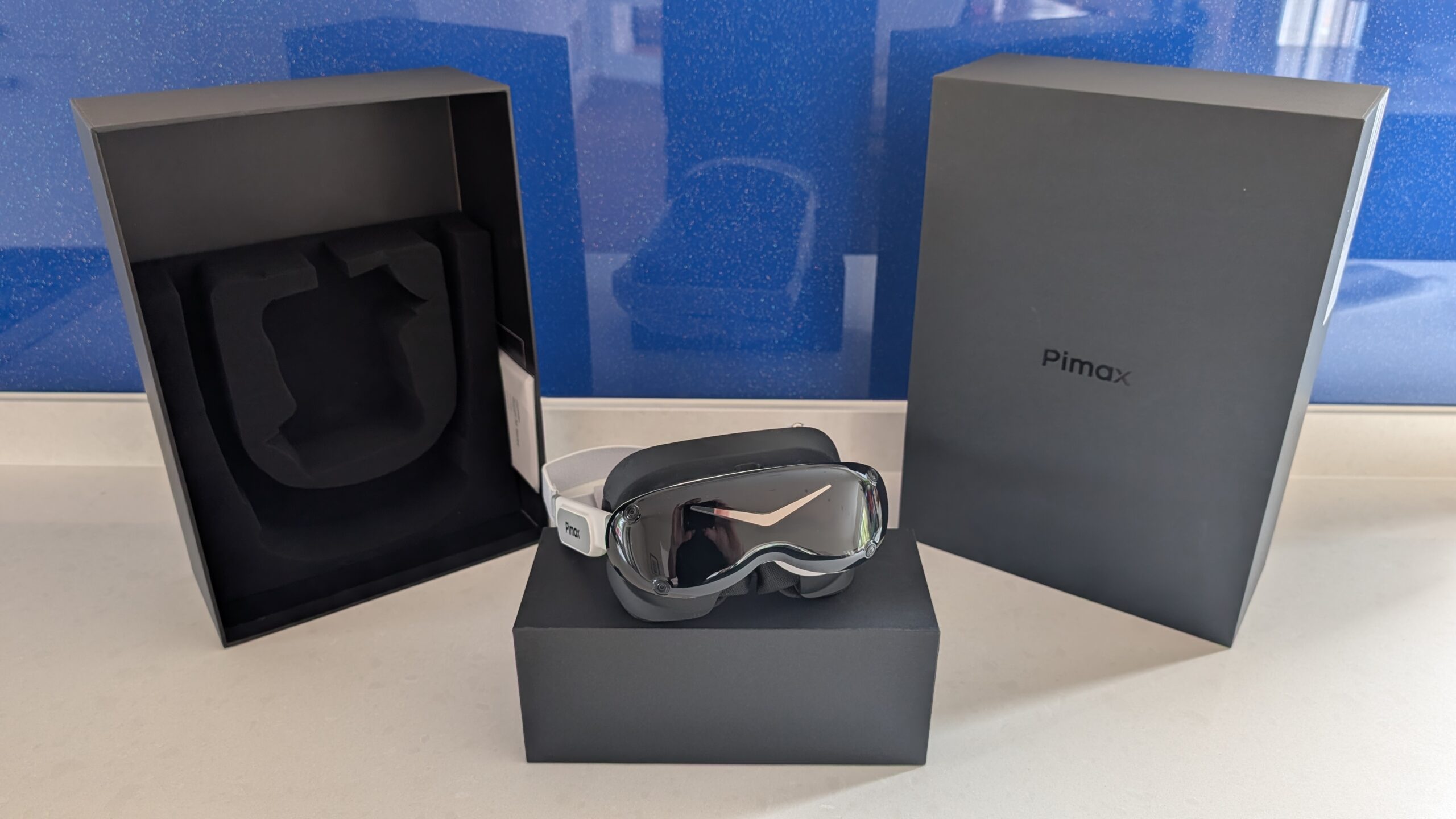
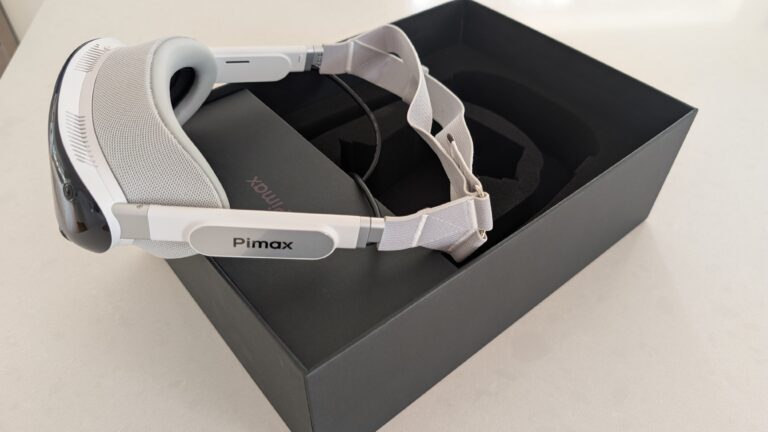
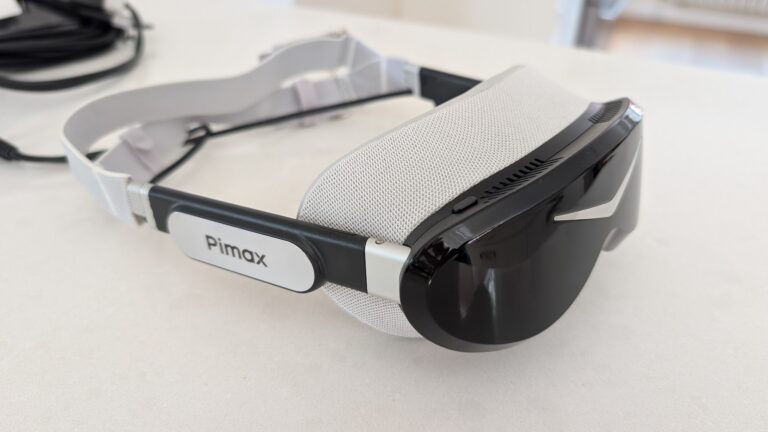
My Dream Air has been on the rig long enough now that I’ve stopped thinking about it. It’s the SLAM edition, and I run it at 90Hz. The specs still make me smile when I say them out loud: Sony micro-OLED, 3840×3552 per eye, under 170g for the visor and around 300g on your face all in, fed by a 5m split DisplayPort cable. I’ve written it up twice already, the flagship and then the SE, so I won’t relitigate the whole thing here. What matters for this comparison is simple. The OLED picture is the best I’ve raced with, and the weight changes how the headset feels on track. You forget it’s there, which for a VR headset is about the highest compliment I can pay.
Buying a Dream Air? It’s sold direct at Pimax, and our reader code SIMRACINGCOCKPIT takes 2% off, or SIMRACINGCOCKPIT25 knocks $25 off any Pimax headset.
The picture: clarity and contrast
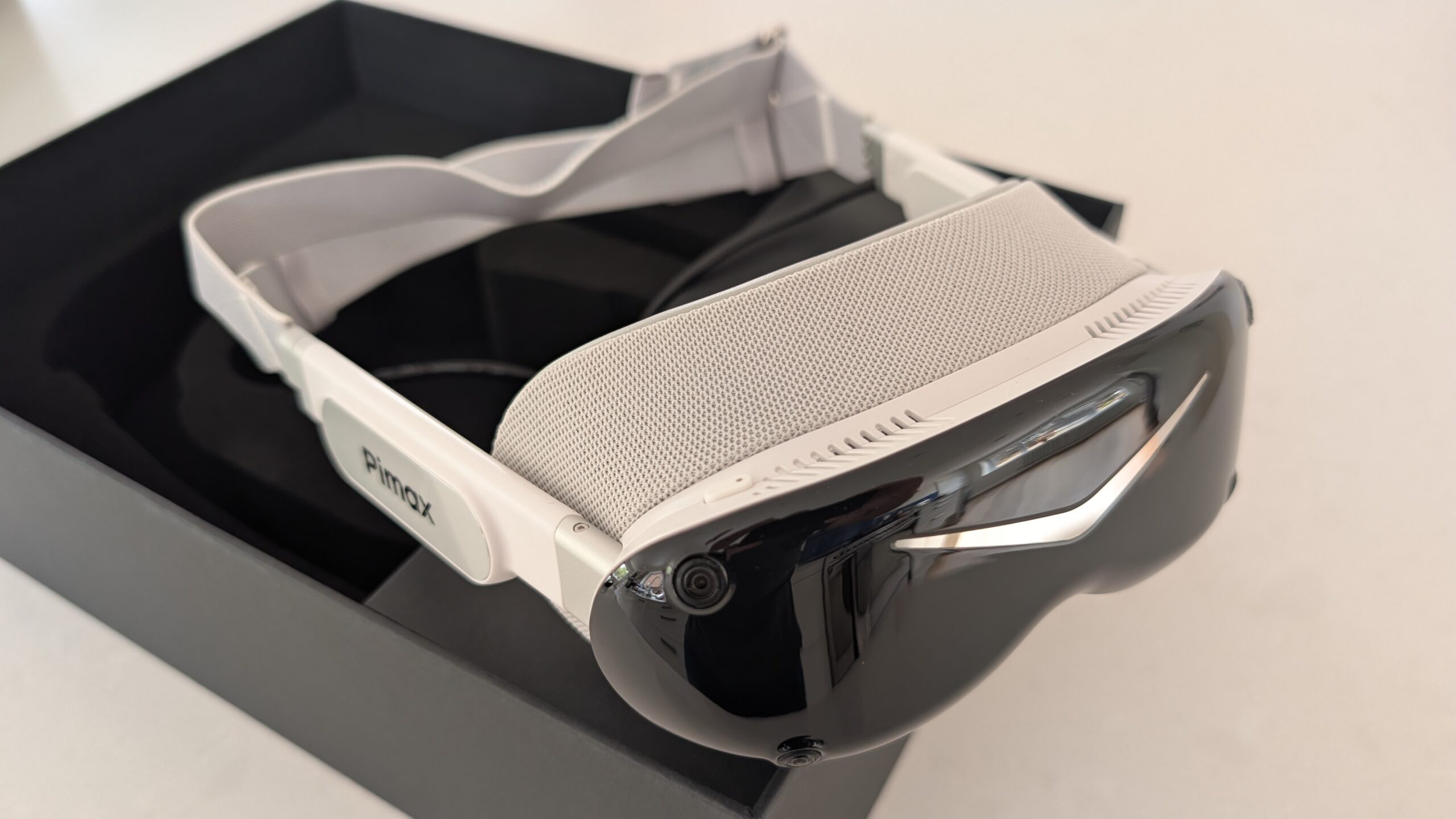
This is where the gap is widest, and it isn’t close. Start with the raw pixels: 3840×3552 of micro-OLED per eye on the Dream Air against 2160×2160 of LCD on the Frame. Then put the panel technology on top of that. OLED gives you true black where an LCD gives you a lit-up grey. Engadget were blunt about the Frame – “noticeably less sharp”, jagged edges, “muddier” textures, and no way to match micro-OLED contrast.
For sim racing specifically, that contrast is the whole game once the sun goes down. One engineer’s first-impressions piece on YouTube put it better than I could: with the micro-OLED, a dark cockpit becomes a scene that actually contains darkness rather than grey fog, night racing turns spectacular, and dashboard text and brake markers stay readable. He’s a triple-4K-OLED monitor user, and he said this was the first compact headset where he didn’t feel he was giving up his usual clarity. That tracks exactly with what I see from the seat.
VRFlightSimGuy, coming at it from flight sim, reckons micro-OLED “wipes the floor” with LCD for clarity and colour – though he’s fair about the SE’s pancake glare being its weak point, and the flagship I run has the better distortion profile.
| Spec | Steam Frame | Pimax Dream Air |
|---|---|---|
| Panel | LCD | Sony micro-OLED |
| Resolution per eye | 2160 x 2160 | 3840 x 3552 |
| Refresh | 72-144Hz (144 experimental) | 90Hz |
| Optics | Pancake | Pancake |
| Weight | 440g assembled (185g visor) | Under 170g visor / ~300g all in |
| Connection | Wireless (6GHz Wi-Fi streaming) | Wired, 5m DisplayPort |
| Tracking | Inside-out | SLAM inside-out (Lighthouse option) |
| Eye tracking | Yes, foveated rendering + streaming | Yes, foveated rendering |
| Passthrough | Black-and-white | Focused on tethered PC VR |
Two numbers decide this section: resolution per eye, and panel type. On both, the Dream Air isn’t a step up from the Frame so much as a different league. For reading an apex or catching a brake marker at distance, that’s the difference that counts.
Wireless freedom, or a wire that just works?
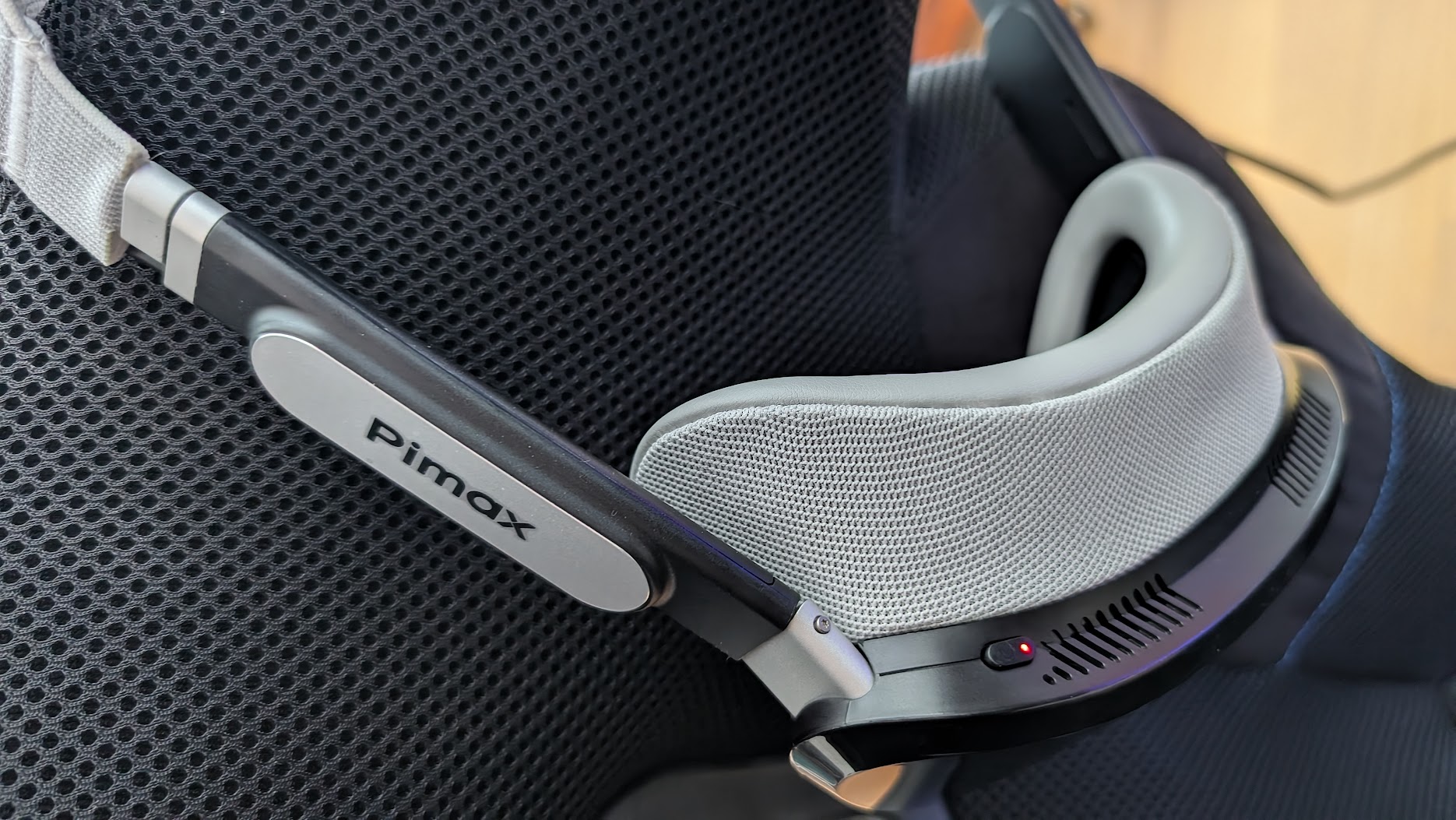
Here’s the one that actually splits the sim-racing community, and it’s the most interesting argument on the table. The Frame’s pitch is foveated streaming: it tracks your eyes, sends full detail only where you’re looking, and cuts the bandwidth and latency that usually make wireless a non-starter. People on r/simracing reckon total Wi-Fi latency lands around 10ms, and some would happily take that for iRacing at 120Hz and above. That’s a real position, and I’m not going to wave it away.
The counter-argument is about how the image gets to your eyes. The wired Dream Air uses DisplayPort with DSC, display stream compression, which is visually lossless and low latency – the same link a 240Hz monitor runs. Wireless streaming instead pushes each frame through a video codec, H.264 or HEVC or AV1, and decodes it in the headset. As that same engineer put it, that codec artifacts in difficult scenarios, and sim racing is nothing but difficult scenarios: fences, foliage, asphalt texture, tiny moving objects, fast head movement, all the things video compression hates most.
For me, sat still in a fixed rig I never carry anywhere, the wireless win is a win I don’t need. I’ll take the clean wired signal every time. But I want to be straight about the edge of my own knowledge here. Foveated streaming is new, it’s clever, and it may well close more of the clarity gap than the sceptics expect. I haven’t worn a Frame, so on that exact question I genuinely can’t tell you yet.
Weight, comfort and living with it
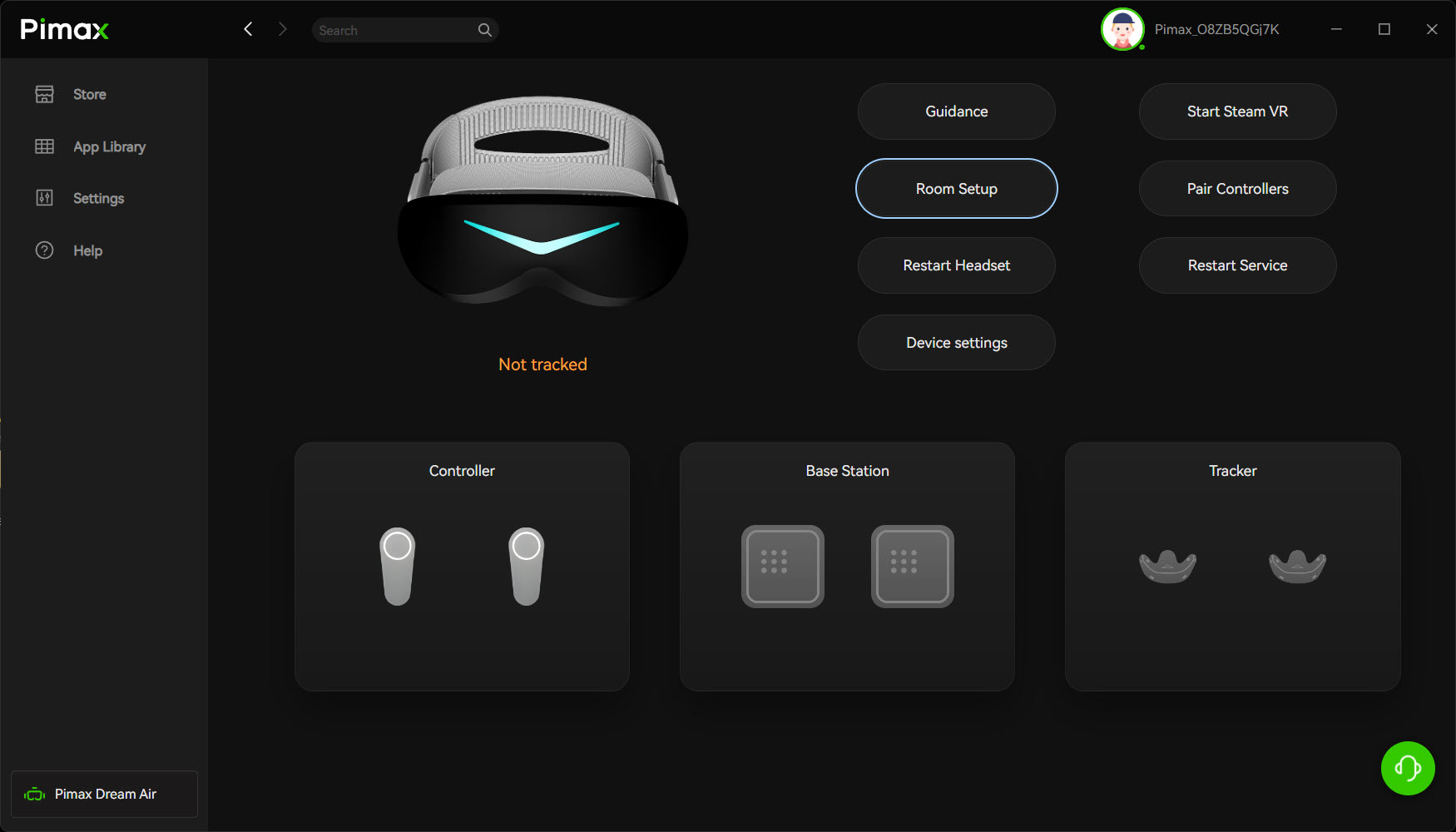
Weight is the other place my Dream Air quietly wins for what I do. Under 170g on the visor, around 300g all in, against the Frame’s 440g. On track that matters more than it sounds – a light headset lets you turn your head naturally into a corner instead of feeling the mass lag behind you.
What reviewers report is a split: Engadget found it comfortable without glasses, since the rear battery balances the front weight, but noticeably less so with them on. Pimax, for their part, carry a long-standing reputation for a QC lottery, teething units, waits, the occasional horror story, though owners say support has improved markedly of late. Valve’s polish and the tight SteamOS integration are the other side of that coin, and worth saying plainly. My SLAM tracking, for what it’s worth, is completely fine for seated racing. You’re sat still, so the inside-out solution has an easy job.
Price, and who each one is for
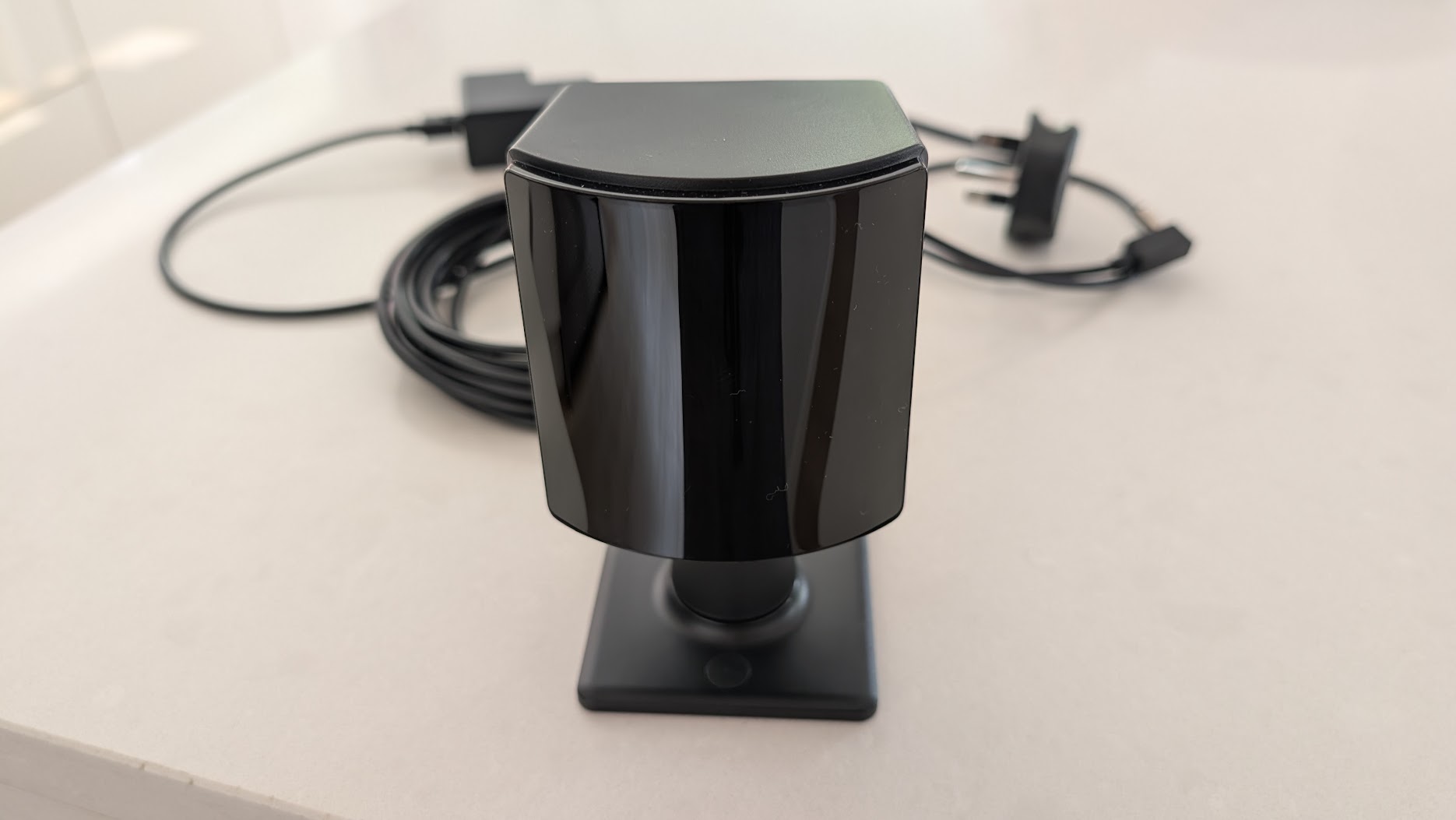
On paper the Frame is the cheaper ticket: $1,059 for 256GB or $1,299 for a terabyte, with Half-Life: Alyx thrown in. The Dream Air is a premium buy – $1,999 for the Lighthouse edition, $2,299 for the SLAM version with controllers. Neither is what you’d call cheap, and they’re answering different questions.
One useful tip if you’re coming from where I came from. If you owned a Valve Index, you’ve already got Lighthouse base stations sitting in the corners of your room, and you can buy the Lighthouse edition of the Dream Air and reuse them rather than paying for the SLAM bundle with its own controllers and tracking. That’s a real saving, and it’s close to the path I came up myself. So who is each one for? The Frame suits mobility, the Steam library on your face, and Quest 3 owners ready to trade up. The Dream Air is for the fixed rig where clarity is the point.
So, am I switching?
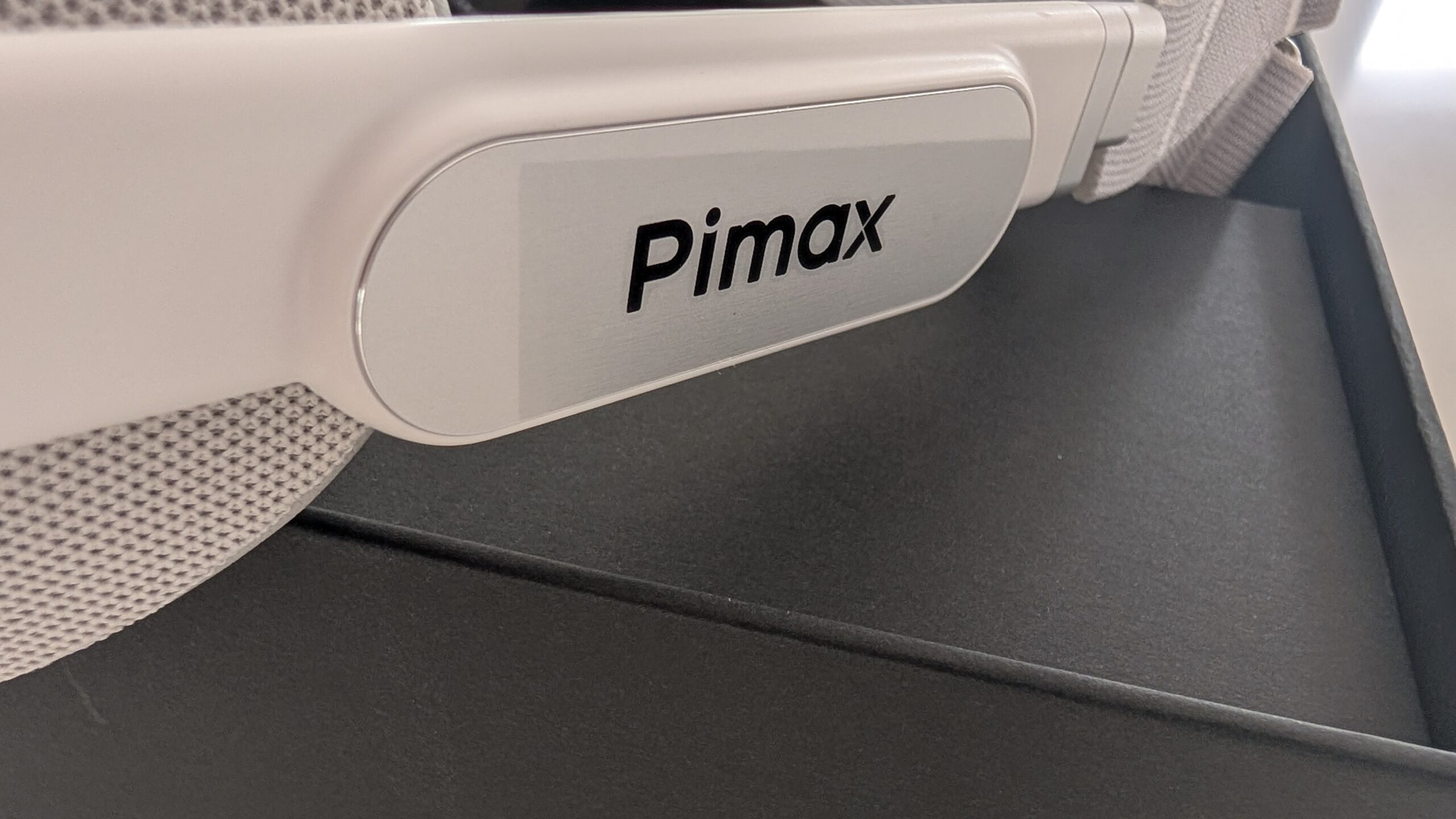
So, am I switching? No. Not because the Frame is a bad headset – it clearly isn’t, and I loved the Index in its day, so this was never going to be an anti-Valve piece. It’s that the Frame solves a problem I don’t have, and softens the one thing I care most about. The Dream Air stays put: the picture, the light weight, and the simple fact that it’s now woven into my rig the way only a headset you’ve lived with for months can be. Next time I drop into a night race and the trackside dark actually looks dark, I’ll know I made the right call, reaching for the same headset already sitting on my seat.
Related Articles
Should Sim Racers Wait for the Pimax Crystal Pro, or Buy Today?
Pimax Crystal Pro: Everything We Know So Far
Bigscreen Beyond 2 for Sim Racing: What to Know in 2026
Pimax Dream Air vs Dream Air SE: Which Should a Sim Racer Buy?
SteamVR Base Stations for Sim Racing: Lighthouse vs SLAM on the Pimax Dream Air
How to Install the SBoys3 Driver on the Pimax Dream Air Lighthouse
Topic: VR Headsets