

I’m a sim racer and amateur racer with a passion for Motorsport, good racecraft and the technical and setup aspect of sim racing.
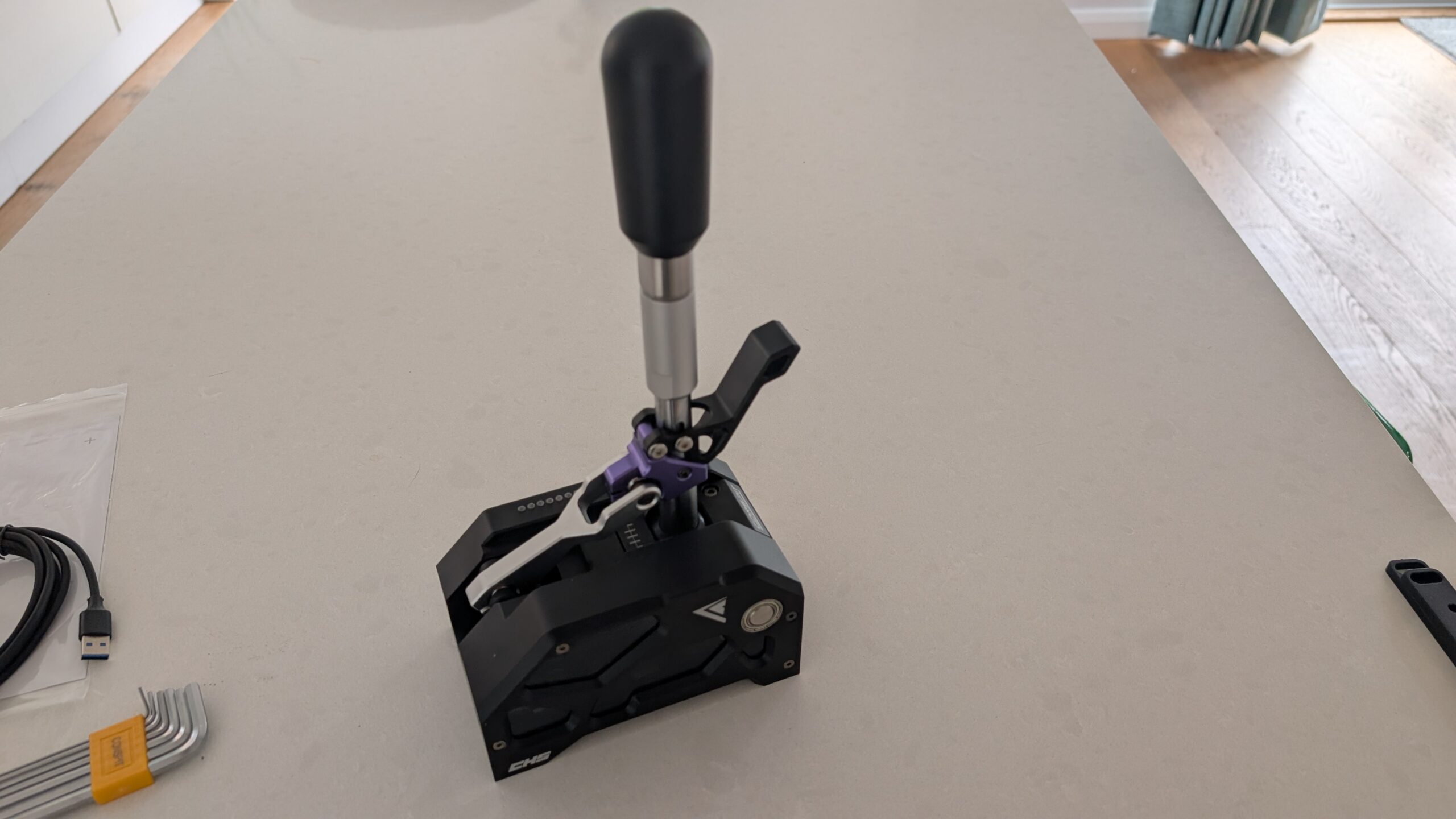
It’s been a little while since I last reviewed anything from CONSPIT. But to give you a frame of reference, I still run the CPP.Lite hydraulic brake pedal set that I reviewed several years ago. They’re quite a pure sim racing manufacturer; having watched them over the years, CONSPIT has a really firm approach to product design and development. I’m a fan and I’m excited to be (one of) the first people to get hold of their new CHS shifter.
Quick Navigation
Jump directly to what you’re looking for:
Verdict |
Unboxing |
The chassis |
In the box |
Specs |
Switching modes |
H-pattern |
Sequential |
Reverse lockout |
The window |
Software |
Fitting |
On track |
Where to buy |
Pros and cons |
Should you buy one?
First, the verdict
For any sim racing driver who values that manual, tactile input through either sequential or H-pattern (probably because you do track days, or maybe because you’re an amateur driver like me, or even a professional), this is easily one of the best shifters in sim racing, without a doubt. I’ll be updating my buyer’s guide as soon as the review embargo is ready.
Unboxing
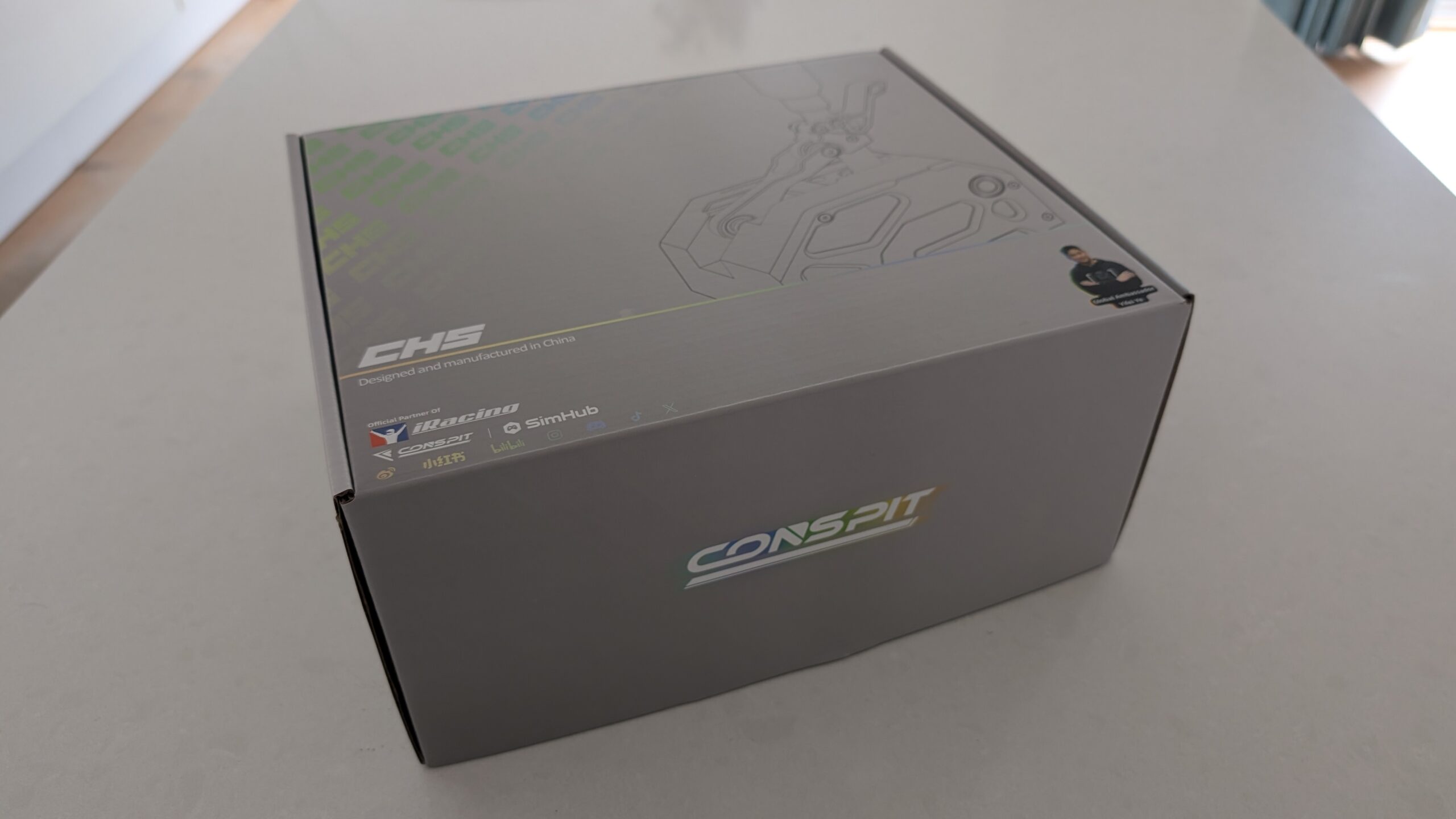
I’m delighted to see that their packaging has evolved – it’s such high quality. They’ve got a lovely printed box, and they still do a clear plastic sheet with beautifully illustrated imagery of the product.
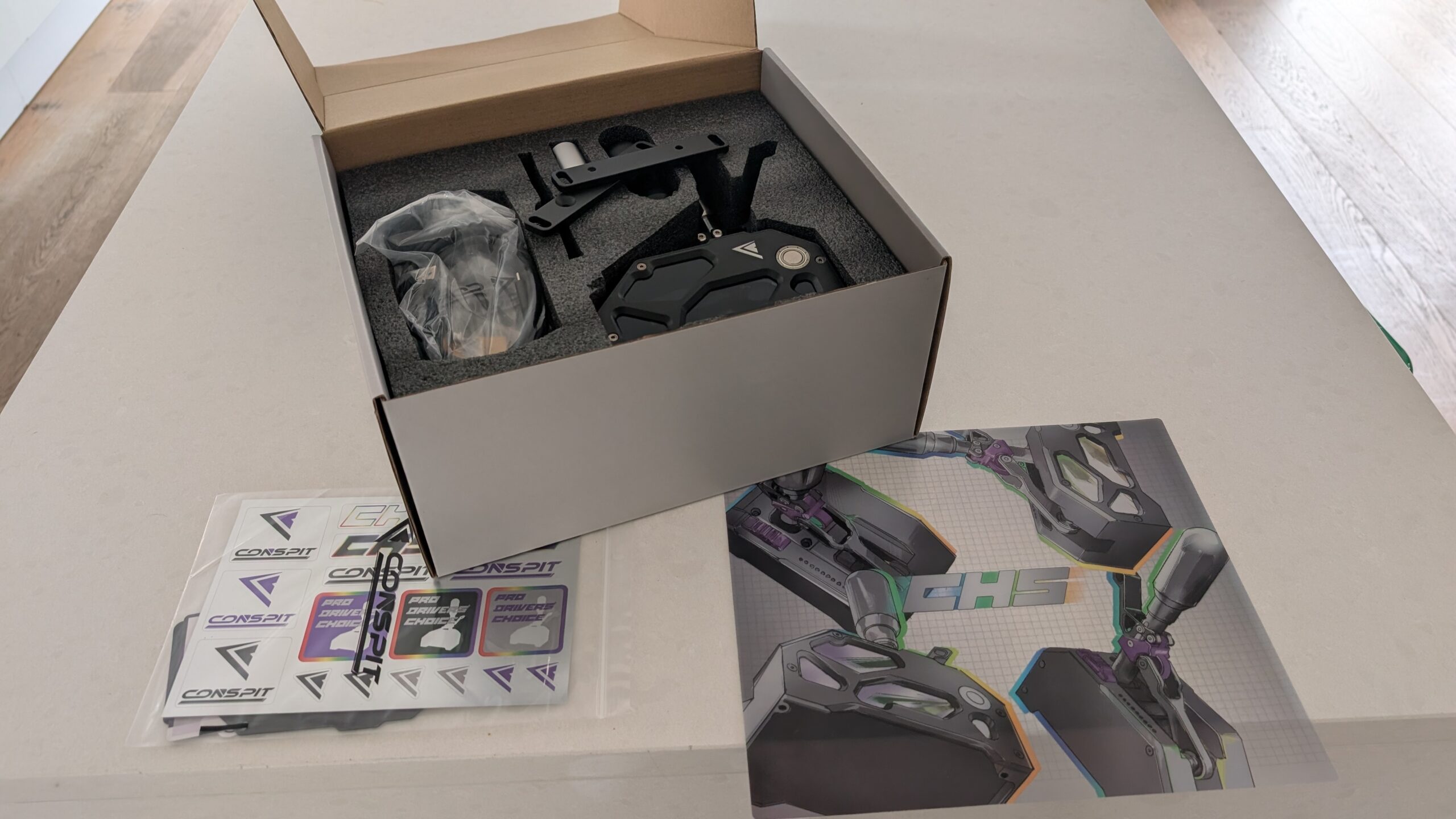
It is such a nicely made piece of kit.
How does the chassis feel?
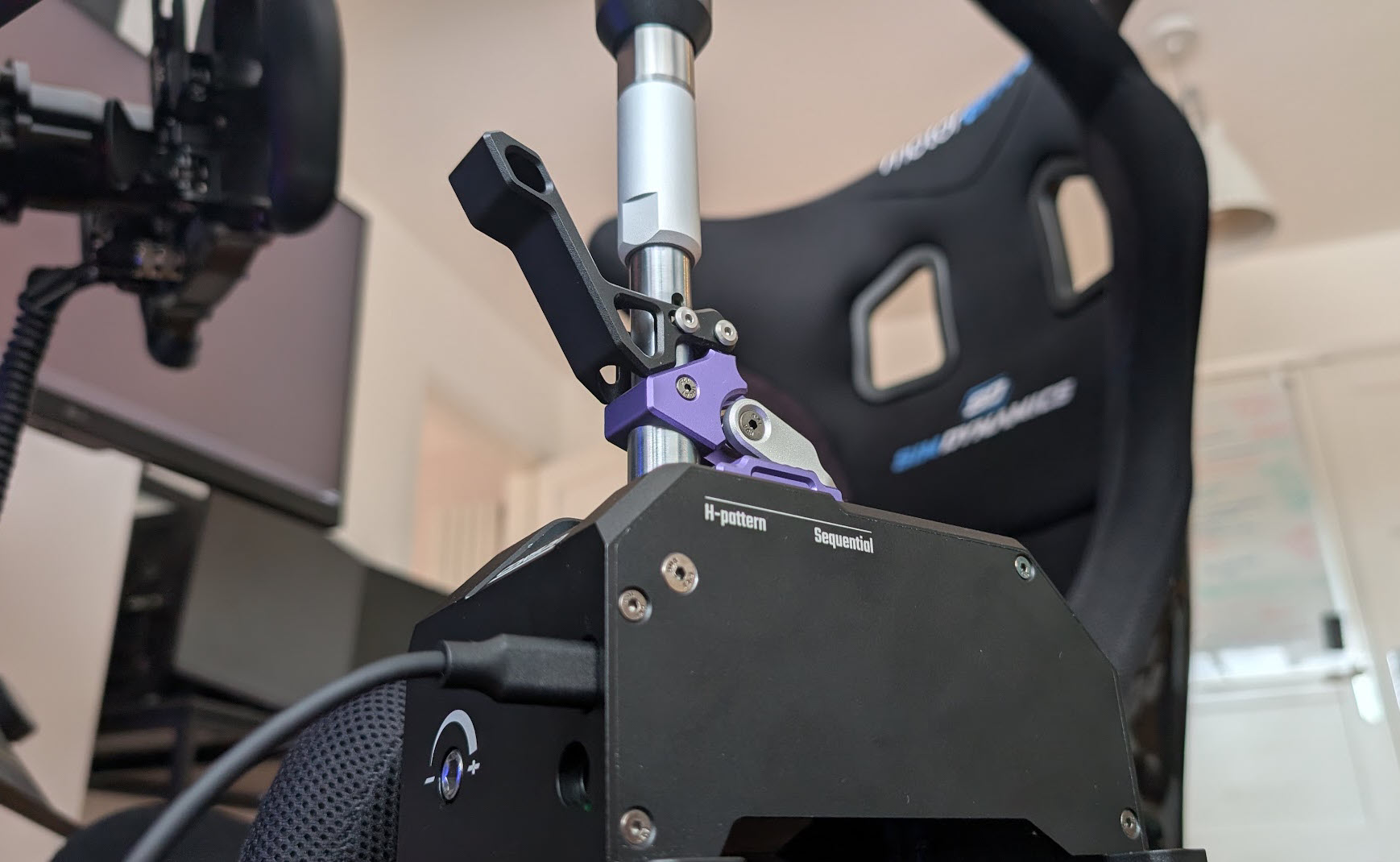
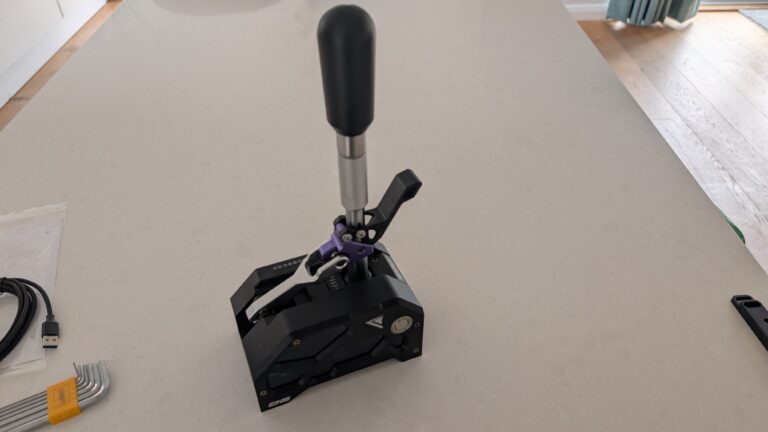
This thing is solid as a rock, and heavy. It is easily the nicest-made shifter we’ve had sent here so far and for what it’s worth has immediately replaced my Simagic DS-8X (my prior favourite). The anodising – that special purple anodising – is familiar to me because I’ve seen CONSPIT gear before. It’s weighty, but so nicely machined. Are there any sharp edges or anything like that? Absolutely not. This thing looks like it’s probably come out of a very expensive five-axis CNC machine: no tool marks, no seam gaps.
The hardware bundle
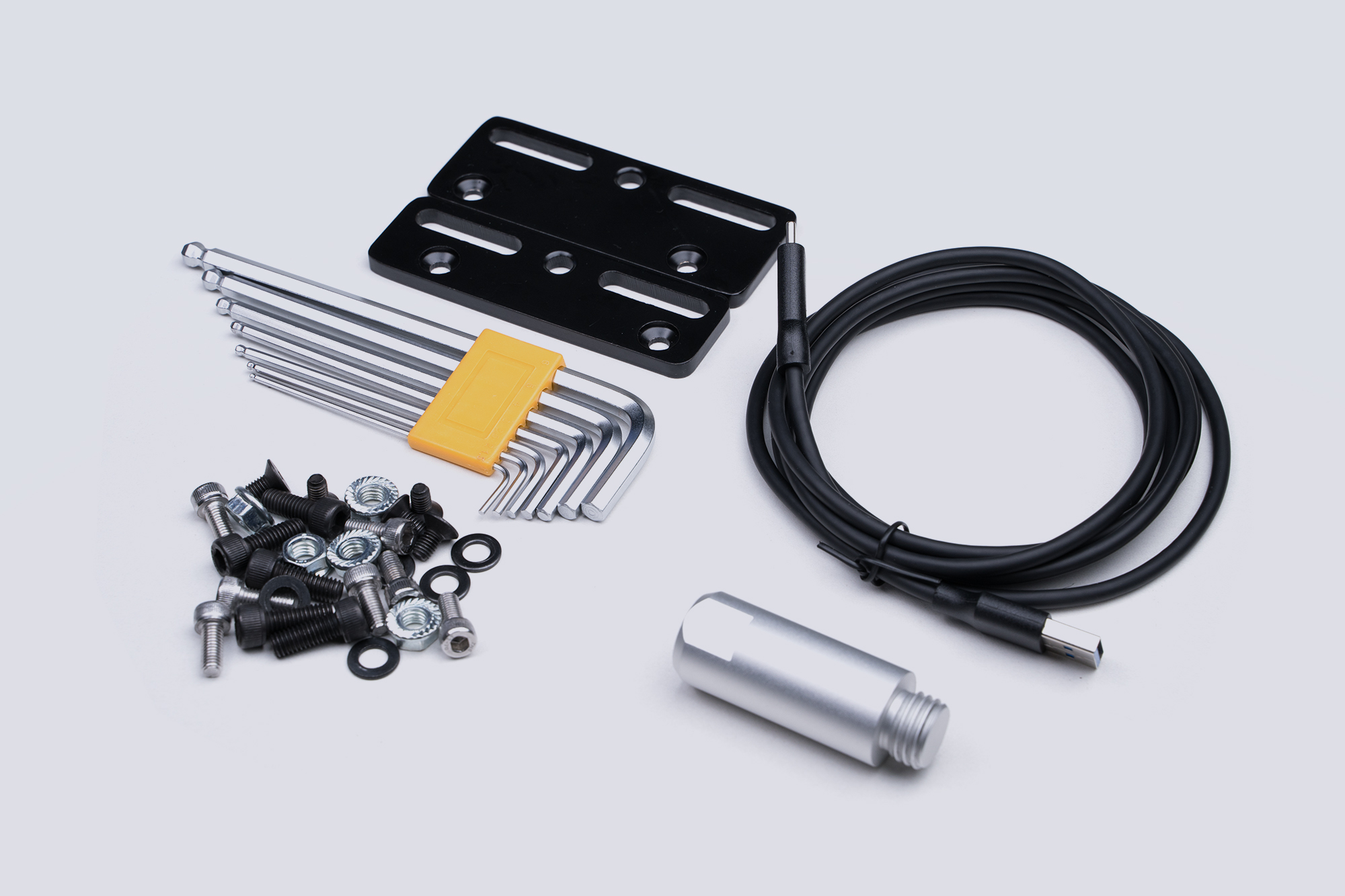
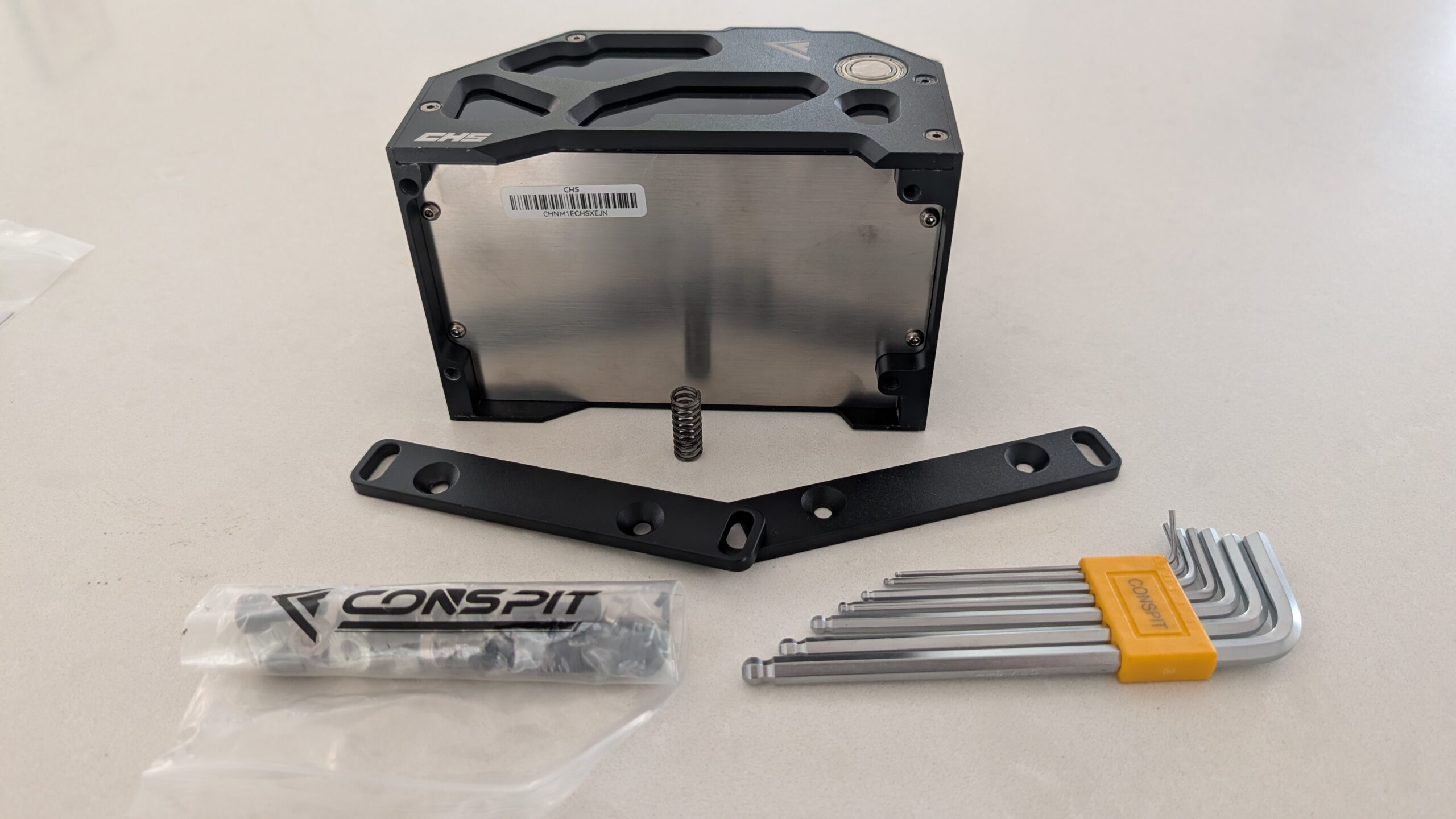
CONSPIT supply all the tools that you need: a nice set of ball-ended Allen keys, which means you can install from a slight angle and makes things easier to fit to the rig. There are two flat adapter bars to mount onto your 8020 profile. Mine is the pre-release prototype, and its bars are a different design from the production ones – we’ll come to that when it’s time to fit it.
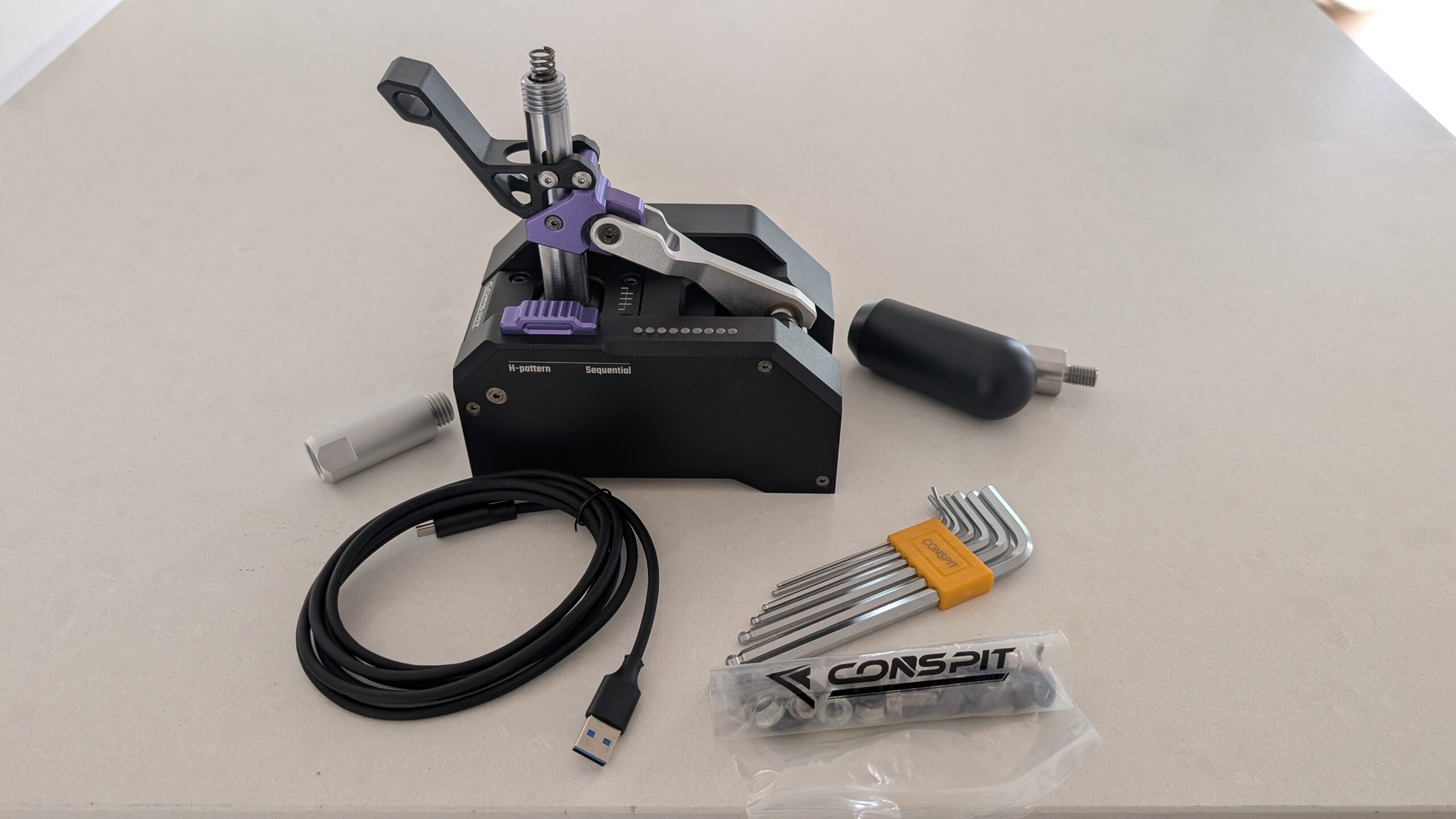
Overall, the shift knob, the shaft extension, the tools CONSPIT supply and the standard of manufacture is amazing. Be a bit careful when you turn it upside down for the first time, because there’s a little spring in the shaft extension which can fall out. The shaft extension threading and the way it all fits together is so nicely machined. It’s really strong work.
The Specs
| Modes | H-pattern, 7 gears plus reverse, and sequential, on separate mechanical paths; both bindable in-game at the same time |
|---|---|
| Shift force | Adjustable 3 to 10 kg via the hex adjuster on the front face; damping tunable |
| Throw | H-pattern 38 mm / 12°; sequential asymmetric, a shorter forward push for the downshift than the pull back for the upshift |
| Sensors | Hall magnetic sensors (no switches to wear) |
| Lockout | Lower trigger on the shaft collar gates reverse and 7th |
| Construction | One-piece aluminium chassis, heat-treated 45# steel key parts; clear side window fitted, dark-tinted window in the box |
| Size and weight | 95 x 165 mm footprint, 255 mm tall (305 mm with the 50 mm extension link); 1.0 kg |
| Mounting | M5 threads in the base for flat mounting; Ø6.5 mm holes in the two supplied adapter bars for 8020 profile |
| Connection | USB direct to PC; CONSPIT Link 2.0 optional |
| LEDs | 9 RGB LEDs on the top deck, gear or RPM via Link 2.0, SimHub mode |
| Knob thread | M10 x 1.5 x 15 |
Switching between H-pattern and sequential
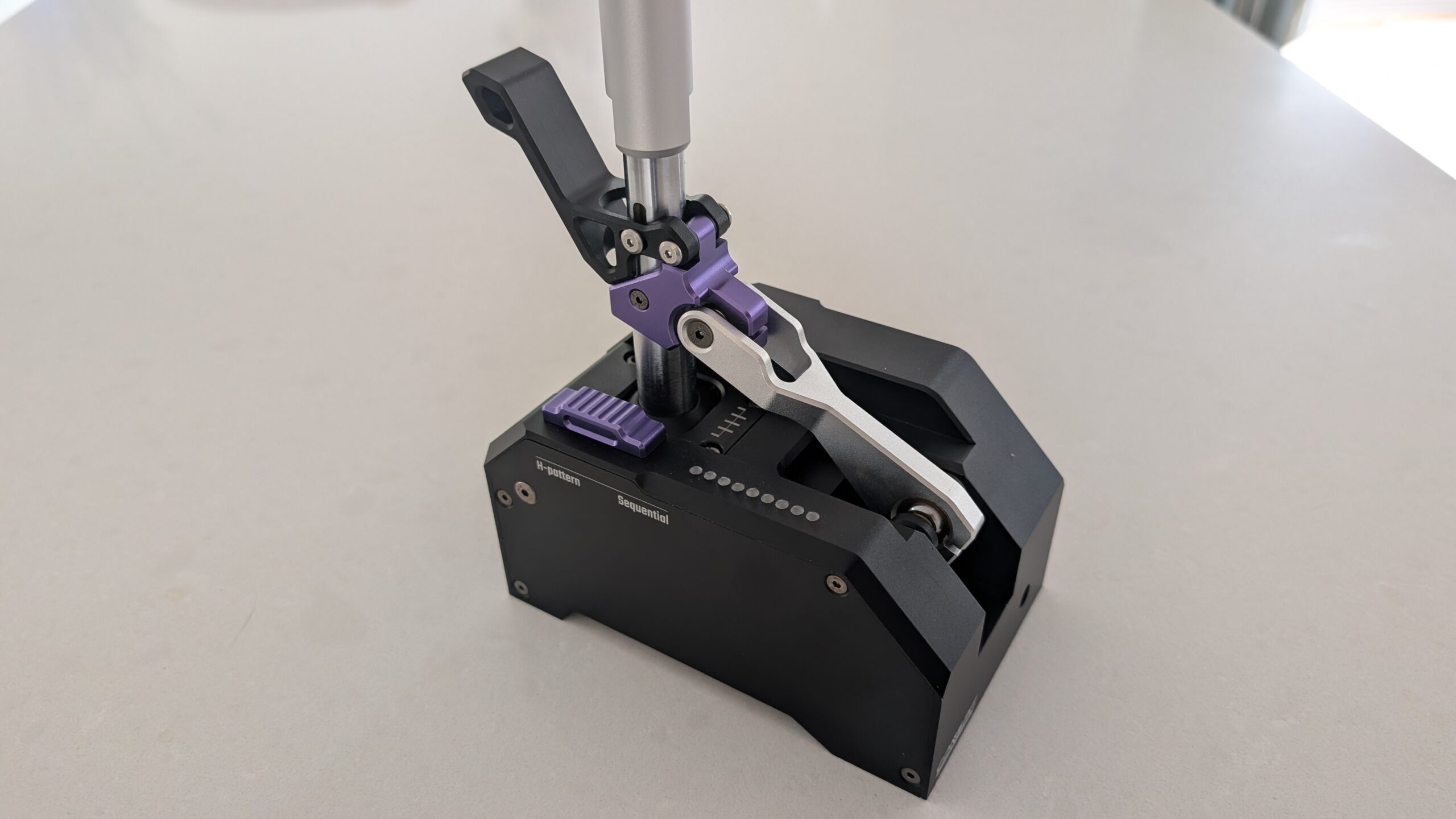
Let’s move on to the mechanism, gate action and switching modes. The whole thing feels quite industrial, much like how I felt opening up the Simucube 2 Pro all those years ago. When you switch from H-pattern to sequential, you know about it: there’s quite a lot of resistance in the switch, though it’s probably something a lot of people don’t do very often. I’m a big H-pattern user, not so much on the sequential side, but for a bit of rally action it’s great to have. I prefer H-pattern because I like to use the clutch to practise my heel-and-toe.
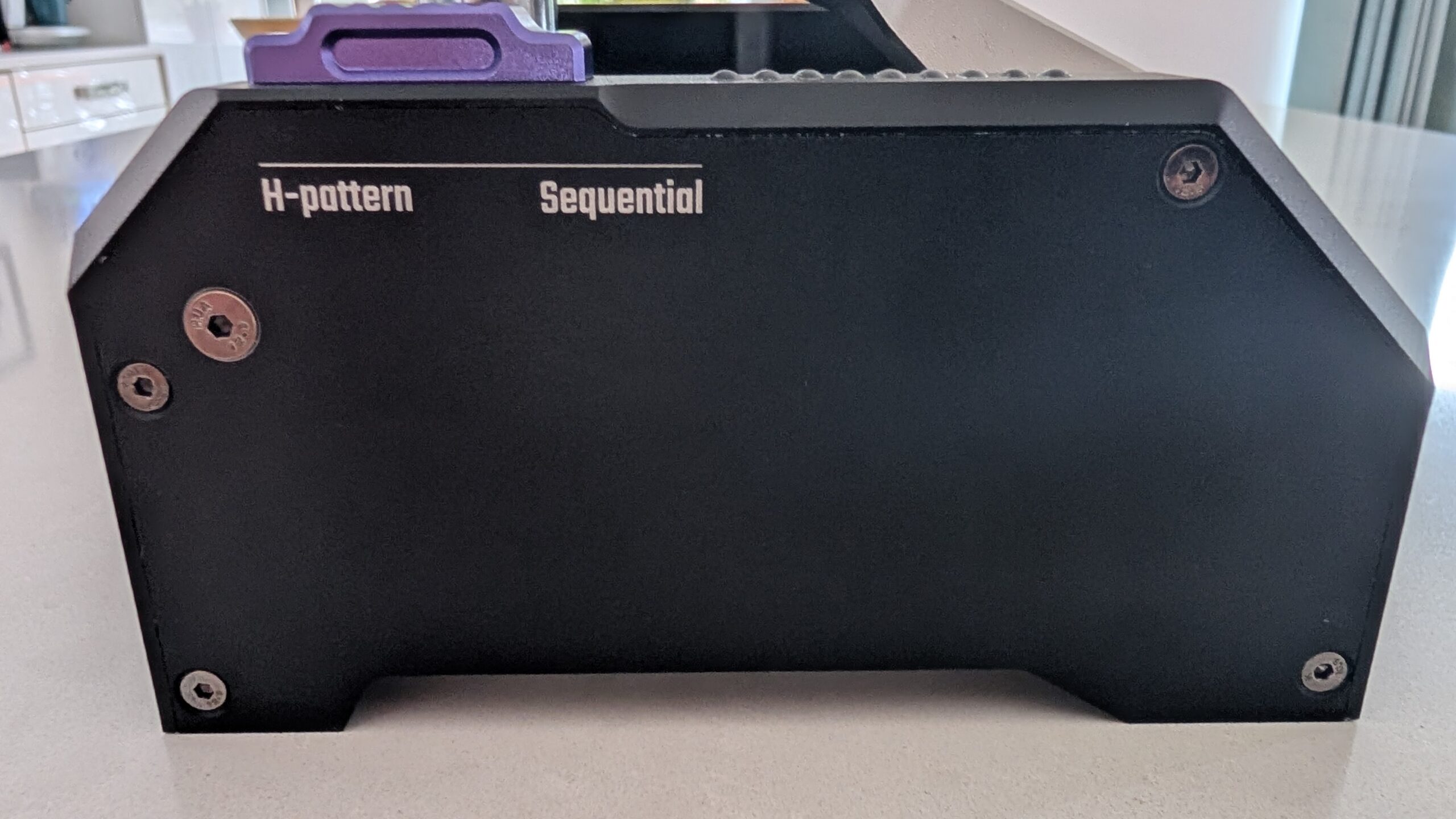
The H-pattern action
The action on the H-pattern reminds me an awful lot of a manual dog box. We had a dog box on the Lotus Elan 26R (my historic Lotus), and they’ve got the feel of the shift absolutely right. This is what a proper racing box feels like. I’d say the CONSPIT shifter is a little heavier in the action, but it’s almost indistinguishable. I think they’ve got the resistance on the H-pattern correct out of the box, and you can adjust to suit your taste if you disagree.
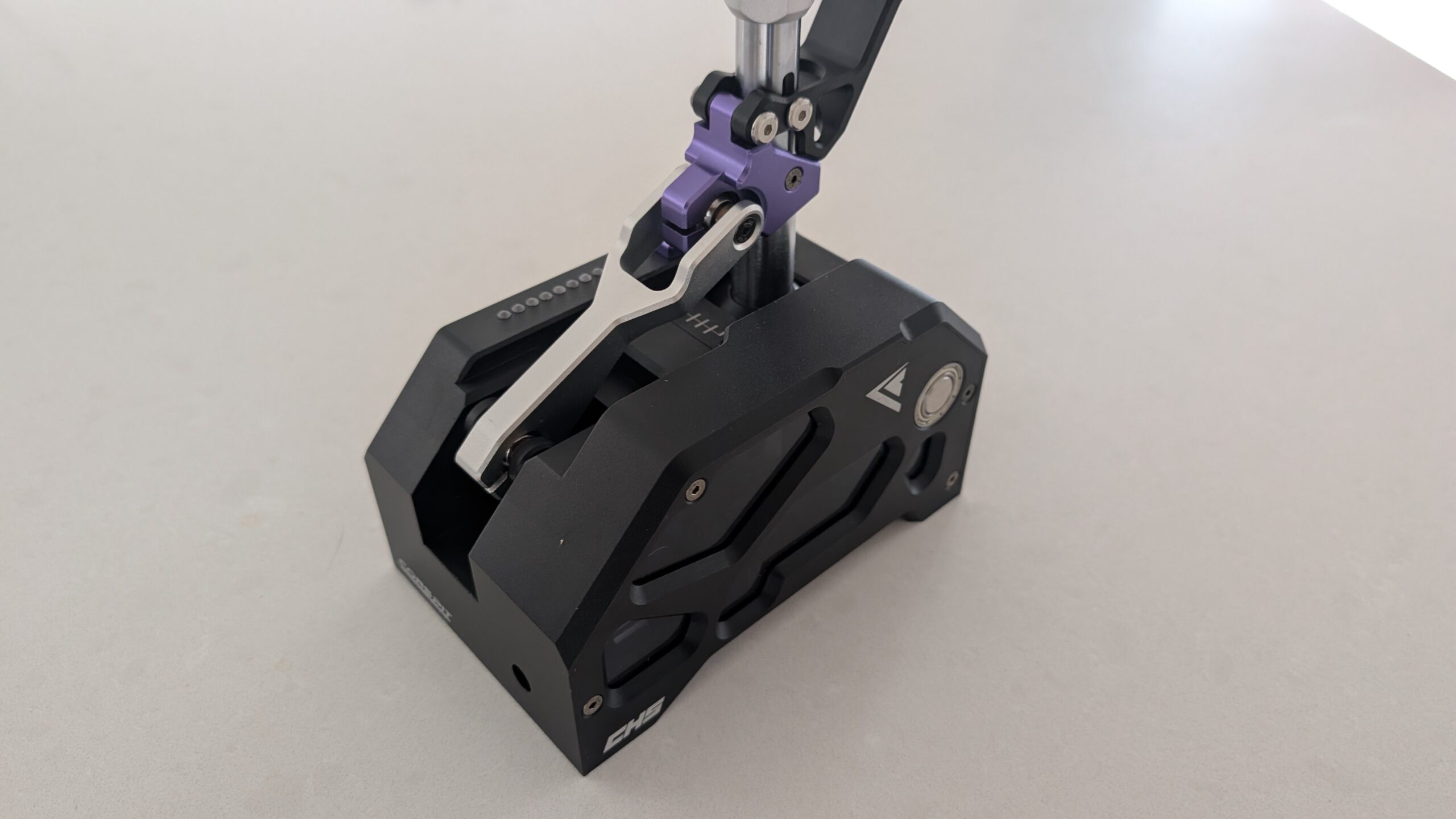
The sequential action
On the sequential, what I noticed out of the box is that initially there’s a little more resistance on the upshift than the downshift – I may be imagining things though! Regardless, it’s adjustable, so you might want to tweak it once you’ve got it installed and driven a few laps. I feel like the adjustment is so good and so close that you could just install this and go racing straight away.
I was playing with it before I mounted it, thinking this feels super stiff, and that maybe I’d have to adjust the preload before I started driving with it. But once mounted, it just felt so right. I’ve driven the Mini Cooper Works with the sequential box in it, and compared to a real racing sequential box they’re pretty much the same – which is why I think this is a really good motorsport simulator gearbox, whether you prefer an H-pattern or a sequential shifter.
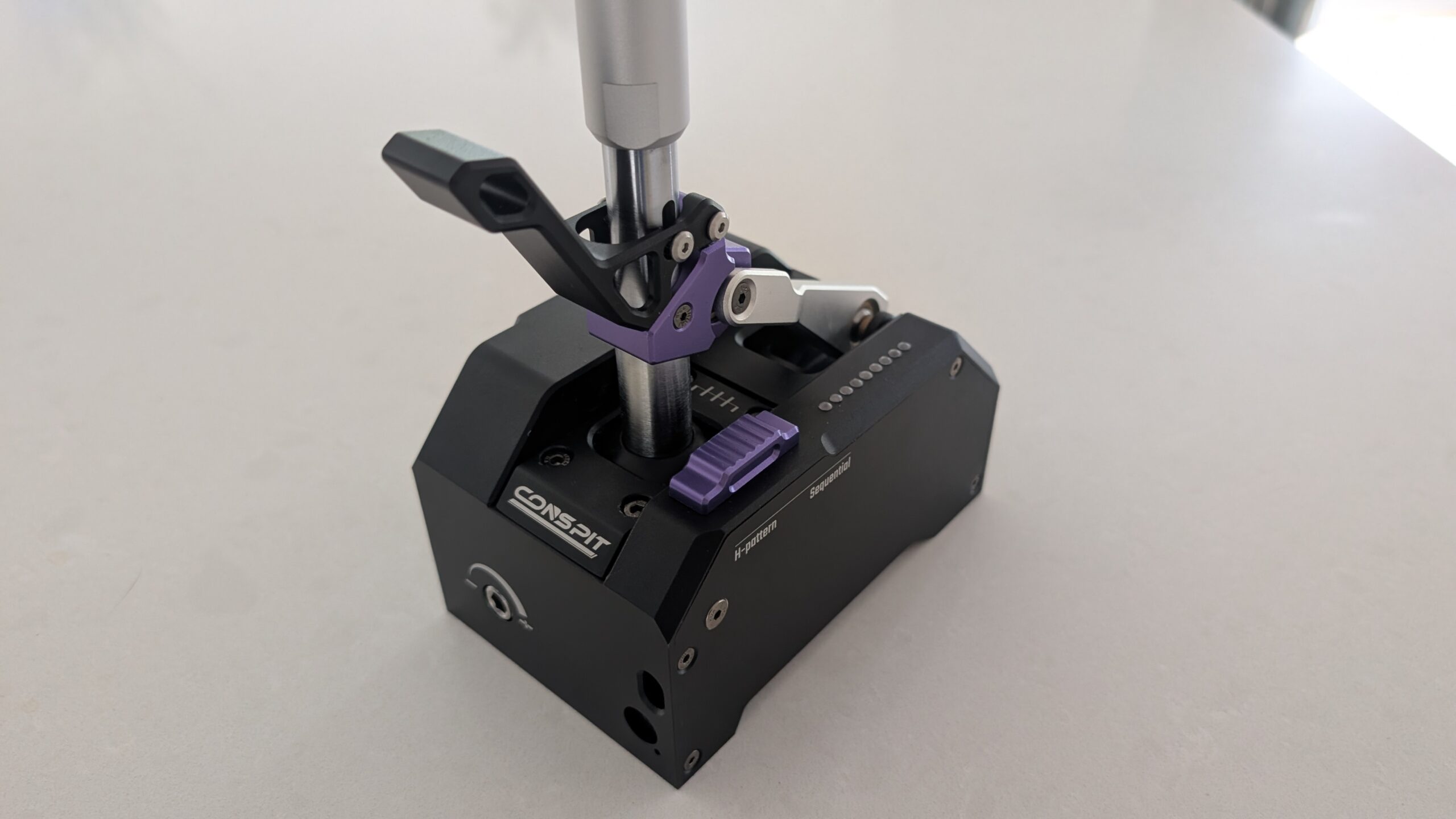
The reverse lockout, and that spring
My mistake first: I mentioned earlier that spring that had fallen out. The reason I noticed is that when I went to sequential, the reverse lockout trigger had no resistance whatsoever. That’s how I realised that spring is pretty important…
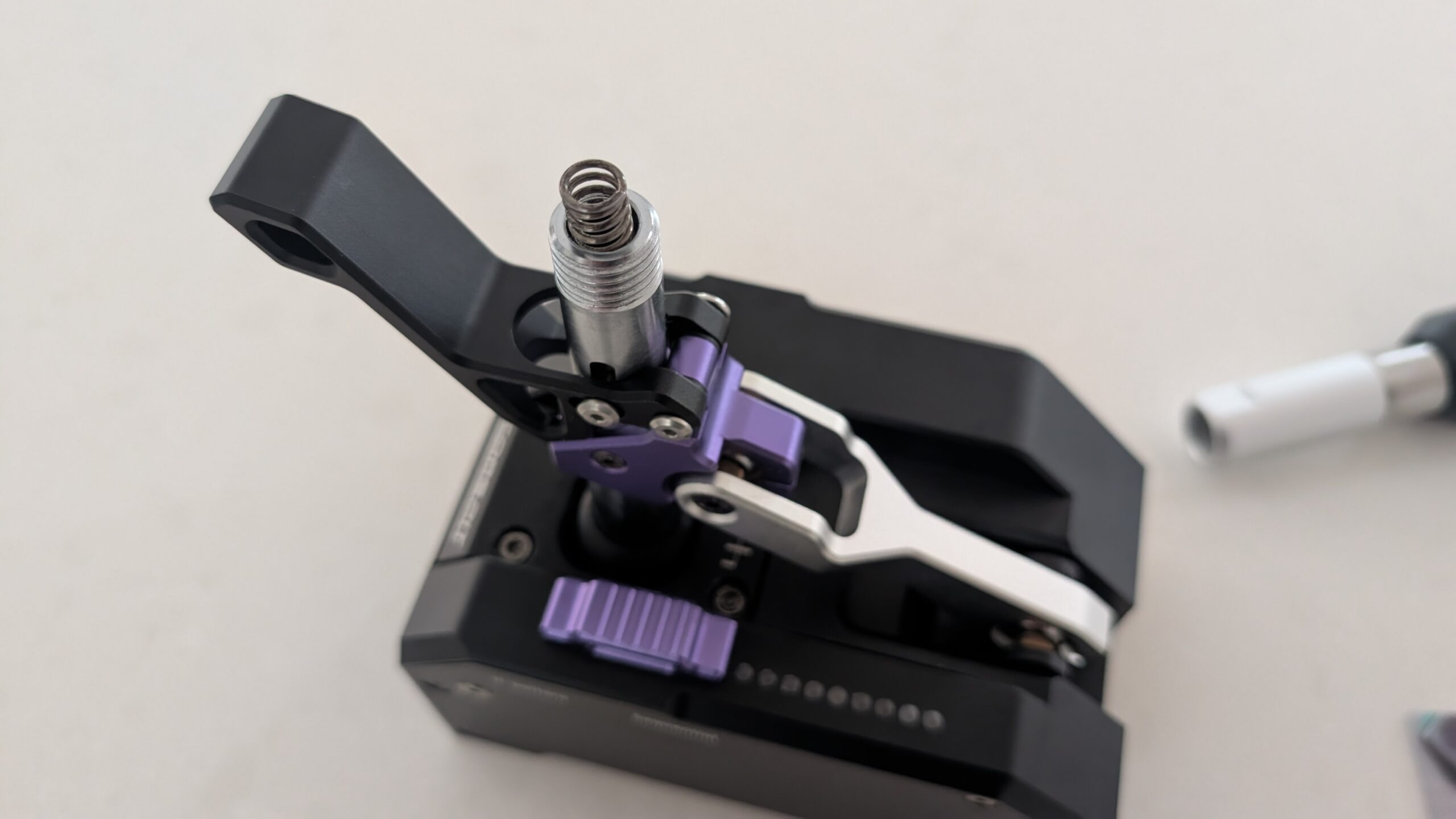
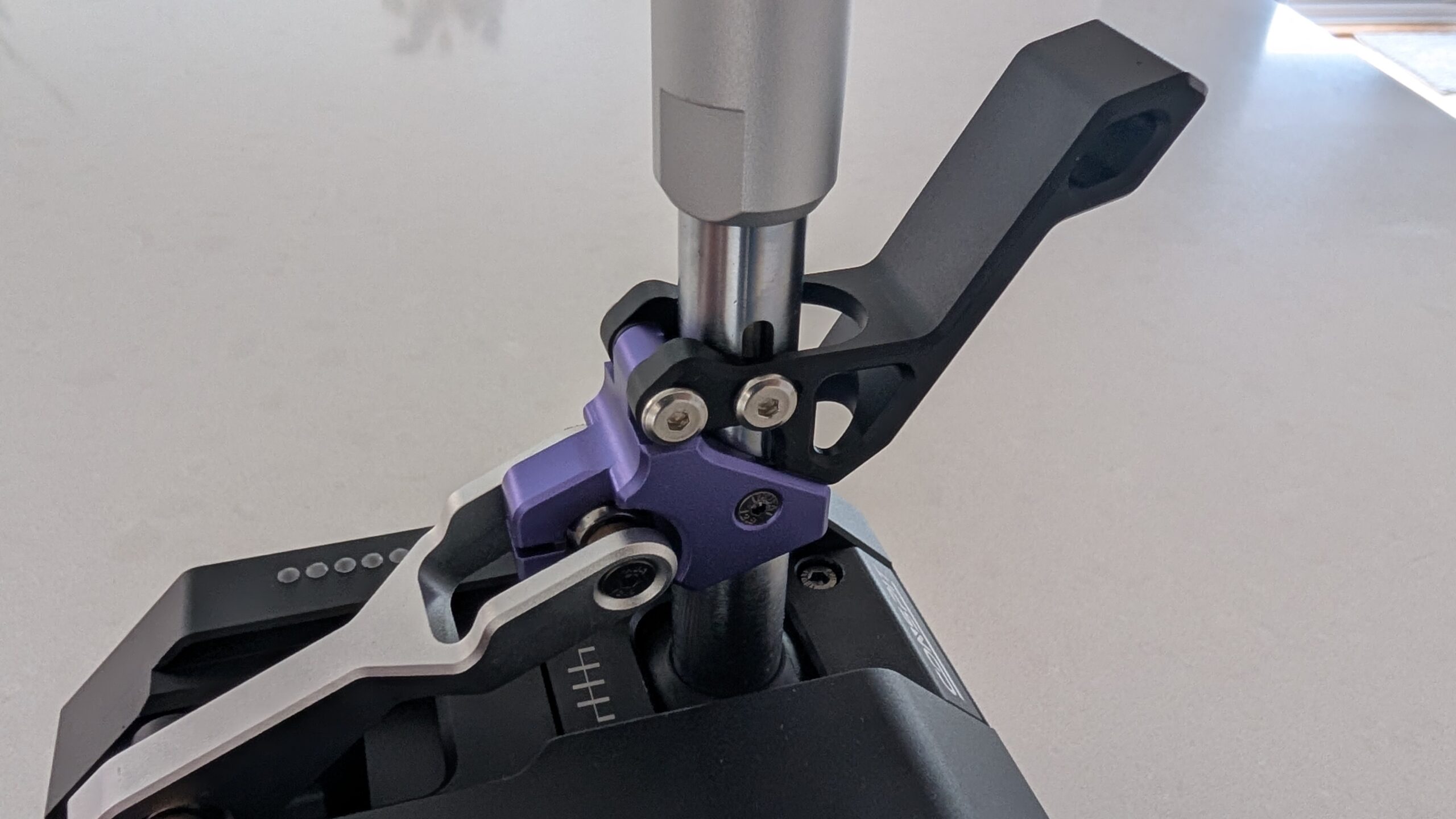
The spring adds preload to the reverse lockout lever, which again is beautifully machined. It’s got just the right amount of resistance – there’s no way you trigger it by accident. You have to put a deliberate move in to get the gear into reverse.
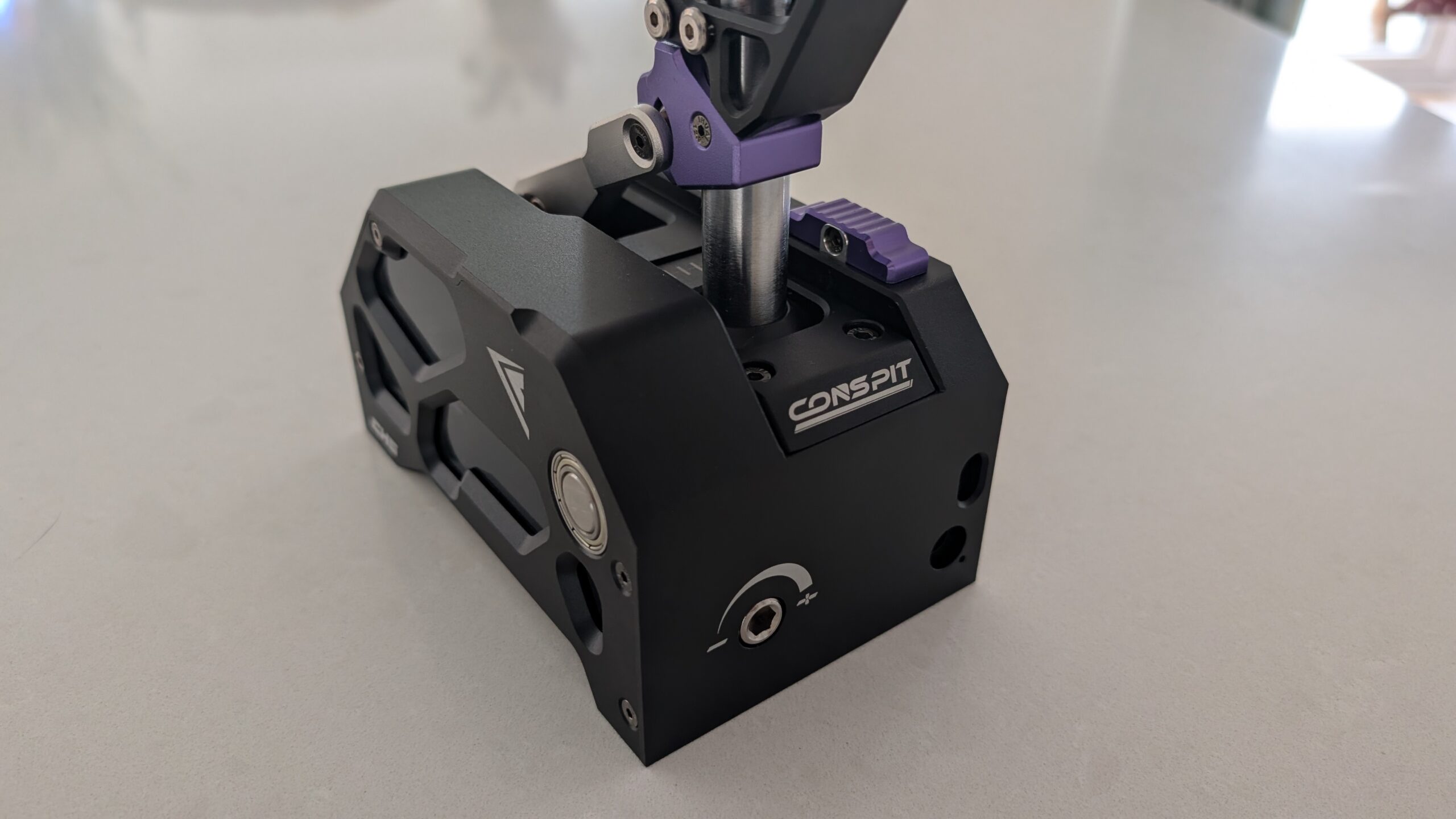
The window
I really love that you can see the internals through the Perspex window. It depends which angle you’re coming at it from, but for me it’s on the left-hand side, so you can see the inner machinery, and it really is quite nice. I was a little tempted to remove the cover for a teardown, but I thought better of it because of the shaft bearing – this is a piece of engineering that might be beyond my skillset to reassemble.
CONSPIT Link 2.0
CONSPIT Link 2.0 is CONSPIT’s unified driver software for all of their gear. The latest version at the time of writing is 1.1.22, and you can download it from conspit.com/download.
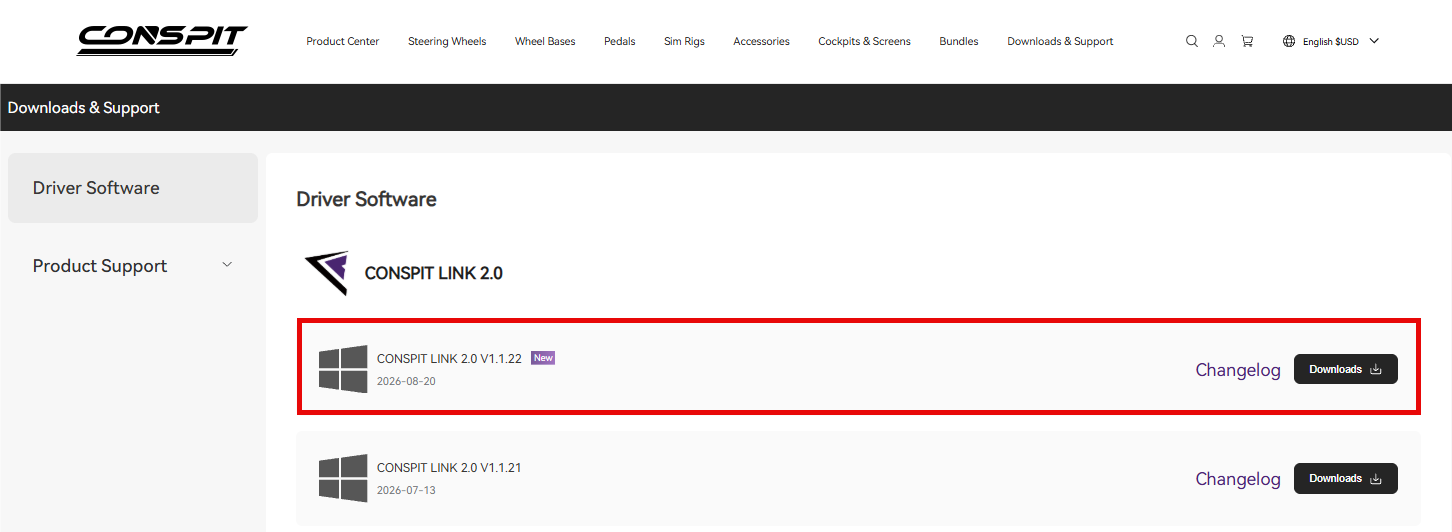
As far as I understand, the software just detects that the shifter is connected. For whatever reason I couldn’t get any further than the main CONSPIT application homepage with just the shifter installed – I don’t think there’s much more for the software to do. I could see that the shifter was installed and connected in the app, and the LEDs show it’s powered. As an aside, the CHS connects with the supplied USB-C to USB-A cable, which is fine.

Fitting it to the rig
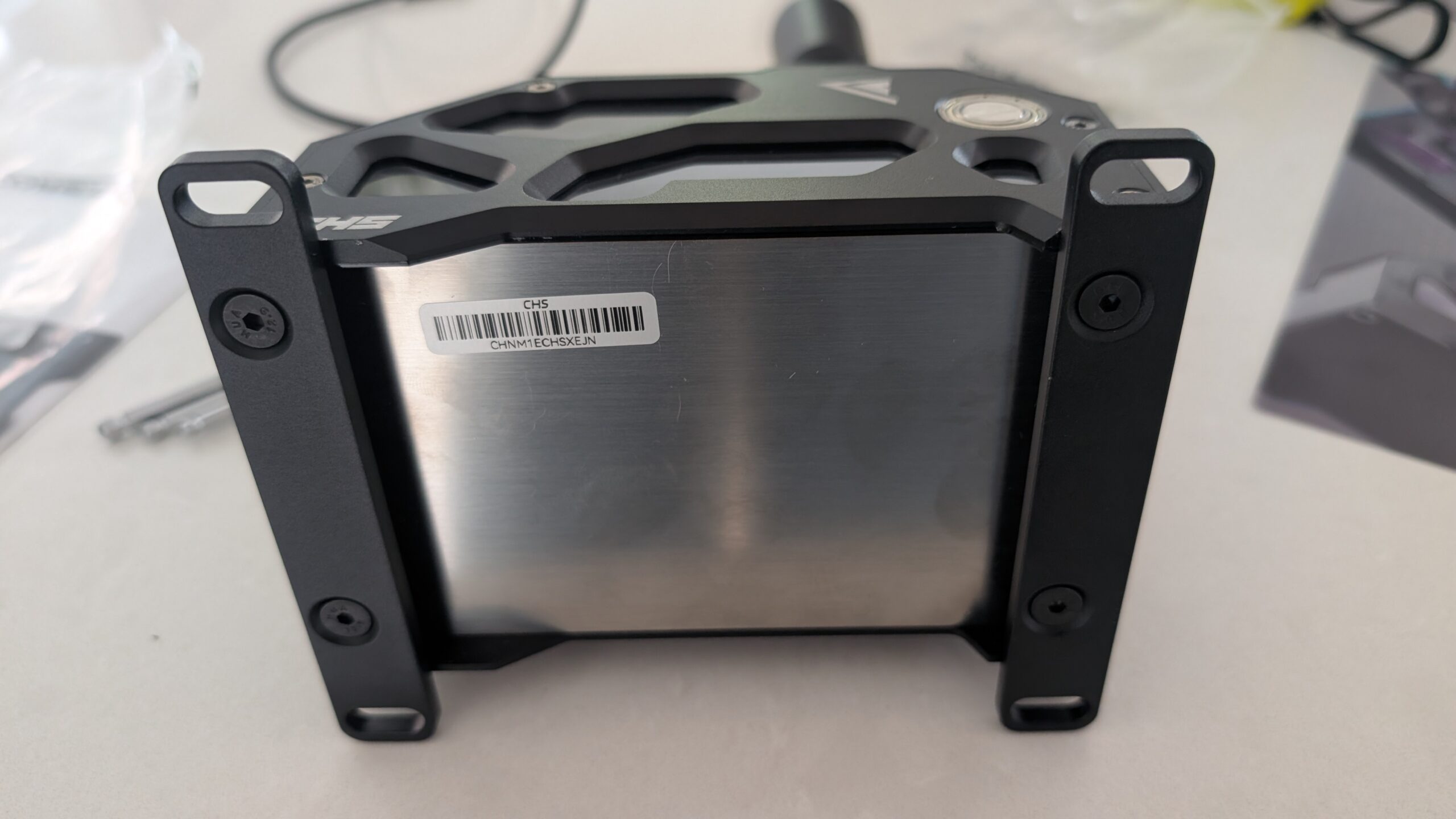
The mounting process should be quite simple: install the two flat brackets to the base of the shifter first. The screws and tools are supplied. Just use the right amount of torque, because this thing is very sturdy and very rigid – you’re going to put a lot of force through it, so torque wisely when you’re tightening up those screws.
With the brackets on, it goes onto the shifter support on my rig: an 8020 profile armrest on the left-hand side that you can mount your accessories on, with an extra section of profile, so I’ve got quite a lot of mounting options. Even so, installation was not as straightforward as I would have liked. The unit I have is the pre-release prototype, and its brackets ran along the long sides of the base – I got the tape measure out, and that’s 4½ inches, or 115 mm, across – which was a little too wide for the armrest. So it was a bit of a freestyle job, with two extra little brackets from my spares to get it firmly mounted. You might be able to mount it directly to a flat surface through the bolt holes in the base if you have a compatible shifter mount, but my rig is a bit “old school” and needs T-nuts and bolts for everything.
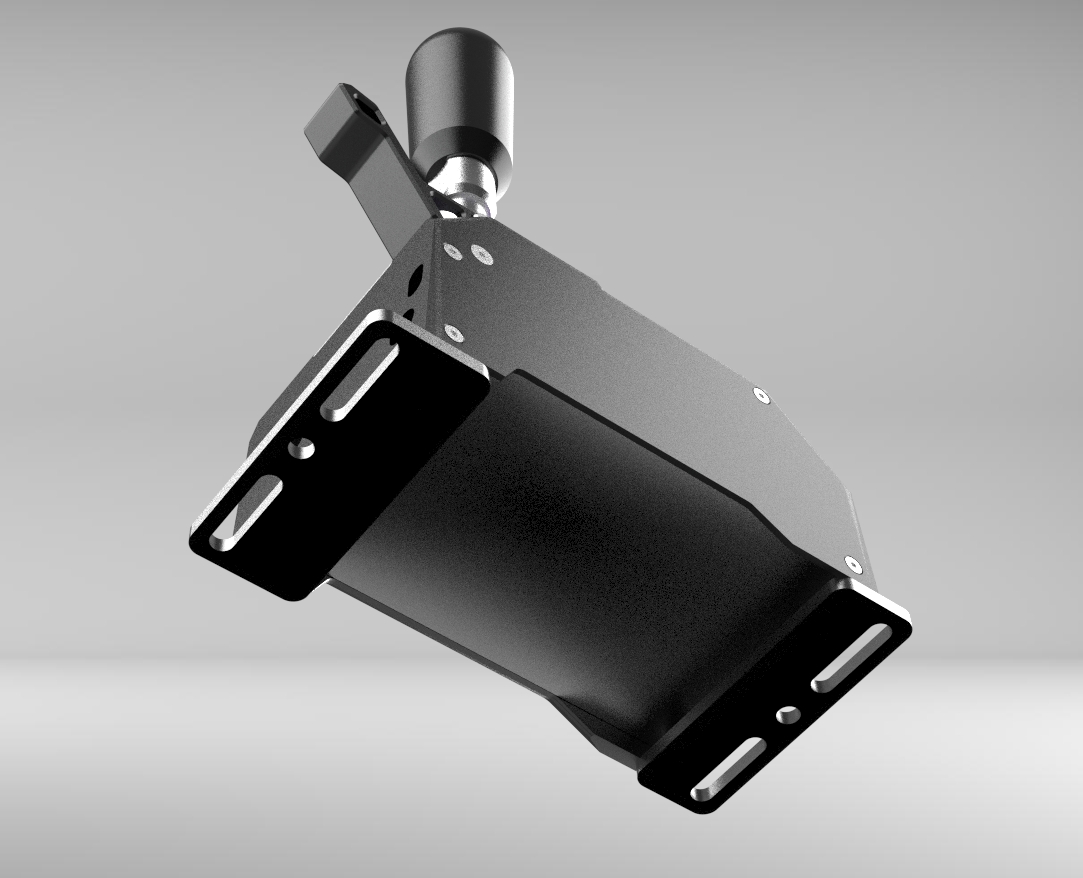
I sent that feedback to CONSPIT and they responded with a new bracket design. Rather than bars along either side, the production bracket mounts across each end of the body, so the width you’re mounting is essentially the body’s, and it saves a lot of space. That puts the footprint and the mounting method in line with the Simagic DS-8X, which went straight onto the profile on my rig with T-nuts – so if you’re upgrading from a DS-8X you’ll have no problem mounting the CHS. I haven’t fitted the production bracket myself; that’s from CONSPIT’s images of it.
Whichever bracket you have, make sure you’ve torqued your screws up properly, and the shaft extension too, because this really does need a firm mounting. If you’ve got the right size spanner it’s worth giving everything a tighten – I can see it coming loose during use if you don’t, and I’m even slightly tempted to use a little screw lock on it. With the prototype, you needed some basic fitting technique and the ability to modify your setup to accommodate the width. This is where the CHS reveals itself as quite an advanced piece of kit for serious simulation. It’s more than just a beginner’s piece of kit.
On track
I tested it in a few iRacing test sessions: the Global Mazda MX-5 Cup car, the F4 in sequential mode for a laugh, and the FF1600 in H-pattern.
It took me a couple of laps to settle in and warm up, but what a lovely sequential shift feel the CHS has out of the box. I had some doubts when I was getting an initial feel for it on the bench, just before I fitted it, but fully mounted, H-pattern and sequential both feel really realistic, and it just makes me want to get back out on track.
Where to buy the CHS
The CHS launches on 23 September 2026 at $369 (€308 / £274 before VAT and shipping, €369 / £329 with VAT). It will be listed at Trak Racer alongside the rest of the CONSPIT range, and our daily price and availability monitor below will pick it up as soon as it goes live.
CONSPIT discount code: use SRC at checkout for 5% off at conspit.com.
Pros and cons
Pros
- Solid as a rock – easily the nicest-made shifter we’ve had sent here so far.
- The H-pattern feels like the dog box we had on a real historic racing car – almost indistinguishable.
- The reverse lockout has just the right amount of resistance; there’s no way you trigger it by accident.
- It just works straight out of the box – mounting aside, it’s easy to get going.
- CONSPIT supply all the tools you need, branded ball-ended Allen keys included.
Cons
- The prototype’s side brackets were too wide for my 8020 armrest; the production bracket is end-mounted.
- There’s a little spring in the shaft extension which can fall out and get lost when you turn it upside down.
- I couldn’t get past the main CONSPIT Link 2.0 homepage, so I’m not certain there are any further software settings for this device – probably not.
- It really does need a firm mounting – torque the screws up properly, and the extension too.
Should you buy one?
I can’t wait for the Caterham to be available in iRacing and test that out with the CHS. For the lower formulas and the rookie classes – the MX-5s and all those cars that do have a manual shift in real life – it’s a great shifter.
If you’re a serious sim racer, especially if you’ve got quite a high-end rig, you’re a serious hobbyist, and you’re into motorsport in real life, this is the shifter to own at the moment. I can’t see how anybody can improve on it. It feels pretty much like a real car’s gearstick would. I will add that there is a little side-to-side play on the shifter, but that’s what real gearboxes feel like, and I think that’s what they’ve designed in (if you’ve ever driven a classic Formula Ford you’d know what I mean).
If you jump in after getting out of a car on a track, I think you’d be really shocked by the similarity of the two. And that’s what CONSPIT do really well, I think. As I said in the V1 CPP.Lite review years ago, they’re the same guys that were designing brake pedals for EV manufacturers. If you’re driving an EV, that pedal is simulating hydraulic feel, because actually you’re braking with motors. Clearly, they’ve taken that expertise and ported it brilliantly into a real-world H-pattern and sequential feel. Bravo!
Related Articles
CONSPIT CHS Review: H-Pattern and Sequential in One Shifter
Moza SGP Shifter: Testing Moza’s new Sequential Sim Racing Shifter
Shifter Comparison: Fanatec SQ 1.5 vs Simagic DS-8X vs Moza HGP
Review: Simagic DS-8X H-Pattern / Sequential Shifter
Push-Pull Rally Shifter from Sim-Lab: Review
Moza’s HGP Shifter: Review
Topic: Sim Racing Shifters