

I’m a sim racer and amateur racer with a passion for Motorsport, good racecraft and the technical and setup aspect of sim racing.
This Trak Racer buyer’s guide covers a brand that’s expanding fast – they used to just make cockpits, and now they want to be everything else as well. They’re a sim racing manufacturer / retailer hybrid, selling their own gear alongside other manufacturers’ kit through the same store. Nothing wrong with that, smart move when all you sold was cockpits and monitor stands.
Trak Racer have been making 8020 extrusion rigs in Australia since 2008, with the TR160 one of the most rigid profile rigs you can buy. Since those heady early days, they’ve partnered with the BWT Alpine Formula One team for their flagship TRX cockpit, and they’ve started carrying VNM Simulation peripherals through their own store – VNM is an independent Vietnamese maker Trak Racer distributes, and VNM pedals and a VNM handbrake are the two products shipping today.
That’s a big shift from a company that used to just make the thing you bolt everything to. Good luck to them.
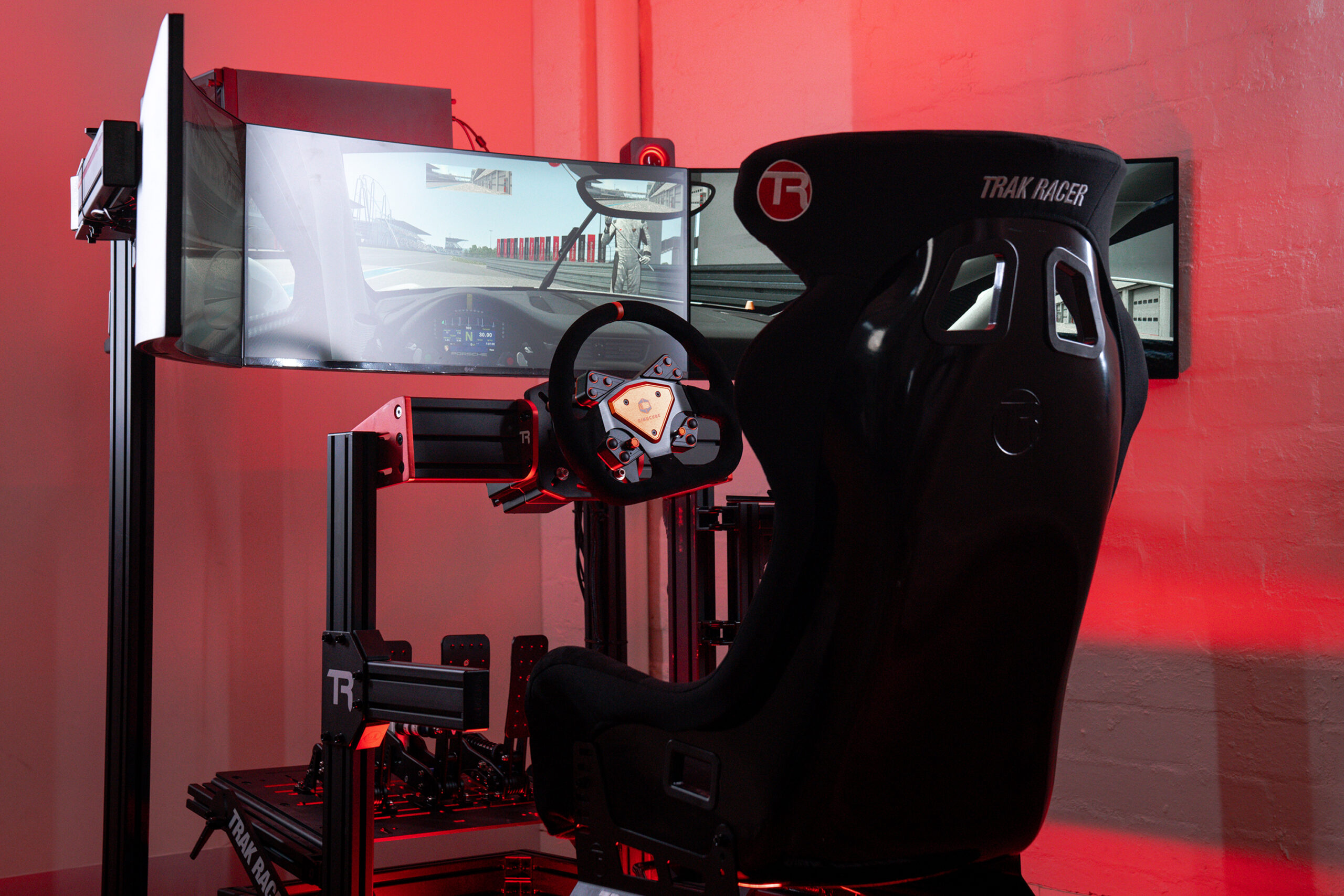
Trak Racer doesn’t run public discount codes either – the brand mostly relies on bundle pricing and their plug-and-play Spec packages for the saving. That said, the catalogue has its share of currently out-of-stock products (the Ready 2 Race TR8 Pro Pro Bundle, the TR160 V5, the TR80S Racing) and the live shortcodes below show the In Stock / Pre-Order / OOS state in real time. Worth a quick scroll before you commit. For peer brands in the same cockpit space, the Sim-Lab buyer’s guide and the cross-brand best sim rigs on the market roundup are the next two reads.
Today’s guide covers the whole Trak Racer product range – their cockpits, seats, monitor stands, and the growing peripherals line under the VNM banner. They also stock third-party brands like Simucube, Heusinkveld, and Moza through their store, but I’m focusing on what Trak Racer (or VNM) makes in this post. Their range runs from around $349 for the TR40S frame up to nearly $22,000 for the Spec 4 TR160 Motion plug-and-play simulator with everything bolted on. Oh, and they do flight too.
Quick Navigation
Jump directly to what you’re looking for:
Why Trak Racer? |
The Cockpit Range |
The Alpine TRX |
Seats |
Monitor Stands and Mounts |
The VNM Peripherals Line |
What the Community Thinks |
Black Friday 2026 |
Building a Complete Trak Racer Setup
Below I’ll walk through each part of the Trak Racer lineup, from entry-level wheel stands to the Alpine F1-engineered TRX. I’ll also cover the seats (with an honest warning about one particular issue), the monitor stands, the new VNM peripherals, and where this brand sits against competitors like Sim-Lab and the names in the best sim rigs roundup.
Why Trak Racer?
Trak Racer has been at this since 2008. They started in Australia building cockpits from aluminium extrusion profiles – the same basic approach as Sim-Lab and most other serious rig manufacturers. What sets them apart is range. They offer both traditional profile rigs (the TR40S, TR80 MK5, TR80S, TR120S V2, TR160S V2) and tube-frame designs (the TR8 Pro V2, RS6 Racing, and the Alpine TRX). Nobody else in this price bracket gives you that choice.
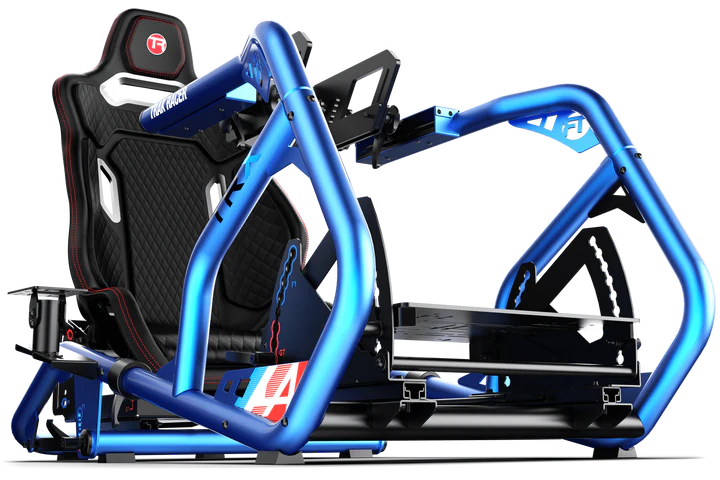
Their design philosophy, taken directly from their own site, is blunt: “we’re not interested in building the cheapest, lightest and simplest gaming platforms.” They position themselves as premium value – not the cheapest option, but the most rigid thing you can get before stepping up to properly boutique manufacturers. The TR160 uses a 160mm wide base profile, which Trak Racer claims makes it the most rigid extrusion rig on the market. From what I’ve read across community forums and YouTube reviews, that claim holds up fairly well.
The Alpine F1 Partnership
This is the headline. Trak Racer partnered with the BWT Alpine Formula One team to co-engineer the TRX cockpit. This isn’t just a sticker on the side – Alpine’s engineers were involved in the structural design, particularly the tool-free adjustment system that lets you switch between F1 and GT seating positions in under five minutes. No other cockpit manufacturer has an active F1 team collaboration at this level. They’ve also extended the partnership into seats – the HSX Hybrid Formula Pro BWT Alpine F1 Team Edition seat ($409) carries the same Alpine livery and is the closest the catalogue gets to “designed with an F1 team” credibility.
Community Sentiment
The community view on Trak Racer is a bit of a mixed bag, and I think it’s worth being upfront about that. The hardware itself gets solid reviews. The TR120 is a very solid product with no flex on the wheel deck. Sean Cole at The Simpit described the TR8 Pro V2 as “structurally bulletproof.” The rigs are well-built.
The problems come after the sale. Customer service is, frankly, the number one complaint across Reddit, forums, and YouTube comments. Slow response times, missing parts in deliveries, and stock availability issues – particularly through late 2025 and into 2026 – have frustrated buyers. If you’re the sort of person who needs quick resolution when something goes wrong, factor that into your decision. The hardware is good. The after-sales experience can be testing.
The Cockpit Range
Trak Racer’s cockpit lineup is broad. Wheel stands, entry-level rigs, mid-range profile cockpits, tube-frame alternatives, and the Alpine TRX flagship – plus the four “Spec” plug-and-play complete simulators at the top end. Here’s how they stack up.
Entry Level: Getting Started
The TR40S Racing at $349 is the entry-level proper rig – aluminium profile construction, supports up to 10Nm, and it’ll take an entry-level direct drive like the Fanatec CSL DD or a Moza R5. There’s also a TR40S + Moza R3 bundle at $709 if you want the cockpit and an entry wheelbase in one shipment.
The RS6 Racing at $424 (currently Pre-Order) uses 2-inch tubular construction and handles up to 8Nm. It’s simple, assembles in an hour, and works well as a budget cockpit – the blue Alpine-livery version is the photogenic option. The TR80 MK5 ($450) is the older 80x40mm profile model still in stock, while the newer TR80S Racing ($499, currently OOS) is the upgraded variant. The TR80 line supports up to 16Nm – enough for a mid-range direct drive.
Mid Range: Where It Gets Serious
The TR8 Pro V2 ($699) is the tube-frame option at this level. It uses 2-inch round tubing rather than aluminium extrusion, which gives it a completely different look and feel. Sean Cole’s review noted it handles up to 25Nm without significant flex, the sliding wheel deck with lever lock is properly useful for quick position changes, and it assembles in about an hour rather than the seven-plus hours you’ll spend on a profile rig. There’s also a TR8 Pro V1 still listed at $629 if you want the older variant.
The TR120S V2 with seat slider ($719) uses 120x40mm aluminium profiles and supports 30Nm+ of direct drive torque. It includes the TR-One wheel mounting system, which gives you four options: wheel plate, Fanatec DD side mount, universal front mount, or Asetek front mount. This is also direct-fit for motion platforms – no separate base required.
The TR160 V5 ($730, currently OOS) and TR160S V2 with seat slider ($600) are the profile flagships. The 160mm wide base profile gives them genuine structural advantage over anything with a narrower extrusion. Trak Racer calls the TR160 “the most rigid rig on the market” and, while that’s obviously marketing, the double-walled aluminium extrusion and heavier brackets do make a noticeable difference at high torque levels. Both support 30Nm+ and are direct-fit motion compatible.
What to Buy
If you’re running a direct drive base under 15Nm – a Moza R9 or Fanatec CSL DD – the TR80 or TR8 Pro V2 will handle it without any issues. Once you get into 20Nm+ territory with something like a Simucube 2 Pro or Fanatec DD2, the TR120S V2 or TR160 are the sensible choices. The profile width matters at these torque levels.
The Alpine TRX
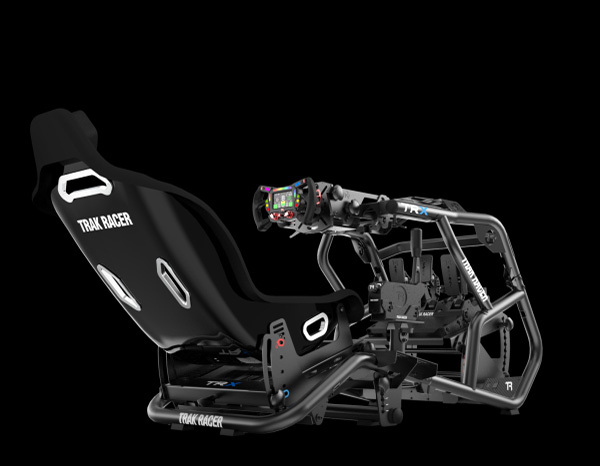
The Alpine TRX deserves its own section because it’s properly different from everything else in this price range. Co-engineered with BWT Alpine F1 Team engineers, it uses 2-inch tubular construction (not aluminium profiles) and weighs 89kg. That weight is the point – it doesn’t move.
The headline feature is tool-free F1/GT position switching. Every other Trak Racer rig takes about 30 minutes to convert between formula and GT positions. The TRX does it in 3-5 minutes with no tools. Geek Street’s review called the adjustability “its major selling point” and noted you can switch between driving positions without reaching for a single Allen key.
- Frame: 2-inch tubular steel, Alpine F1 Team co-designed
- Weight: 89kg (196lbs) – it stays put
- Torque support: 30Nm+ direct drive
- Dimensions: 620mm x 1507mm
- F1/GT switch time: 3-5 minutes (tool-free)
- VESA mount: 75-400mm, supports monitors up to 70″
- Motion: compatible with motion base
- Assembly time: approximately 2 hours
There are caveats. Geek Street noted flex on the wheel deck when running a Fanatec DD2, which peaks at 25Nm, and the pedal mount showed some movement in F1 position. Up to that 25Nm ceiling it’s solid, and that’s about as much torque as you’ll throw at it from a Fanatec base. The Racing TRX V2 Black is currently $999 USD for the frame, with the full Spec 3 Alpine Racing TRX plug-and-play package running to around $10,999.
Seats
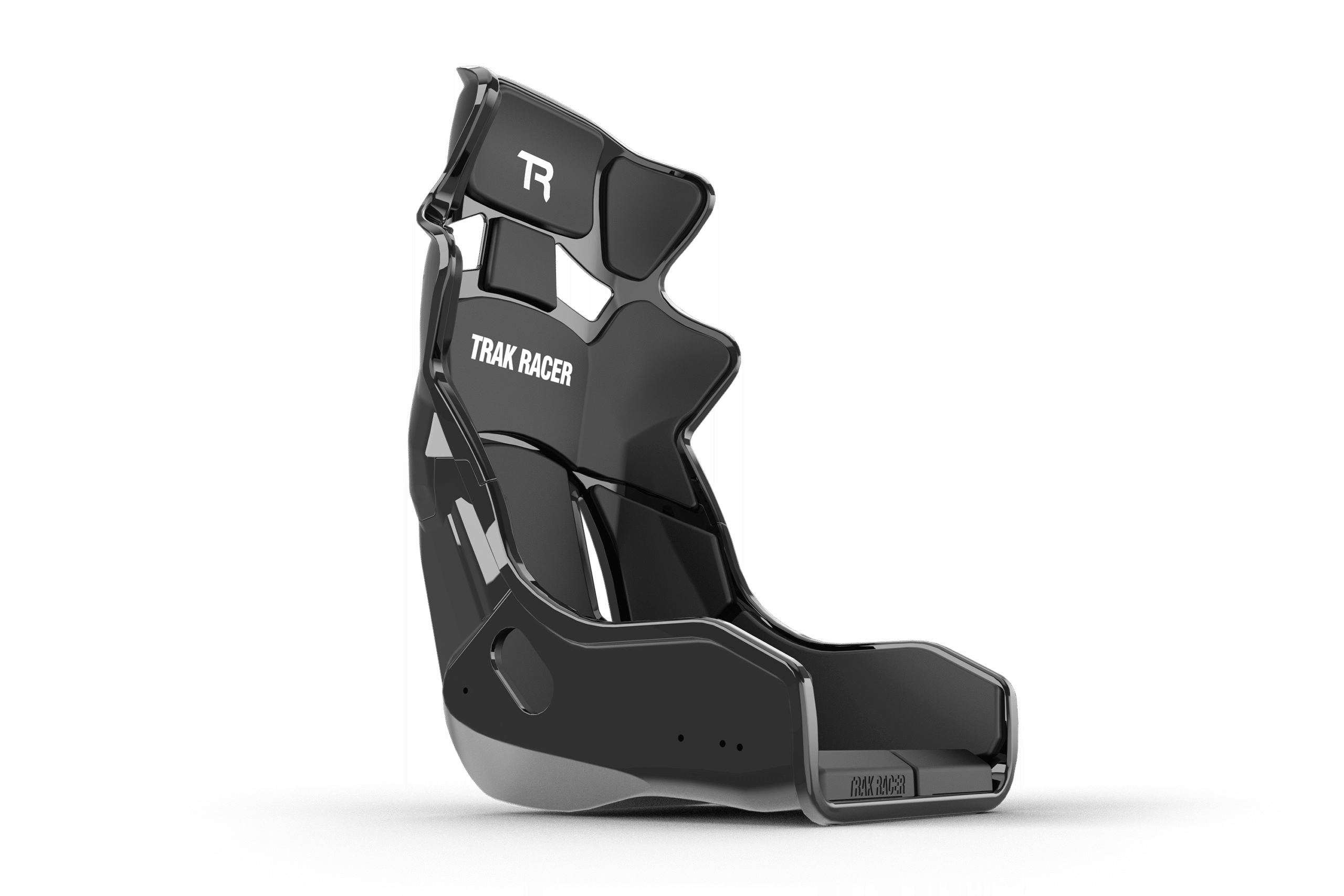
Trak Racer’s seat range runs from $299 recliner seats up to $439 for the new pearlescent colour-shift fiberglass GT Pro seat. The HSX Hybrid Formula Pro BWT Alpine F1 Team Edition is $409, which is the Alpine F1-engineered option designed to work with the TRX’s position switching – the closest thing the catalogue has to “engineered alongside an F1 team for real”.
Here’s where I need to be honest about something. The GT fiberglass seat is where the TR120 falls apart. Under heavy braking force (60-80kg, which is normal with load cell pedals), the seat back can physically pop out of its mounting. The fix is to swap in a rally-style bucket seat instead.
That’s a specific, well-documented issue with the GT fiberglass option. The RS GT Rally-Pro Fiberglass at $349 doesn’t have this problem because it’s a single-piece construction. If you’re running serious load cell pedals – Heusinkveld Sprints, Simucube ActivePedal, anything pushing real force – go rally seat, not GT. Sean Cole’s TR8 Pro V2 review echoed this: “the seat doesn’t care about your comfort.” For the broader cross-brand picture, the sim racing seat guide covers the bucket-vs-GT decision in more depth.
Monitor Stands and Mounts
This is one of Trak Racer’s stronger categories. They make freestanding and cockpit-mounted monitor stands for single, dual, triple, and even quad setups. The freestanding options are worth noting because they don’t attach to the cockpit frame – that means zero vibration transfer from your wheelbase to your screens.
The freestanding triple stand runs $599 and handles monitors up to 55 inches. The quad freestanding stand sits at $749. Both handle the kind of width modern triple setups need. If you’re running smaller screens or want to bolt straight onto the rig, the 980mm Triple Add-on Arms ($179) attach directly to the extrusion profile of any TR-series cockpit. The integrated cockpit mounts work with the TR120S, TR160 and TR160S and support singles up to 80 inches.
They’ve also started selling their own branded monitors – a 49-inch ultrawide and a 34-inch curved ultrawide. I haven’t seen community reviews of the Trak Racer monitors specifically, so I’d be cautious there. The monitor stands themselves are well-regarded. For the cross-brand monitor picture, the gaming monitors guide covers the wider field.
The VNM Peripherals Line
Worth being clear about what’s shipping versus what’s been announced, because the gap between Trak Racer’s roadmap and what you can order today is wider than the marketing suggests. Here’s the honest picture as of mid-May 2026.
VNM – the peripherals Trak Racer distributes
VNM Simulation is an independent Vietnamese manufacturer that Trak Racer distributes, the same way they resell Simucube, Heusinkveld and Moza, and the two products you can order through the affiliate catalogue today are:
- VNM 3-Pedal Set ($650): “Professional Load Cell” 3-pedal set. This is the real Trak Racer answer to Heusinkveld Sprint territory – load cell brake, hall-effect throttle and clutch, mounts straight onto the TR-series rigs.
- VNM Rally and Drift Handbrake V1.5 ($279): A proper hydraulic handbrake at the entry rally/drift price point. Sits well below the Heusinkveld and Asetek handbrake options on price.
For wheels in the catalogue that Trak Racer have either developed or rebranded, you’ve got the Trak Drift Deep-Dish 350mm ($99), the Trak Tour wheel ($39), and a co-branded REXING Formula Mayaris 2 Carbon at $1,599 for serious money. The deep-dish is the obvious pick for drift practice; the Mayaris is a proper carbon formula option if you want a credible flagship wheel without going to Cube Controls.
What’s been announced but I can’t see in the catalogue yet
Trak Racer have publicly trailed an own-brand direct drive wheelbase line (mid-range and a 30Nm Ultimate), a BWT Alpine F1 1:1 Replica Wheel at around EUR 1,999, a Sequential Shifter PRO, and a higher-spec 200kg-load-cell pedal set. None of these are in the affiliate catalogue at the time of writing. Treat the announcement coverage as future-looking – I’ll update this guide when actual SKUs go live, but right now if you want a Trak Racer-branded DD wheelbase or a Trak Racer-branded shifter, you can’t buy one.
What the Community Thinks
I’ve spent a fair bit of time reading through Reddit threads, watching YouTube reviews, and going through forum posts on Trak Racer. The picture that emerges is consistent – good hardware, frustrating service.
The Good
Rigidity is the word that comes up most. The TR120 and TR160 are properly stiff rigs that handle serious direct drive hardware without flex. The TR120 wheel deck holds firm even at high torque, with no flex worth mentioning. The pedal plates on newer models are a massive improvement over older versions. Assembly instructions have got better too, though they still lag behind Sim-Lab’s documentation.
The Not-So-Good
Customer service is the consistent pain point. Missing components in deliveries, slow email responses, and stock availability problems – particularly for European and UK buyers in late 2025 – come up repeatedly. Reviews of the TR120 specifically mention missing boxes on delivery and missing components inside the boxes that did arrive. Multiple Reddit threads echo the same experience.
The GT fiberglass seat issue I mentioned earlier is the other major concern. It’s a well-documented problem that Trak Racer hasn’t fully addressed. If you’re buying a Trak Racer rig, budget for a third-party racing seat or go with the Rally-Pro option. It’ll save you frustration down the line.
Trak Racer Black Friday 2026
Our forecast for Trak Racer this Black Friday is medium to high, and we’re expecting another store-wide percentage off its own rigs and accessories. Back in 2024, the sale was 15 percent off all Trak Racer products and, going by its published terms, ran from 1 to 30 November. Trak Racer ran a Black Friday collection again in 2025, and the collection page is still live. The archived copy of it gives no start date and doesn’t print a percentage. The 2026 collection isn’t up yet.
If you’re waiting on a rig, the ones to watch are the TR40S, TR80S, TR120S V2 and TR160 V5. Trak Racer has newer models on its New Releases page, but none we found replaces the TR80S, TR120S V2 or TR160 V5. Don’t take the “On Sale” link on Trak Racer’s site as the Black Friday sale starting early – it goes to a clearance collection, which had small accessories in it on 8 October.
No Trak Racer Black Friday deals listed yet – check back. We check daily from 10 November.
Our Black Friday page has Trak Racer’s full forecast, its past Black Friday deals and the confirmed deals as they come in, alongside the other brands we’re tracking. Once the sale is over, we go back and mark each forecast there as a hit or a miss.
Building a Complete Trak Racer Setup
Three realistic builds at different price points, using Trak Racer cockpits as the foundation. I’m pairing them with peripherals that make sense at each level – a mix of VNM kit and the third-party stuff Trak Racer also stock.
Entry Build (~$1,500-2,000)
TR40S frame ($349) + Rally-Pro seat ($349) + basic pedal plate. Pair it with a Moza R5 or Fanatec CSL DD and CSL pedals (or step up to the VNM 3-Pedal Set if you’re committed to load cell from day one). Add a basic single monitor mount and a 27-32 inch monitor. This gets you a proper rig that handles entry-level direct drive without flex, and the Rally-Pro seat won’t let you down under braking. The TR40S + Moza R3 bundle ($709) is also worth considering as a quicker route to the same place.
Enthusiast Build (~$3,500-5,000)
TR120S V2 ($719) or TR160S V2 ($600) frame + Rally-Pro or third-party bucket seat + freestanding triple monitor stand ($599). Run it with a Fanatec DD+ or Moza R12 V2 and either Heusinkveld Sprint pedals (third-party, sold through trakracer.com) or the VNM 3-Pedal Set. The TR120S V2 with TR-One wheel mounting gives you four different wheelbase mount options, and the direct-fit motion compatibility means you can add motion later without buying a separate base plate. This is the sweet spot where the hardware properly matches the ambition.
No-Compromise Build (~$10,000+)
Racing TRX V2 Black ($999) + HSX Hybrid Formula Pro BWT Alpine seat ($409) + freestanding quad monitor stand ($749). Pair with a Simucube 2 Pro, Heusinkveld Ultimate+ pedals, and the VNM Handbrake V1.5 ($279). The TRX’s tool-free F1/GT switching makes practical sense at this level because you’re likely running multiple disciplines. Or if you’d rather not source the parts yourself, the four “Spec” plug-and-play packages run from the Spec 1 TR8 Pro at $9,388 up to the Spec 4 TR160 Motion at $21,999 – everything in one order, motion included on the Spec 4. For peer comparisons in this bracket, the best sim rigs on the market roundup covers Sim-Lab and the dedicated boutique manufacturers.
The honest summary on Trak Racer is this: the cockpits are properly well-engineered, the range is broader than almost any competitor, and the Alpine F1 partnership gives them credibility that’s hard to argue with. The customer service situation is a real concern, and I’d factor that into any purchase decision. The ecosystem is properly growing – VNM peripherals are real, the announced DD wheelbase line probably will land in time, and the Spec packages are a credible “one box, sorted” option for buyers with the budget. If you’re patient and the hardware ships correctly, you’ll end up with a seriously rigid rig. If things go wrong with the order, brace yourself for a slow resolution. That trade-off is worth understanding before you commit.
Related Posts
Sim Racing Wheel Stands and Folding Cockpits: Why I’d Skip One, and What to Buy Instead
The Best Direct Drive Sim Racing Bundles (2026)
Best Thrustmaster Wheel and Pedal Mods (2026)
ButtKicker and Tactile Feedback for Sim Racing: The Highest-ROI Upgrade You Shouldn’t Skip (2026 Beginner’s Guide)
Sim Racing Motion Platforms: A Beginner’s Guide to Adding Motion to Your Rig (2026)
D-Box Sim Racing: The FIA-Supplier Haptic System Explained (2026 Buyer’s Guide)
Topic: Buyer's Guides