

I’m a sim racer and amateur racer with a passion for Motorsport, good racecraft and the technical and setup aspect of sim racing.
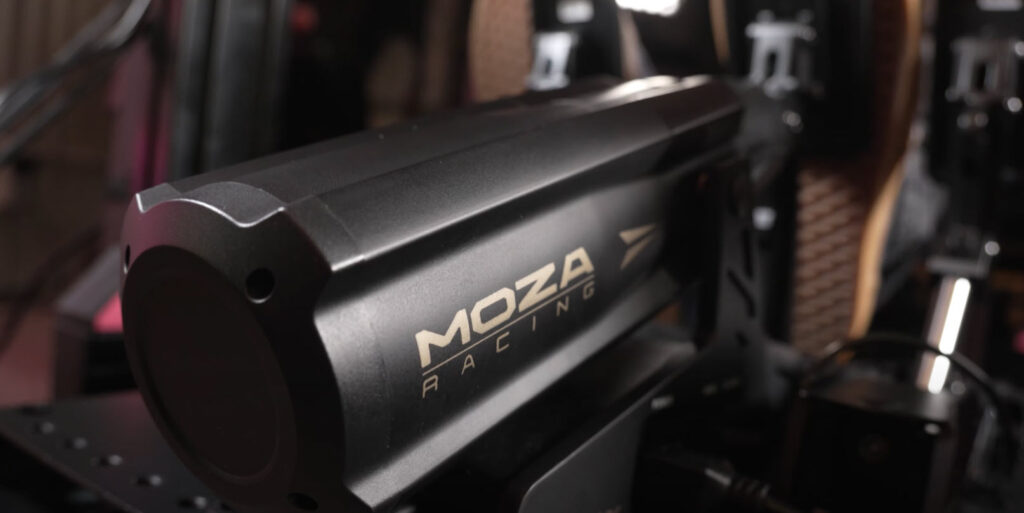
Featured image: Moza R25 Ultra wheelbase
Moza is owned by Gudsen, and it’s a deceptively large company – big enough to iterate on its product range at quite an alarming pace. Those economies of scale are why the kit is so inexpensive, and the software ecosystem behind it is really mature now. When Fanatec ran into its financial difficulties a few years ago (Corsair bought the business out of Endor AG’s insolvency in 2024), Moza was primed to swoop in, took the entry-level market share and undercut Fanatec drastically on price while it was at it. I’d classify Moza as excellent beginner to intermediate to high-end sim racing equipment. The R21 Ultra is one of my favourite wheelbases, very impressive and very nicely made, and the FSR2 is my favourite Moza wheel.
Moza discount code: use SIMRACINGCOCKPIT at checkout for 3% off at mozaracing.com.
Today I’m going through the whole Moza range, from the R3 bundle up to the R25 Ultra, plus the flight sim gear, which has grown into a range of its own.
Quick Navigation
Jump directly to what you’re looking for:
What’s new |
Wheelbases |
Steering wheels |
Pedals |
Shifters and handbrakes |
Bundles |
Flight sim |
Black Friday 2026 |
Which should you buy?
What’s new at Moza
The R16 Ultra arrived in July 2026 and has taken the R16 V2’s place in Moza’s line-up, bringing the Ultra series’ flat-wire motor to a 16 Nm base. The same launch added the R5 Pro, a 6 Nm bundle-only tier above the R5. In September 2026 Moza announced its first PS5 products, the R5S Pro and the R16S Ultra, with native Gran Turismo 7 support. They’re still waiting on Sony’s final approval, there’s no price or release date yet, and none of the existing R-series bases work on a PS5.
On the software side, AI Coach is now built into Pit House for every user. It drives the wheelbase (and the active pedals) so you can feel the inputs, and compares your laps against AI reference laps. Moza has also moved into motion with the HMA150, a four-actuator haptic motion system, and the PHF kit adds haptics to Moza pedals that don’t have them. The flight side picked up a new line of cockpit panels, from a G1000-style instrument panel to Airbus and Boeing flight computer displays.
Moza direct drive wheelbases
The R3 and R5 are sold only as bundles now, which is how I’d buy them anyway. I see the R3 as very much an entry-level wheel, designed to wipe away what’s left of any market share the Logitech G923 might still be clinging on to, and choosing it as your very first sim racing package is a no-brainer. It’s straightforward enough to set up without the manual (my 7-year-old happily spent a few days putting it through its paces). The R5 offers a similar level of detail and overall feel, with the main difference being peak torque. My first reaction to the R5 was, genuinely, “Wow” – the texture on the track was enough to rattle loose items on my desk, and having come from a Simucube 2 Pro I was still impressed. My R3 review and my R5 bundle review have the setup and the settings.

Above the bundles, the R9 V3 and the R12 V2 are the two bases Moza sells on their own below the Ultra series. If you’re weighing the R9 against Fanatec’s entry base, my Fanatec CSL DD vs Moza R9 comparison covers the older model. I’ve spent longer with the R12 than with any other Moza base. 12 Nm feels like more than enough power to cover almost every sim racing discipline, with enough room to prevent clipping, and working at the top end of its torque it doesn’t clatter or feel like it’s going to shake itself to bits. Kerb strikes, bumps and oversteer come through cleanly; understeer was less clear in Assetto Corsa, and setting AC’s slip value to 50 or above seems to help. It could even be enough power to never want for anything else, and I’ve put the full Pit House settings list in my long-term R12 review.

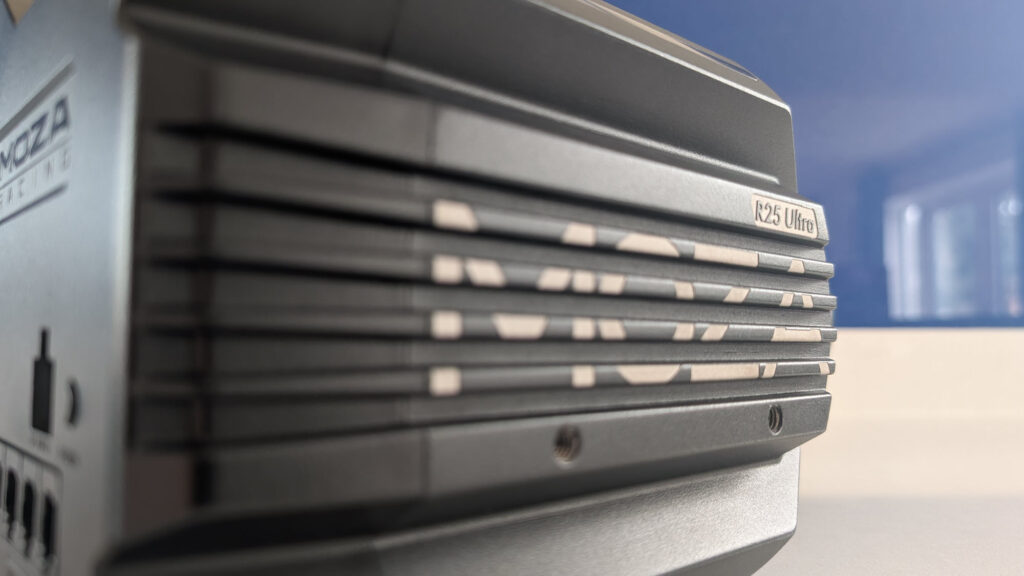
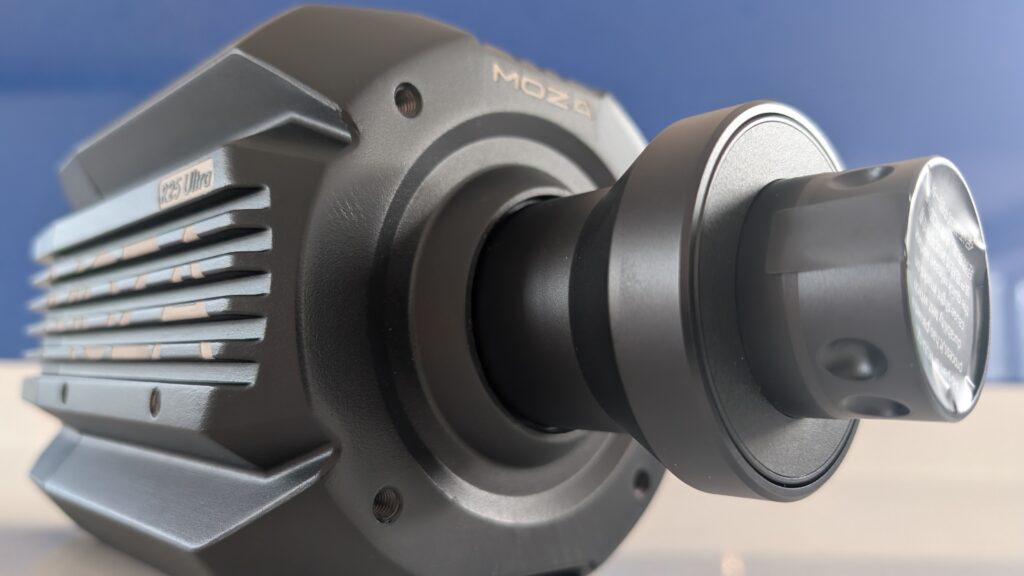
Above the R12 there’s now the R16 Ultra, and above that are the R21 Ultra and R25 Ultra, which I tested together (Moza sent me the R21 by mistake, I think, which is of course absolutely fine). Drag one of these out of its foam inserts and you’ve got a fully CNC-machined aluminium housing in your hands, and they’re heavy – you’ll need a proper aluminium profile rig. Every time I grab the wheel, the first thing that hits me is the sharpness, with virtually no detectable latency. The default iRacing profile felt a bit peaky, so I’d raise Wheel Damper in Pit House to 20-30%, and if the centre feels strangely dead, turn Hands-Off Protection down or off. Once dialled in, the spikiness disappears and I found myself catching slides quicker and earlier than I typically would. The R25 adds Moza’s True Torque sensor; for most sim racers that’s a luxury rather than a necessity, and the R25 sits comfortably in the pro setup category. For what it costs, the R21 is a particularly safe bet. The detail is in my R21 and R25 Ultra review.
You’ll also see the AB6 and AB9 in Moza’s list of bases, but they’re flight sim bases, not wheelbases, so I’ve covered them with the rest of the flight gear.
Moza steering wheels
The FSR2 is Moza’s formula wheel, and its 4.3-inch touchscreen is only 480p, but it’s crystal clear and absolutely does the job, and it’s handy for quick settings changes between practice sessions without reaching for the mouse. The six-paddle setup might sound excessive, but in modern sims where you’re managing DRS and dual clutches, dedicated paddles are a nice thing to have. The magnetic shifters feel very similar to Fanatec’s Podium paddles, and the dual clutch paddles are there for race starts. My FSR2 and CM2 review covers the wheel alongside the dash.

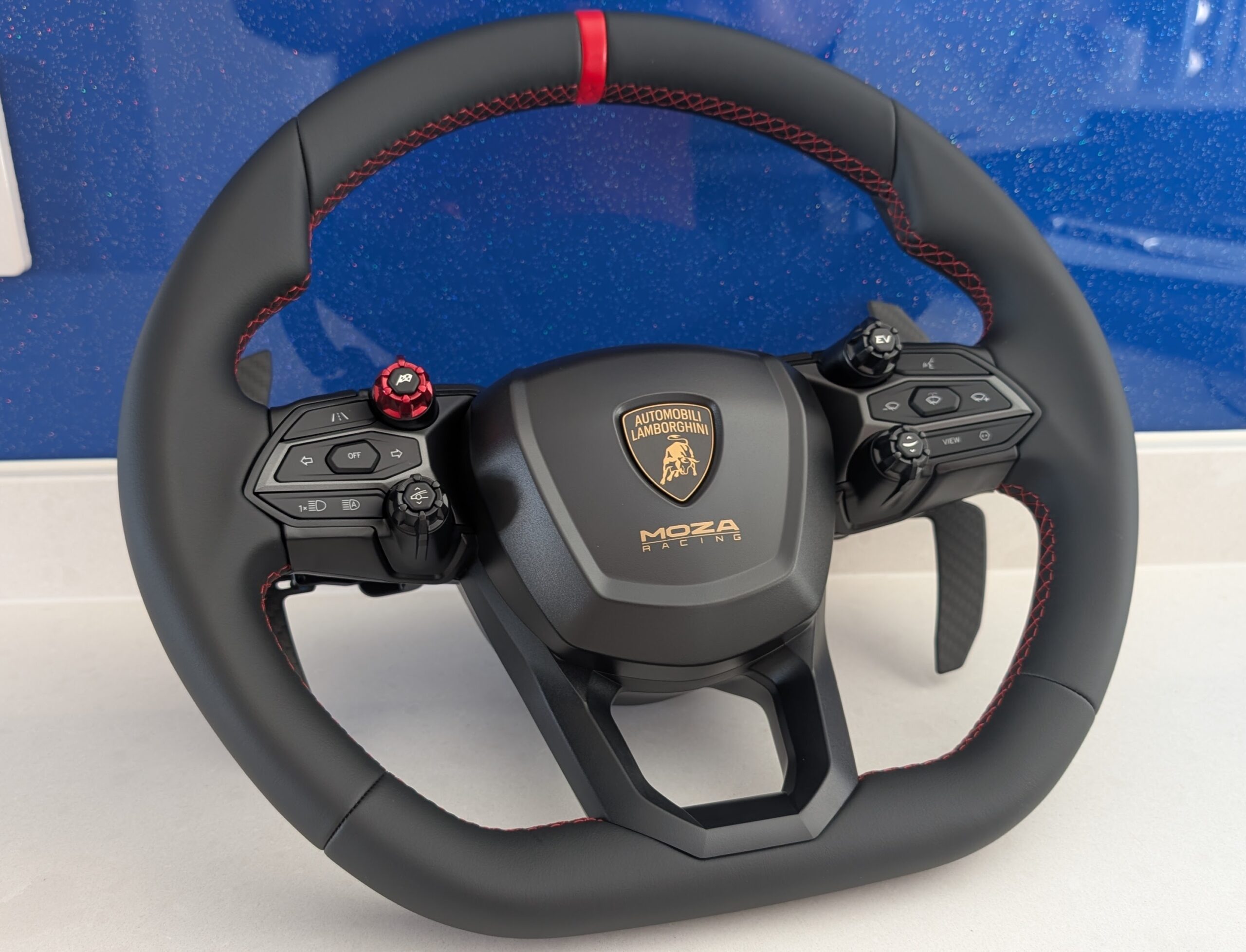
The Vision GS is absolutely stunning. It surprised me when it arrived because it’s a more premium design than we’d been accustomed to from Moza: composite and aluminium, a GT-style figure-of-eight shape and a self-levelling centre screen that made the data an awful lot easier to consume. The paddles are a little noisier than the quietest wheels, about on par with the Cube Controls GTX2. I ran mine on my Simucube 2 Pro through Moza’s Universal Hub Kit and a Sim Racing Machines 70mm PCD adapter, and the wheel communicated the FFB nicely without leaving anything off the table. That’s all in my Vision GS review. The Lamborghini Revuelto is the licensed wheel I’ve had on the rig, and it’s amazing for just a thrash around Assetto Corsa – there’s more in my Revuelto review.

In the middle of the range, the CS Pro (325 mm) and KS Pro (300 mm) are the newest rims, with the older CS V2P, KS and GS V2P below them and the 330 mm RS V2 – a smaller rim gets your hands round a hairpin quicker, and a bigger one makes a strong base easier to hold. At the top, Moza sells two licensed flagships, the Lamborghini Essenza SCV12 and the Porsche Mission R, and has shown Mercedes-Benz, Porsche 911 GT3 RS and Ford Mustang GTD wheels that aren’t on sale yet, and my ranking of the best Moza wheels puts the ones you can buy in order.
Moza pedals
The CRP2 is Moza’s flagship load cell pedal set, with a 200kg cell in the brake. I prefer to push at my usual 120-130kg, which gets the cell nowhere near its limit, and you set the maximum force that suits you in Pit House. The adjustability is where these pedals shine – pedal plate height, pedal arm angle, spring preload and total travel – and lap after lap they delivered the same feel, which is what builds muscle memory. One tiny gripe: changing the brake elastomers can be fiddly, and the manual suggests using foot pressure to take the brake apart, which I found a bit awkward. There’s a USB adapter in the control box too, so they’ll work with a non-Moza base. There’s more in my CRP2 review.

The mBooster is Moza’s active brake pedal: a servo motor and ball screw instead of springs and elastomers, so you set how the pedal feels in Pit House, along with its ABS, TC, engine vibration, brake threshold and wheel lock effects. It replaced my previous favourite, the Conspit CPP.Lite brake, and put simply it makes the hobbyist pedal rumble motor projects completely obsolete. It’s worth getting the threshold setting right, because having a little buzz when the tyres are braking at their maximum available grip is powerful information. It takes about 30 minutes to learn the pedal’s “language”. Mounting is the catch: it’s 382.5mm long, and I had to lengthen my pedal base and add an extra 4040 profile at the end to fully mount it. It replaces the CRP2 brake and talks to the CRP2 throttle and clutch directly, so the control box isn’t needed. My effects settings are all in my mBooster review.
Below the CRP2, the SRP2 is a 100kg load cell set, so the brake answers to how hard you press rather than how far, and it comes in the “with SRP2” bundles. The SR-P Lite and SRP Lite2 sets only come inside bundles. If your pedals don’t have haptics, the PHF Pedal Haptic Feedback Kit adds a vibration module (0-100 Hz) to SR-P, SRP2, SRP Lite2 and CRP2 pedals.
Moza shifters and handbrakes
The HGP is Moza’s H-pattern shifter, and H-pattern only: seven gears plus reverse, pushing the lever down to reach both reverse and 7th. For the money the feel is great, with the right amount of clackiness (is that a word?), and it indexes as naturally as a racing box. It’s stiffer than the Fanatec SQ, by some margin, but I had no trouble adjusting to it within a few laps. If it won’t calibrate, hold the lever down while you move it from the extreme left to the extreme right – get that wrong and 1st gear can put the car in reverse. Once calibrated, it doesn’t need Pit House running at all. The full story is in my HGP review.

The SGP is Moza’s sequential shifter, a heavy-set, all-metal unit for rally and touring cars. You can lengthen the handle, and there’s a multi-function handle too – a small brake-handle style addition like the one you’d find on a race-spec Mini JCW. I tested it in iRacing with a TCR car at Lime Rock and found myself really enjoying shift after shift. It’s the most “bang for the buck” update I’ve ever made to my sim, and the install is in my SGP review. The HBP is the handbrake that pairs with it. It reads the pull with a 15-bit angle sensor, and you can swap the spring and the pair of elastomers to change the feel. There’s no side-to-side play in the mechanism, and the endstops give a soft, quiet ending to a rapid pull. My only gripe is that there aren’t many angles to choose from for the handle. And don’t expect to daisy-chain it through the SGP – Pit House didn’t see mine over the RJ11 cable, which is meant to connect directly to a Moza wheelbase. My HBP review covers the setup.

For how these compare with everything else, my sim racing shifters guide and my sim racing handbrakes guide rank the lot.

Moza bundles
The R3 comes as a PC bundle with SR-P Lite pedals or as the Xbox and PC bundle with the ESX wheel, which is officially licensed for Xbox Series X|S and is the Xbox route into Moza. The R5 Pro Racing Simulator adds the ES Lite wheel and SRP Lite2 pedals, and there are two trucking bundles with the TSW wheel. Further up, the R9 V3 and R12 V2 bundles pair the base with a wheel but no pedals, apart from the four “with SRP2” bundles, which add the 100kg load cell SRP2 pedals. There are no bundles above the R12.

A bundle is the sensible start because everything arrives in one box and talks to the same software. With the R5 I didn’t read the assembly instructions until I wanted to know how to lock the wheel onto the hub, and the whole package offers a balanced introduction to sim racing with almost no barriers to getting started. You can always add a better wheel or pedals later.
Moza flight sim gear
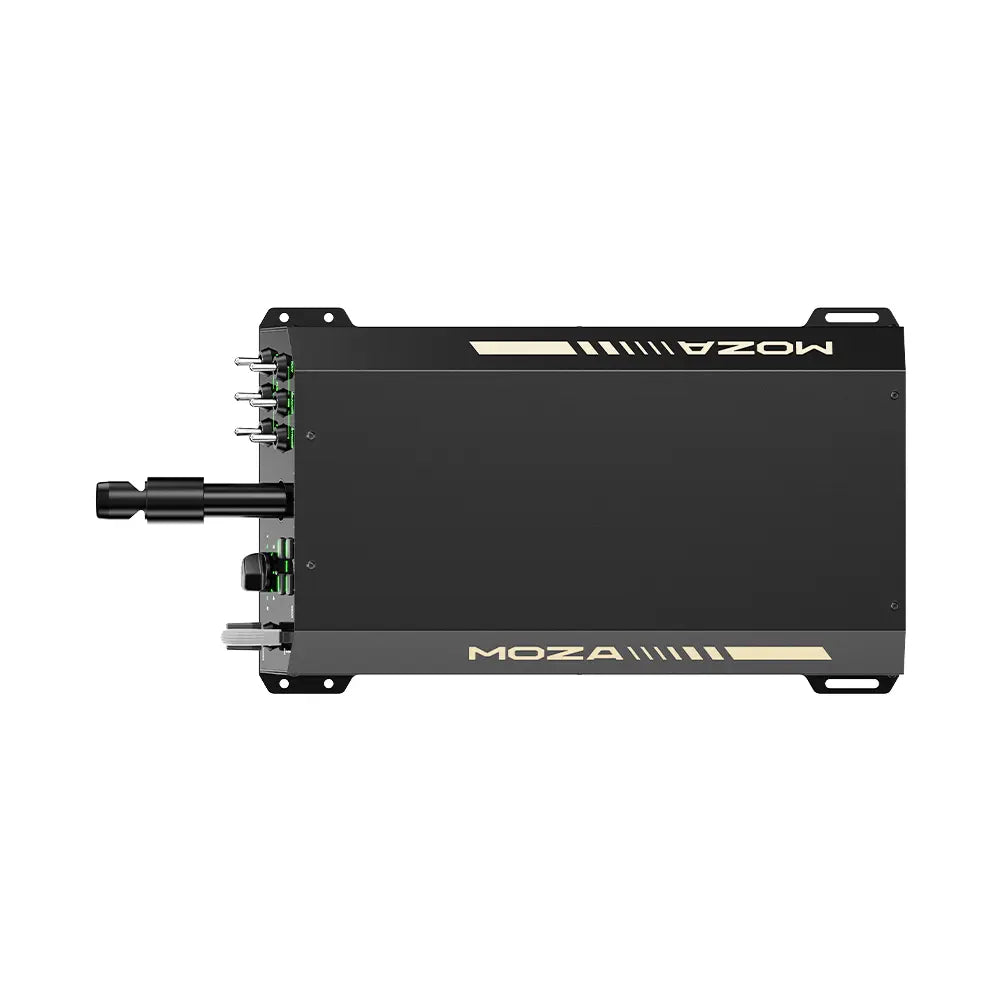
I have the AB6 on my bench for review at the moment, the 6 Nm force feedback base sold with the MHG flightstick, and it’s so impressively built. Above it is the AB9, a 12 Nm FFB base. Both work with Moza’s sticks and with third-party ones, and since September 2026 Moza’s FFB-Bridge partnership brings force feedback for its flight bases to macOS and Linux.
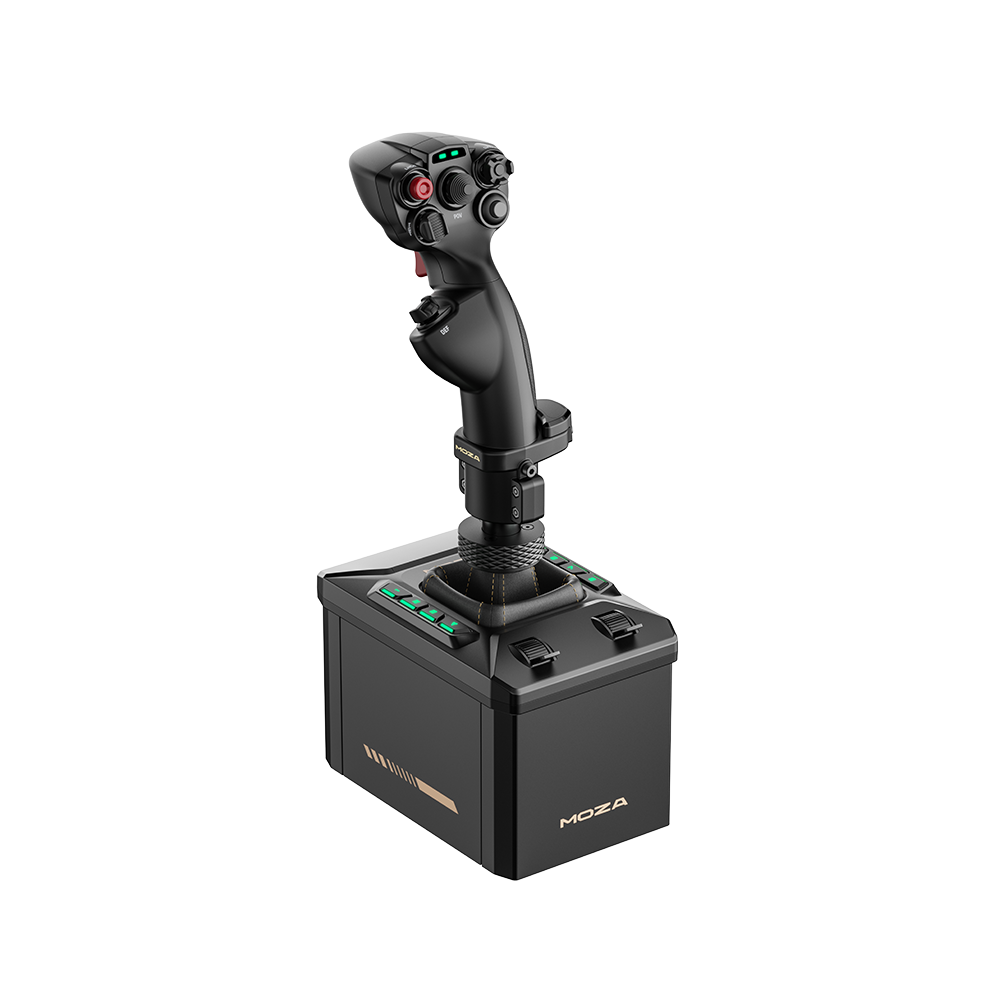
For yokes, the AY210 is the bigger force feedback base, with 210 N of push force against the new AY90’s 90 N. The MFY yoke handle goes on top, or the MFY Pro, which adds a 4.3-inch touchscreen and Hall-effect sensors.
If you fly airliners, the four-axis MTQ throttle quadrant takes the TQA (Airbus) and TQB (Boeing) lever modules, and the new MA3F and MB7F flight computer displays match them. The MGX1000 G1000-style panel is for light aircraft and the FMP18 front panel for carrier jets. The MHG, MH16 and MA3X side stick cover the sticks, the MTP is the other throttle, and the MRP rudder pedals take an optional adjustable damper. My flight sim gear guide covers where Moza fits against everyone else, and I’ve ranked the best joysticks for flight sim and the best flight sim throttles separately.
Moza Black Friday 2026
For Moza’s Black Friday 2026 sale, we rate the chance of a deal on the R3 racing bundles as high. The original R5 Bundle, which Moza now sells alongside the R5 Pro, rates high, if stock lasts. Behind those we have the R12 V2 bundles at medium to high and the R9 V3 bundles at medium. Bear in mind that Moza’s store carries standing “Save” tags on its bundles, so a markdown there at the moment doesn’t mean the Black Friday sale has started.
As of early October, Moza hasn’t put up a Black Friday page for 2026. Last year Moza’s own terms ran the sale from 14 November to 5 December 2025. The cuts were small, 6 to 14 percent, on bases and bundles across a lot of the range. Newly released products were left out, which is why we don’t expect the R5 Pro or the R16 Ultra on sale. We don’t expect the R5S Pro and R16S Ultra PS5 range Moza showed in September either.
No Moza Black Friday deals listed yet – check back. We check daily from 10 November.
The full forecast and last year’s deals are on our Black Friday page, and that’s where we post the confirmed deals.
Which Moza should you buy?
If you’re starting out, buy a bundle. The R3 bundle is where I’d start (or the Xbox bundle if you’re on an Xbox), while the R5 gives you a little more torque for the same easy start.
If you’re buying a base to keep, I’d pick the R12, because 12 Nm covers almost every discipline with room to spare. Above that, I’d go to the R21 Ultra, and only step up to the R25 Ultra’s True Torque sensor for a pro-level setup.
For the wheel, I’d buy the FSR2 if you drive formula cars and want the screen and the paddles, or the Vision GS if you want a GT rim. For pedals, I’d start with the CRP2 and add the mBooster brake if you want ABS and wheel lock under your foot. I’ll see you out on track!
Related Articles
Should Sim Racers Wait for the Pimax Crystal Pro, or Buy Today?
Sim Racing Wheel Stands and Folding Cockpits: Why I’d Skip One, and What to Buy Instead
The Best Direct Drive Sim Racing Bundles (2026)
Best Thrustmaster Wheel and Pedal Mods (2026)
ButtKicker and Tactile Feedback for Sim Racing: The Highest-ROI Upgrade You Shouldn’t Skip (2026 Beginner’s Guide)
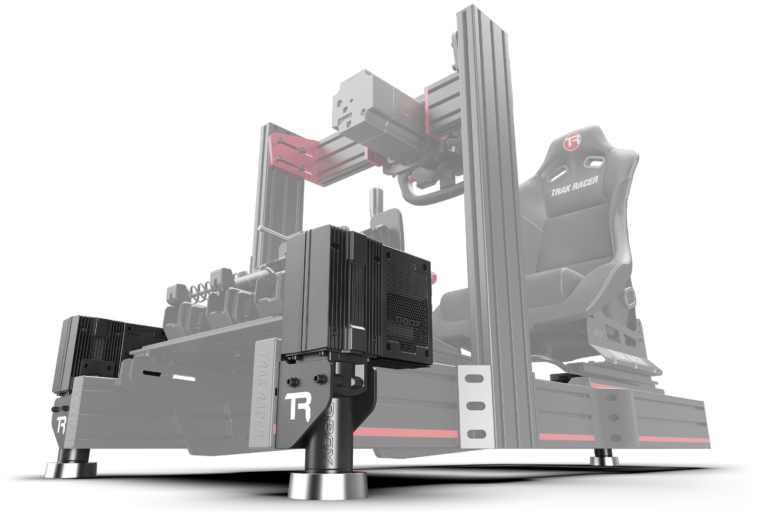
Sim Racing Motion Platforms: A Beginner’s Guide to Adding Motion to Your Rig (2026)
Topic: Direct Drive Wheels