
I’m a sim racer and amateur racer with a passion for Motorsport, good racecraft and the technical and setup aspect of sim racing.
In a real car, you feel every detail: the tyre under rotation as you brake, a lock-up at the front through the pedals and understeer through the steering wheel. The rotation of the car into a corner and the movement at the rear are felt through your body, and the quick reflexes you need to catch an oversteer moment are usually triggered by sensations through your bottom! Because you can’t feel any of that in the sim, you learn to take other signals into account, like hearing understeer over the speakers or spotting over-rotation with your eyes and through the steering wheel. A lot of people are buying motion sims for this exact reason.
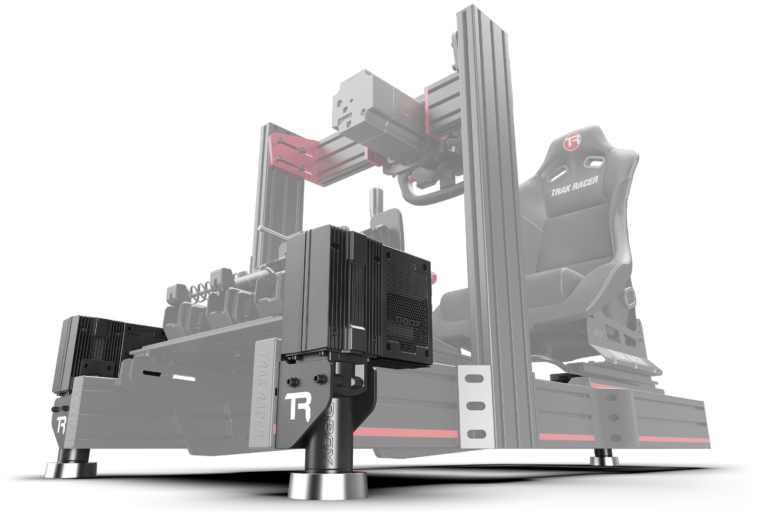
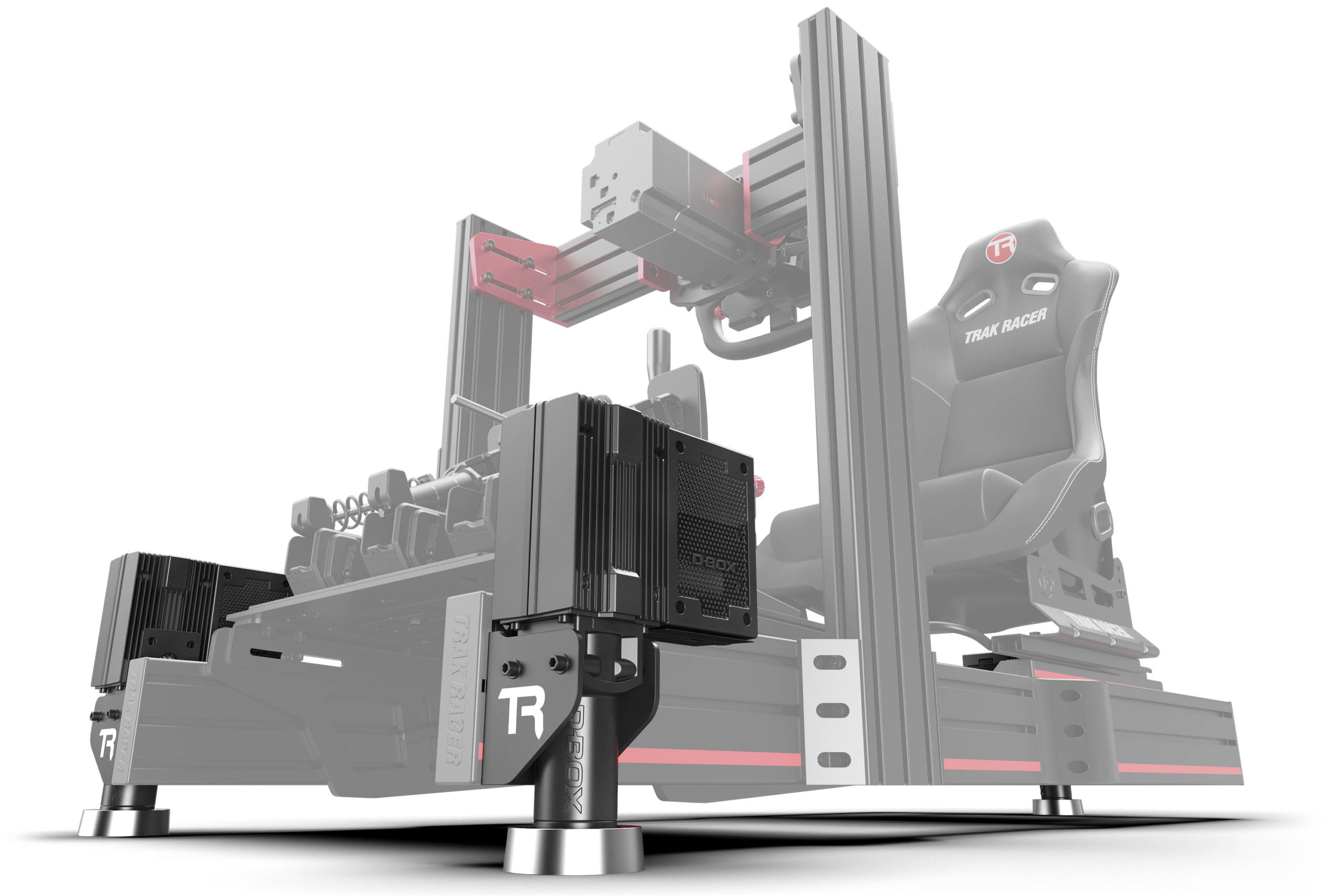
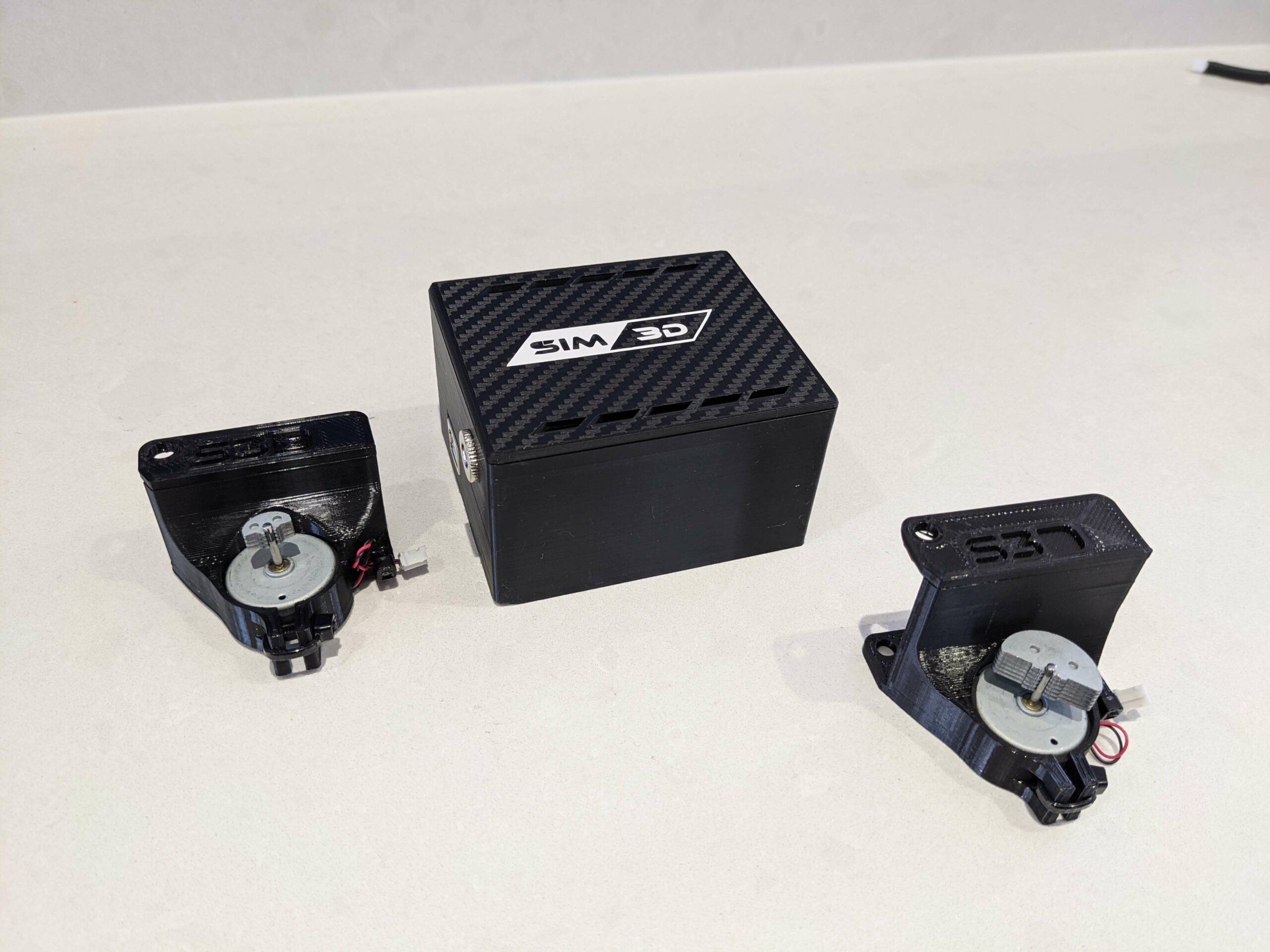
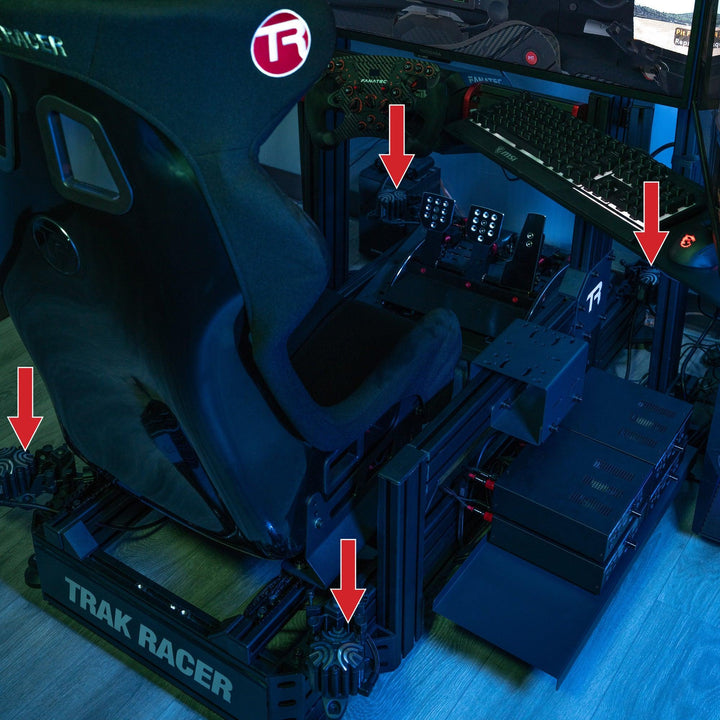
Start with tactile feedback, such as a ButtKicker, unless your rig is already fitted with something like a D-BOX motion system. For full motion, the MOZA HMA150 costs US$2,999 on MOZA’s US store at the time of writing, which is about half the price of D-BOX’s four-actuator 4250i kit. D-BOX G5 is the one for haptic detail, and Qubic suits you if you’d like to start at 2DOF and upgrade later. Motion won’t make you any faster, though, and it belongs at the end of the upgrade list. I’ve fitted and raced with a ButtKicker Gamer Plus on my own rig, and a Sim3D pedal rumble kit on my Heusinkveld Sprints.
Quick Navigation
Jump directly to what you’re looking for:
What is a motion platform? |
Tactile, haptics or motion |
DOF explained |
What to look for |
MOZA HMA150 |
D-BOX G5 |
Qubic System |
Next Level Racing |
DOF Reality |
Vero and the high end |
Will motion make you faster? |
What you need first |
Motion in VR |
How much does motion cost? |
Which setup should you buy?
What is a sim racing motion platform?
A motion platform takes the data your sim sends out while you drive and turns it into movement. That data is called telemetry, and it carries the speed, the suspension travel, the G forces and the yaw of the car. Bridge software reads the telemetry and tells the actuators what to do. An actuator is the motor and mechanism that does the lifting and tilting. The bridge software can be SimHub or Sim Racing Studio (SRS), and the makers have their own apps too: MOZA Motion Manager, D-BOX HaptiSync Center, Qubic Manager and NLR Platform Manager.
If you race on a console, thankfully Gran Turismo 7 on the PS5 does send telemetry over the network, and SimHub lists it as supported. SRS calls its own GT7 support experimental, because there’s no official telemetry from the developer, and it needs a wired network connection. It also sells a MagicBox, which runs SRS without a Windows PC. The HMA150’s game list has no GT7 and no console at all, so if you race on a PS5 it’s worth checking the software support before you look at the hardware.
Tactile, haptics or motion?
I hate to admit this, but despite how long the ButtKicker brand has been around in the sim racing community, I’d never tried a rig with one installed until I fitted the Gamer Plus in 2022, and it was a revelation. A ButtKicker is a tactile transducer (a bass shaker), which works like a speaker that vibrates the seat instead of making sound. As a track driver, I really like the feeling of the engine in a stiff chassis like the Radical SR3, where you feel every single RPM vibrate the car and every gearshift has a kick to it as the torque curve resets and the acceleration begins again. I clamped mine to a 40×40 aluminium profile bar under my seat, which took minutes. I’d been warned they can be noisy, but I was impressed by how quiet it was. In the Formula iRacing IR-04 it handled the gearshift in an extremely lifelike manner, literally like a kick in the seat.

Before the ButtKicker I’d been a fan of the SimHub-powered Sim3D rumble kit on my Heusinkveld Sprints, which lets you feel under rotation and a lock through the pedals. During testing I found about another 3% of maximum brake force in the pedal. Each addition I’ve tested makes for a valuable extra source of information, but there’s a big difference between a rumble kit with motors or a ButtKicker and a haptic system. When I wrote about this in 2021, rumble kits, ButtKickers and vibrating seat cushions all used audio waveforms to create the feedback. There was a limited dynamic range to them, which made conveying detail in a way that would immediately make sense to a racing driver very difficult. ButtKicker says its HaptiConnect software can now use in-game telemetry as well as audio. Vibration isn’t information, and with vibration you have to learn to interpret the signals rather than immediately recognising them as a real-world feedback experience. D-BOX is the example on the other side, with motion and vibration from the same actuator (“No shaker required!”, in D-BOX’s words) and effects coded for more than 100 games.
On 29 September 2026, ButtKicker’s own store showed every Gamer Plus and Gamer Pro (the version with the bigger 150 W amplifier) as sold out, along with everything else it sells, and it doesn’t say why. The Gamer Plus is the model that replaced the Gamer2. If you can’t wait, the Dayton Audio BST-1 is a 50 W RMS shaker covering 10-80 Hz, and Trak Racer sells complete amp and shaker kits, which are in the table below.
DOF explained: 2DOF, 3DOF and 6DOF motion
DOF stands for degrees of freedom, which is the number of independent ways the system can move you. Pitch tips the nose up and down, which is what you feel under braking and acceleration. Roll tilts you left and right through a corner, heave lifts the whole rig up and down over bumps, kerbs and crests, and yaw rotates you as the rear steps out. Surge and sway are the forwards-and-backwards and the sideways shunts. Actuator count isn’t the same as DOF count, either, because four actuators at the corners give you pitch, roll and heave, which is 3DOF. 6DOF usually means six actuators working together in what’s called a Stewart platform.
You’ll also need to decide whether the platform moves just the seat or the whole cockpit. A seat mover moves only the seat, so the wheel and pedals stay still in front of you, and Next Level Racing’s Motion Platform V3 works this way. A chassis mover moves the whole cockpit with the seat, wheel and pedals together, which is how the NLR Motion Plus and the MOZA HMA150 work. The SimRacing Den calls a 2DOF seat mover or a 2.5DOF pivot setup “often the best entry point”, while others argue you should start at 3DOF. A 2DOF seat mover has no heave, though, so it can’t lift you over a kerb.
| Axis | What it does |
|---|---|
| Pitch | Tips the nose up and down – braking and acceleration |
| Roll | Tilts you left and right – cornering |
| Heave | Lifts the whole rig up and down – bumps, kerbs and crests |
| Yaw | Rotates the rig – the rear stepping out |
| Surge | Shunts you forwards and backwards |
| Sway | Shunts you sideways |
What to look for in a motion platform: stroke, speed and payload
Stroke is how far an actuator can travel, measured in mm, and speed is how fast it gets there, in mm/s. The SimRacing Den’s rule of thumb is that “a rig at 300 mm/s will feel dramatically more alive than one at 100 mm/s”, and that realism comes from the timing and accuracy rather than the dramatic travel. Boundless Racing, a retailer that sells both D-BOX and Vero, disagrees, and argues that more travel conveys more.
Payload is the weight the actuators can move, and it’s a lot more than just you. Add up the cockpit, seat, wheel, pedals and any screens mounted to the rig, then the driver, and leave a 10-15% buffer on top of that. For vibration, the HMA150 covers 0-200 Hz, and D-BOX and Qubic both cover 0-100 Hz. Latency is harder to compare. Qubic states “<8 ms latency” and says professional systems operate below 15-20 ms from telemetry input to physical motion. MOZA doesn’t publish a latency figure for the HMA150, only “Ultra-Low Latency” and “Millisecond-level actuator response”.
| Platform | Type | Stroke | Speed | Max payload | Vibration | Software |
|---|---|---|---|---|---|---|
| MOZA HMA150 | 4 actuators, 3DOF chassis mover | 150 mm | 300 mm/s | 350 kg | 0-200 Hz | MOZA Motion Manager |
| D-BOX G5 (3250i / 4250i) | 3 or 4 actuators, up to 6DOF with a Haptic Expander | 38.1 mm (1.5 in) | Not published | 114 kg per actuator | 0-100 Hz | HaptiSync Center |
| Qubic QS-220 | 2, 2.5 or 3DOF | 100 mm | 300-800 mm/s by mode | 200-350 kg by mode | 0-100 Hz | Qubic Manager |
| Qubic QS-210 | 2, 2.5 or 3DOF | 60 mm | 300-400 mm/s | 200-250 kg | 0-100 Hz | Qubic Manager |
| NLR Motion Plus | Chassis mover, 2DOF (3DOF with two) | Not published | Roll about 21 deg/s | 250 kg | Not published | NLR Platform Manager |
| NLR Motion Platform V3 | Seat mover, pitch and roll | ±10 deg | 20 deg/s | 130 kg (seat + user) | Not published | NLR Platform Manager |
| DOF Reality H3 | Whole rig, pitch, roll and yaw | Not published | 50 cm/s | 150 kg | Not published | Sim Racing Studio |
| Vero Motion Champion GT | 4 actuators, 3DOF | 100 mm | 250 mm/s | 320 kg | Not published | SimHub |
MOZA HMA150 – four-actuator 3DOF motion
The HMA150 is MOZA’s first full-cockpit motion system. It uses four ball-screw actuators for 3DOF (pitch, roll and heave), and the control electronics are built into each actuator, so there’s no separate drive box to find a home for. MOZA revealed it at GDC on 9 March 2026 and put it on sale on 28 July 2026 at US$2,999 / £2,799. At the time of writing, MOZA’s US and UK stores both give an estimated dispatch of mid-November 2026, and it’s €3,199 on the EU store.
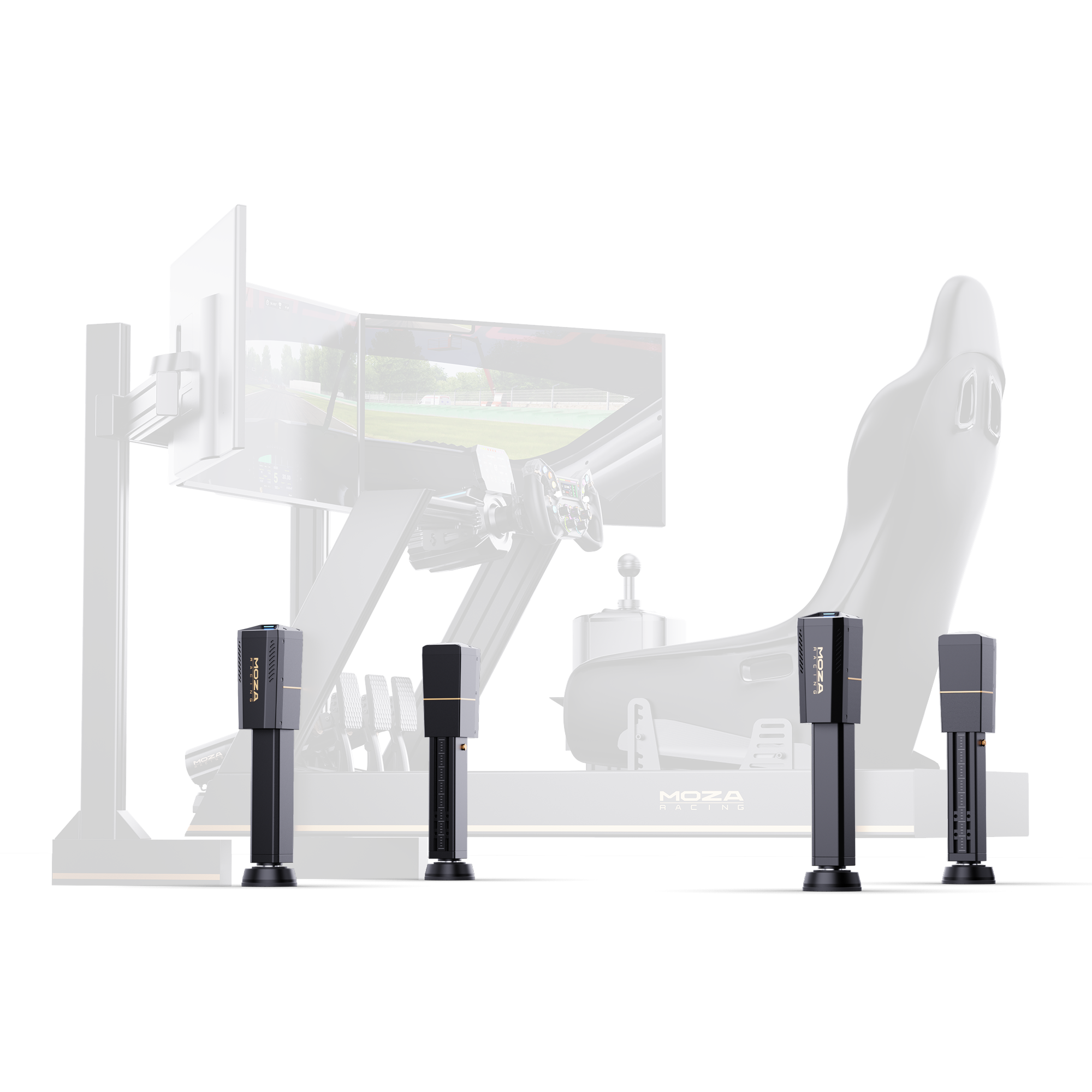
With a 250 kg payload MOZA quotes more than 1G of acceleration, but that drops to 0.45G at the full 350 kg. The HMA150 runs on its own app, MOZA Motion Manager, where an AI Motion mode handles non-racing games. That mode needs an NVIDIA RTX 4060 8 GB or better, and AMD and Intel graphics cards aren’t currently supported. The native game list covers the main PC sims, including ACC, AC EVO, iRacing, Le Mans Ultimate, AMS2, RaceRoom, the F1 games, Forza Motorsport and EA SPORTS WRC.
There are four HMA150 actuators in the box, along with the parts you need to build them into the system. You set it up in MOZA Motion Manager, which walks you through the actuator port configuration, a system self-check, an automatic position calibration and then a manual motion test. The actuators run on 48 V low-voltage DC and take 110-220 V from the wall. On MOZA’s figures the HMA150 moves at up to 300 mm/s with 250 kg on it, and that halves to 150 mm/s at its 350 kg maximum, which means a heavier rig and driver cost you speed as well as acceleration.
It bolts to 40×80, 40×120 or 40×160 aluminium profile, and a 40×120 or 40×160 rig with a closed central rail needs MOZA’s HMA Profile Adapter Kit (US$49). Kireth, in a video sponsored by MOZA, reckons you hardly ever get to drive a motion rig that’s set up accurately. His method is to start from a baseline and change things in roughly 5% steps at one reference corner.
The HMA150 comes with an E-Stop (emergency stop), which halts all movement and holds your rig where it is. Once you release it, the actuators lower the rig all the way down before you can restart the system. MOZA has also built in slow-descent protection, which helps stop the rig dropping abruptly underneath you if the power goes. The actuators don’t need lubricating out of the box, and after that MOZA says to re-lubricate them every 6-12 months as needed, following the procedure in its manual.
MOZA says the HMA150’s 3DOF setup is built to be expanded later to 6 or 7 axes, adding yaw, surge and sway for full 6DOF, without a complete hardware replacement. Nothing for those extra axes is on sale yet, though, and MOZA hasn’t given a date or a price.
MOZA discount code: use SIMRACINGCOCKPIT at checkout for 3% off at mozaracing.com.
D-BOX G5 – haptic motion coded game by game
D-BOX’s G5 actuators each have a 1.5 in (38.1 mm) stroke, move up to 114 kg and vibrate across 0-100 Hz (Trak Racer also lists the system as GEN 5). They’re electromechanical, and D-BOX describes them as “no oil, no maintenance”. D-BOX calls itself “The exclusive official supplier of haptic systems of the FIA”.
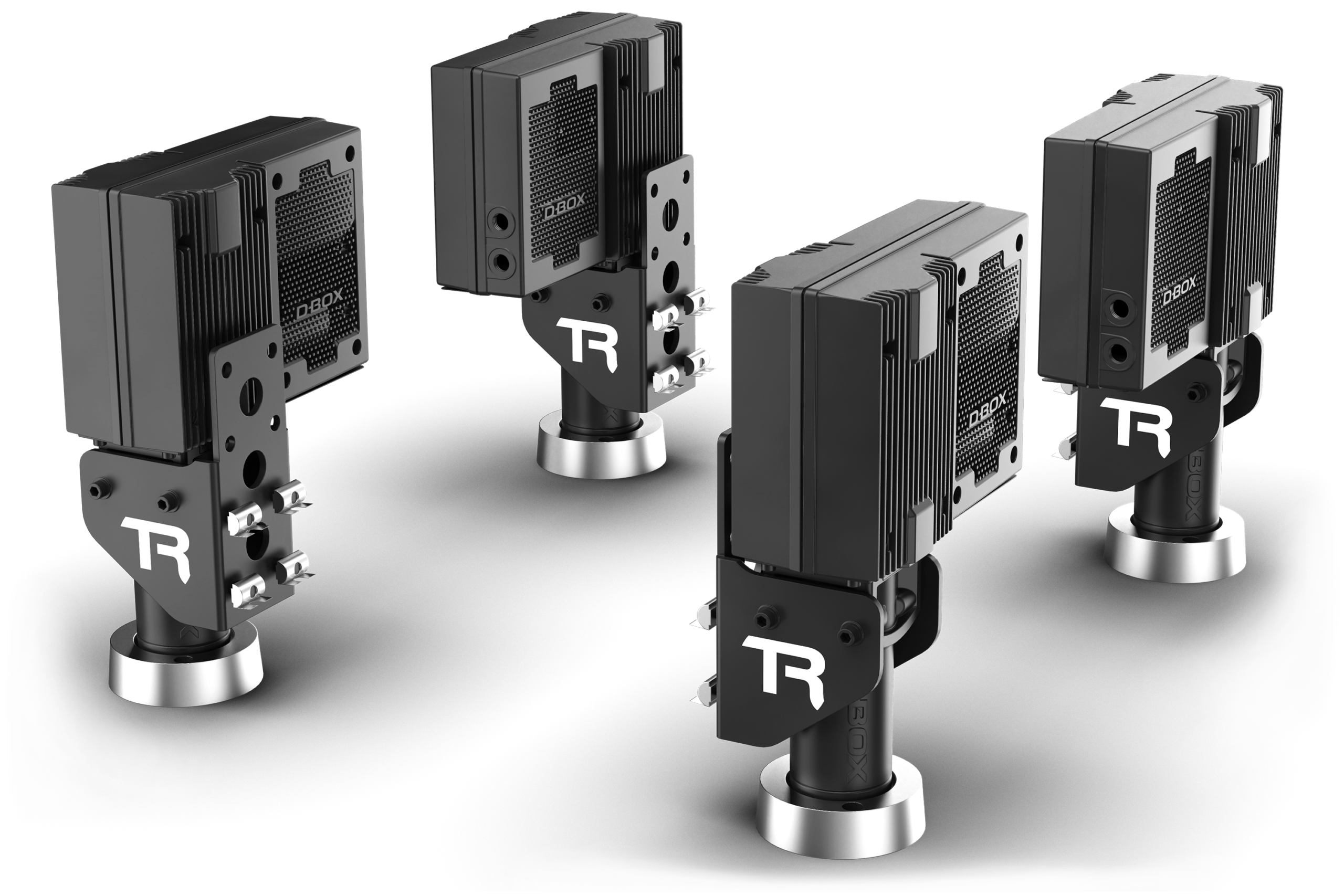
Back in 2021, D-BOX’s haptic code was integrated directly into the sim’s software engine, so the motion came from the simulator itself rather than from its audio output. D-BOX lists “+100 D-BOX coded games”, plus an Adaptive Gaming mode for any other PC game, and it’s all tuned in HaptiSync Center. A Haptic Expander takes the system up to 6DOF. Boundless Racing, who sell D-BOX as well as Vero, find the pitch fast, but with a slight delay as it pitches down. They rate the haptics very highly and put that down to D-BOX’s background in 4D cinema seats.
Trak Racer sells the G5 as complete kits: the 3250i with three actuators at US$4,590 and the 4250i with four at US$5,990, both with the Haptic Bridge and Trak Racer’s steel brackets. If your rig needs a base to mount them to, the Trak Racer TR Move supports two, three or four actuators for US$399, with the actuators sold separately. My 2022 review of the ButtKicker Gamer Plus put a D-BOX motion system at around 20 times the price. Trak Racer’s own US pages have both kits due in stock in late October 2026, and the TR Move base in mid November.
Qubic System QS-210 and QS-220 – start at 2DOF, upgrade later
Qubic System is made in Poland, and it’s modular. Two actuators give you 2DOF, adding the QS-Pivot gives 2.5DOF (Qubic makes the heave effect from the pitch axis), and four actuators with two power cabinets and a QS-MC6 controller give you 3DOF. You can buy 2DOF now and add the second pair later. The QS-220 has a 100 mm stroke and trades payload for speed by mode: 350 kg at 300 mm/s in Heavy Duty, 250 kg at 400 mm/s in Performance and 200 kg at 800 mm/s in Q-MODE, which needs 230 V. The QS-210 is the cheaper option, with a 60 mm stroke, 250 kg or 200 kg of payload and 300-400 mm/s.
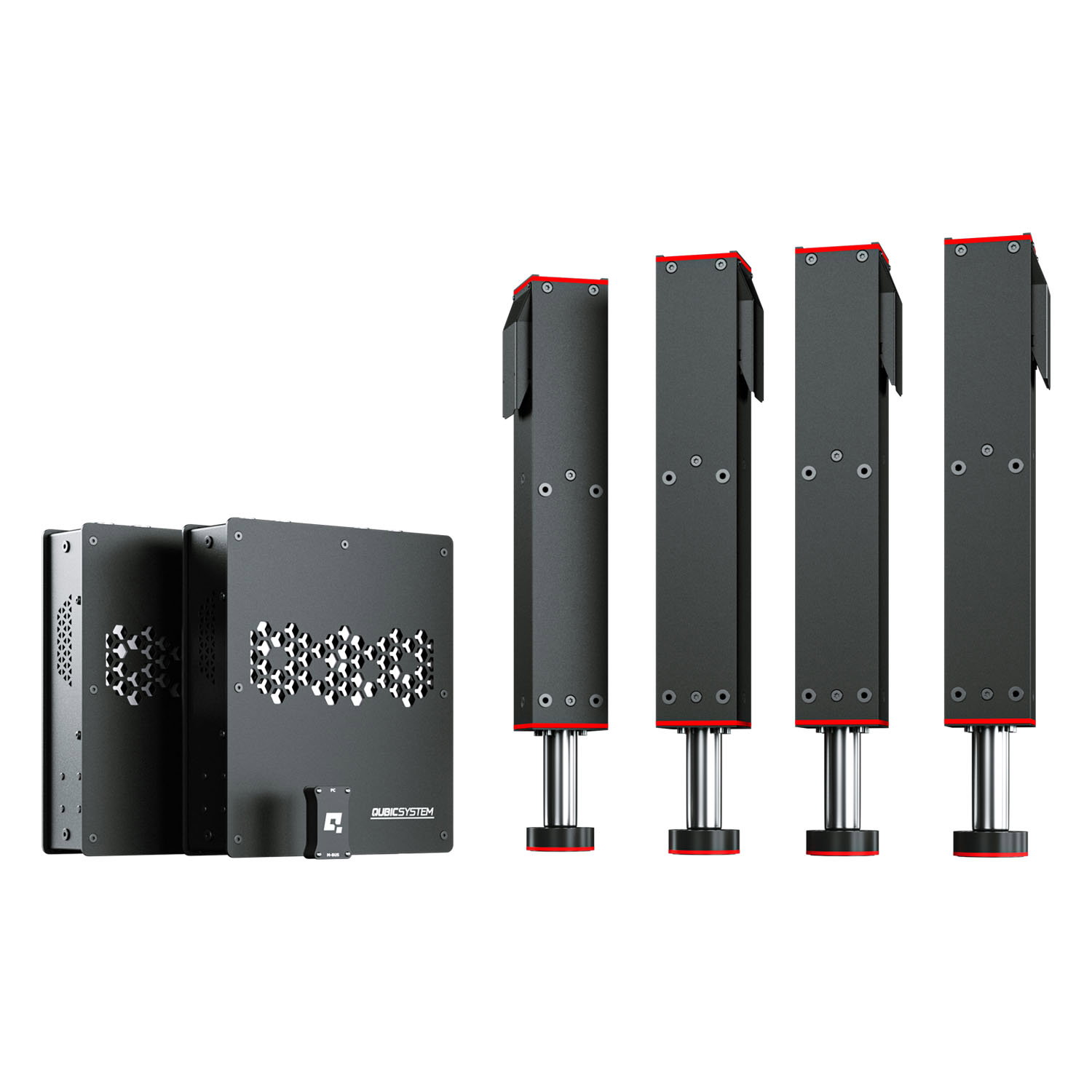
At the time of writing, the QS-220 costs €4,615 for 2DOF and €8,880 for 3DOF before tax, and the QS-210 costs €3,515 and €6,680. Both are rated at 54-59 dB. Qubic Manager is free and includes VR motion compensation. The QS-TP1 Traction Pro fits under a QS-210 or QS-220 3DOF set and adds surge and yaw for five axes. Qubic also makes the QS-BT1, a belt tensioner that pulls the harness tight to fake the sustained G a platform can’t hold. It gives up to 200 N per channel and costs €1,390.
Next Level Racing Motion Plus and V3 – chassis mover or seat mover
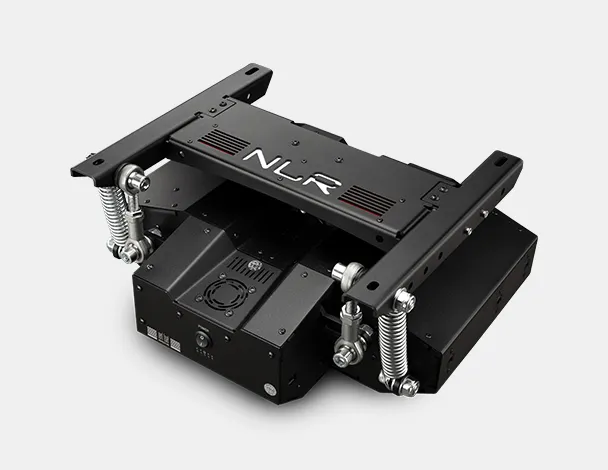
Next Level Racing’s Motion Plus is a compact full-cockpit mover. One unit gives you pitch, roll and partial heave, which is 2DOF, and a second unit adds full heave for 3DOF. It takes up to 250 kg and costs US$2,999 per unit, so 3DOF means buying two.
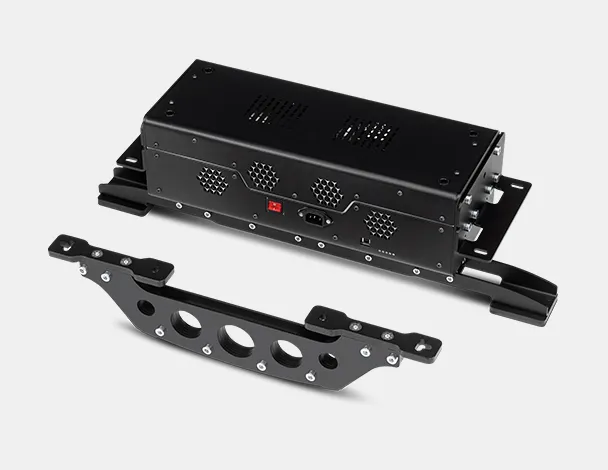
The Motion Platform V3 is NLR’s seat mover. It gives pitch and roll to ±10° at 20°/s, with a 130 kg limit that includes the seat, and it also costs US$2,999. Both run on NLR Platform Manager, which has VR headway for motion compensation, and you buy them direct from Next Level Racing.
DOF Reality H3 and H6 – a whole-rig mover with yaw
DOF Reality’s H3 is a HERO platform, which means it moves the entire rig, including the seat, wheel and pedals. It gives pitch, roll and yaw along with traction loss, at 50 cm/s and with a 150 kg limit. It costs US$2,999 without a seat, wheel or pedals, and it ships with a Sim Racing Studio licence.
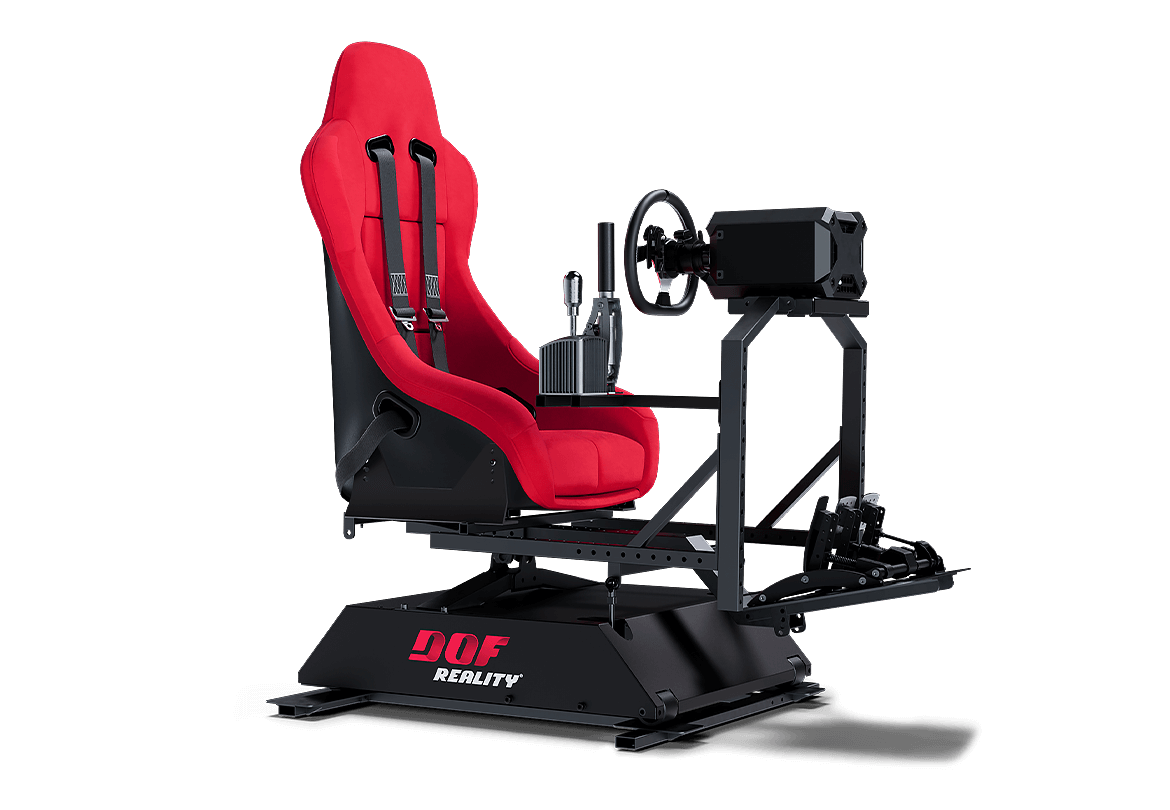
The H6 is the full 6DOF version at US$6,999, and the M2 seat mover (pitch and roll) is US$1,499. DOF Reality builds its platforms around rotary arms and gearboxes, and its own FAQ says “some play in the gearboxes and arms joints is unavoidable”.
Vero Motion, SimXperience and the high end
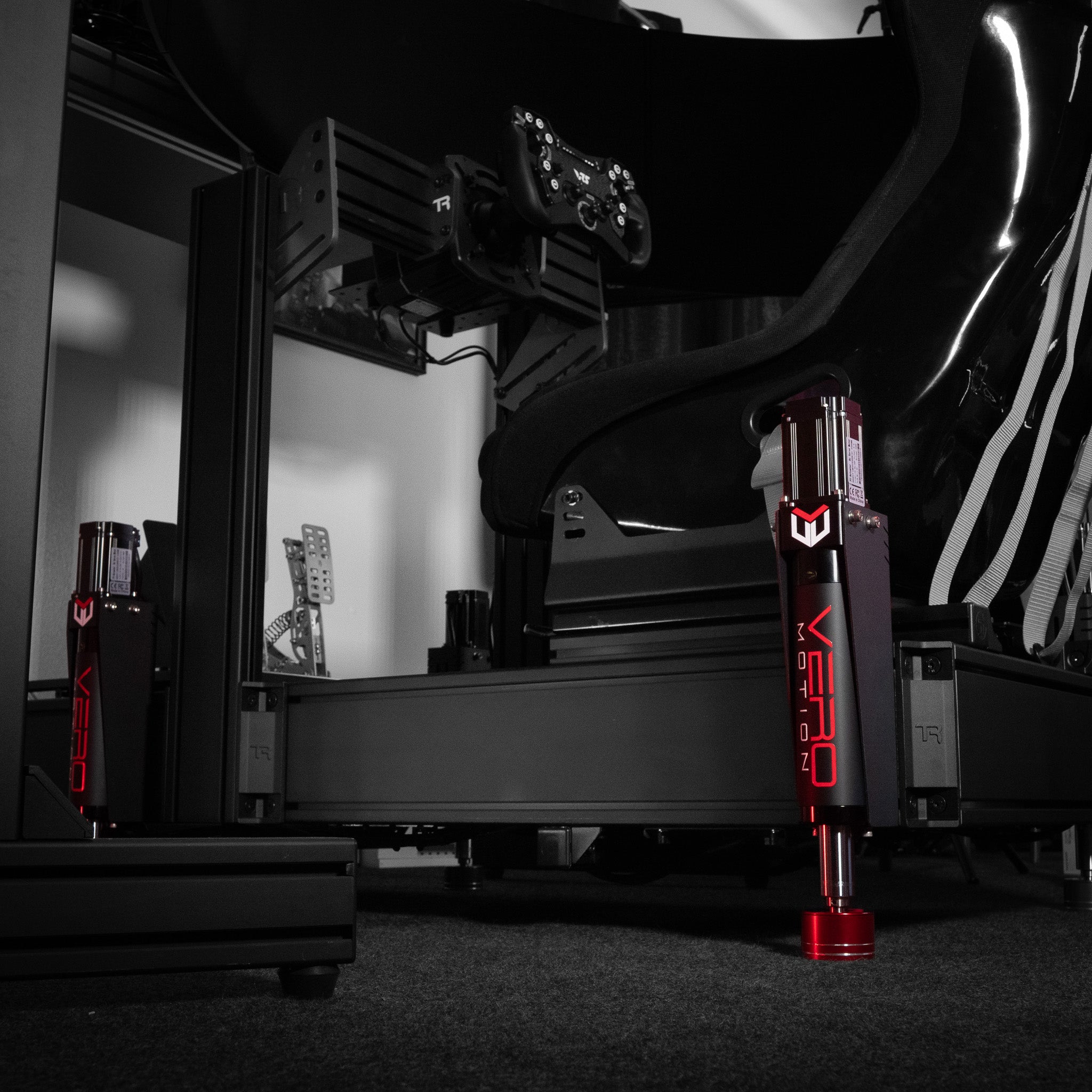
Vero Motion’s Champion GT is a 3DOF system with four actuators at 250 mm/s, a 100 mm stroke and a 320 kg capacity, and it works with SimHub. It starts at US$6,500. The Legend adds surge, sway and traction loss for 6DOF, from US$11,000.
SimXperience still sells the Stage 5 at US$29,999, which bundles motion with a G-Seat, a G-Belt, SimVibe, rear traction loss, an AccuForce Pro V2 wheel and Heusinkveld pedals. It also sells the ESR-3, but the older Stages 1-4 are no longer on its homepage. That US$29,999 is the listed price, and a Stage 5 runs from US$24,999 to US$35,000 depending on the screens and the configuration.
Will motion make you faster?
In short, no. Motion is an immersion upgrade rather than a lap-time one. Esports drivers rarely race on it, as Kireth points out in the same MOZA-sponsored video, where he also warns that the wrong settings can make you slower.
For The SimRacing Den, though, motion has improved his braking consistency and confidence. Motion recreates the onset cues, like the first tilt under braking and the first roll on turn-in, but it can’t hold sustained G. Motion goes last in the upgrade order, after a stiff rig, a direct drive wheel, load cell pedals and a PC that holds its frame rate.
What you need before you add motion
A motion system needs a stiff rig to work from. An aluminium profile cockpit is the right place to start, because flex in the main frame and wheel support won’t be an issue. Check the profile size against the platform, though: MOZA says the HMA150 needs 40×80 mm profile or larger, and the D-BOX kits ship with steel brackets for profile rigs.
Your monitors either go on a separate stand, which is what MOZA recommends with the HMA150, or they’re mounted to the rig and move with you. If your rig sits near a wall, leave room for roll. Kireth’s co-host found his roll limit by hitting the wall with his monitor, and now runs roll at about 60%.
MOZA measures the HMA150 at 55 dB or less at 1 m in its lab, Qubic quotes 54-59 dB, and The SimRacing Den compares modern actuators to “a PC fan under load”. Once your platform is running, start the settings low and build up from the defaults. Kireth’s comparison is a 25 Nm wheelbase, which you’d run at about 40%, and nobody should run motion at 100% either.
| Platform | Mounting | Power and noise (maker figures) |
|---|---|---|
| MOZA HMA150 | 40×80, 40×120 or 40×160 profile; adapter kit for closed-rail 40×120/160 | Rated 1500 W; 55 dB or less at 1 m (MOZA lab) |
| D-BOX G5 (Trak Racer kit) | Trak Racer steel brackets for profile rigs, or the TR Move base | 120/230 V switch on each actuator |
| Qubic QS-210 / QS-220 | Power cabinets supplied (two for a 3DOF set) | 54-59 dB; Q-MODE needs 230 V |
| NLR Motion Plus | Under the cockpit, one or two units | 321 W |
| DOF Reality H3 | Moves the whole rig; seat, wheel and pedals not included | 750 W peak |
Motion in VR: motion compensation
If you race in VR on a moving rig, you’ll need motion compensation. When the rig moves you, the headset reads that as your head moving, so the view in the game moves too. Motion compensation stops that by locking the in-game world to the position of the rig.
OpenXR-MotionCompensation is free and open source, but it’s Windows only and only works with OpenXR games. SRS Premium adds motion compensation for US$19.99 a year, Next Level Racing’s Platform Manager has its VR headway, and Qubic Manager includes it for free.
How much does sim racing motion cost?
At the time of writing, tactile is the cheapest place to start, with Trak Racer’s shaker kits at US$199-249 and the ButtKicker Gamer Plus at US$279.95 when it’s in stock. DOF Reality’s M2 seat mover is US$1,499. For full 3DOF, with heave, the HMA150 is US$2,999, two NLR Motion Plus units come to US$5,998 and the Vero Champion GT starts at US$6,500.
D-BOX G5 kits are US$4,590-5,990, plus US$399 for a TR Move base if your rig needs one, and Qubic runs from €3,515 to €8,880 ex tax. The DOF Reality H6 is a 6DOF platform at US$6,999, and the SimXperience Stage 5, which comes with its own wheel and pedals, is US$29,999.
| Step | Examples (maker or SRA price, 29 Sep 2026) |
|---|---|
| Tactile | Trak Racer shaker kits US$199-249; ButtKicker Gamer Plus US$279.95 (sold out); Dayton Audio BST-1 shaker US$77.99 MSRP |
| Belt tensioner | Qubic QS-BT1 €1,390 ex tax |
| Seat mover | DOF Reality M2 US$1,499; NLR Motion Platform V3 US$2,999 |
| Chassis mover | MOZA HMA150 US$2,999; DOF Reality H3 US$2,999 (pitch, roll, yaw); NLR Motion Plus US$2,999 per unit (two for 3DOF) |
| Haptic motion | D-BOX G5 3250i kit US$4,590; 4250i kit US$5,990; TR Move base US$399 |
| Modular and premium 3DOF | Qubic QS-210 3DOF €6,680, QS-220 3DOF €8,880 (ex tax; 2DOF from €3,515); Vero Motion Champion GT from US$6,500 |
| 6DOF and turnkey | DOF Reality H6 US$6,999; Vero Motion Legend from US$11,000; SimXperience Stage 5 US$29,999 |
Which motion setup should you buy?
Overall, I think having a ButtKicker is a complete no-brainer, and for the price it gets my recommendation as an upgrade. On the pedals, my Sim3D rumble kit gave me an early warning system that helped me find more confidence in braking. The ButtKicker store was sold out at the time of writing, though, so Trak Racer’s shaker kits are the ones to look at if you don’t want to wait.
For full motion, the MOZA HMA150 gives you four actuators and full heave for US$2,999. If you want the haptic detail and a long list of coded games, it’s D-BOX G5, and if you’d rather buy 2DOF now and add the second pair of actuators later, Qubic is built for exactly that. Next Level Racing makes sense for a seat mover or a compact unit under your cockpit. To feel the rear step out, DOF Reality’s H3 gives you yaw and traction loss from one platform. Vero Motion’s Champion GT is the four-actuator system to look at if you run SimHub.
If you’d like to go deeper before you spend anything, our D-BOX explainer and the tactile feedback guide go into both in more detail. Have fun with it!
Related Articles
Should Sim Racers Wait for the Pimax Crystal Pro, or Buy Today?
Sim Racing Wheel Stands and Folding Cockpits: Why I’d Skip One, and What to Buy Instead
The Best Direct Drive Sim Racing Bundles (2026)
Best Thrustmaster Wheel and Pedal Mods (2026)
ButtKicker and Tactile Feedback for Sim Racing: The Highest-ROI Upgrade You Shouldn’t Skip (2026 Beginner’s Guide)