

I’m a sim racer and amateur racer with a passion for Motorsport, good racecraft and the technical and setup aspect of sim racing.
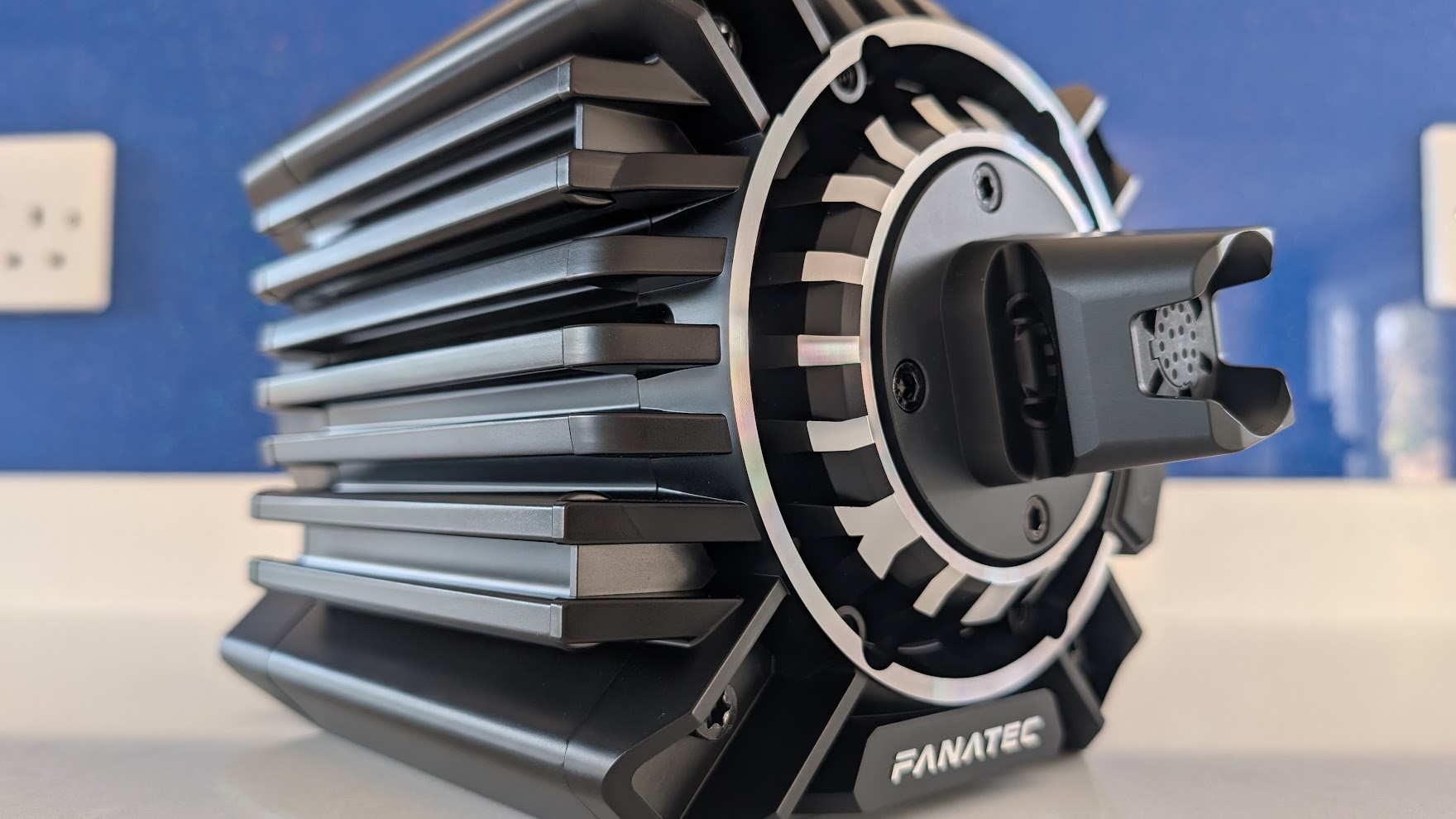
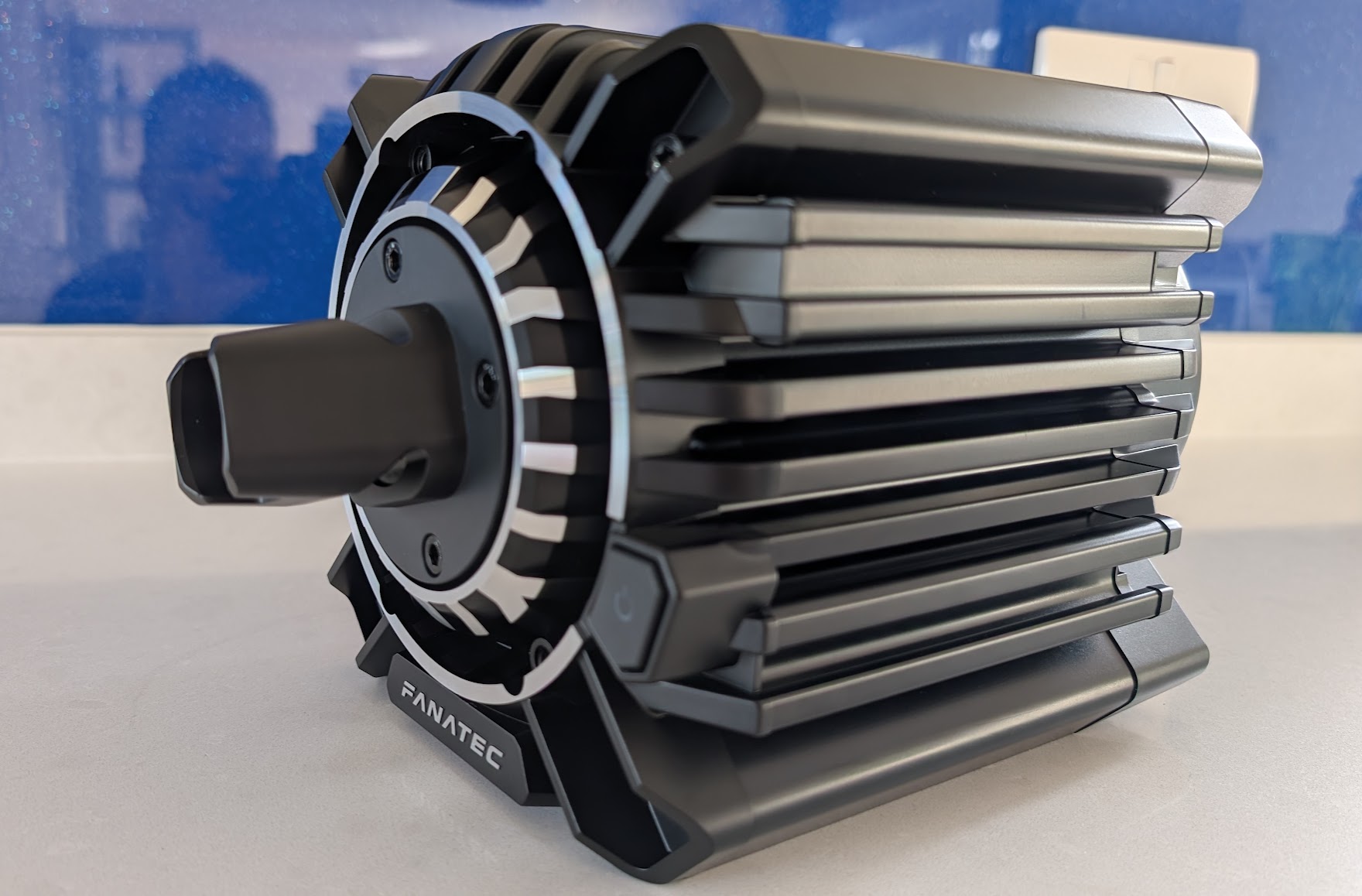
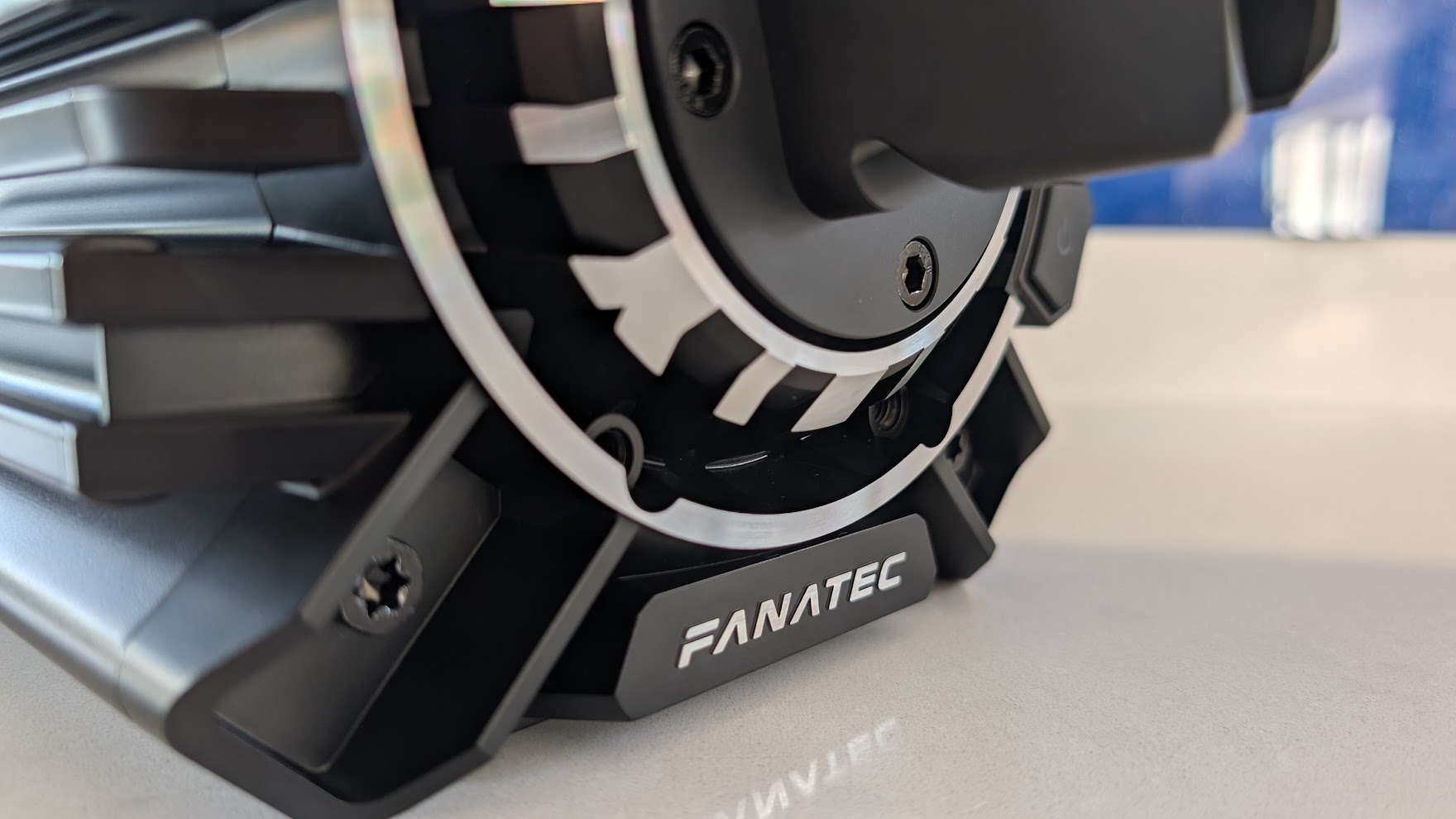
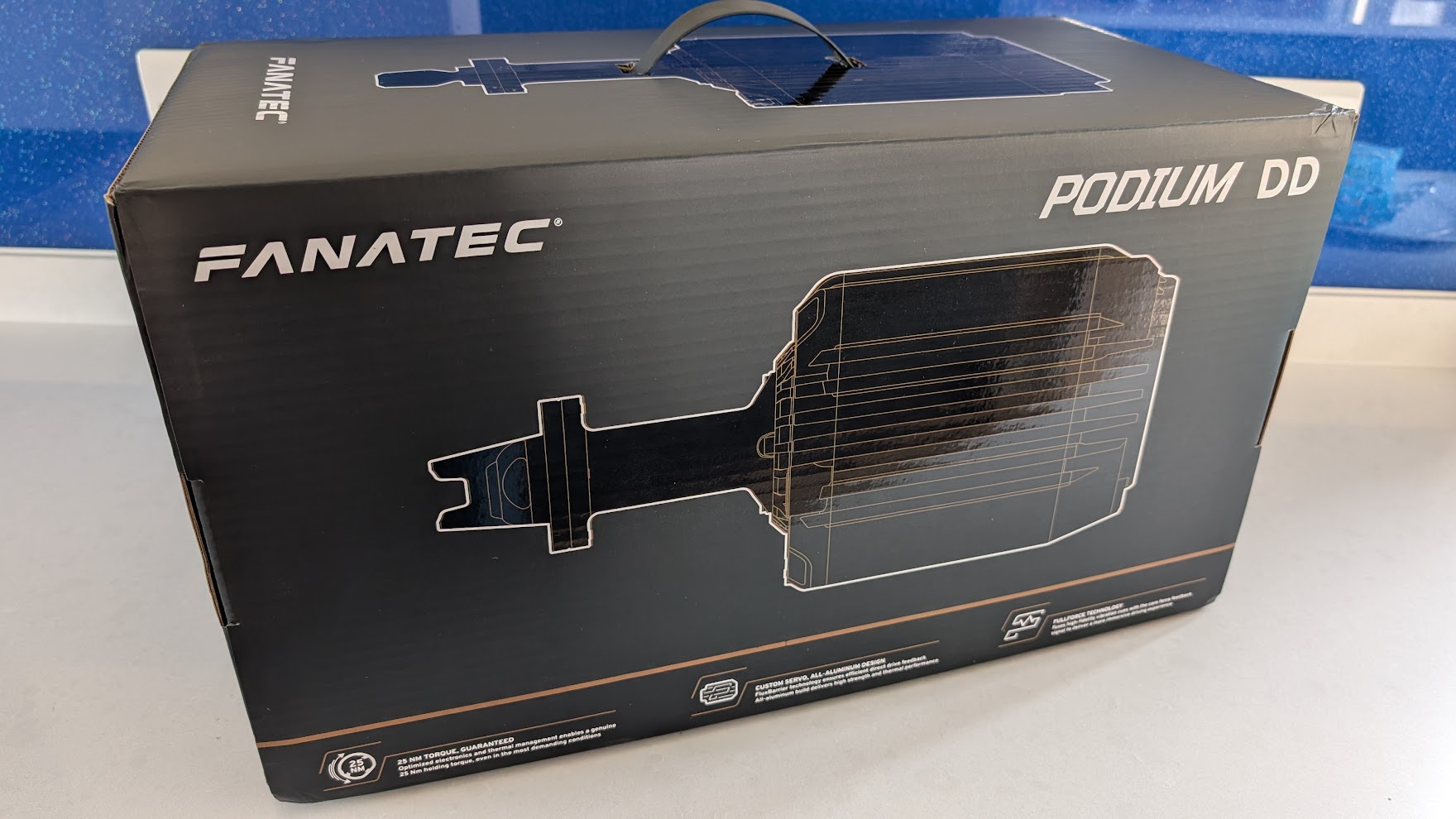
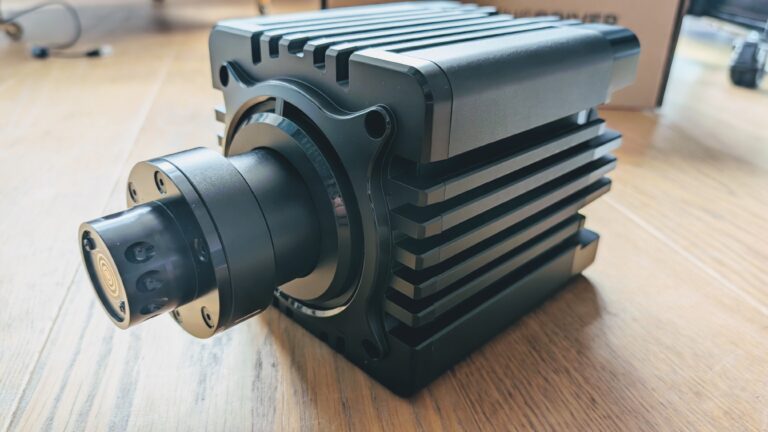
My first direct drive wheelbase, back in 2020, was a Fanatec Podium DD2, an upgrade from my CSL Elite. I moved on to a Simucube 2 Pro, and I’ve still got it. I also own Fanatec’s Podium DD, the 25 Nm flagship that went on sale in January 2026 to replace the DD2, and the photos on this page are mine.
The Podium DD runs cool and its force feedback is clean and precise. It’s a clear step on from the DD1 and DD2, but only a small one over the ClubSport DD+. It works on PC and Xbox only. Before you buy one, you should know about the force feedback complaints owners raised in 2026 and the firmware update Fanatec released in September to deal with them.
Fanatec discount code: use SIMRACINGCOCKPIT5 at checkout for 5% off at fanatec.com.
Quick Navigation
Jump directly to what you’re looking for:
What is the Podium DD? | How is it different from the DD1 and DD2? | Mounting and setup | What does it feel like? | The firmware problem | FullForce and platforms | How does it compare? | Pros and cons | Final thoughts
What is the Fanatec Podium DD?
Fanatec’s Podium DD was announced at SimRacing Expo in Dortmund on 17 October 2025 and went on sale on 15 January 2026. It’s rated at 25 Nm of holding torque, with a 33 Nm peak overshoot on top. Holding torque is the force the motor can keep up continuously, and the peak is a short burst above it. The overshoots come and go so quickly that you don’t feel them as separate peaks.
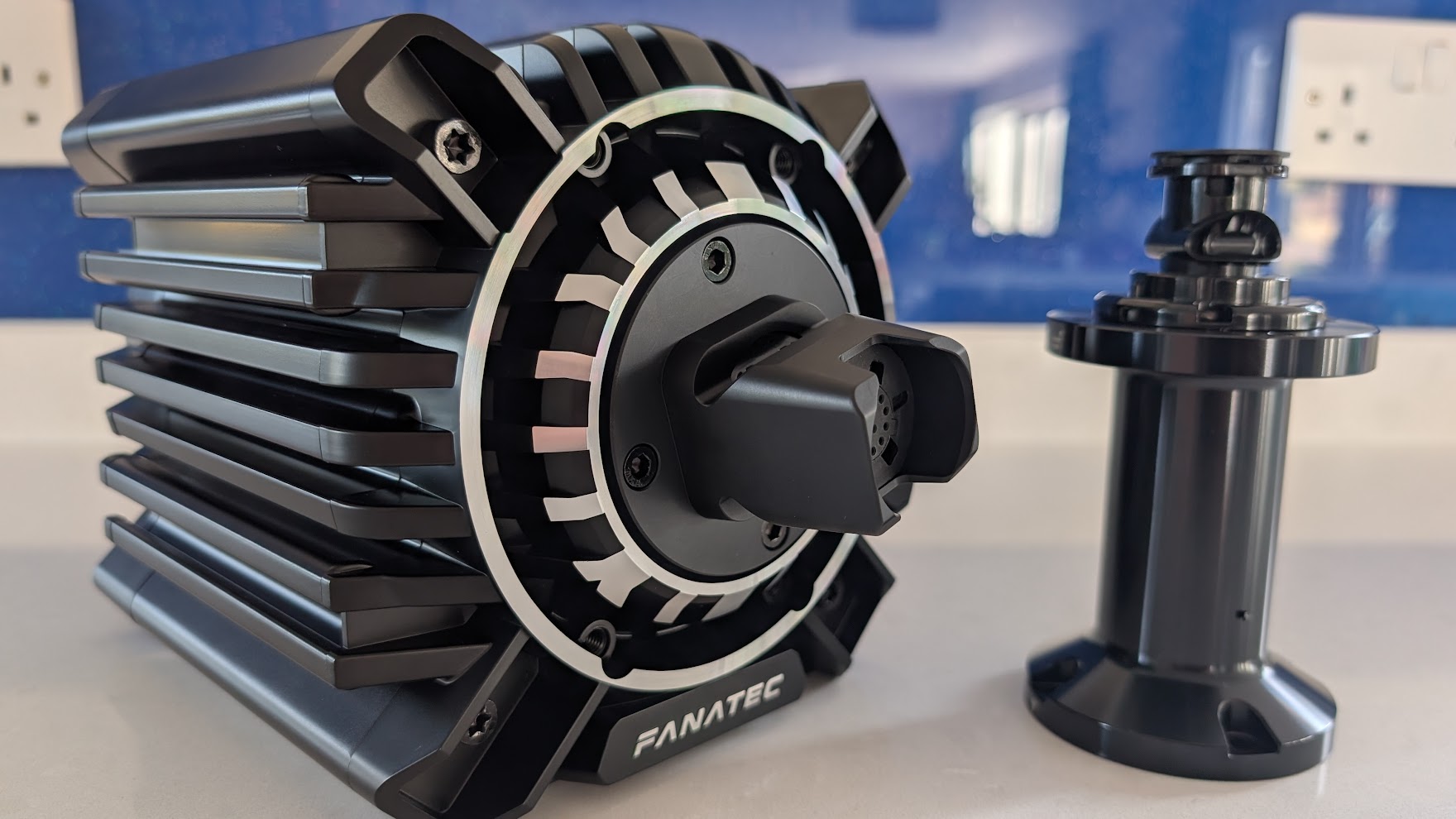
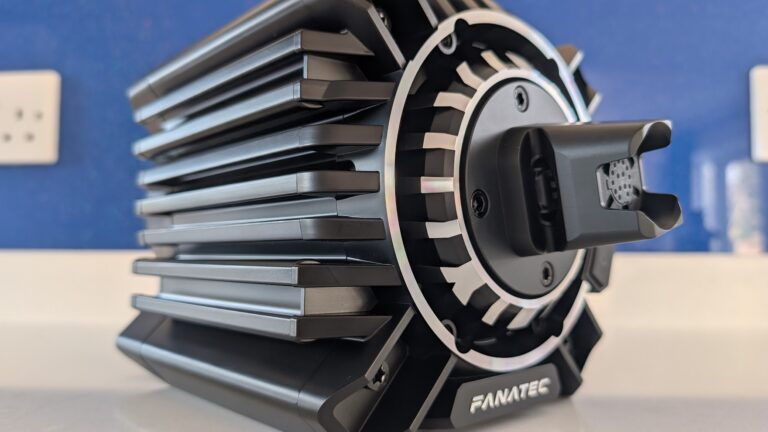
The motor is a second-generation inrunner, custom-designed in Germany, with an offset segmented rotor to cut cogging. Cogging is the faint notchy feel some motors have as the magnets pass each other. Fanatec adds its patented FluxBarrier technology, which it says improves the motor’s efficiency and smoothness. The whole thing is built on the same footprint as the ClubSport DD. The cooling is passive, with no fan, and the aluminium body’s cooling fins double as the mounting rails.
In the box you get the Podium DD with the QR2 base-side already fitted, a power supply, four T-nuts, a USB-C to USB-A cable, a 4 mm Allen key, a QR disassembly tool and a 10 cm shaft extension. Fitting the extension is optional, and it moves the wheel 10 cm further out, which leaves room for a display between the Podium DD and the rim.
There are no mounting bolts, no steering wheel and no table clamp in there. Fanatec backs it with a three-year warranty, and the rest of the specification is in the table below.
| Spec | Fanatec Podium DD |
|---|---|
| Holding torque | 25 Nm (33 Nm peak overshoot) |
| Motor | Second-generation inrunner, offset segmented rotor, FluxBarrier |
| Position sensor | Contactless Hall sensor (resolution not published) |
| Cooling | Passive, no fan |
| Housing | All aluminium, diecast front and rear plates |
| Rotation | Up to 2520 degrees, adjustable |
| Quick release | QR2 base-side (Type-F), fitted |
| In the box | Power supply, 10 cm shaft extension, 4 T-nuts, USB-C cable, Allen key, QR tool |
| Mounting | T-nut rails on the sides and bottom, M6 bolts (not included) |
| Ports | USB-C, Shifter 1, Shifter 2, Pedals, Handbrake, CAN, power |
| Platforms | PC; Xbox with an Xbox-licensed Fanatec wheel; no PlayStation |
| Software | Fanatec App (Windows), firmware 2.12.2.1 as of September 2026 |
| Warranty | 3 years |
How is it different from the DD1 and DD2?
My old Podium DD2 was a different design, with an outrunner motor cooled by a fan and a rating of 25 Nm peak. It had an OLED display, and the kill switch and torque key came in the box. Inserting the torque key unleashed the full 25 Nm.
Fanatec says the Podium DD maintains 25 Nm of holding torque consistently, unlike the DD1 and DD2, which focus on peak torque values. There’s no fan, and the OLED screen and the kill switch port have both gone. In Fanatec’s words, it also launched at a substantially lower price than the DD2.
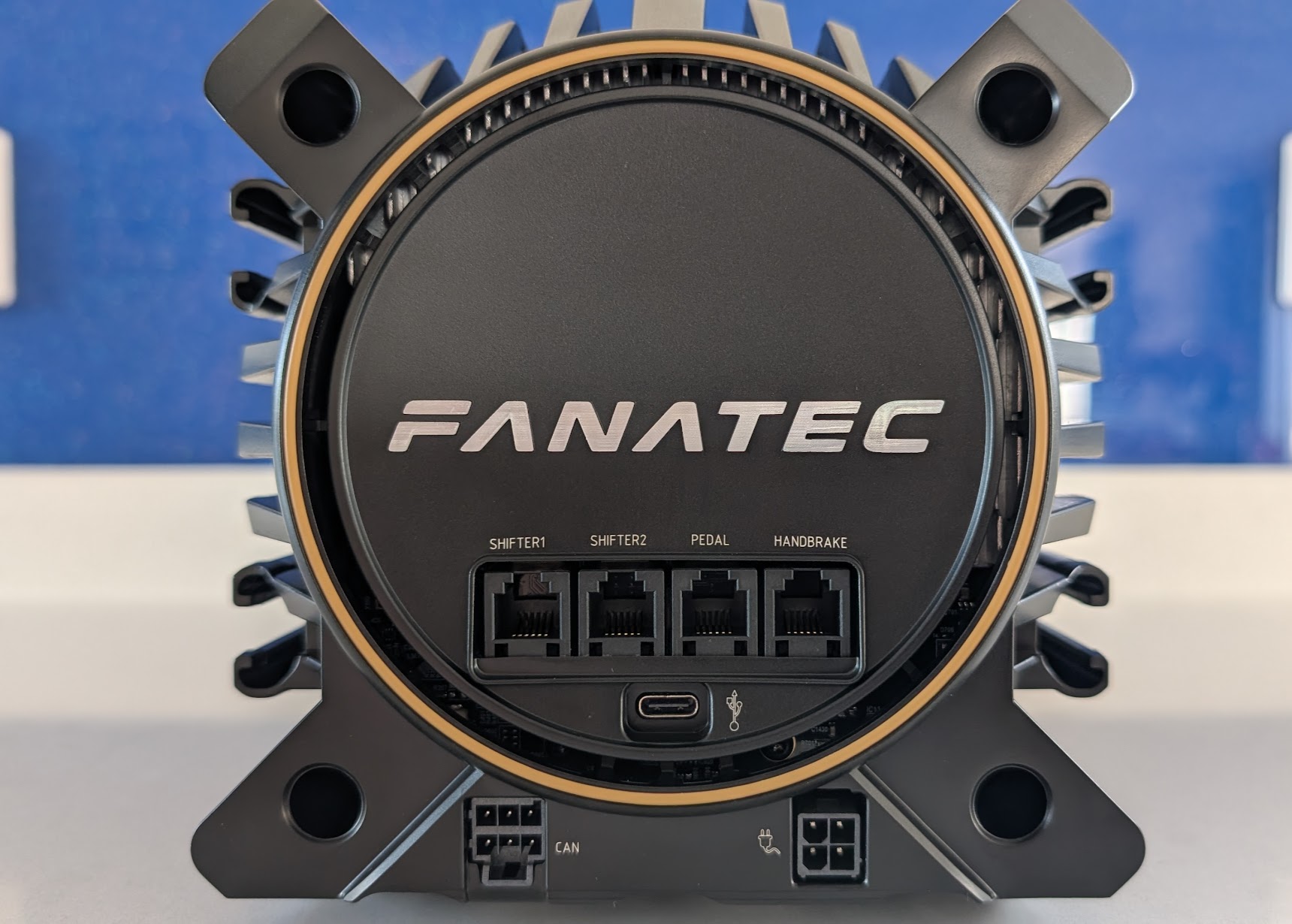
What bothered me about the DD2 was the hub. I always found the Fanatec hub lacking in stiffness, with a tiny bit of play between the wheel and the hub, especially next to the rock-solid SQR on my Simucube. The Podium DD comes with Fanatec’s newer QR2 quick release already fitted, and the QR2 is solid, with none of the play the old QR1 had.
The Podium DD’s force feedback is smoother and rounder than the DD1 and DD2. It responds much more directly than either of them, especially if your DD1 or DD2 is still on QR1. Lacktausch, who owns a DD1 and a ClubSport DD+, says the DD1’s knocks feel like a tennis ball flying around inside the housing. On the DD+, the base the Podium DD evolved from, they feel more like a steel ball. If you still want a DD2, it’s now sold only as a refurbished unit on fanatec.com.
Mounting the Podium DD and setting it up
The Podium DD side-mounts or bottom-mounts on T-nut rails, and you’ll need to supply your own M6 bolts, 10 mm long plus the thickness of your plate.
If you’re coming from a DD1 or DD2 side mount, the Podium DD is slightly narrower, and OverTake filled the gap with washers and longer screws, which they don’t recommend for the long term. Underneath, the T-nuts in the slots take the same bolt spacing as Fanatec’s earlier bases, so a plate drilled for one of those should line up. pixelconnect says threading the T-nuts takes a lot of patience, especially onto a metal plate. The Podium DD stands about 16 cm high, so bottom-mounting it can get cramped for taller drivers, and the shaft extension gives a bit more room.
The Podium DD has no kill switch, and no RJ12 port to plug one into. Instead there’s a power button on the right side, which you hold for three seconds to turn it off. On my DD2 I made the mistake of not letting go in time, and ended up with skier’s thumb. With 25 Nm on tap, be careful, and let go if there’s going to be a crash.
Setup runs through the Fanatec App, which is Windows-only and handles the firmware updates and five tuning profiles. You can assign them to a game or even a single car, which is convenient. The Podium DD doesn’t need much damping and has little tendency to oscillate. Fanatec’s recommended damping is very conservative, and you can turn it down after a few laps. For games that don’t know the Podium DD yet, there’s a compatibility mode, which makes it show up as a ClubSport Wheel Base V2.5. RON would rather not pay for the shaft extension, as it comes in the box whether you want it or not.
What does the Podium DD feel like?
Like many other reviewers and sim racers in the community, I’ve always enjoyed the Fanatec feedback. My approach to force feedback is that less is more. Just because a wheel can deliver 25 Nm doesn’t mean you need to use all 25 Nm.
The Podium DD runs cool, with no fade in force over long sessions even at high torque. At around 15 Nm the housing stays barely warm, if it warms at all. The force feedback is clean and precise, and the headroom means there’s no clipping at normal settings. Clipping is when the game asks for more force than the wheelbase is set to give, so the detail flattens off. Reviewers ran it at around 11 to 15 Nm, nowhere near 25, and the ones who tried full strength found it hard work to drive for long.
RON ran the Podium DD back to back with a ClubSport DD+ at about 11 Nm and found it a bit smoother, calmer and not as nervous, with the move from grip to grip loss rendered extremely precisely. random callsign, who replaced his DD+ with one, felt it the other way round, with a touch more sharpness and detail, though he’s clear it’s not a night and day difference.
Xander Racing Sim Tech describes a glassy magnetic smoothness you can feel even with it switched off, and he saw no thermal throttling through a summer heatwave.
Back in January, OC Racing, who daily-drives a Moza R25 Ultra, reckoned some 98% of people would be equally happy with a 12 Nm base like the ClubSport DD (it’s had 15 Nm since a firmware update in May). Lacktausch argues the other way, that the headroom gives a much bigger dynamic range.
The 2026 force feedback firmware problem
The launch reviews came out between 15 and 19 January 2026, before the complaints started, and none of them names a firmware version. On 30 January an owner who’d come from a ClubSport DD+ opened a thread on Fanatec’s forum saying that on firmware 2.8.0.6 the force feedback felt very filtered and the Podium DD super dull. Another owner said kerbs and rumble strips felt muted and weaker than on his ClubSport DD. Several owners sent theirs back and kept a DD+.
The complaints come from a vocal group of around fifteen regular posters, and even the owner who found kerbs muted said the general feedback was strong, precise and sharp for the most part. RON’s back-to-back with the DD+ was on Fanatec App 1.2.1.3 in February, at the same time as owners on the forum who’d come from a DD+ were calling the Podium DD dull.
On 15 February Fanatec said the root cause had been found. Fanatec App v1.2.2.1 on 9 March listed an improvement to the Podium DD’s force feedback, and v1.4.2.3 on 5 May made the March changes official. Then on 9 July Fanatec posted an update saying its engineers had started a deeper investigation. On 21 September, Fanatec App v1.6.1.3 brought firmware 2.12.2.1, which Fanatec says improves the force feedback in fine details like road texture and kerb texture.
Owners are split on it, with some saying it feels stronger and more pronounced and others calling it a clear improvement that’s still lazy or numb. Fanatec’s own release notes also list idle vibrations, caused by the first hotfix, as an open issue it plans to improve in a future update. At the time of writing (October 2026), the Podium DD scores 2.8 out of 5 from 19 owner reviews on Fanatec’s product page.
If you buy one, update to the current firmware before you judge it. Whether 2.12.2.1 settles the complaints is still open. Fanatec has also confirmed a bootloader issue that can stop the Podium DD detecting a QR2 wheel, and reflashing the QR firmware fixes it. There’s more in our Fanatec troubleshooting guide.
FullForce and the platforms it works on
FullForce is Fanatec’s extra force feedback layer, driven by the game’s telemetry. Fanatec lists four titles, but Gran Turismo 7 is PlayStation-only, so on the Podium DD it works in iRacing, Project Motor Racing and Assetto Corsa EVO. Fanatec says FullForce depends on developer support. In the titles that have it, FullForce adds road detail and a vibration that follows the engine’s revs, which is texture and immersion more than information about what the car is doing. random callsign says iRacing does feel numb without it, and OverTake found the gear-shift jolts arrive a fraction late.
The Podium DD works on PC with any Fanatec wheel or hub, and on Xbox only with an Xbox-licensed Fanatec wheel. It isn’t compatible with any PlayStation and can’t be upgraded to be, which is its biggest drawback, especially as the cheaper ClubSport DD+ is licensed for PS5 and PS4.
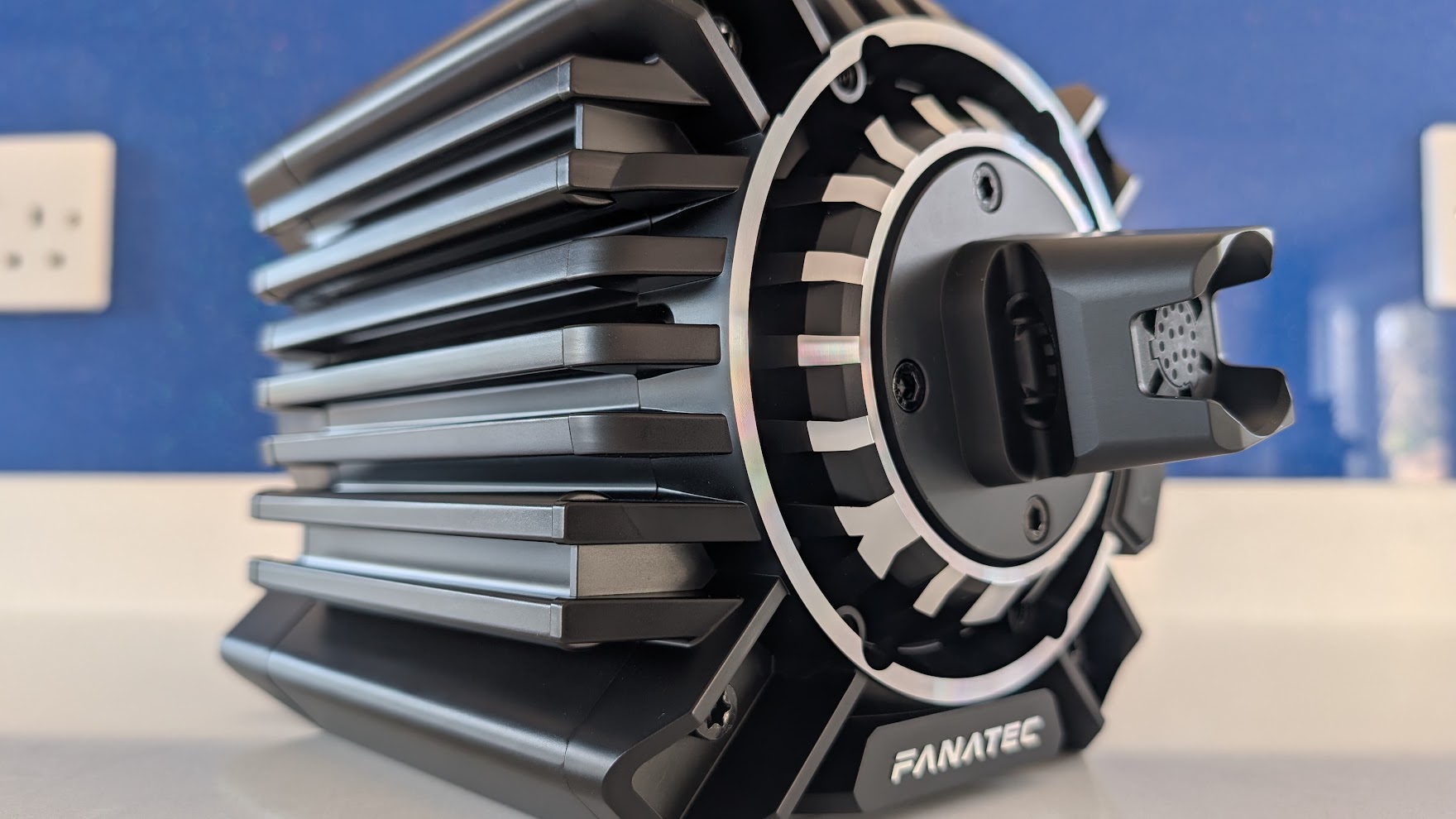
A third-party rim needs a Fanatec hub or QR adapter, as there’s no USB pass-through. Round the back, next to the pedal and shifter ports, there’s also a CAN port. It’s a connection Fanatec has added for future peripherals, and nothing uses it yet.
How does the Podium DD compare?
The obvious alternative is Fanatec’s own ClubSport DD+, now 18 Nm after the May 2026 firmware update and $899.99 at the time of writing (October 2026), against $1,199.99 for the Podium DD. If you’re happy with 18 Nm, the DD+ saves you $300. It also works on a PS5, which the Podium DD doesn’t. The two look almost identical, as they share a chassis family, though the Podium DD has metal front and rear plates.
By 2022 I was using my own Simucube 2 Pro much more than the DD2, as it seemed to outperform the DD2 on the detail and smoothness of the force feedback, and for me it was the hub that did it. I’m yet to see a reason to dispose of my Simucube 2. On 5 October 2026 the Simucube 2 Pro was still on sale at $1,299 on simucube.com, and the same site listed the Simucube 3 Pro (25 Nm peak) at between $1,599 and $1,699. There’s more on both in the table below.
The Moza R25 Ultra is the cheaper 25 Nm route, at $899 from Moza’s US store on the same day. pixelconnect found that once both are tuned, its force feedback and the Podium DD’s are very similar. Above roughly 15 Nm, good direct drive bases converge, so the extra money buys less and less.
Pros and cons
Pros
- 25 Nm of holding torque, with a 33 Nm peak overshoot
- Passive cooling, with no fade in force over long sessions
- Clean, precise force feedback with no clipping at normal settings
- The QR2 quick release is solid, without the old QR1’s play
- Diecast aluminium front and rear casing on an all-aluminium body
- Three-year warranty
Cons
- Not compatible with any PlayStation
- 2026 force feedback complaints, with an idle vibration still listed as an open issue
- No kill switch port
- Mounting bolts aren’t included
- The shaft extension is bundled whether you want it or not
- FullForce works in only three titles on this base
- Bottom-mounting the Podium DD, at about 16 cm high, can get cramped for taller drivers
Final thoughts
The Podium DD makes the most sense for a PC or Xbox racer who’s already on Fanatec wheels, especially one still running a DD1 or DD2.
Whichever wheelbase you own, you get used to its own pattern of force feedback anyway. It’s much the same as a real car. No two racing cars feel the same at the steering rack, or tell you as much about the track through the front tyres. A well set-up wheelbase will usually win in the end, and seat time is better than buying the newest device and expecting it to make you faster.
Good luck, and I’ll see you out on track!
Related Articles
The Best Direct Drive Sim Racing Bundles (2026)
Simucube 3 Review: Sport, Pro and Ultimate
The Best Direct Drive Wheels for Sim Racing
Fanatec Podium DD Review
Le Mans Ultimate – Sorting Out the FFB Settings with Revosim
REVOSIM RS Pure 9Nm Bundle Review
Topic: Direct Drive Wheelbase