

I’m a sim racer and amateur racer with a passion for Motorsport, good racecraft and the technical and setup aspect of sim racing.
Featured Image: Moza Vision GS wheel fitted to Simucube 2 Pro
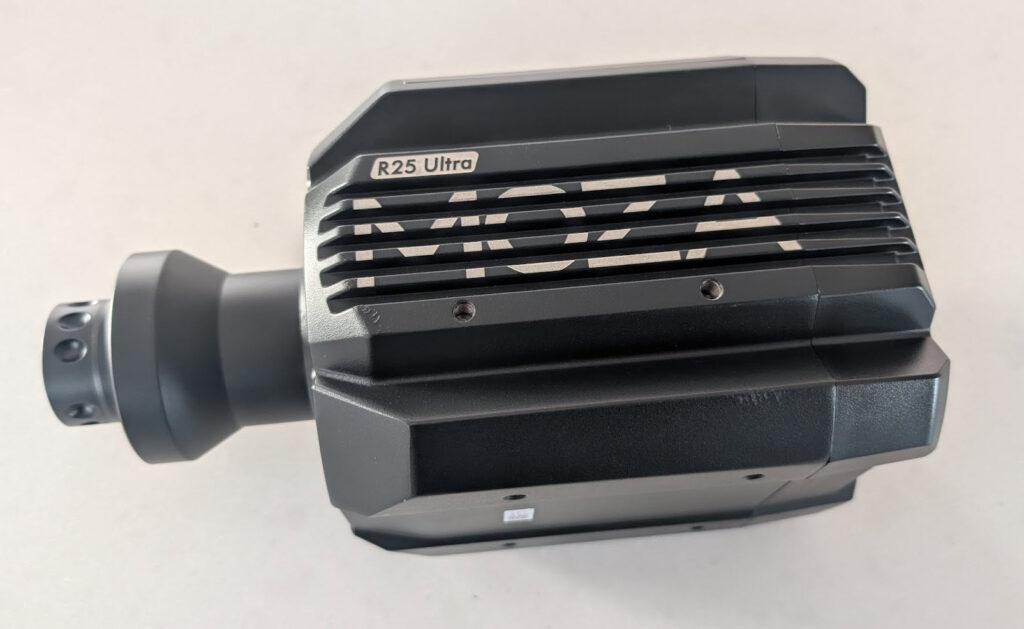
Choosing a direct drive wheelbase can feel overwhelming, especially with new brands and models releasing seemingly every month. I’ve been running a Simucube 2 Pro for four years now, and I’ve tested numerous wheelbases across different price points. I’ve been testing the new Moza R25 Ultra and, of course we’re testing Fanatec’s latest release currently.
So – where do you start? Let’s wade through the marketing schtick to help you make an informed decision based on what matters to all sim racers, new and experienced.
Direct drive changed sim racing by getting rid of the belts, gears and pulleys that filtered and muffled the feedback in older wheels. You feel the motor directly through the wheel, so every weight transfer, tyre slip, lock-up and bit of road texture comes through cleanly. As step-changes go, it sits up there with the load-cell brake and eye tracking in VR.
Jump directly to what you’re looking for:
Choosing a DD Wheel |
Best Value Bundles |
Main Differences |
How Direct Drive Works |
What Matters Most |
Is DD Better? |
What is Torque? |
Fanatec CSL DD |
Logitech RS50 |
Simucube 2 & SC3 |
Moza R5 |
Simagic Alpha Mini |
Simagic Alpha |
Simagic Alpha-U |
Simagic Alpha Evo |
Moza R12 |
Moza R21 & R25 |
Fanatec ClubSport DD |
Sim-Lab DDX |
VNM Simulation |
Wheelbases Compared
Not all direct drive wheels are created equal, though, and more torque doesn’t mean better performance.
What I’ve found in my testing is that engineering choices made at the factory matter far more than headline specifications. Motor type, shaft material, encoder resolution, and signal processing quality all contribute to how a wheelbase feels in your hands. Of course your choice of steering wheel material matters, but that’s for a different guide.
Some £600 wheelbases punch well above their weight, whilst others costing twice as much disappoint with poor quick release systems or firmware that never gets updated.
How Do I Choose a Direct Drive Wheel?
The most important decision is matching your budget to realistic expectations. Direct drive wheelbases start around £350 for the Fanatec CSL DD and extend beyond £2,500 for premium options like the Simucube 3. Personally, I think spending upwards of £3500 is crazy unless you really want the best and you’ve got the money. Sim racing champions win on Logitech gear just as often as they do with Simucube – don’t let these manufacturers fool you.
The best value direct drive bundles
If you’re starting from scratch rather than bolting a base onto an existing rig, a bundle is almost always the cheaper way in. You get the base, a wheel, and usually a set of pedals chosen to work together out of the box, and the ecosystem builders price them keenly to get you through the door. Two are worth a proper look.
Moza bundles – the value pick on PC
Moza’s bundles are the ones I steer most new PC racers towards. The R5 bundle pairs the 5.5 Nm base with a wheel and pedals for well under £400, and if you can stretch a little the R9 V3 bundles move you up to 9 Nm with the KS or CS wheel for around £500. Everything runs through Pit House, the quick release is solid, and you can add Moza pedals, a shifter or a handbrake later without soaking up your PC’s USB ports.
Fanatec Ready2Race bundles – the console-friendly route
Fanatec’s Ready2Race bundles build on the CSL DD and come themed – GT3, WRC, F1 – with the wheel and pedals packaged at a discount over buying them separately. They start around £480 for the 5 Nm QR2 bundle and climb as the wheels get fancier. If you want a way into the Fanatec ecosystem, and with the right licensed wheel a route onto console, this is the sensible entry point.
The good news is that diminishing returns set in quite early – a £600-800 wheelbase delivers 95% of the experience compared to flagships costing four times as much.
Fanatec Direct Drive Wheels
Here’s the important bit for choosing a wheelbase: torque output between 10-15Nm for most adults, motor type affecting the overall FFB character, quick release quality preventing play and preserving detail, and firmware update frequency ensuring long-term improvement. Factors like slew rate and sample rate are largely marketing specifications that don’t materially affect your experience.
Simucube DD Wheels
Most buyers focus too heavily on peak torque numbers whilst overlooking engineering quality. A well-designed 12Nm wheelbase with good signal processing will feel better than a poorly executed 20Nm unit fighting its own rotating inertia. The motor sizing paradox is real – oversized motors at moderate settings often feel worse than motors optimised for their output range.
Moza DD Wheels
Consider your sim racing goals. If you’re upgrading from a Logitech G29 or Thrustmaster T300, even a 5-8Nm wheelbase like the CSL DD or Moza R5 will be a massive upgrade. The jump from belt-driven wheels is more significant than the jump from 12Nm to 20Nm direct drive. If you’re already running mid-range gear and want the ultimate in FFB fidelity, then wheelbases like the Simucube 2 Pro with 22-bit encoders (the Ultimate has 24-bit) deliver really perceptible improvements.
Platform compatibility is crucial. If you’re on console, options narrow considerably – Fanatec dominates the PlayStation and Xbox ecosystem, whilst PC users have access to every brand. Think carefully about whether you might switch platforms in future before locking into a console-specific wheelbase.
Cheapest Direct Drive Wheels Sorted by Price
What are the Main Differences Between Direct Drive Wheelbases?
The differences lie in motor type, which dramatically affects the character of force feedback you’ll feel. Outrunner motors, used by Moza and some Fanatec models, spin the magnets around a stationary core. This design inherently minimises cogging torque and produces exceptionally smooth FFB.
Some people say that outrunners tend to feel “buttery” and refined, particularly at the wheel’s centre position. I have a different opinion: smooth isn’t always what you want – not perfectly smooth. You want the vibration (it indicates understeer in a real car). I like a bit of noise – a real racing car steering wheel isn’t this sublime, “buttery” experience – most of the communication about the tyres comes through the wheel (acknowledging the seat feelings too in a real car!).
Driving a racing car in real life is physically and mentally demanding, with a lot of information coming through the wheel. Driving a road car and driving a racing car aren’t remotely similar experiences.

Industrial servo motors, featured by Simagic and Simucube, come from CNC machinery and robotics applications. They deliver precise linear torque control with minimal cogging through sophisticated electronic commutation. The trade-off is a more “raw” or “direct” feel – less filtered than outrunners (which I really love), and like me, some drivers prefer this unvarnished character. My Simucube 2 Pro uses this approach, and it’s surgically precise. The Fanatec DD2, now discontinued, was excellent at this; I really miss the DD2 – if you see a cheap one on eBay, buy it!
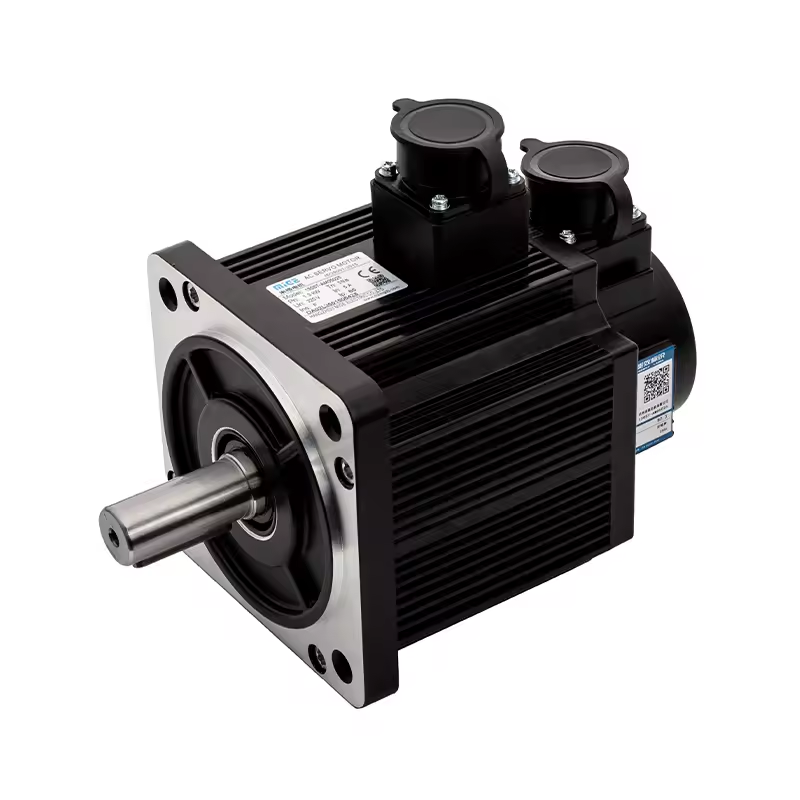
Custom inrunner motors represent bespoke engineering optimised specifically for sim racing. Fanatec’s higher-end models use this approach, though they don’t disclose exact specifications. The focus is on maximising torque density whilst minimising cogging through high pole counts and precise winding patterns.
Encoder resolution is another critical differentiator. Entry-level wheelbases typically use 16-bit encoders providing 65,536 steps per revolution. Mid-range models jump to 18-bit (262,144 steps), whilst premium options range from 22-bit (Simucube Sport and Pro with 4.19 million steps) to 24-bit (Simucube Ultimate with 16.7 million steps). The caveat is that this isn’t about steering smoothness – 16-bit resolution already exceeds human perception. Higher encoder resolution affects internal processing quality, enabling more accurate reproduction of subtle FFB effects without quantisation artefacts.
Signal processing and firmware quality separate good wheelbases from exceptional ones. I’ve tested wheelbases before and after major firmware updates, and the difference can be more noticeable than switching brands entirely. Recent examples make this clear – Simagic’s Evo bases saw fundamental FFB character changes via firmware, whilst Moza’s Ultra 25 went through multiple iterations during testing, each feeling notably different.
How do Direct Drive Wheelbases Work?
The technical bit…
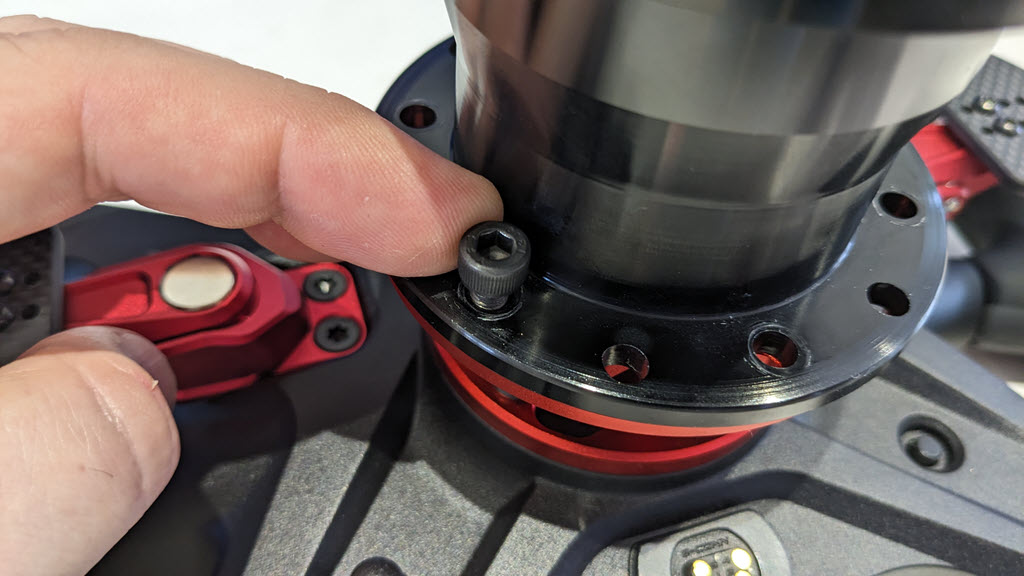
Direct drive wheelbases connect the steering wheel directly to a powerful motor shaft, eliminating all the belts, gears, and pulleys found in traditional force feedback wheels. The motor shaft becomes the wheel axle, which means every force the motor produces translates immediately to your hands without any mechanical filtering or play.
The motor receives force commands from your sim through a USB connection, typically using the DirectInput protocol. Your racing simulator calculates the forces acting on the steering column based on tyre physics, suspension geometry, and aerodynamic loads. It sends these force values to the wheelbase firmware 60 times per second in most cases – that’s the typical update frequency.
Here’s where firmware quality becomes critical. Even without the filters you see in sim software, there’s enormous signal processing happening behind the scenes. The firmware must counteract oscillations from feedback loop delays – DirectInput was never designed for the strength and mechanics of direct drive systems. What tends to separates brands is interpolation quality between those 60Hz (now 360Hz in iRacing) physics updates.
Here’s calibrating a direct drive wheel looks in iRacing:
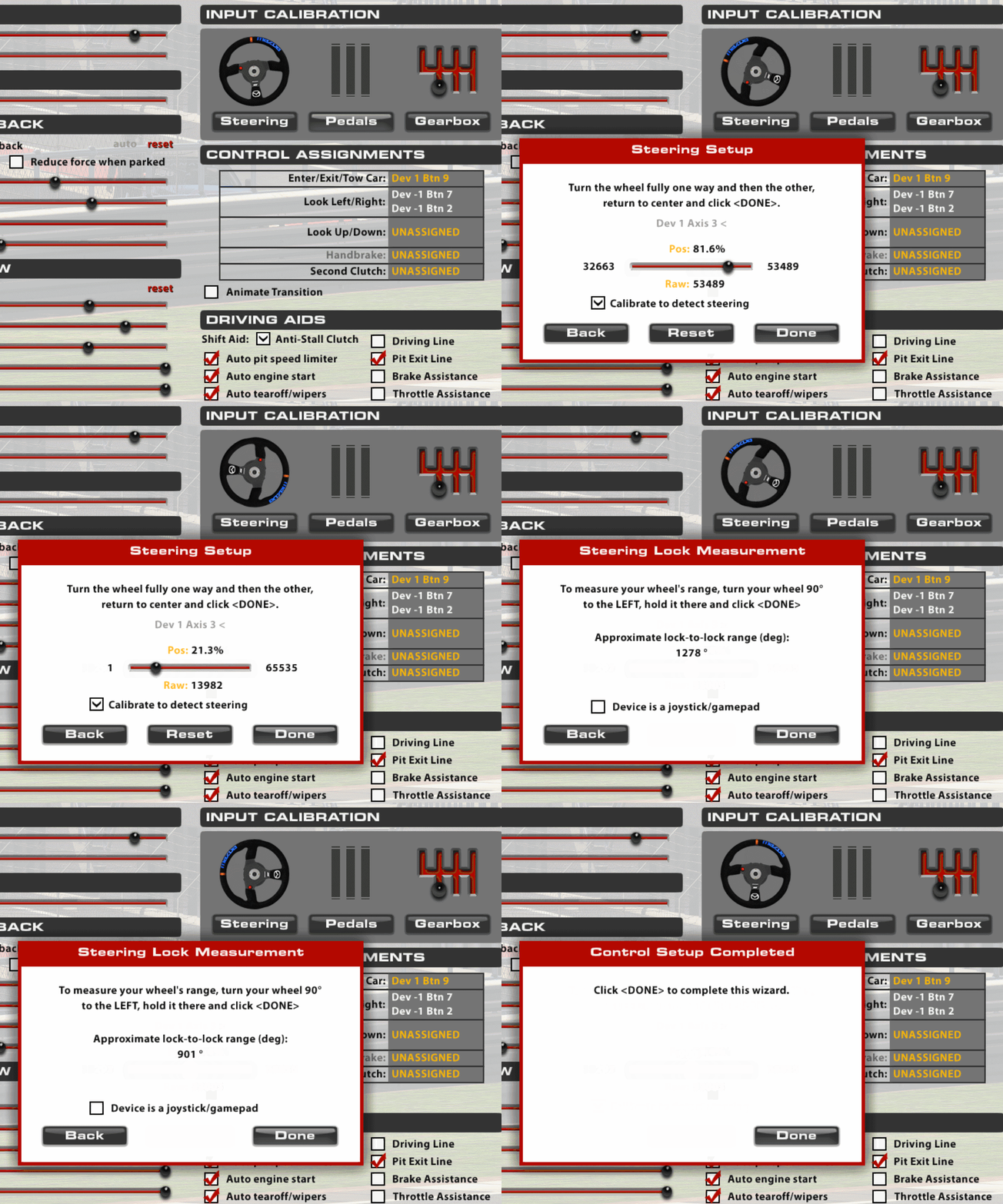
During the calibration sequence, you see when first powering up, the motor rotates through a full 360° whilst mapping every magnetic field. The firmware then varies power output as the motor rotates, compensating for the resistance and attraction patterns of each magnetic field. This can make a motor that feels notchy when unpowered feel utterly smooth when energised.
The trade-off is subtle but real – any magnetic field energy used for cogging compensation isn’t available for force feedback reproduction.
Factors that are Important to the Typical Sim Racer
Force feedback “fidelity” is the primary reason to invest in direct drive. You want to feel subtle weight transfer as the car pitches under braking, tyre scrub when you’re at the grip limit, and road surface texture that tells you exactly what’s happening between rubber and tarmac. Entry-level wheelbases like the Fanatec CSL DD and Moza R5 deliver this brilliantly for their price point, whilst premium options like the Simucube 2 Pro reveal even more nuanced detail.
I’ve tested a wheel new to the market recently (which I thought was garbage). The problem was the force feedback really made no sense to what I was expecting. It didn’t even match my Logitech wheel!
Quick release quality matters enormously and often gets overlooked. Any play between the wheelbase shaft and wheel rim creates false feedback and loses detail. Fanatec’s QR1 is the cautionary tale here – after roughly two years of regular use, it develops noticeable play that users on Reddit find “distracting.”
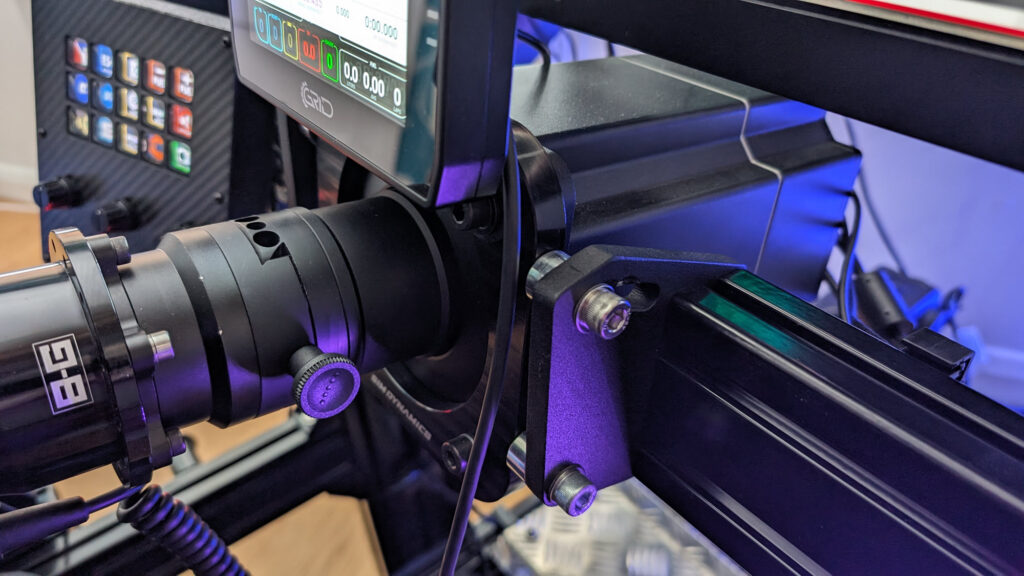
The SQR pin-based system gets consistent praise for zero play, whilst Simagic and Simucube deliver industrial-strength connections worthy of their motors.
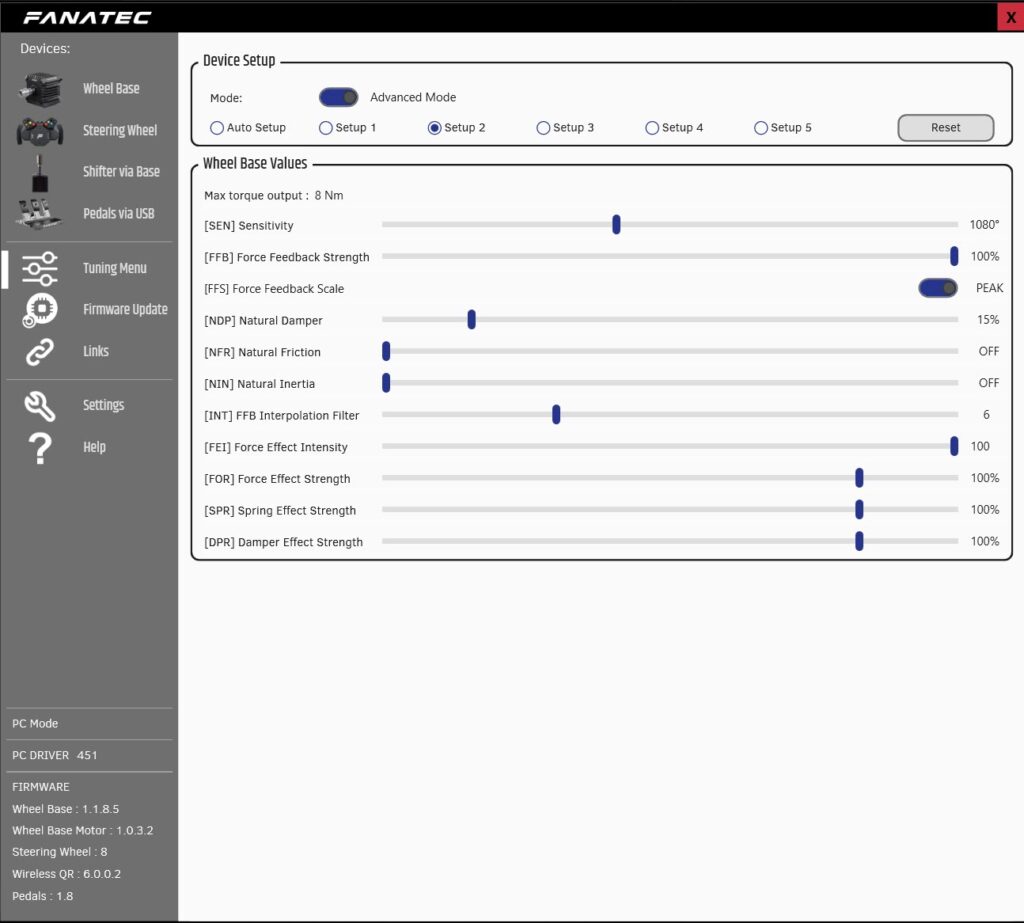
Firmware update frequency is critical for long-term ownership. I’ve tested wheelbases before and after major firmware updates, and the improvement can exceed hardware differences between competing brands. Moza releases updates regularly and responds to community feedback. Simagic’s firmware evolution has fundamentally changed their wheelbases’ FFB character over time. Companies that abandon products after launch leave you with whatever FFB quality existed at purchase, which is frankly unacceptable at these price points.
Slew rate isn’t worth worrying about. It measures how quickly the motor responds to large force spikes, and it’s a non-existent problem on any modern direct drive wheelbase. What’s more, excessively high slew rates can feel “unrealistically snappy.” Most people cap slew rate on high-end bases to tame over-reactivity. This simply isn’t a meaningful decision point when choosing a wheelbase.
Why is Direct Drive better for Sim Racing?
The elimination of mechanical components between motor and wheel means zero filtering of force feedback signals. Belt-driven wheels like the Thrustmaster T300 or Logitech G923 lose detail through belt stretch, pulley friction, and gear backlash. These mechanical inefficiencies smooth out the feedback, which sounds pleasant initially but costs you information about what the car is doing.
Direct connection to the motor shaft means you’re feeling the raw output of the force calculations with minimal latency. When the sim determines the front tyres are starting to lose grip, that information reaches your hands almost instantly. With belt-driven systems, the belt must stretch, the pulleys must overcome inertia, and mechanical play introduces delays. By the time you feel something is wrong, you’re already sliding.
The dynamic range of direct drive motors vastly exceeds belt and gear systems. They can deliver powerful forces for heavy braking whilst simultaneously reproducing delicate road texture. Belt-driven wheels must compromise – they’re either too weak for impactful effects or too coarse for subtle detail. Direct drive motors handle both extremes effortlessly whilst covering everything in between.
Reliability improves dramatically without mechanical wear components. Belts eventually stretch and perish, and on cheaper belt-driven wheels you can usually feel the play developing within the first year of regular use. Gears wear and develop play. Direct drive motors are essentially maintenance-free – the only moving part is the motor itself spinning on industrial bearings designed for continuous operation. My Simucube 2 Pro has run flawlessly for four years without any degradation in feel.
What does “Torque” mean, and How Does it Benefit Me?
Torque measures the rotational force the motor can apply to the wheel shaft, expressed in Newton-metres (Nm). Higher torque means the motor can resist your steering inputs with greater force and deliver more powerful force feedback effects. But here’s what catches people out: the industry loves pushing higher torque numbers, whilst the lived experience is quite different.
After extensive testing across multiple wheelbases, I can confidently say that 10-15Nm of constant force is the real sweet spot for most adults. The caveat is that marketing departments want you to believe 30Nm is essential. It simply isn’t. Beyond 15-16Nm, you’re largely buying FOMO rather than functional benefit. I cap my Simucube around 16Nm peak, and my son uses the same wheelbase at even lower settings – both of us get the full experience.
Most professional sim racers don’t use the maximum torque available to them. The general consensus on r/simracing seems to be that 10-15Nm provides ample headroom for feeling subtle changes in grip level and weight transfer, which is what counts for lap times. Sample rates and excessive torque claims are mostly marketing speak. The physics engines in your sim are updating at 60Hz typically – your brain simply cannot process force feedback detail beyond a certain point, and that point arrives well before you hit 20Nm.
To put this in perspective, street cars produce roughly 7-10Nm of force through the wheel, whilst an IndyCar at maximum cornering force might hit 30Nm. The difference is that IndyCar drivers are professional athletes with neck and arm strength most of us don’t possess.
For children under 12 years old, I’d recommend capping torque at 5Nm maximum. Direct drive wheelbases deliver serious forces that can cause genuine injury, and it’s frankly worrying how many products lack emergency stop buttons. Safety has to come first. Always set torque limits conservatively when first using a new wheelbase, test at low forces before increasing, and keep an emergency stop within reach.
Once you’ve got the base, the next decision is settings. I’ve written a separate complete guide to direct drive wheel settings that walks through the dial-in process per base and per sim – friction, damping, inertia, FFB strength, the per-game adjustments. Worth reading alongside this guide if you’re picking your first base or fine-tuning the one you’ve already got.
Fanatec CSL DD
The CSL DD remains brilliant value after all this time. At £350 for the 5Nm version or £490 with the boost kit delivering 8Nm, it’s completely changed the entry-level direct drive market. The composite shaft is a big reason why this wheelbase punches above its weight – Fanatec chose carbon fibre reinforced polymer instead of solid aluminium or steel, which significantly reduces rotating inertia.
Lower rotating inertia means the motor changes direction and delivers FFB effects with greater fidelity and speed. The wheel feels “lively” and responsive, especially for subtle effects like road texture and initial tyre slip. Even the 5Nm CSL DD feels snappier than some higher-torque wheels precisely because of this low rotating mass. The caveat is rigidity – a steel shaft would be stiffer, which matters for competitive driving where you want absolute precision. But for the target market upgrading from gear-driven wheels, the composite shaft is spot on.
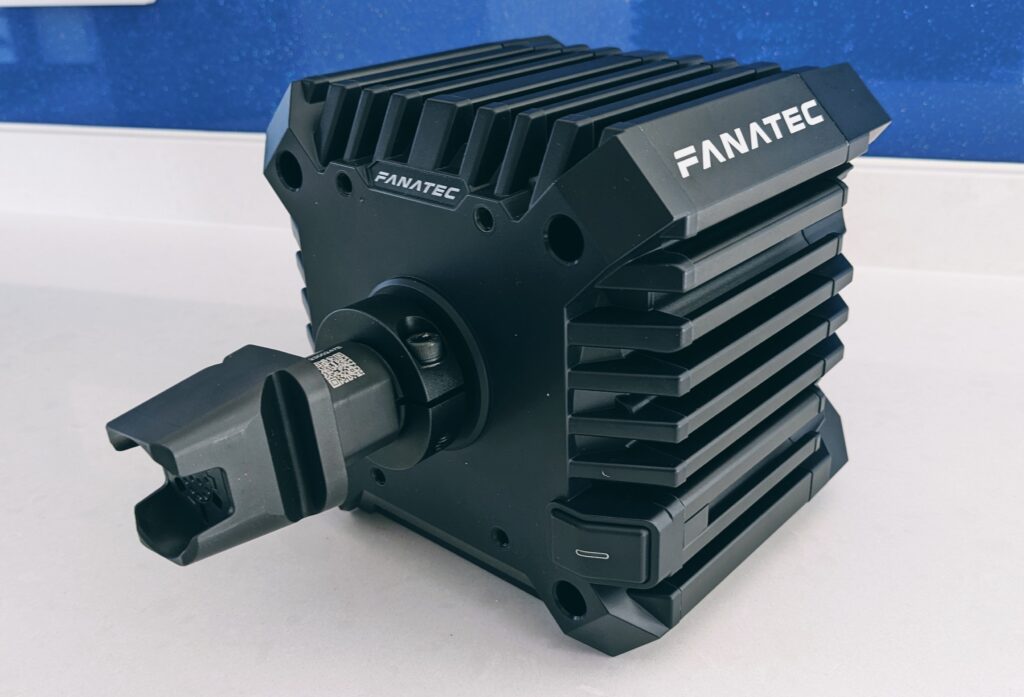
I own several Fanatec wheels, so I’m well familiar with the ecosystem. The QR1 remains the one significant weakness. After about two years of regular use, the QR1 develops perceptible play. It’s distracting when you’re feeling for grip limits, and it degrades FFB fidelity. The QR2 solves this completely with its industrial ball-bearing mechanism, but it’s another £100-150 investment on top of the base price. That’s an unfortunate additional cost, though the QR2 properly improves the experience.
Console compatibility is a major advantage if you’re racing on a console. Fanatec dominates this market segment. The CSL DD works with PC and Xbox when paired with Xbox-licensed steering wheels (note: the CSL DD is not PlayStation compatible – for PlayStation, you need the Gran Turismo DD Pro). PC users have more options, whilst console racers need specific models for their platform.
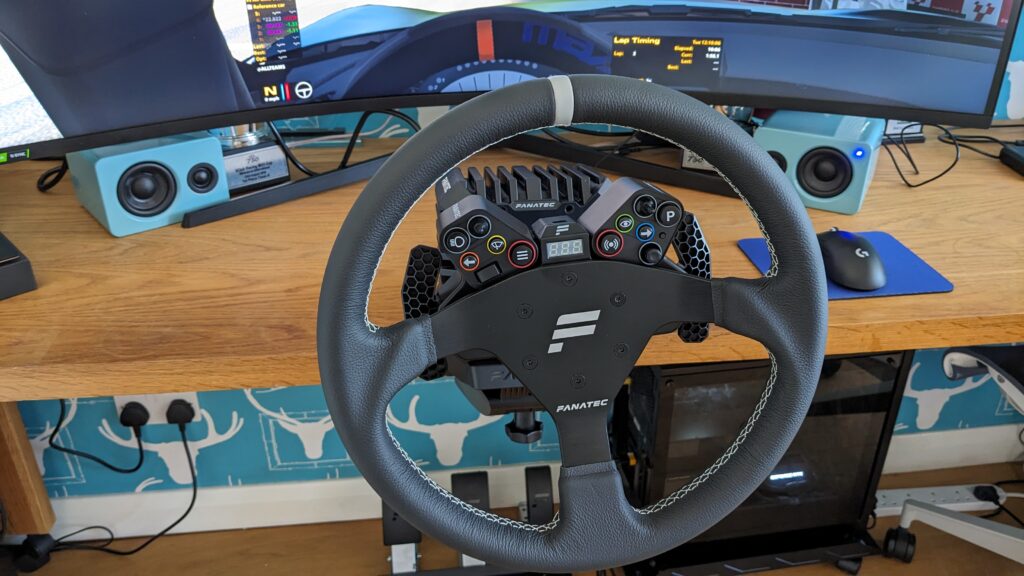
Firmware updates have been reasonably frequent, though not as regular as Moza’s release schedule. The CSL DD received meaningful improvements over its lifespan, including better torque delivery and refined FFB processing. For someone entering direct drive at this price point, it’s properly difficult to find better value, provided you budget for the QR2 upgrade.
Logitech RS50 – the new tri-platform contender
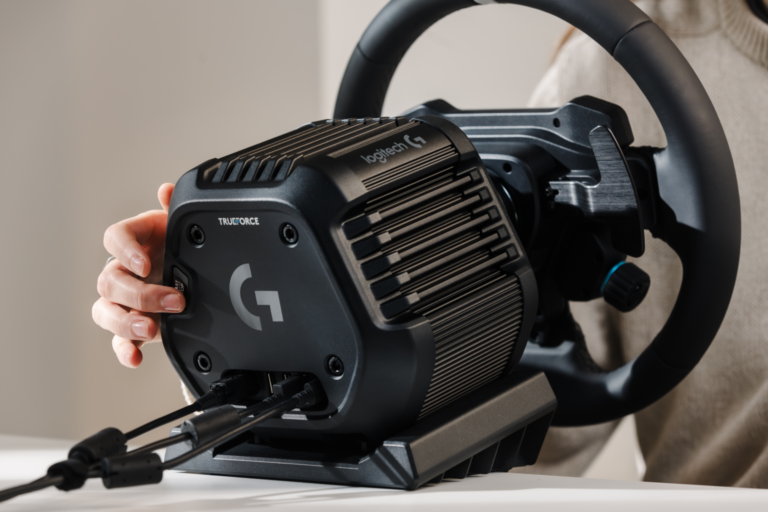
The RS50 is the wheelbase that properly shook the entry direct drive market in 2025-26. 8 Nm peak torque from a custom inrunner motor, TrueForce haptic layer baked into the shaft, an OLED on the front for on-the-fly settings, and the part nobody else can match at this money – tri-platform support out of one box. PC, PlayStation 5, Xbox Series X|S all from the same wheelbase, no separate platform hubs to buy.
Pricing puts it in awkward territory for the existing competition. The PC version is $349 wheelbase only. The PlayStation version (with the platform chip in the wheelbase rather than the wheel rim) is $449. The full RS50 System bundle – wheelbase, RS hub, RS round wheel, table clamp – is $699 (sometimes discounted to $599). Add the $150 RS Pedals with their load cell and you’ve got a complete console-or-PC direct drive setup for the same money as Fanatec’s GT DD Pro – except the Logitech bundle includes a load cell brake from the start.
The catch is the proprietary quick release – no Cube Controls, Ascher, or Fanatec wheels. You’re locked into Logitech’s wheel range, which at the moment runs to the RS round wheel, the McLaren formula collaboration (which nobody asked for), and a handful of older PRO/RS rims. The H-shifter and RS Handbrake / sequential are out though, and the catalogue’s filling in. Read the full RS50 review for my hands-on take.
Who buys this? Console racers first – the platform-agnostic story is real and Fanatec’s DD Pro doesn’t match it for the money. G29 / G923 upgraders second – if you’re staying in the Logitech ecosystem your G HUB profiles carry across. PC-only racers chasing pure torque-per-pound should still look at Moza R9 (9 Nm, $329) or R12 (12 Nm, $349) before committing to the RS50 – you’ll get more grunt for less, you just lose TrueForce and tri-platform support.
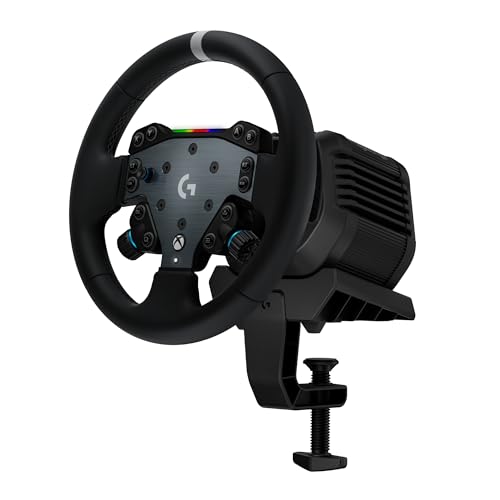
Logitech G RS50 Racing Wheel, Hub and Base (Xbox/PC, 8 Nm Direct Drive)
- 8 Nm direct drive peak torque with TRUEFORCE feedback
- RS wheel hub with 13 console buttons and adjustable paddle shifters
- 11-inch RS round wheel with integrated quick release
- Works with Xbox Series X|S, Xbox One and Windows 10/11
Simucube 2: Sport / Pro / Ultimate
I’ve owned my Simucube 2 Pro for four years now, and it remains the benchmark wheelbase in my view. The Pro uses the same 22-bit encoder as the Sport (4.19 million positions per revolution), whilst the Ultimate features a true 24-bit encoder (16.7 million positions). What matters more than the raw numbers is the Pro’s 8.0 Nm/ms slew rate – nearly double the Sport’s 4.8 Nm/ms – delivering noticeably sharper, more detailed force feedback. This is powered by a single 450W PSU on the current R2 revision.

You’re not just getting smoother steering – you’re getting more accurate reproduction of everything the sim is trying to communicate. Tyre scrub when you’re at the limit, road surface texture, weight transfer under braking – all of it comes through without any digital artifacts.
Simucube owners consistently report “feeling things they didn’t even know existed in the sim.” That’s the combination of the high-resolution encoder, industrial servo motor with negligible cogging, and TrueDrive’s sophisticated processing algorithms.
The caveat is that this costs money. At £1,679 for the Pro, you’re paying roughly twice what a mid-range wheelbase costs. The justification lies in uncompromising industrial-grade components – the motor, encoder, bearings, and internal construction are all designed for continuous industrial operation. This far exceeds the demands of sim racing, which means long-term reliability is exceptional. Mine has run flawlessly without any degradation in feel.
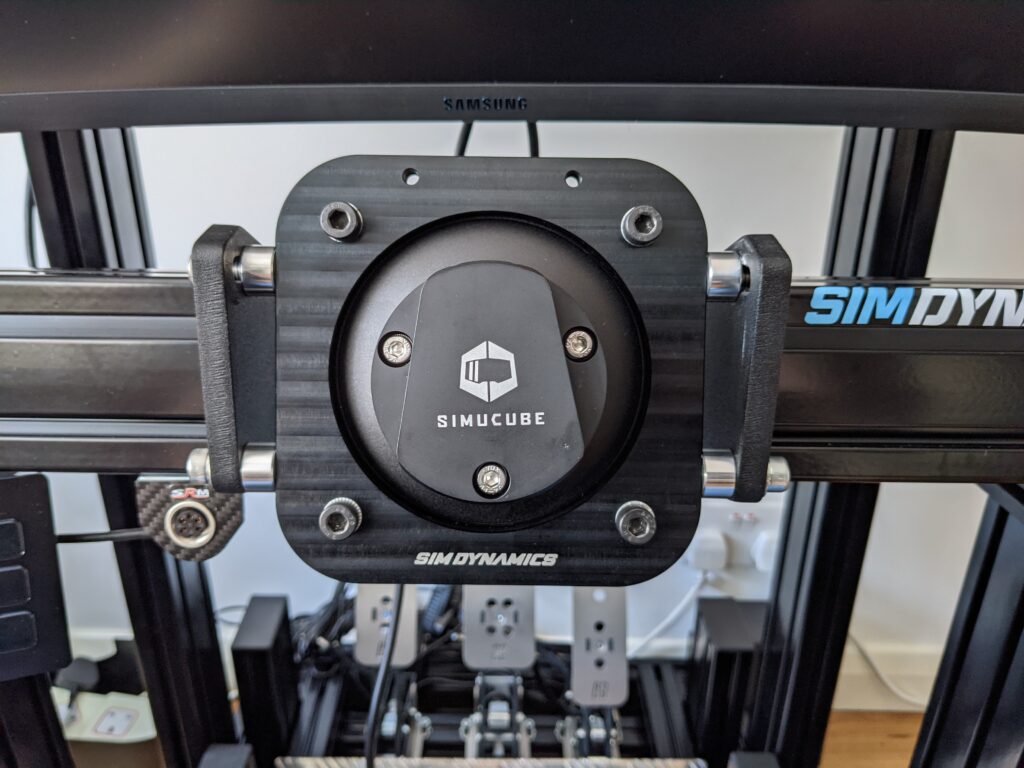
The general consensus on r/simracing is that Simucube represents the gold standard for FFB detail and realism. TrueDrive software provides extensive configuration options, allowing you to tailor the FFB character precisely to your preferences.
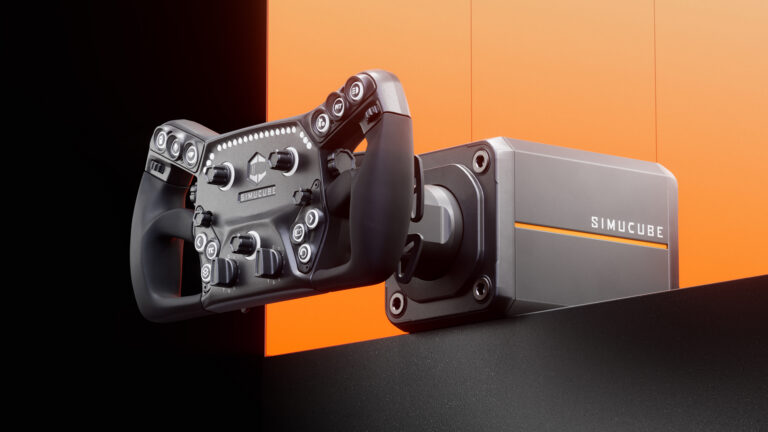
The Simucube 3 Sport (15 Nm, ~$1,399) and Pro (25 Nm, ~$1,599) are the current generation. The SC3 range uses a new “Simucube Link” data-passthrough quick release, and the flagship SC3 Ultimate (35 Nm, ~$3,299) with an IPM motor is due later this year. The SC2 line is superseded, though mine still runs flawlessly and Granite Devices continue to support it.
As for the Ultimate’s 32Nm – frankly, it’s overkill for 99% of users. What I’ve been reading on forums is that most Ultimate owners run it at 15-20Nm and still have immense headroom. The Ultimate features a true 24-bit encoder (16.7 million positions per revolution), 9.5 Nm/ms slew rate, custom industrial-grade motor, and 1000W dual PSU. It’s a professional-grade simulation tool with a 5-year warranty. The benefit isn’t needing 32Nm, it’s having a motor so far from its limits that the FFB at lower settings feels utterly effortless and precise. But you’re paying £2,799 for that privilege, which is difficult to justify unless you’re chasing the absolute ultimate.
The Sport at £1,169 delivers 17Nm with a 22-bit encoder, representing the entry point to the Simucube ecosystem. It’s still premium pricing, but you’re getting industrial-grade build quality and TrueDrive software. The SQR quick release system is industrial-strength, designed for 32Nm forces without any compromise – zero play, exceptionally well-built, and utterly reliable.
Simucube 3: Sport / Pro / Ultimate, and the LightBridge gamble
Simucube re-set their own benchmark with the SC3 family in late 2025. Three bases: Sport at 15Nm (around £1,300), Pro at 25Nm (around £1,400), and the Ultimate at the top of the range (coming with a step-up in motor technology). The motor’s running their new digital-twin control architecture, which rewrote the firmware from scratch versus the SC2 generation – the result is feedback that’s noticeably lighter and cleaner than the SC2 ever was. Not as aggressive as the Simagic Alpha Evo Ultra, more refined. The 23-bit encoder is shared across all three SC3 variants.
The complication with the SC3 line is LightBridge. Simucube have built their own wireless data system – magnetic induction power plus infrared half-duplex data – and the new SC3 quick release is built around it. If you buy into the SC3 platform you’re committing to wheels that support LightBridge, or to running your USB wheels via a third-party QR adapter. Wheel manufacturers like GSI and Bavarian Sim Tech are building LightBridge-compatible wheels but the ecosystem is smaller than USB. The trade-off is reliability and longevity (no slip ring to wear out, no USB ground-loop issues) versus the openness of a normal USB pass-through system.
The SC3 launch had some rough edges – early units had oscillation issues and EMI weirdness on the control box – but Simucube responded quickly with firmware updates and ferrite beads shipped from factory on newer batches. The control box itself is a properly nice piece of kit: emergency stop, FFB strength dial, in-game overlay you can adjust on the fly. Read my full Simucube 3 review for the on-track impressions and the LightBridge debate in detail.
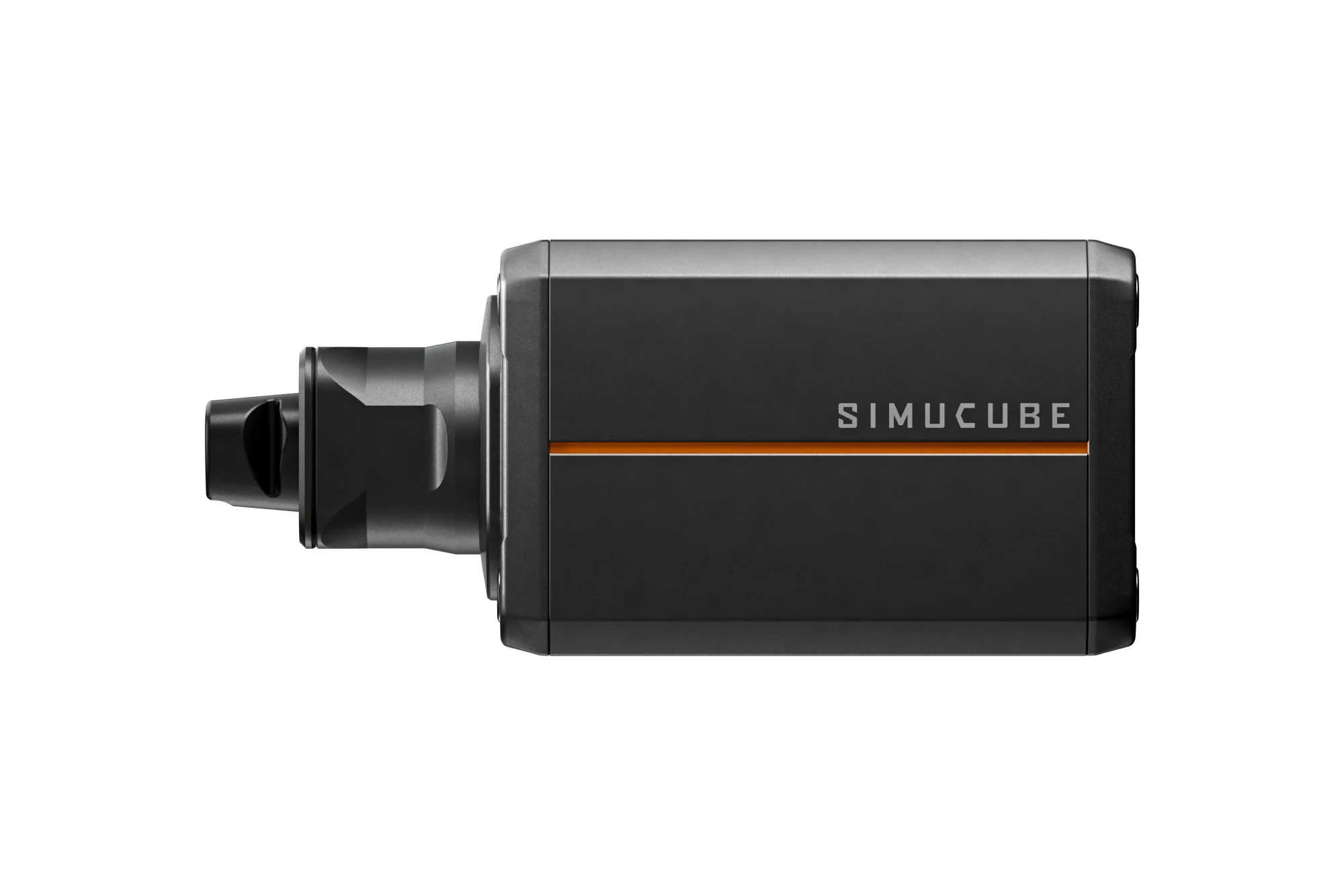
Moza R5
Quick context on the Moza lineup in mid-2026: the entire R-series got refreshed to V2/V3 spec in 2025 with the new NexGen 4.0 force feedback algorithm. The R9 V3 (9Nm, around £329), R12 V2 (12Nm, around £429), R16 V2 (16Nm, around £699), R21 V2 (21Nm, around £899), and the R25 Ultra at the top all share the same NexGen 4.0 firmware, the same Pit House software, and the same Moza quick release. The trade-off across the whole product line is the proprietary slip-ring data link – it ties you to Moza wheels (you can’t run a third-party USB wheel through the Moza QR) but it means the rest of the Moza product line (pedals, shifter, handbrake, dash) integrates cleanly via direct ports on the base rather than soaking up your PC’s USB ports. If you’re building a fresh sim racing rig and you want everything from one brand, Moza make that easy. The detailed comparison of the top two bases is in my Moza R21 and R25 Ultra review.
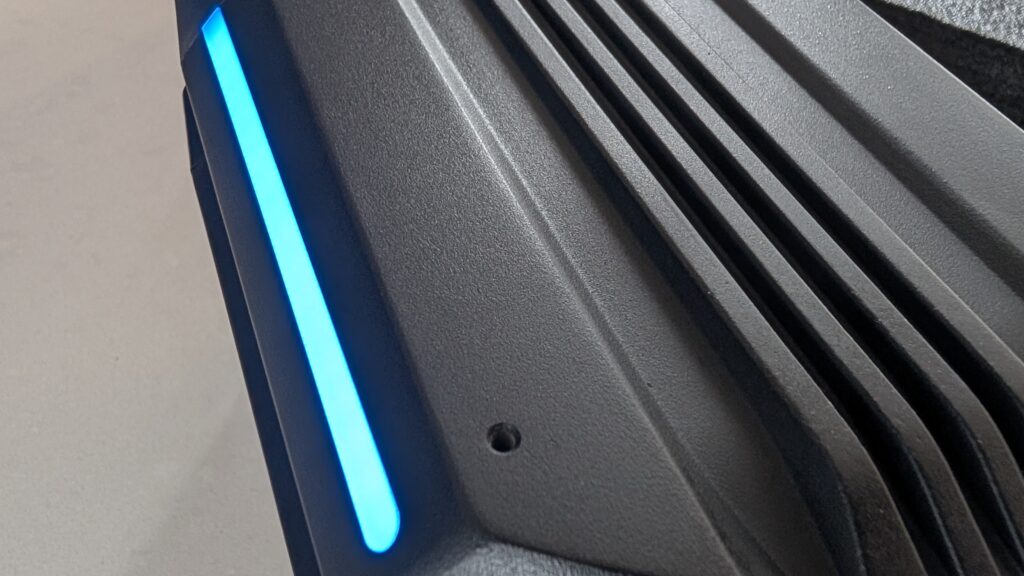
The R5 bundle represents fantastic value for newcomers at around £399. You get a 5.5Nm wheelbase, steering wheel, and two-pedal set that work together smoothly. The outrunner motor design is central to its character – outrunners inherently produce very smooth FFB due to their mechanical design. The magnets spinning around the stator naturally minimise cogging torque. Moza’s current lineup includes the R5, R9 V3, R12 V2, R16 V2, R21 Ultra, and R25 Ultra – the V2 and V3 designations indicate revised versions with improved electronics and firmware, whilst the Ultra models represent their premium flatwire motor technology.
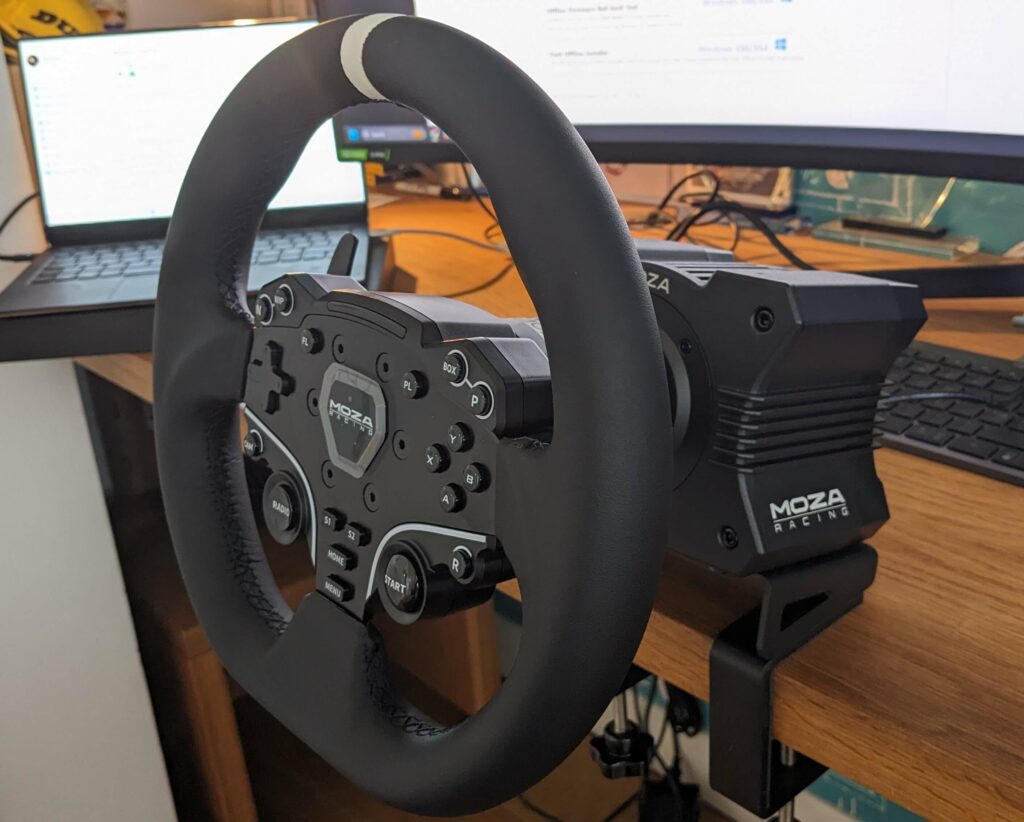
The R5’s FFB is “incredibly smooth, almost buttery,” which is excellent for immersion. The trade-off compared to the CSL DD’s composite shaft is slightly less “snap” for very fine, high-frequency details. The solid aluminium shaft contributes slightly higher rotating inertia, but at this torque level it’s a subtle difference that most users upgrading from belt-driven wheels won’t notice.
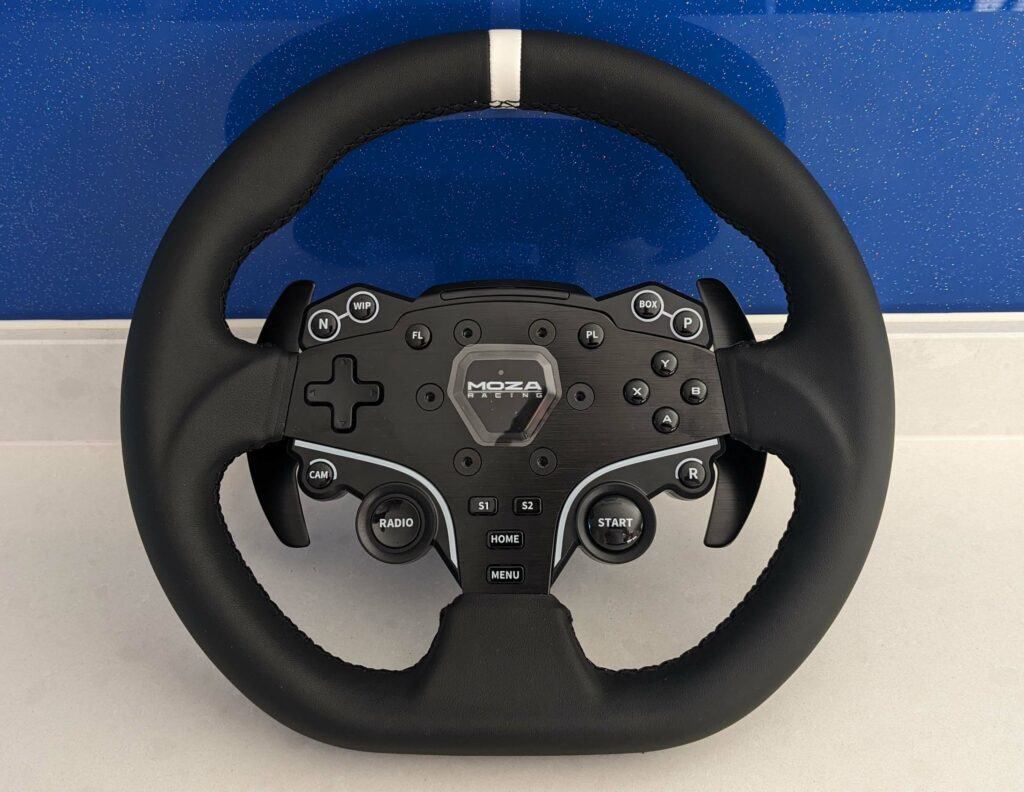
The real strength of the R5 is the complete package. Users consistently report that the Moza bundle approach eliminates compatibility worries and provides a cohesive setup out of the box. The pin-based quick release is solid with zero play. Fanatec addressed their previous QR1 issues with the QR2 system in 2024, which now offers similar reliability. The included ES steering wheel is basic but functional, with enough buttons for essential controls.
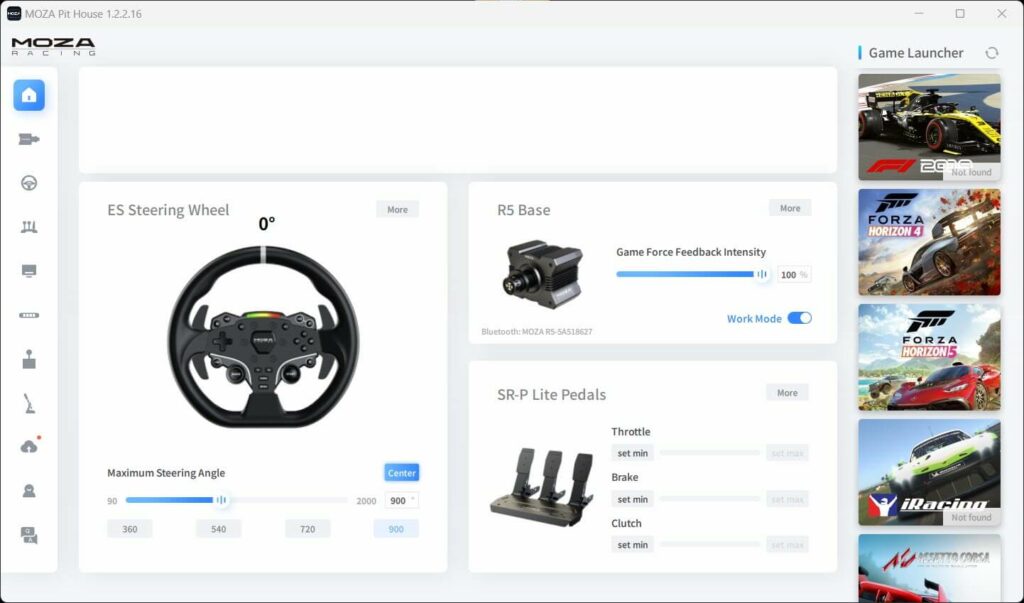
Moza’s Pit House software is intuitive and provides good configuration options. Firmware updates have been frequent and responsive to community feedback, which matters enormously for long-term ownership. The R5 works exclusively on PC, so console racers need to look elsewhere. But for PC sim racers wanting a complete entry-level direct drive setup, the R5 bundle is really difficult to beat on value.
Moza Bundles
Alpha Mini
The Alpha Mini delivers something quite different to Moza’s smooth character at £699. That industrial servo motor provides a more “raw” and “direct” FFB feel – less filtered, more immediate. Some drivers find this character more engaging, whilst others prefer smoother delivery. It’s really a matter of preference rather than one being objectively better.
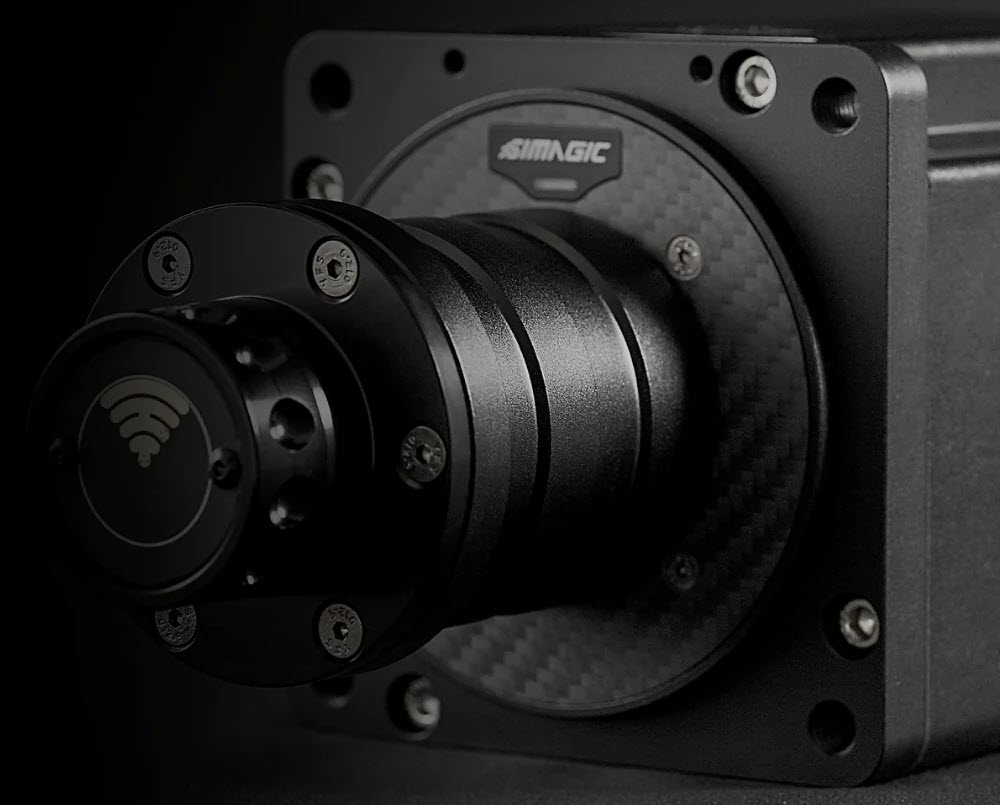
Build quality is exceptional for the £699 price point. The steel shaft is rigid, the housing is substantial, and the quick release is rock solid. Alpha Minis remain “solid as day one after 2 years” of regular use. That’s the industrial motor delivering on its design brief – these components are designed for continuous operation in demanding environments.
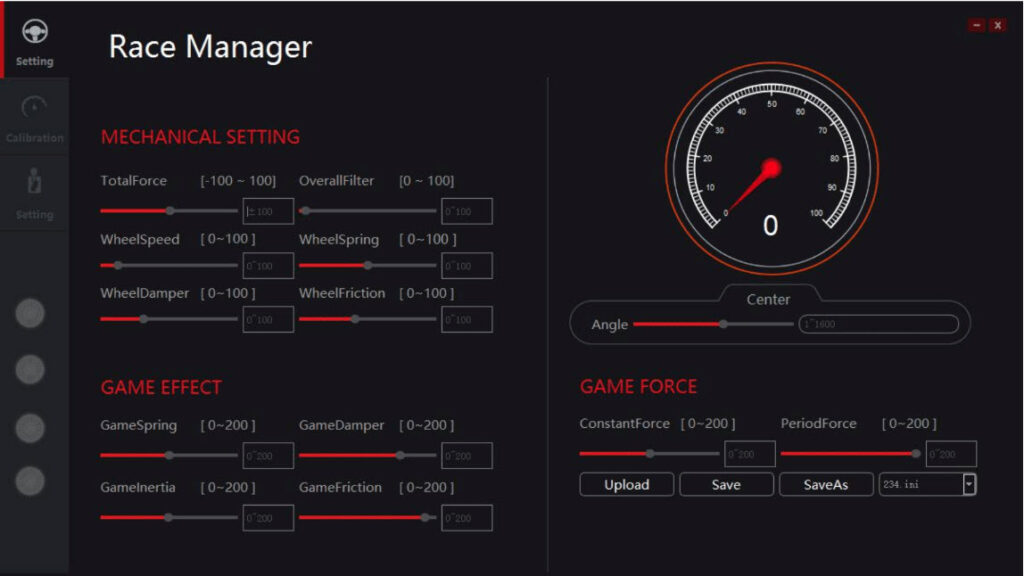
The claimed 262,144 PPR encoder resolution (equivalent to 18-bit) is likely software-interpolated rather than genuine mechanical resolution, but it’s more than adequate for this segment. The FFB detail rivals wheelbases costing twice as much, which speaks to Simagic’s signal processing quality. Alpha Manager software provides extensive configuration options, and firmware updates have been reasonably regular.
At 10Nm constant output with 13Nm peaks, the Alpha Mini sits in the sweet spot for torque output. It’s enough for proper immersion and feeling grip limits, without venturing into the excessive forces that most people don’t need. The motor sizing is appropriate for the output range, avoiding the paradox of oversized motors at low settings.
Simagic Alpha DD Wheelbase
The standard Alpha delivers 15Nm constant output for £749, representing excellent value in the mid-range segment. It shares the Alpha Mini’s industrial servo motor design, scaled up for higher output. The same direct, unfiltered FFB character applies here – some find it engaging, others prefer smoother delivery from outrunner designs.
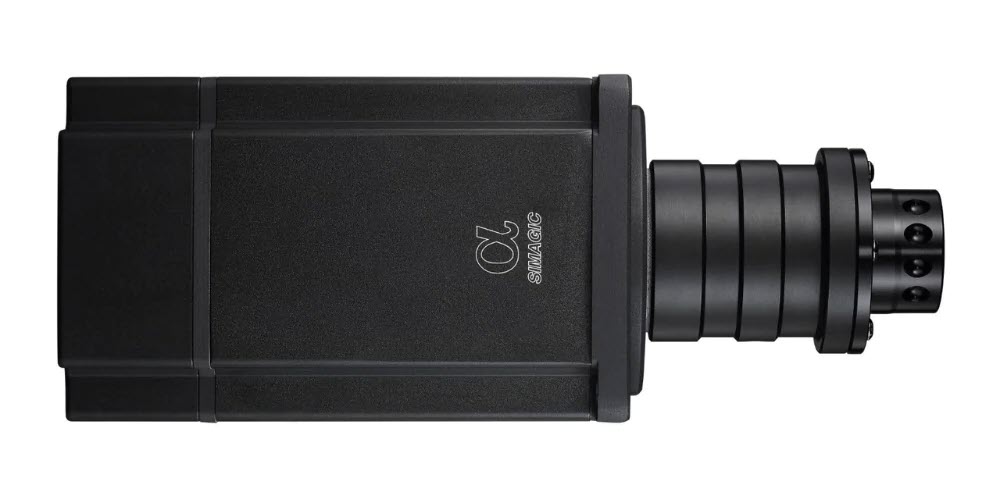
Build quality matches the Mini’s exceptional standards. Solid construction, reliable quick release, rigid steel shaft – these are industrial components that’ll last years of regular use without degradation. Alpha Manager software provides the same extensive configuration options, and the 18-bit encoder delivers plenty of resolution for this price point.
At £749, the Alpha competes directly with the Moza R12 at £649. The trade-off is clear: Moza’s smooth outrunner character versus Simagic’s raw servo directness. Both are excellent wheelbases that deliver proper mid-range performance. Your preference for FFB character should guide this decision more than specifications.
Simagic Alpha-U Wheelbase
The Alpha-U steps up to 25Nm output at £1,099, targeting users who want substantial torque without reaching Simucube pricing. It uses an upgraded servo motor capable of higher sustained output whilst maintaining the Alpha series’ characteristic direct feel. At this output level, you’re getting forces that cover everything from street cars to professional race cars.
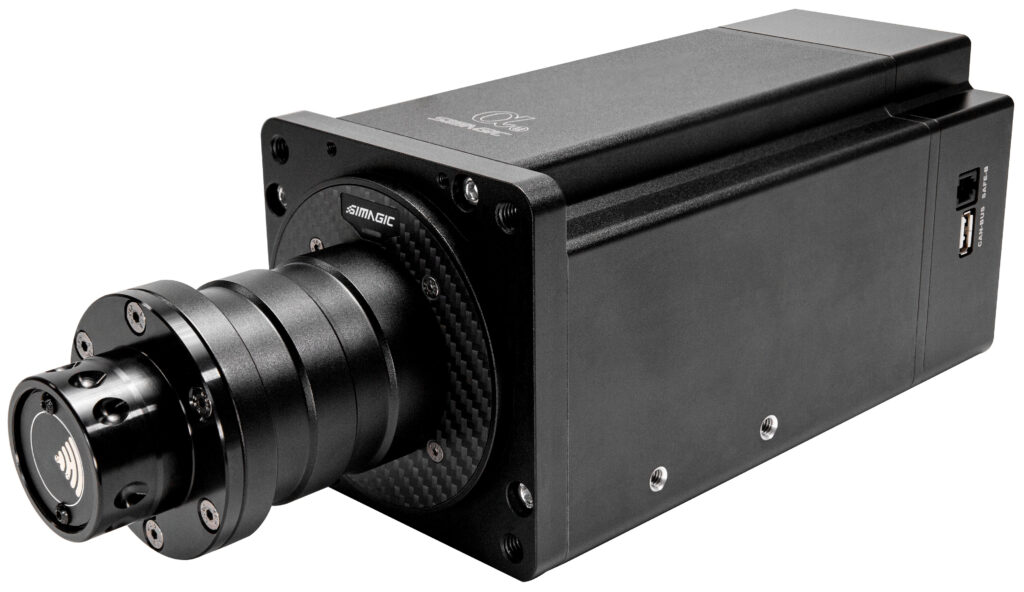
The question at this price point is whether you want 25Nm of industrial servo character from Simagic, or whether you’d prefer Simucube’s 24-bit encoder and surgical precision at similar money. The Sport costs just £70 more and delivers 17Nm with meaningfully superior encoder resolution and TrueDrive software sophistication. For competitive sim racers prioritising absolute FFB fidelity, the Simucube is compelling.
But if you really want 25Nm output – perhaps for endurance racing where you’re fighting heavy steering for hours, or if you prefer having that overhead for effortless detail – the Alpha-U delivers solid value. Build quality remains exceptional, and the Alpha Manager ecosystem provides good long-term support. It’s a capable wheelbase that competes well in this challenging price segment.
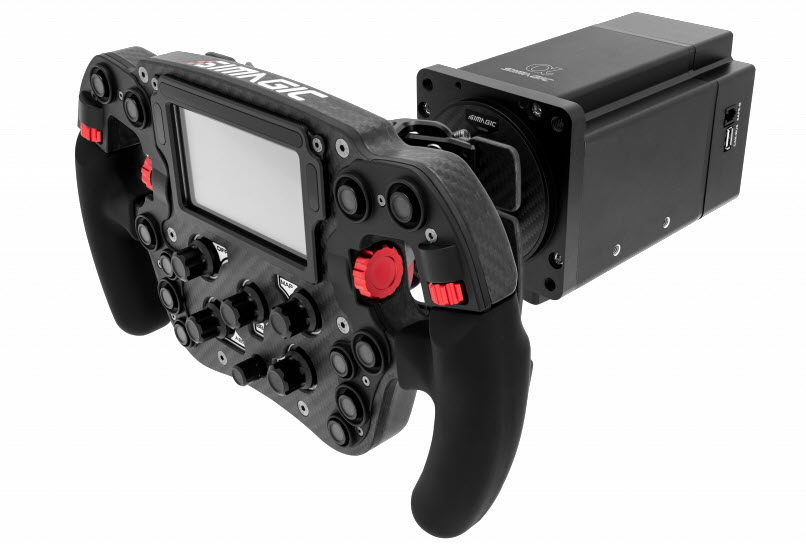
Simagic Alpha Evo: the new low-inertia lineup
The Alpha Evo line is Simagic’s 2025-2026 refresh and it’s properly different from the Alpha / Alpha-U generation above. New motor, new quick release, new software. Four bases: Sport at 9Nm (around £330), Normal at 12Nm (around £450), Pro at 18Nm (around £750), and the Ultra at 28Nm (around £1,000). The Sport and Normal share the same chassis – same dimensions, same weight. The Pro is a little longer to fit the bigger motor. The Ultra is bigger again.
The headline change is the motor. Simagic designed it from scratch for low inertia – lighter rotor, smaller diameter, faster to react to force feedback signals. The practical effect is feedback that arrives quicker and feels more alive in your hands than the Alpha / Alpha-U generation. The Ultra at 28Nm feels stronger than the rating suggests in my experience – I’d guess 30Nm+ if you hadn’t told me the number. With a lightweight wheel the smaller bases can feel slightly too reactive (pair them with a heavier aluminium-rim wheel and the picture settles down).
The other big change is the quick release. The Alpha Evo line uses an NRG-style QR with USB pass-through built in – spring-loaded contacts plus magnetic alignment, supporting up to 7.5W of power delivery (enough for a wheel with a full display and high-brightness LEDs). All the connectors are now on the back of the base, which makes cable management much tidier than the older Alpha series where ports were on the side. Active cooling keeps the base quiet under load. The base sits around 35°C externally even after a long endurance run.
Worth knowing: the warranty is one year, which is weak compared to VNM’s recently-extended two years or Simucube’s longer cover. And the early firmware prioritises CAN-FD over USB on the QR pins, which can confuse SIMHub support – there’s a sticker-on-the-pin workaround until Simagic ship the firmware fix. Neither is a dealbreaker but they’re worth knowing about before you commit.
MOZA Racing R12 DD Wheelbase
The R12 hits a fascinating price-to-performance point at just £649. That’s less than half the cost of Fanatec’s comparable Clubsport DD, yet it delivers 12Nm of smooth, consistent torque. The motor sizing principle applies perfectly here – the R12’s native 12Nm output means the motor is optimised for efficient operation at that level. It’s not fighting against excessive mass or operating far below its design point.
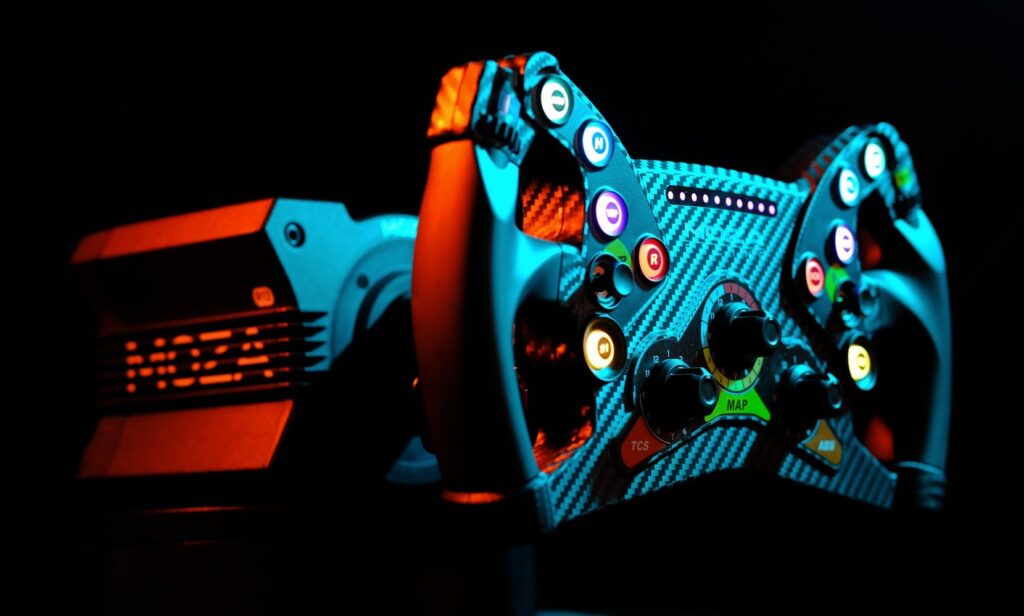
What I’ve been reading on r/simracing is that the R12 has become something of a “set it and forget it” wheelbase. Users praise its smooth FFB character, which comes from that scaled-up outrunner motor design. The general consensus on RaceDepartment seems to be that it provides a noticeable bump in detail and strength from entry-level bases, whilst maintaining Moza’s signature smoothness.
Firmware updates have been frequent and meaningful. Moza’s responsive to community feedback, which matters enormously for long-term ownership. The Pit House software ecosystem continues improving with regular updates, adding features and refining existing functionality. This isn’t a wheelbase that’ll be abandoned after launch.
The pin-based quick release continues delivering zero play after years of use according to community feedback. Build quality is solid throughout, with proper mounting provisions and good thermal management. At £649, the R12 represents the motor sizing paradox working in your favour – not too large, not too small, just right for the torque it delivers.
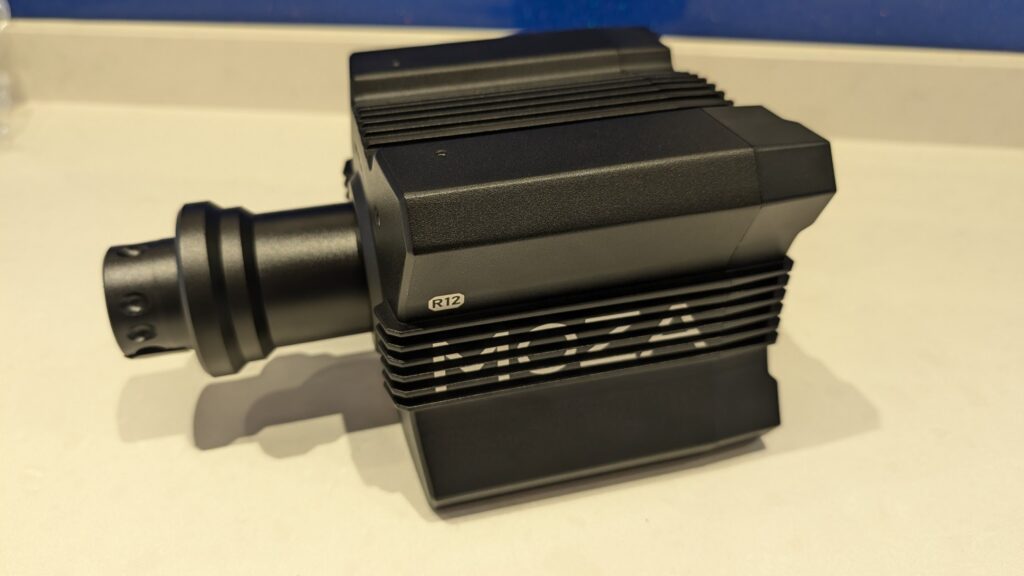
Moza R21 and R25 Ultra
Moza’s latest high-torque offerings represent a significant leap for budget, high torque systems. The R21 Ultra delivers 21Nm for £699, whilst the R25 Ultra pushes to 25Nm for £899. These aren’t simply higher-torque versions of existing bases – Moza has implemented flatwire motor technology that eliminates cogging entirely, alongside a 21-bit encoder providing roughly 2 million positions per revolution. That’s ten times the resolution of previous-generation units.
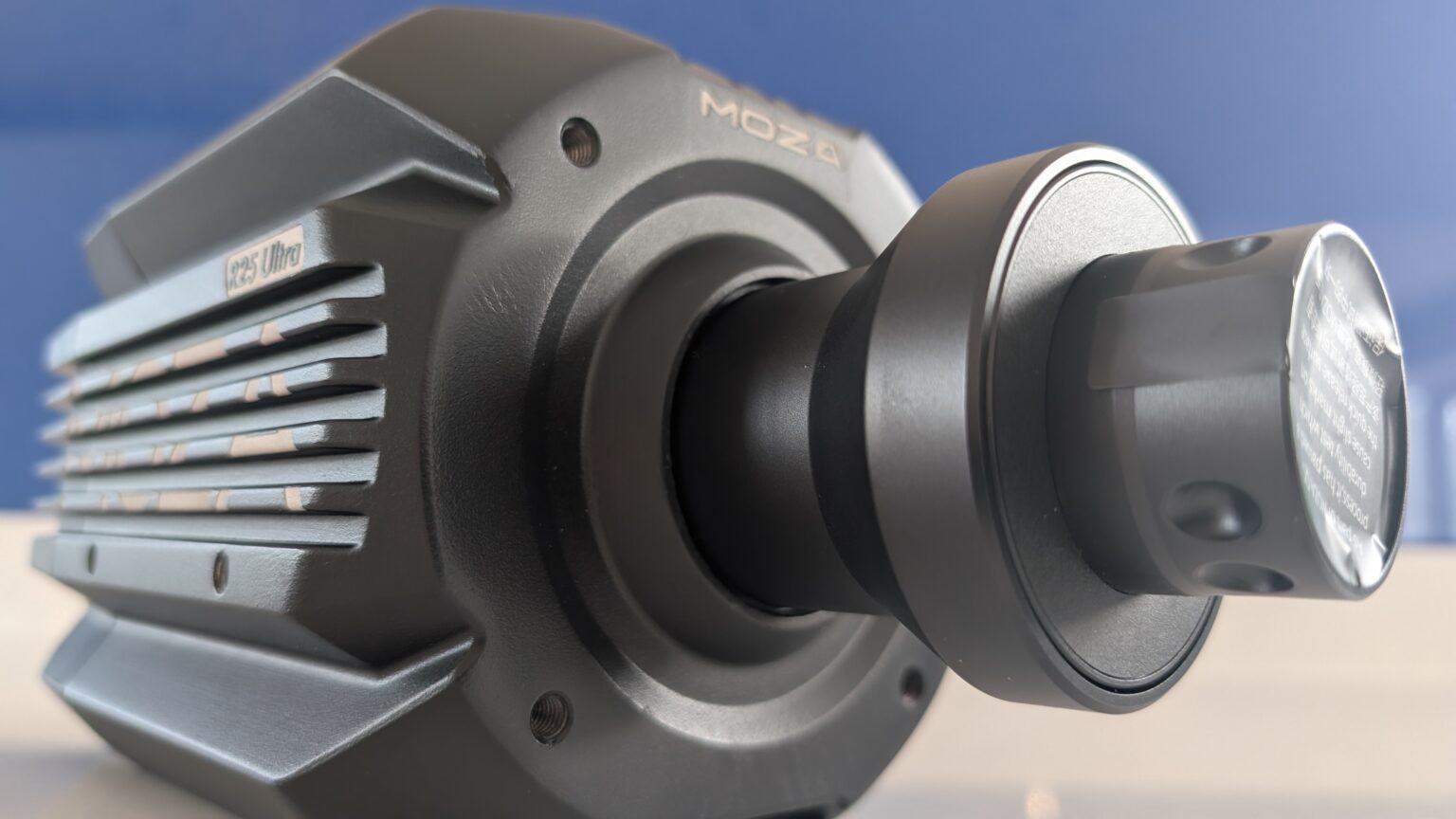
What struck me during testing was the sharpness. These bases feel incredibly responsive with no detectable latency. The FFB is aggressive and lively – some might say spiky out of the box. The motor responds to high-frequency telemetry data faster than you can physically resist, which creates an initial impression of instability. The fix is straightforward: increase Natural Damping to 20-30% in Pit House, and set Hands-Off Protection to low or off. Once properly dialled in, that spikiness disappears.
The flatwire motor design delivers smooth force across the entire torque range with zero notchiness or dead spots. Road surface communication is excellent – every imperfection, weight transfer, and tyre load change transmits clearly. The 21-bit encoder resolution means subtle details don’t get compressed when multiple force effects combine. You feel understeer onset and road texture simultaneously without one drowning out the other.
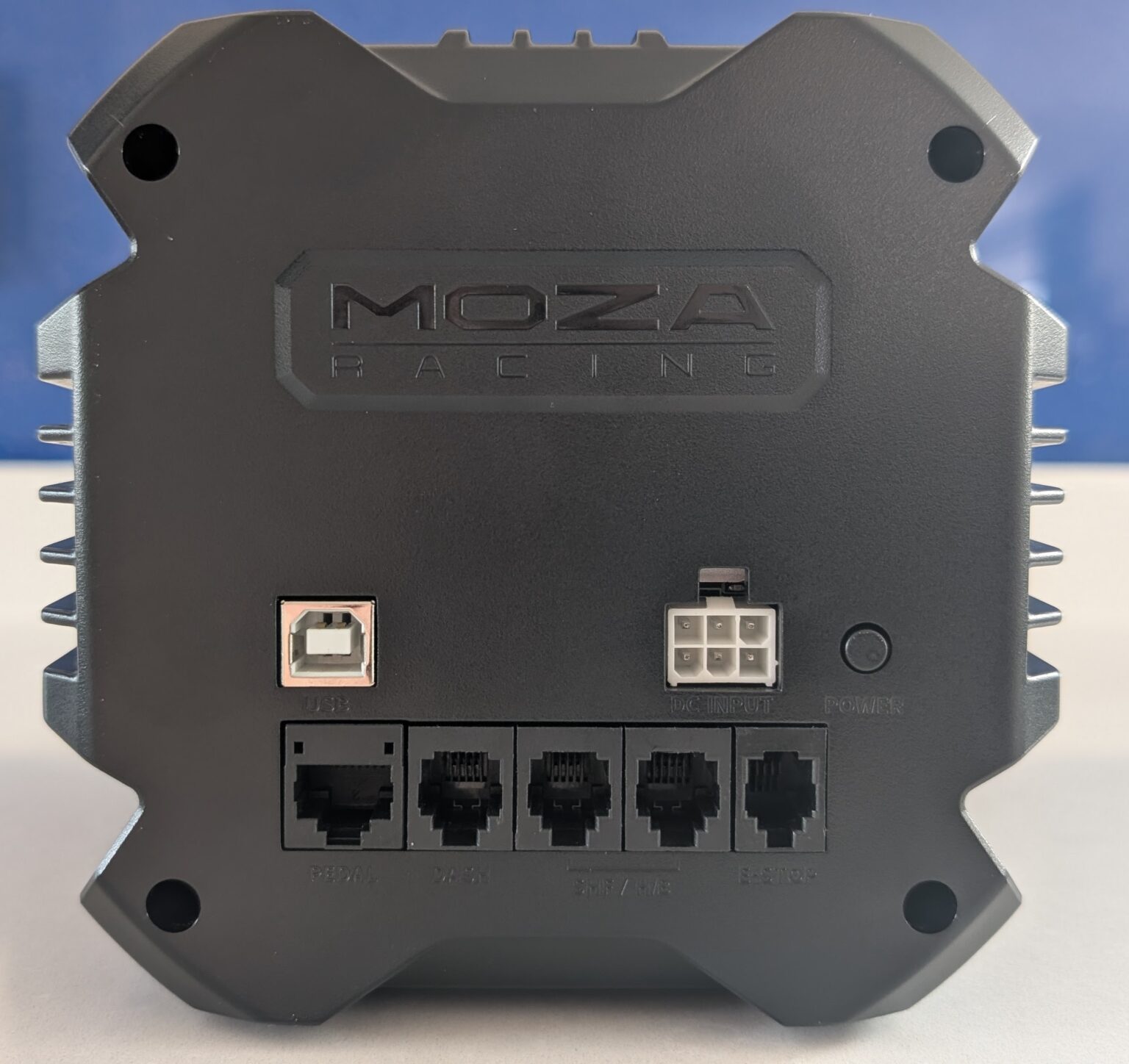
The R25’s exclusive True Torque sensor operates to 0.1% accuracy with 2kHz response rate, measuring torque directly rather than estimating from motor current. For most sim racers, the R21’s encoder resolution is already more than adequate. The True Torque sensor justifies the £200 premium only if you’re competing at the top end or really chasing every tenth. It’s a luxury rather than necessity for the vast majority of users.
Build quality is exceptional. Full CNC-machined aluminium housing, substantial weight (the R25 hits 9.2kg), and integrated RGB lighting that responds to telemetry. The lighting features shift indicators, ABS activation, and flag warnings – it’s more functional than gimmicky. These bases need proper aluminium-profile rigs; they’re far too powerful for desk mounting.
At £699 for 21Nm, the R21 Ultra offers remarkable value. Compare that to the Simucube 2 Pro at £1,679 for 25Nm, or even the Simucube 2 Sport at £1,050-£1,150 for 17Nm. Moza has positioned these bases aggressively on price whilst delivering industrial-grade motor technology and encoder resolution that properly competes. It’s easy to finish a sentence like that with “the established premium brands” but frankly, Moza is an established premium brand and they can take the fight to Fanatec and Simucube quite easily.
Fanatec Clubsport DD and DD Plus
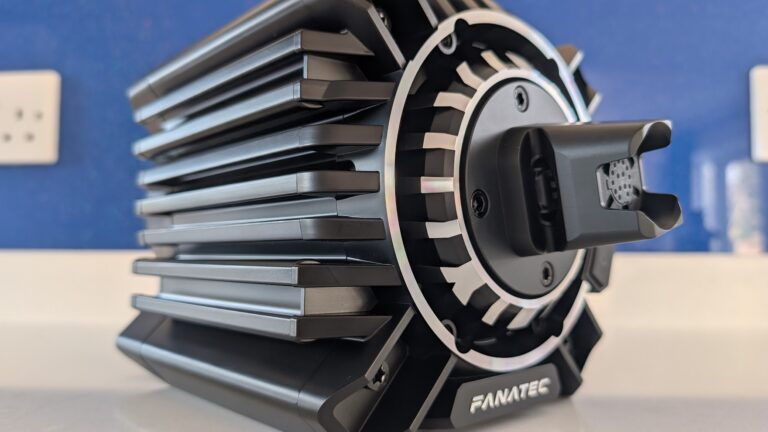
Worth knowing about the Fanatec lineup in mid-2026: Corsair completed their takeover of Fanatec in late 2024 and the practical effects are now visible. Build quality is up, delivery times are respectable again, the QR2 is shipping as standard across the range, and the product roadmap looks like someone planned it. Software has improved noticeably too. The Podium DD line (DD1 and DD2 at the very top of the range) is the premium Fanatec offering above the Clubsport DD – the DD2 at 25Nm is what you’d buy if budget isn’t the constraint and you want the proper Fanatec premium tier. My full take is in the dedicated Fanatec Podium DD review.
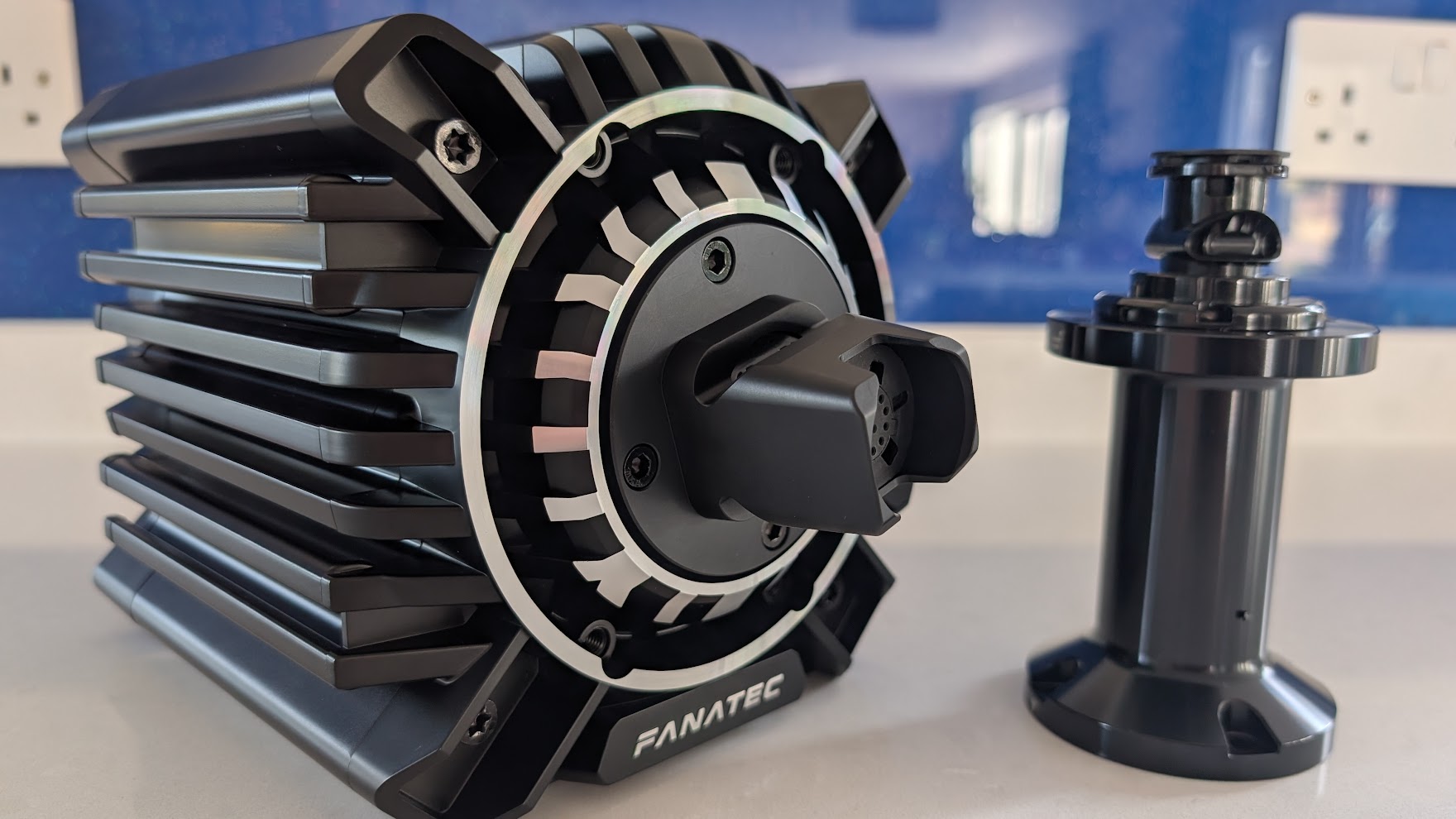
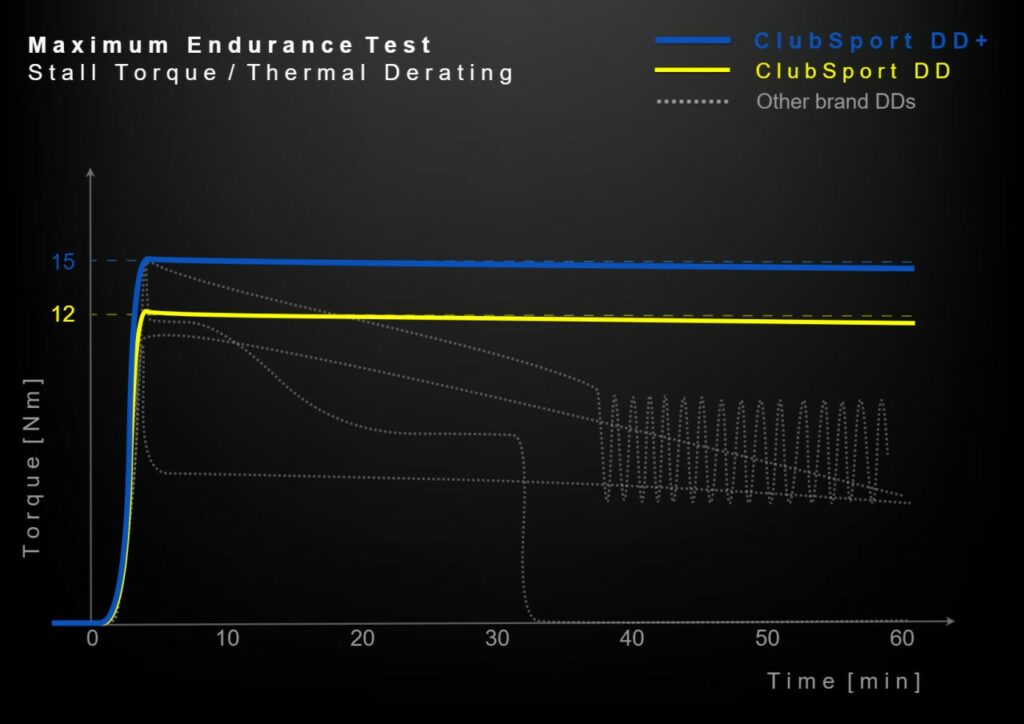
The Clubsport DD launched two years ago at around £599 (699 euros) representing Fanatec’s attempt at a refined mid-range offering with 12Nm output. The DD Plus adds PlayStation compatibility and FullForce telemetry support for £1,599. These wheelbases finally shipped with QR2 as standard, eliminating the play issues that plagued earlier Fanatec products.
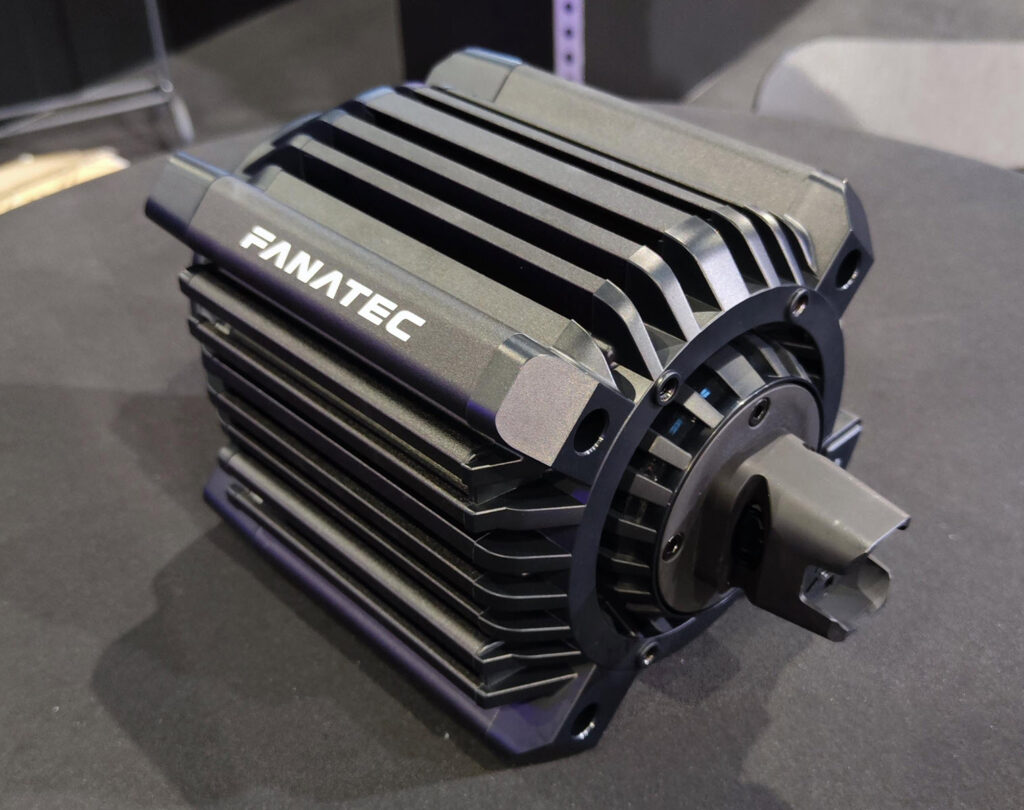
The caveat is that FullForce launched with literally no game support. It took 18 months before iRacing became the first supported title. Imagine buying a wheelbase where the main advertised feature is unusable for a year and a half. This exemplifies the telemetry fragmentation problem – proprietary systems requiring individual developer integration create inconsistent experiences across sims.
Build quality is solid, and the QR2 system delivers the zero-play connection these wheelbases deserved from the start. The outrunner motor provides Fanatec’s characteristic smooth FFB delivery. But at £1,299 for 12Nm, the value proposition is questionable when the Moza R12 delivers the same torque for £649 with arguably better long-term firmware support.
The DD Plus at £1,599 makes sense if you absolutely need PlayStation compatibility and are willing to wait for FullForce game support. For PC-only users, it’s really difficult to recommend over a Simucube 2 Sport at similar money, which delivers superior encoder resolution, industrial-grade construction, and proven long-term reliability. The Clubsport DD represents what Fanatec should have delivered years ago, but the market has moved on.
Sim-Lab DDX TorqueSync Series
Sim-Lab’s direct drive wheelbases are no longer vapourware. The DDX TorqueSync line was announced at the SimRacing Expo in late 2025, with the DDX26 (26 Nm) and DDX39 (39 Nm) running on a unique 350V internal architecture with an ultra-fast 100kHz feedback loop. Pre-orders opened in December 2025 and initial customer deliveries started in mid-February 2026.
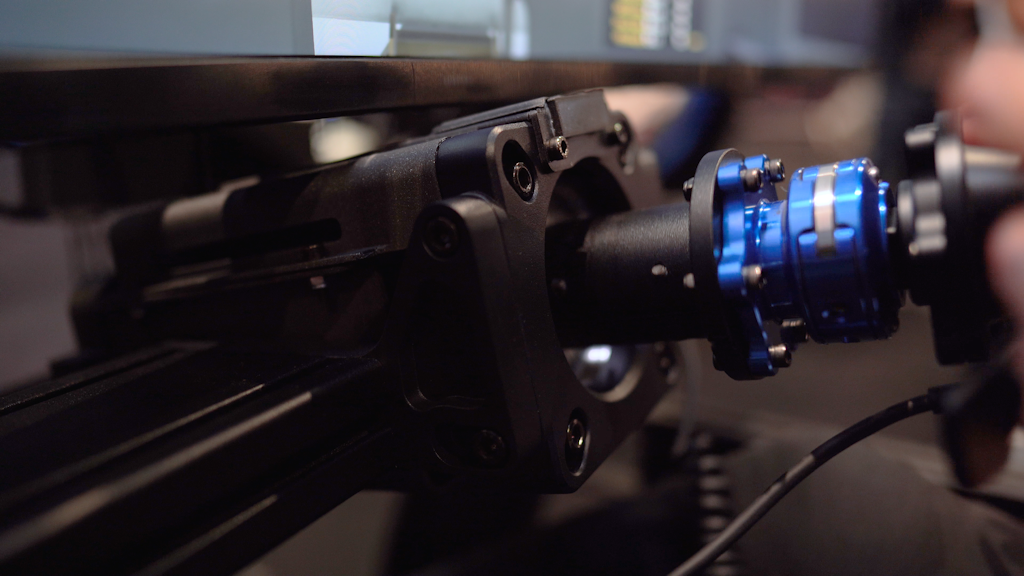
Given Sim-Lab’s reputation for well-built aluminium cockpit construction, the wheelbases were always going to be properly engineered. The 350V architecture and 100kHz loop are properly interesting technical choices – higher voltage means more headroom for dynamic torque delivery, and the feedback rate is faster than anything else on the market. Early reports from customers are positive. I’ll do a proper review once I’ve had one on my rig.
VNM Simulation: the new entrant from Vietnam
VNM Simulation are new to most UK sim racers. Vietnamese company, started in 2020 making pedals, shifters and motion kit, launched their direct drive line in 2024, and the Xtreme has become the dark horse of the high end. Four bases in the range: Premier 13Nm (around £699), Elite 18Nm (around £899), Supreme 25Nm (around £1,150), and the Xtreme at 32Nm (around £1,250-£1,380 depending on if you want the optional slip ring). Our affiliate catalogue currently lists the Xtreme – the smaller bases are available direct from VNM and via specialist retailers.
The reason VNM are worth a section all to themselves is the Tick mode telemetry blend. It’s the most usable telemetry-based FFB implementation I’ve come across. You set a slider for the mix between direct input and telemetry – anywhere from 0% to 100% telemetry – and the system blends the two streams. At about 70/30 direct/telemetry you get the natural FFB the sim is trying to deliver plus the kind of low-speed weight-transfer cues you’d normally only feel through motion. It properly changes how the car feels on the limit.
VNM sell direct from vnmsimulation.com, and the Xtreme is also carried by specialist retailers. The smaller Premier and Elite bases are the ones most UK racers should look at first.
The hardware side: lever-style quick release with pogo-pin USB pass-through (£35 wheelside, much cheaper than the £145 Simucube 3 QR or the £85 Asetek), 23-bit encoder across all four bases, 5-pole-pair industrial servo motor, 2-year warranty (recently extended retroactively to all owners, which is the right thing to do). The catch with VNM is documentation – patchy compared to Fanatec or Simucube – and a software UI that looks like it’s from the early 2000s. Functionally everything works, the Discord community is active and responsive, and the founder is genuinely on Discord answering questions. You just need to be comfortable hunting for answers in chat rather than in a polished knowledge base.
VNM are also doing a co-branded variant with Cube Controls (the VNM x Cube Controls Direct Drives) – same hardware re-badged for Cube Controls’ product line. Worth knowing if you’ve already invested in Cube Controls wheels.
Time to Choose: Direct Drive Wheelbases Compared
Choosing between these wheelbases really depends on your priorities. If you’re entering direct drive from an old belt-driven wheel like a Logitech G29, the Fanatec CSL DD or Moza R5 bundle deliver massive improvements for £350-400. You’ll be quite astonished at the difference, believe me. Both represent amazing value, with the choice between them depending on whether you prefer Fanatec’s composite shaft snap or Moza’s outrunner smoothness. The choice is getting more and more difficult – they’re both excellent companies.
In the mid-range segment, the Moza R12 at £649 and Simagic Alpha Mini at £699 dominate on value. The R12’s smooth outrunner character versus the Alpha Mini’s raw servo directness – your preference for FFB feel should guide this decision. Both deliver proper mid-range performance with excellent build quality and trustworthy, long-term support.

For those wanting the absolute best, I think the Simucube 2 Pro at £1,679 remains my benchmark. That 22-bit encoder (with 4.19 million positions per revolution), industrial servo motor, 8.0 Nm/ms slew rate, and TrueDrive software sophistication deliver surgically precise FFB precision. Mine has run flawlessly for years, and the FFB detail continues revealing nuances in every sim I drive. That said, Moza’s new R21 Ultra at £699 for 21Nm and R25 Ultra at £899 for 25Nm represent remarkable value – the flatwire motor technology and 21-bit encoder are technically very impressive devices.
If, of course, you’re made of money then it’s the Simucube 3 all day. As a Simucube 2 owner, though – I can’t justify the expense.
Whichever wheelbase you pick, the fundamentals remain a constant: match motor output (torque) to your needs, prioritise engineering quality over headline specs, and choose brands that support their products long-term with meaningful firmware updates. Get this right and you’ll find years of enjoyment from whichever wheelbase you choose.
Related Articles
Simucube 3 Direct Drive Wheelbase: The Review
Logitech RS50 Review: First Proper Direct Drive from Logitech
The Best Direct Drive Wheels for Sim Racing
Fanatec Podium DD Review
Le Mans Ultimate – Sorting Out the FFB Settings with Revosim
REVOSIM RS Pure 9Nm Bundle Review
Topic: Direct Drive Wheels