


I’m a sim racer and amateur racer with a passion for Motorsport, good racecraft and the technical and setup aspect of sim racing.
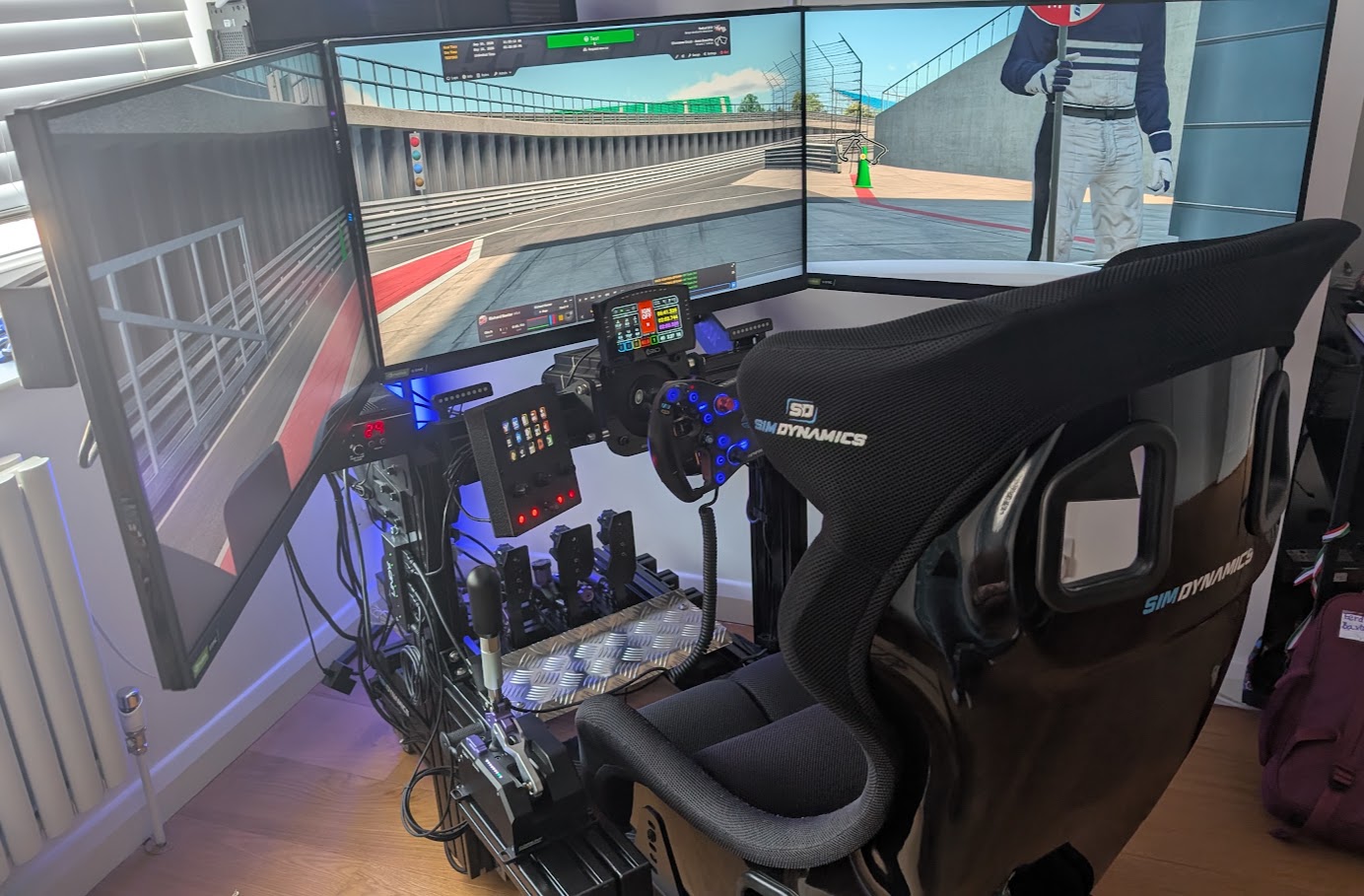
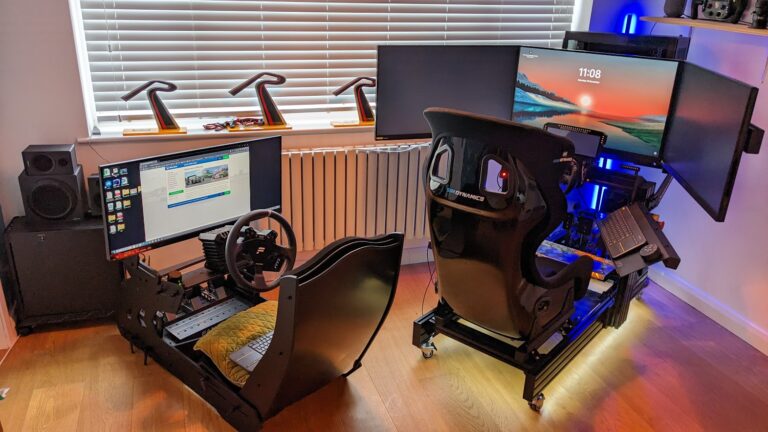
Featured image: My cockpit (right) and my son’s Overpower kids’ rig (left)
Sim racing cockpits (the frame upon which you mount all of your racing simulator gear) come in many shapes and sizes, with a huge variety of choices in terms of build quality, strength, rigidity and, of course, price. My advice is to buy aluminium profile if you can, which is what my own Sim-Lab P1X Pro is built from. If money’s tight, the Sim-Lab GT1 Evo is the way to build a “high-end” rig on a budget. If you’d rather have it built in an evening, the Trak Racer TR8 Pro V2 is steel tube, and Trak Racer say it goes together in 45 minutes. The RCP Cockpit PRO is an 8020 aluminium profile rig from a company that really looks after its customers. The Fanatec ClubSport GT Cockpit makes the most sense if your wheelbase and pedals are already Fanatec.
If you’d like to narrow it down by budget first, start with the finder below.
Quick Navigation
Jump directly to what you’re looking for:
What makes a good rig? |
Profile or steel tube? |
Specs compared |
Sim-Lab P1X Pro |
Sim-Lab GT1 Evo |
Trak Racer TR8 Pro V2 |
RCP Cockpit PRO |
Fanatec ClubSport GT |
Formula and F1 cockpits |
Complete rigs |
Before you buy
Find your sim racing cockpit
Filter by type, frame and budget, then check today’s price.
What makes a good sim racing rig?
When you pick your seat and frame, keep in mind the available space you have, how powerful your equipment is, and how much you want to spend. Above all other things, rigidity is crucial. Higher-end sim racing wheelbases and pedals tend to create far higher forces, with a direct drive wheelbase like the Simucube 2 Pro at 25Nm and VNM’s load cell pedals rated to 200kg of brake force (a load cell measures how hard you press the pedal, not how far it travels). Forces like that can create what we refer to as flex, the unintended movement of the rig itself under duress.
Generally, the more expensive the seat and the frame, the sturdier they will be, allowing for more powerful wheels and pedals, and it’s the same for your wheelbase mounting too. If you’re considering using a direct drive wheelbase and your rig is not robust enough to handle the forces that will be exerted upon it by the wheelbase, the frame that supports the wheelbase will flex too. Flex takes away the mechanical feeling of the equipment and the feedback you get in return.
If you’re not sure what flex looks like, check out this video I made while recording a how-to heel and toe article. Note the movement of the pedal base as I apply the brakes:
The flex of this pedal base (attached to an RSEAT RS1 cockpit) is around 4 degrees at a 25kg brake force. Frankly, my Sprint pedals can handle more load than the pedal base on this rig is designed for, which is why it’s flexing a little. But if I were using Thrustmaster or Logitech pedals, there’d be no flex at all because the brake force would be perhaps a fifth of the brake forces required for the Sprints.
Sim Tourist found flex in the RSEAT RS1 too, at the wheel end. When he ranked the cockpits he’d reviewed, he said the single arm that carries the wheelbase holder “just had a lot of flex in it”. I’ve since moved off the RS1 and onto aluminium profile.

Without wanting to dwell too much on flex in cockpits designed for sim racing, you do need to consider if you’re going to upgrade your pedals. If the answer is yes, you need to decide if you’ll want to upgrade the rig at the same time, or just buy the stiffer rig now and save the hassle later on.
Aluminium profile or steel tube?
The indisputably best material to prevent flex, and for extendibility, is extruded aluminium, the square, boxy-looking material. You’ll see it called aluminium profile or 8020, and your kit bolts to it with T-nuts that slide along the slots, so anything can be moved or added later. While it might not look as pretty to the untrained eye, the experienced sim racer will immediately go for a rig like the Sim-Lab cockpits featured below. If you’re serious about sim racing and you’d like to progress over a long period of time, an extruded aluminium rig is the way to go.
I’m a fan of aluminium profile rigs because they don’t have the same compromises that tube steel rigs can experience. There’s less flex out of the box. For lower budgets, it’s still better to go with an 8020 style extruded aluminium chassis if you can!

That said, two of my five picks use steel tube, the Trak Racer TR8 Pro V2 and the Fanatec ClubSport GT Cockpit (which mixes round steel tube with 8020 extrusions). And tubular rigs are so much easier to assemble. OC Racing reckon profile wins on adjustability, compatibility and sturdiness, and tube on the look and on quick adjustments. They also found the dearer profile rigs use thicker profile, better hardware and labelled parts. I still lean towards profile, mostly because you can keep bolting things on to it as you upgrade.
Sim racing cockpit specs compared
I checked every price below on 28 September 2026. Cockpit prices move around a lot, so check what the daily price monitor under each pick says rather than trusting a figure in an article, including mine!
| Rig | Frame | Wheelbase mounting | Pedal plate | Seat | Footprint |
|---|---|---|---|---|---|
| Sim-Lab P1X Pro | Aluminium profile | Front mount, wheel deck or Fanatec DD mount, chosen at order | Pedal deck included | Optional (Sim-Lab S1 seats) | 1350 x 580 mm |
| Sim-Lab GT1 Evo | Aluminium profile | Direct drive upgrade compatible | Adjustable angle and height | Not listed | Not listed |
| Trak Racer TR8 Pro V2 | 2″ steel tube | Direct drive to 30Nm, sliding wheel mount | Up to 180kg brake force | Frame only (sliders and brackets included) | 1300 x 600 mm |
| RCP Cockpit PRO | 8020 aluminium profile | Universal deck, Fanatec side mounts or front mount | A572 carbon steel | Optional, or as a seat bundle | 1397 x 711 mm |
| Fanatec ClubSport GT | 50mm steel tube with 8020 extrusions | Pre-drilled for Fanatec, T-slots for most other kit | Tool-free adjustment | 290mm side-bolt seat pattern | 1675 x 775 mm |
Specs from each maker’s own listing, read 28 September 2026.
1. Sim-Lab P1X Pro – my own rig
The Sim-Lab P1X Pro is my own cockpit, and it’s the rig I test everything on. The original P1-X was an extremely strong rig, capable of handling the most powerful DD wheels, and the aluminium profile construction means the cockpit is very adaptable. I recommend this one because if budget is less of an issue, it’s probably going to be the last cockpit you need for a very long time.

The potential to customise a Sim-Lab rig like the P1X Pro is nearly endless, with a massive number of accessories available, such as shifters, monitor stands, button boxes, keyboard trays, front mounting wheelbase brackets and so on. You choose the wheel mount when you order (a front mount, a wheel deck or a Fanatec DD mount), and the pedal deck is included. It was around EUR 780 on sim-lab.eu, or $789 on sim-lab.us. It takes up 1350 x 580 mm of floor, 680 mm at its widest, and stands 770 mm tall.
The seat is optional, so you can buy the P1X Pro without one, or with one of Sim-Lab’s S1 seats and the brackets to fit it. Some people like the freedom of being able to decide exactly what seat and accessories they want. The Sim-Lab seat that came with my P1X matched what I want from a GT seat very well, with a snug fit, no side-to-side movement and support for my lower back. If you’d like to see how mine went together, there’s more in my P1X Pro build write-up.
Sim-Lab discount code: use SIMRACINGCOCKPIT at checkout for 5% off at sim-lab.eu.
2. Sim-Lab GT1 Evo – best on a tight budget

Replicating a GT car driving position, the less expensive sibling of the P1X, the Sim-Lab GT1 Evo is a very popular, stiff aluminium profile hybrid sim chassis. We recommend this rig when you’re building a “high-end” rig on a tight budget. This is an absolutely brilliant starter rig on a very reasonable budget and is one of our top recommendations as a solid base to forge a promising sim racing career. That’s mostly because you probably won’t need to replace it with higher torque equipment! It was around EUR 395, and it comes with side mounts for your accessories and a pedal tray you can adjust for angle and height. If you want to mount a Simucube 2 Pro or another front-mounting direct drive wheel, Sim-Lab sell a front mount for a reasonable price. Check the listing says it fits the GT1 Evo.
Sim Tourist is a little less excited about the GT1 Evo. He rates it as a very sturdy rig, but points out that it has barely changed since 2018 and calls it a very plain extrusion profile cockpit.
3. Trak Racer TR8 Pro V2 – a 45-minute build
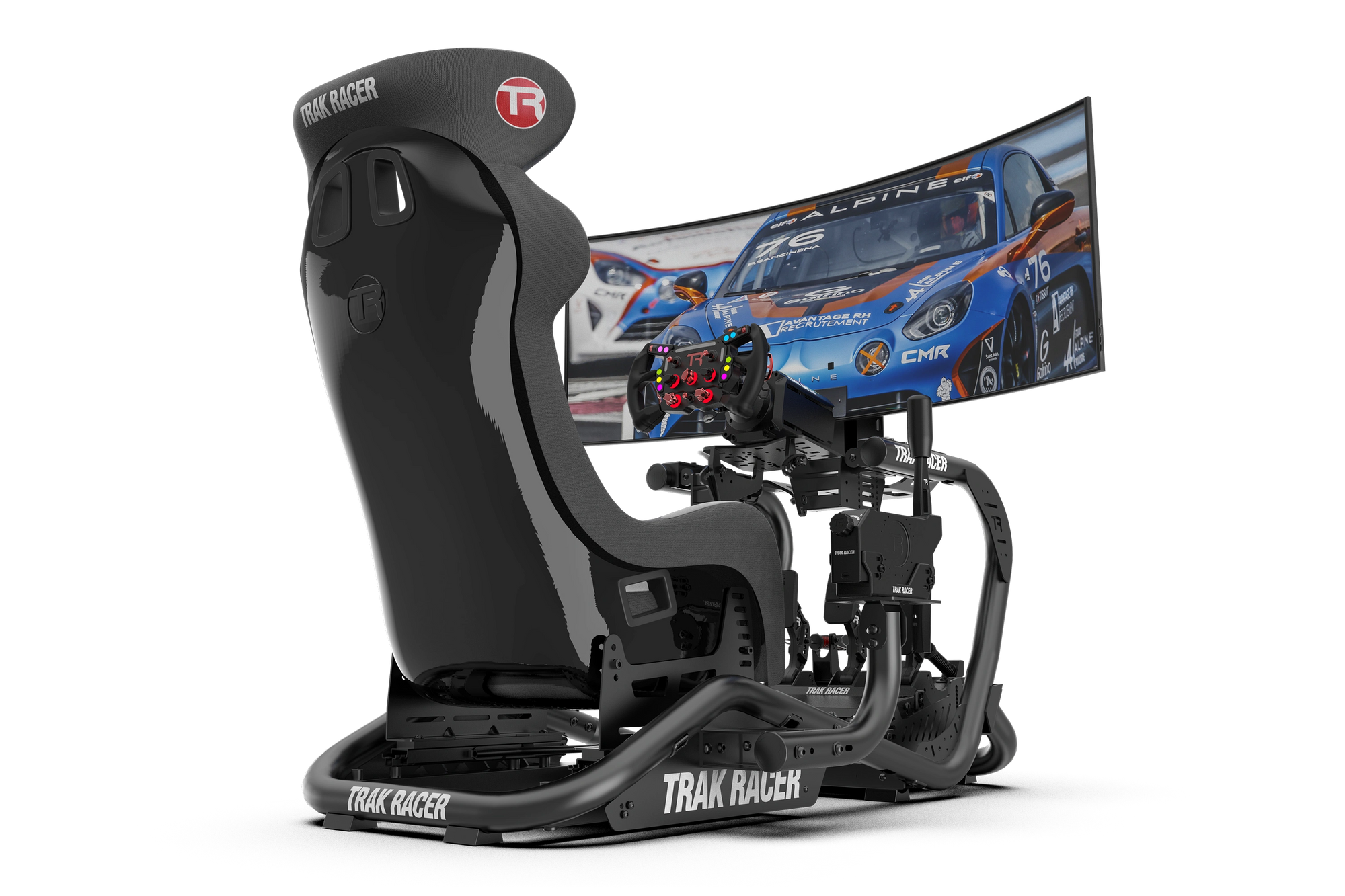
The Trak Racer TR8 Pro V2 is a 2″ high-grade steel tube frame that takes 45 minutes to assemble, by Trak Racer’s own figure. It was $699 for the frame only. It’s rated for direct drive wheelbases up to 30Nm, and the pedal plate takes up to 180kg of brake force. It weighs 51kg and takes up 1300 x 600 mm of floor.
Seat slider rails, oversized seat brackets and a shifter mount come in the box, and there’s an optional integrated single or triple monitor stand. Sim Tourist put the TR8 Pro in his A tier. He found the tubular frame very sturdy and very configurable, and he particularly liked the wheelbase holder that slides out.
A tube frame gives you fewer places to bolt things than profile does, so if you plan to add a lot of accessories later, check that Trak Racer make a mount for each of them.
4. RCP Cockpit PRO – a pedal plate that will not flex

The RCP Cockpit PRO is an 8020 aluminium profile cockpit. It was $875 for the frame, or $1,095 bundled with a racing seat of your choice. It takes up 28 x 55 inches of floor (711 x 1397 mm). The pedal plate is manufactured in A572 Structural Steel, so before you look at it and think “that looks thin” – trust me, it will not flex!
The rig is available with a “Universal Steel Wheel Deck” intended for any bottom mounting wheelbases (such as the Fanatec CSL DD). There’s also a side-mount option for the Fanatec DD1 or DD2, and a front mounting option for the SimuCube, VRS or any MiGE based OSW wheelbases. RCP make a series of upgrades for this rig too, including a stiffer Fanatec DD2 side mount and a Simucube front mount bracket.
Overall we really like RCP and the way they look after their customers. Worth a look!
RacingCockpits discount code: use SRC15OFF at checkout for 15% off at racingcockpits.com.
5. Fanatec ClubSport GT – for a Fanatec setup
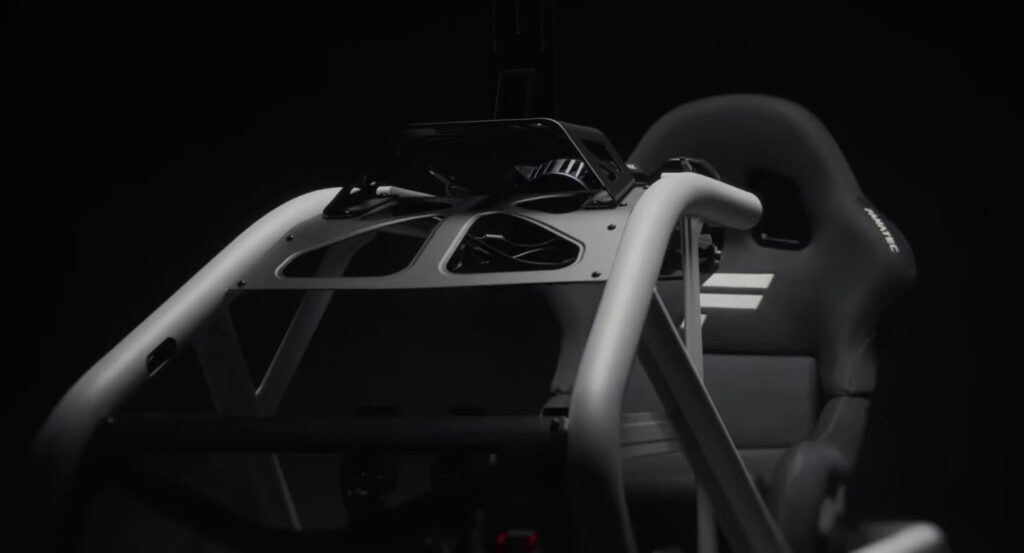
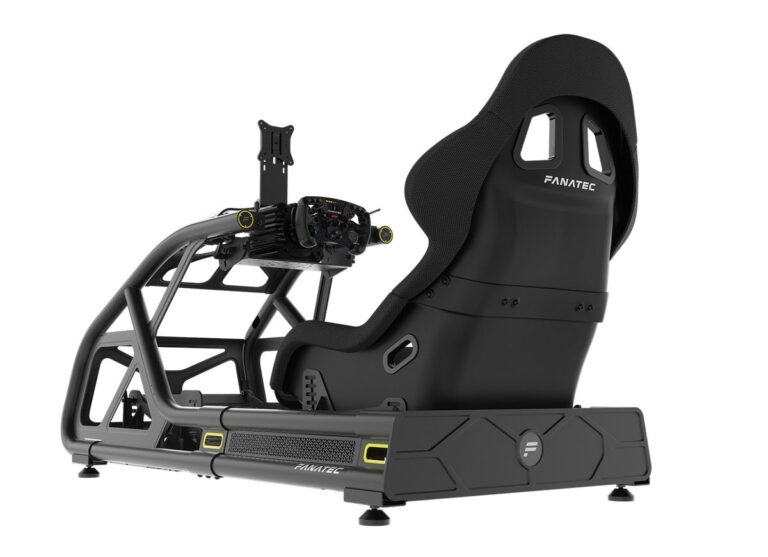
The Fanatec ClubSport GT Cockpit is built from 50mm round steel tubes and 8020 aluminium extrusions on a triangle-based design. The frame was $1,000. It’s pre-drilled for Fanatec bases, pedals and shifters, so your Fanatec kit bolts straight on. Fanatec say the T-slots take kit from the other major brands as well. The seat, wheelbase and pedals all adjust without tools, and the seat bolts on with 290mm side bolt spacing.
There’s also an onboard 100 x 100 VESA mount. VESA is the standard bolt pattern on the back of a monitor, and this one takes anything from a 27-inch 16:9 screen up to a 49-inch ultrawide. The cable management is built in, with a ventilated holder for the power brick. It comes in white or matte black, with a 3-year warranty. At 1675 x 775 x 725 mm it’s a big cockpit, and OC Racing describe the ClubSport (and Trak Racer’s TRX) as “literally massive”, so get the tape measure out first.
Fanatec discount code: use SIMRACINGCOCKPIT5 at checkout for 5% off at fanatec.com.
What about formula and F1 cockpits?
If you’ve got your heart set on an F1 / Formula style driving position and you’re keen just to get going with minimal fuss, we cover those rigs separately in our F1 cockpits guide. The formula position has you leaning back and sitting lower, with your legs raised slightly more than in a GT-style cockpit, and the tubular rigs built around it are simpler to put together.
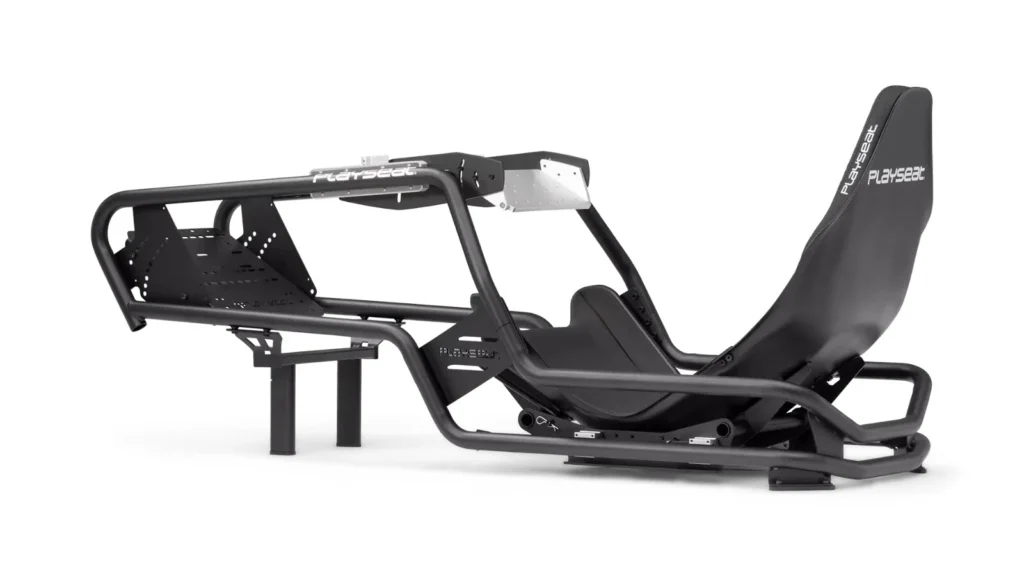
The Trak Racer TRX V2 has a steel frame that switches between formula and GT seating. It was $999. Playseat’s Formula Instinct (there’s an official F1 Edition) and Formula Intelligence are tubular formula rigs too. OC Racing’s take on switchable seating is that the novelty wears off, because re-adjusting the monitors, the FOV (field of view) and the cables every time you switch is a pain.
Complete rigs, with the wheelbase and pedals included
It is possible to buy a rig frame as a separate unit or as part of a bundle package with a seat, and in certain cases, some other accessories too. The complete rigs go further and put the wheelbase, the wheel and the pedals in the same order. You get matched parts, which suits anyone who just wants to go racing without spending too much time on the config details. You’ll still need your own screen.
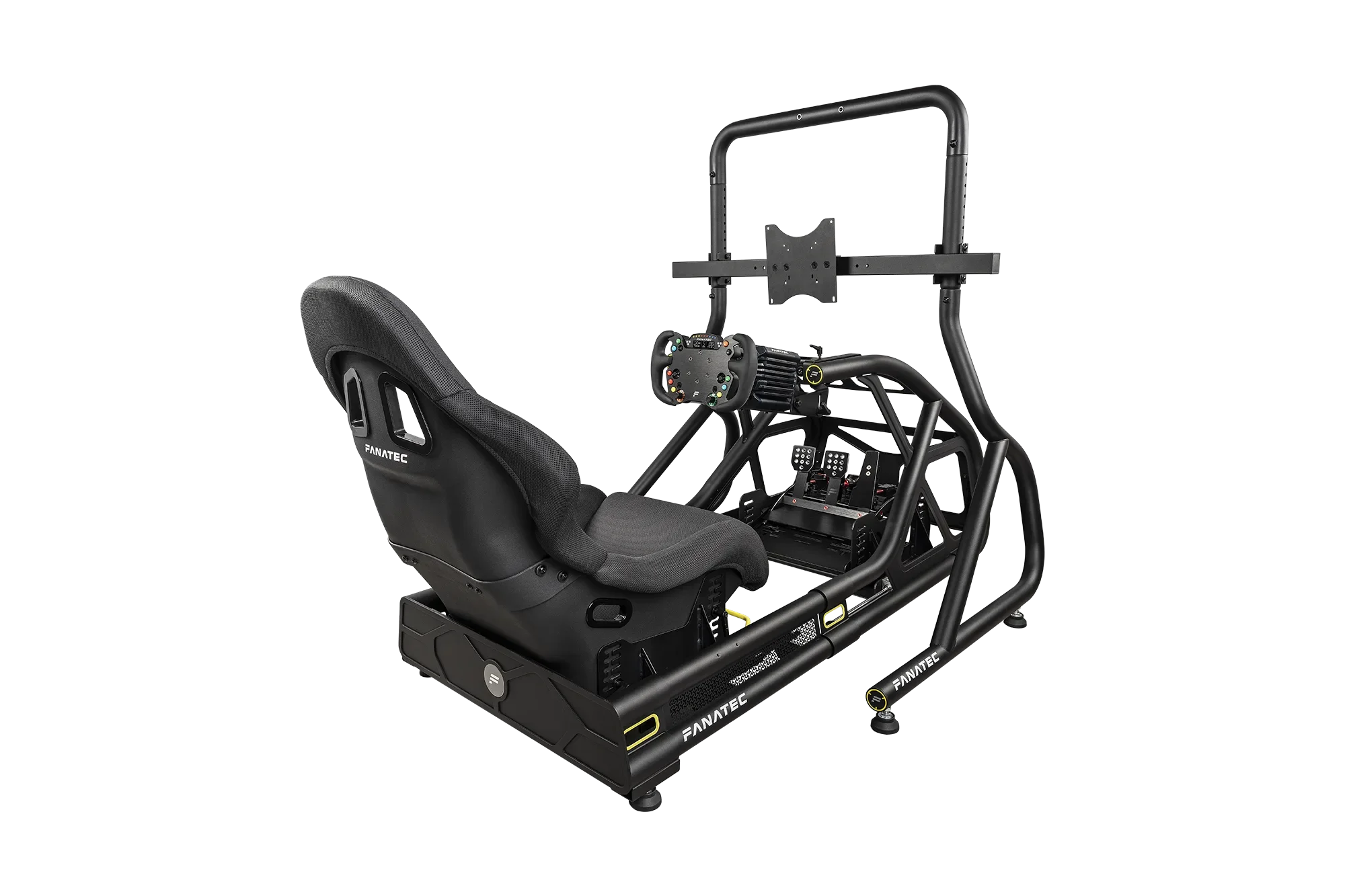
The Fanatec ClubSport GT Cockpit GT3 Endurance Bundle was $3,323.93. That gets you the cockpit, a seat and a monitor stand for 32 to 65-inch screens, plus a ClubSport DD+ at 18Nm, the GT3 Endurance wheel rim and button module, ClubSport Pedals V3 with a 90kg load cell and an Xbox hub. It works on PC, PlayStation and Xbox.
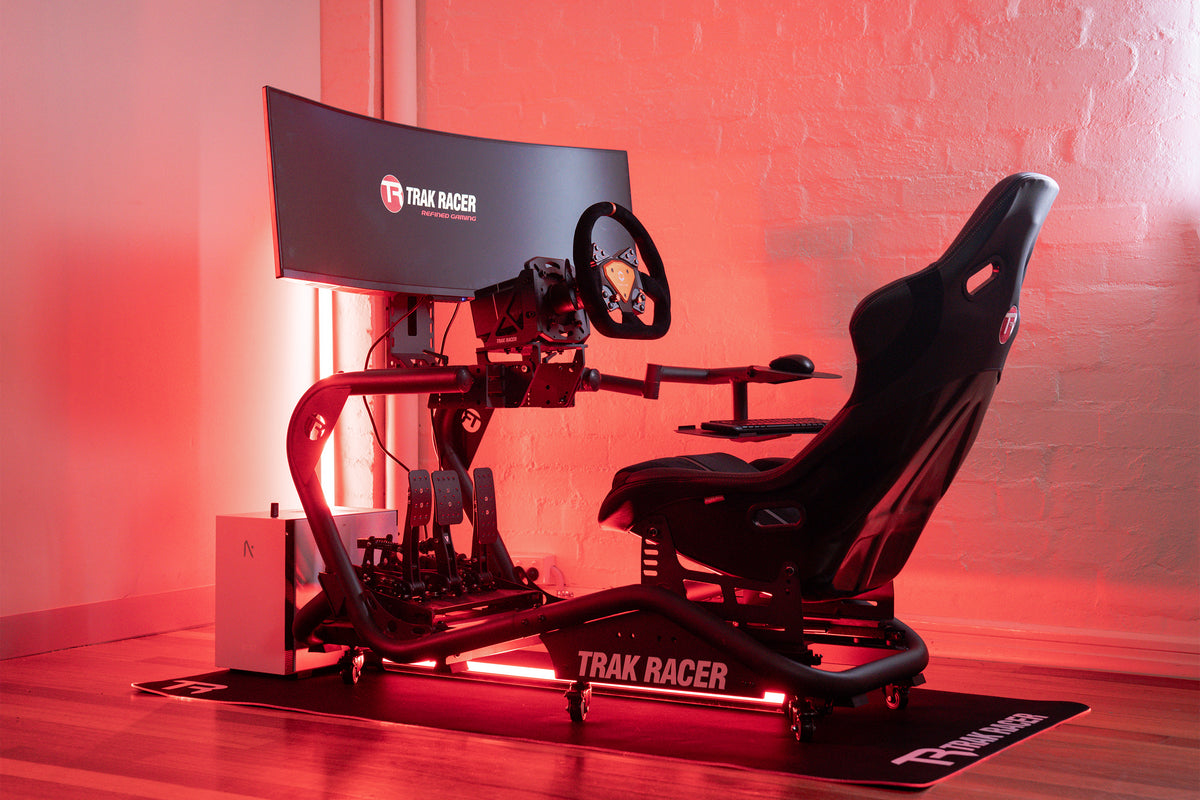
Trak Racer’s Ready 2 Race TR8 PRO comes in two versions. The Sport bundle was $3,194.85 and comes with a Simucube 2 Sport, a CONSPIT 310 APEX wheel, a VNM three-pedal set, a GT fibreglass seat and a single monitor stand for screens up to 70 inches. The Pro bundle, at $3,754.40, steps up to a Simucube 2 Pro at 25Nm, VNM load cell pedals to 200kg and a VNM shifter, and it’s PC only.
What to check before you buy
Some cockpits are sold as a combo, while others require that you purchase the seat separately, and thus the seat is not included in the listed price. OC Racing put a seat at $300 to $400 for most brands, so add that to any frame-only price before you compare. Of my picks, the P1X Pro’s seat is optional, the TR8 Pro V2 is frame only, the RCP Cockpit PRO comes with or without one, and the complete bundles include one. Critically, speak with the retailer as they will always have package combinations available suited to your wheelbase and preferred seat style.
An integrated monitor stand bolts to the cockpit, which means the vibration from your wheelbase, a ButtKicker or a motion platform goes through to the screens. A freestanding stand keeps the screens separate, but it needs more floor space.
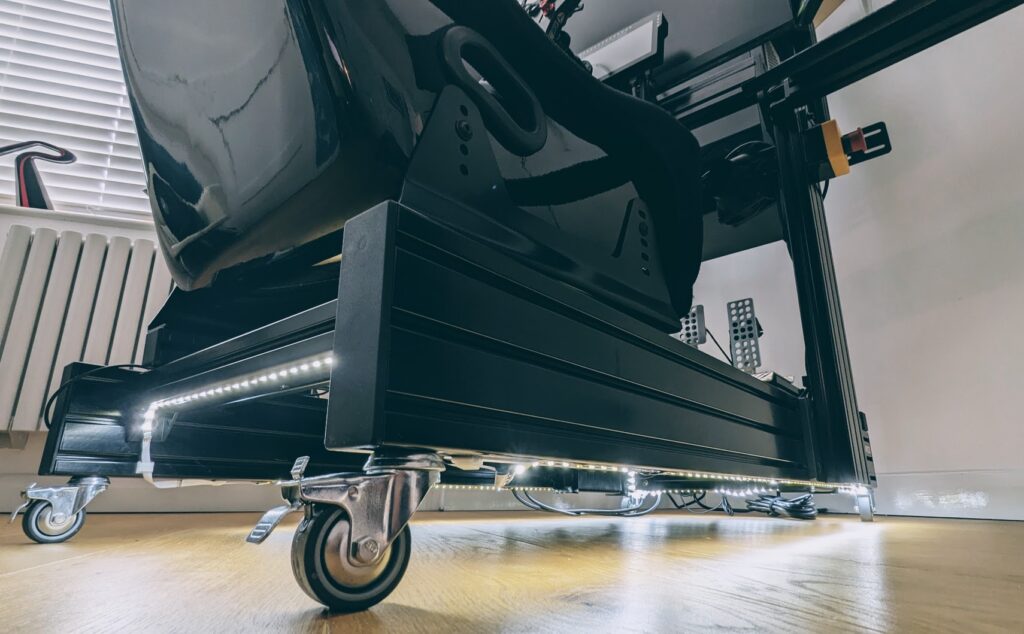
Finally, check the wheel deck suits the way your wheelbase mounts. The name tells you which face of the wheelbase bolts to the rig. A bottom-mount base sits on a universal deck, Fanatec DD1 and DD2-style bases use side mounts, and a Simucube-type base wants a front mount. The RCP Cockpit PRO and the Sim-Lab P1X Pro both offer all three.
Once you’ve picked your frame, the seat is the next decision, and my sim racing seat guide will help with that. I’ll see you out on track!
Related Articles
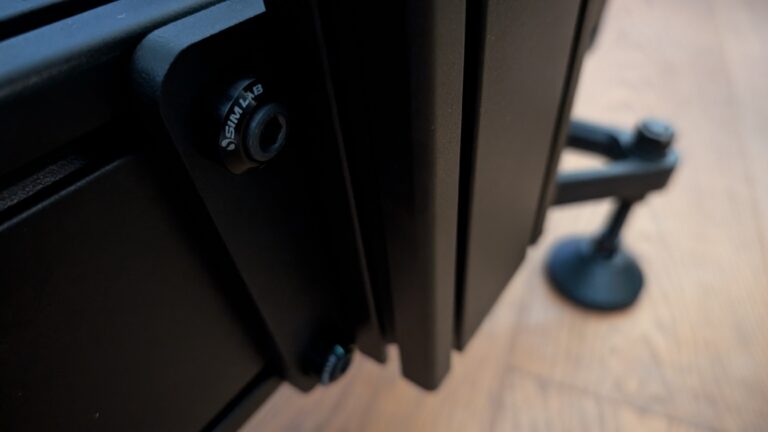
Sim-Lab P1-X Pro Cockpit Review: First Impressions
The Best Sim Racing Cockpits: Our Ultimate Rig Comparison
What are the Best F1 Cockpits and F1 Sim Rigs?
Testing the RSR-21 Cockpit from Rock Solid Rigs
Topic: Sim Racing Cockpits