
I’m a sim racer and amateur racer with a passion for Motorsport, good racecraft and the technical and setup aspect of sim racing.
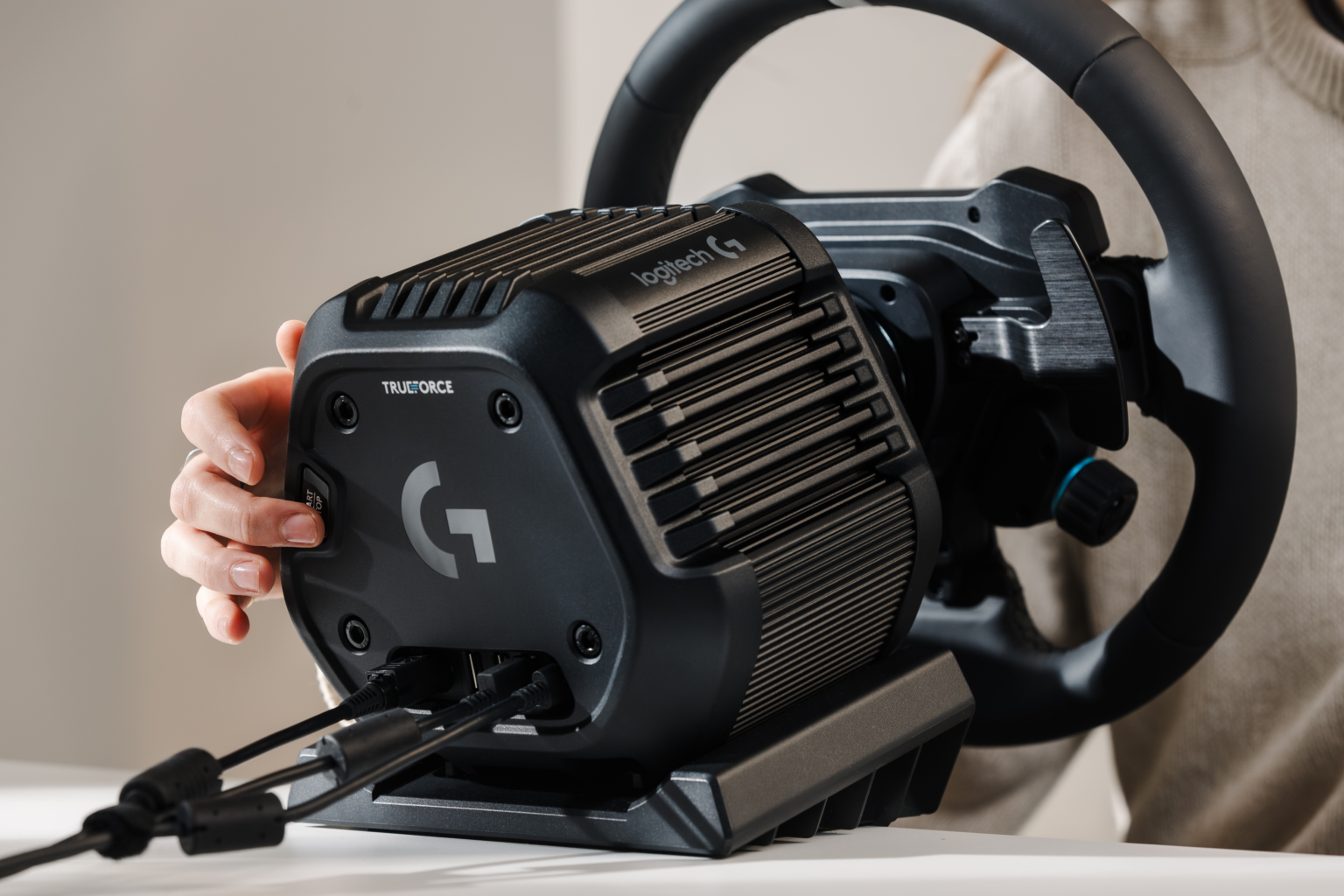
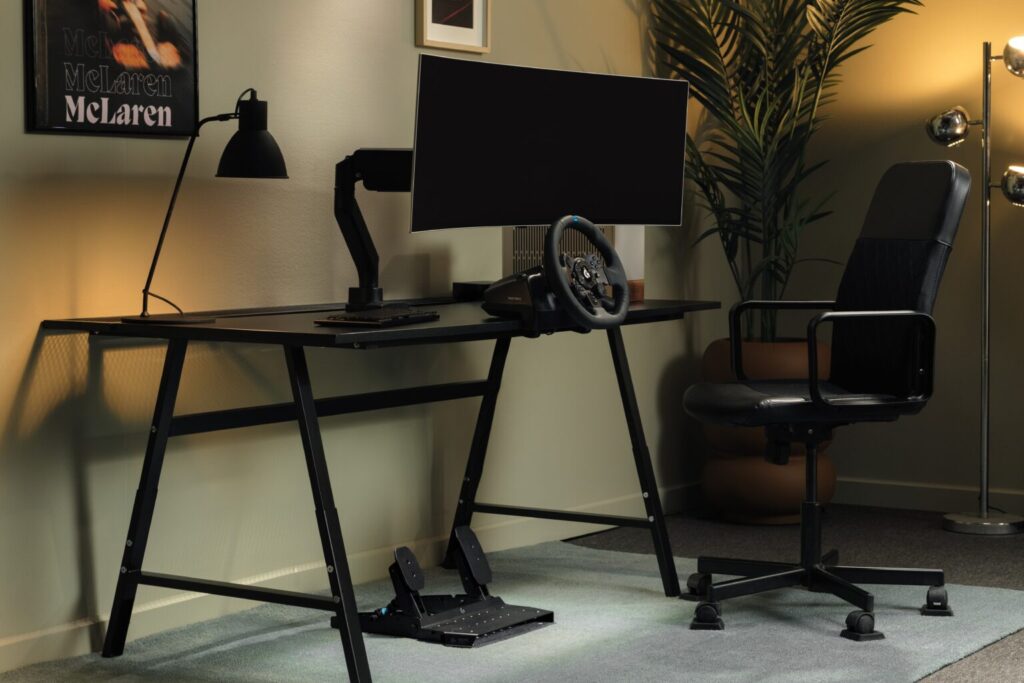
Logitech’s RS50 is their first proper direct drive wheelbase. It’s priced at $349, feattures 8 Nm of peak torque, TrueForce haptics, an OLED screen on the front – and, it works on PC, PlayStation 5 and Xbox without separate hubs. It’s the multitool of the sim racing wheels industry. It’s been doing the ournds in various spots in the office, a desk – the test rig – it’s a surprisingly serious bity of – with just a few small few caveats.
Technical Specifications
8 Nm peak torque from a direct drive motor. That’s on par with the Fanatec CSL DD running the boost kit, and well above the Thrustmaster T598 at 5 Nm. That all sounds fine until you clock what Moza are doing – the R9 V3 pushes 9 Nm for $329 and the R12 V1 churns out 12 Nm at the exact same $349. Purely on muscle, Logitech don’t win that fight. They’re banking on TrueForce and the tri-platform support to make up the gap.
| Specification | Value |
|---|---|
| Motor Type | Direct Drive |
| Peak Torque | 8 Nm |
| Haptic Technology | TrueForce (enhanced for direct drive) |
| Display | OLED (on-base, real-time telemetry) |
| Platform Support | PC, PlayStation 5, Xbox Series X|S |
| Connectivity | USB-C |
| Quick Release | Logitech proprietary |
| Mounting | Desk clamp (included) + hard mount bolt pattern |
| Power Supply | External PSU (included) |
| Software | Logitech G HUB |
| Price (Base Only) | $349.99 USD |
| Price (RS50 System Bundle) | $699.99 USD (wheelbase + wheel + pedals) |
Torque isn’t the interesting number here – what TrueForce does with it is. Logitech pull a second data stream straight from the game engine, layering in texture you’d never get from standard FFB alone. Engine rumble, tyre slip across different surfaces, kerb detail.
Latest Sim Racing Wheel Deals on Amazon
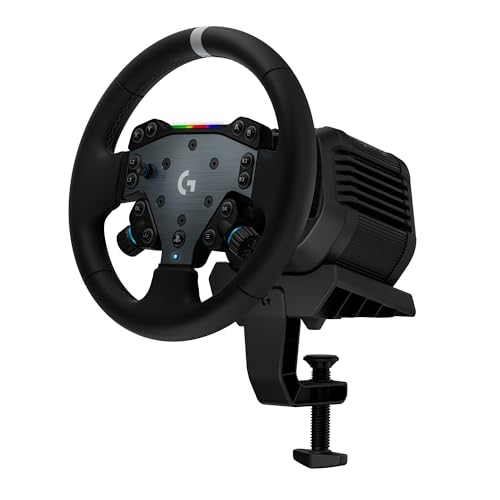
Logitech G RS50 System, 3-Piece Sim Racing Steering Wheel Setup – RS50 Wheel Base with 8 Nm Direct Drive, RS Wheel Hub & RS Round Wheel 11-inch – For PS5/PS4/PC
- 8 Nm Direct Drive peak torque with ultra-realistic TRUEFORCE feedback
- RS Wheel Hub with 13 console-specific buttons and adjustable paddle shifters
- 11-inch RS Round Wheel with high-performance silicone leather grip
- Compatible with PS5, PS4, and Windows 10/11
Compatibility and Ecosystem
This bit’ll probably decide whether you buy the RS50 or not. It runs on PC, PlayStation 5 and Xbox Series X|S without you needing separate hubs for each platform – Moza R9 and the Simagic Alpha EVO Sport can’t touch that, since they’re both PC only. Filter for console support at this price and your options shrink fast – you’re basically left with the Fanatec GT DD Pro or the Thrustmaster T598, and both cost more.
Only real catch is the quick release – Logitech’s is proprietary, which means you can’t stick a Cube Controls GT rim or an Ascher wheel on here – and no third-party adapters exist yet either, far as I know. The RS wheel in the bundle is perfectly fine, but it’s your only option right now and I can’t pretend that isn’t a problem for purists. For a bit of console “crash n go”, though – it’s absolutely brilliant.
Pedals, at least, aren’t locked down – USB connection means third-party sets work fine. Plug in the RS Pedals from the bundle or swap them for Heusinkveld Sprints, Asetek Invictas, whatever you fancy. Ran mine with a set of Sprints – worked first time, no messing about. Mounting’s dead simple too. Desk clamp included, standard bolt pattern if you’re hard-mounting to an aluminium rig like a Sim-Lab P1-X.
Build Quality and First Impressions
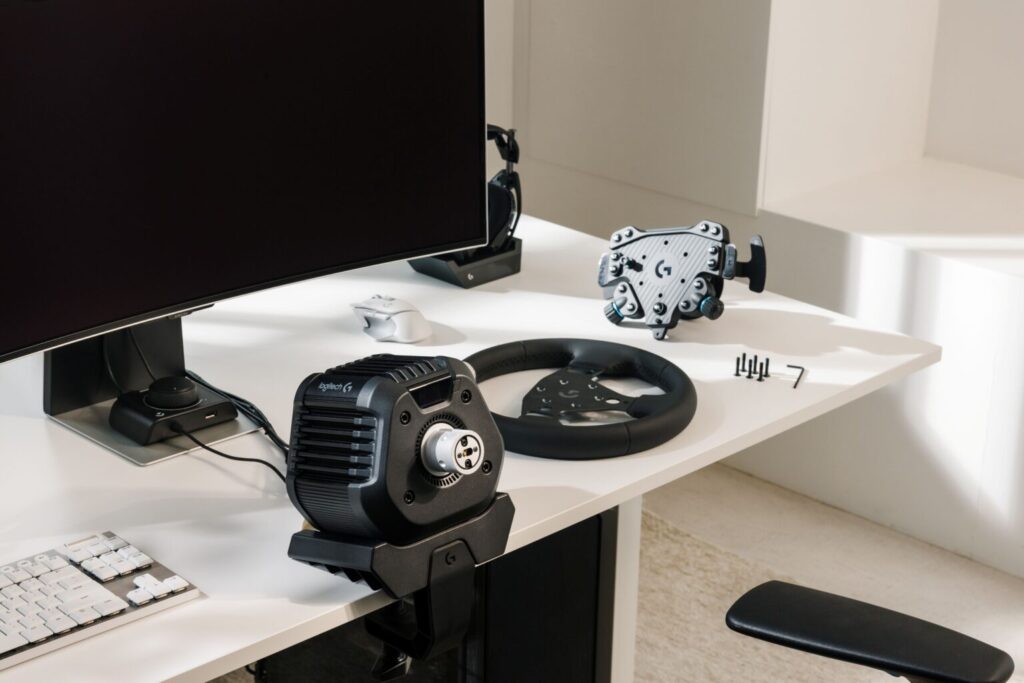
Smaller than my Fanatec CSL DD, which I wasn’t expecting – you could comfortably fit this on a desk without it dominating the room. Matte finish, no garish RGB anywhere, very grown-up looking. Karl Gosling reckoned the build punches above its price and I’d say he’s underselling it. Blindfolded, you’d swear this was a four-fifty or five-hundred quid product.
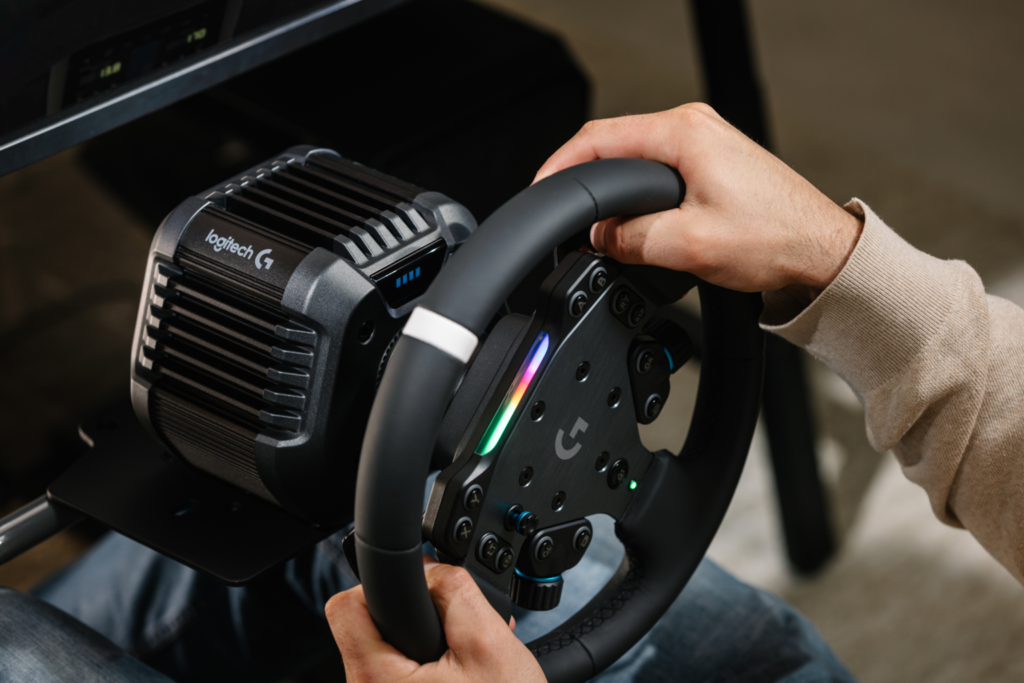
That OLED screen on the front pulls its weight. Shows live telemetry, which profile’s loaded, and you can tweak settings without opening G HUB. Sounds minor until you’re strapped into a rig between quali and the race, fiddling with FFB strength. No alt-tabbing, no reaching for your mouse. Fanatec have had their on-device tuning for ages, but I found Logitech’s screen easier to read and quicker to flick through.
Weight’s about right – heavy enough that the desk clamp doesn’t budge, light enough to shift if you need to. Hard mounting’s the way to go if you’ve got a proper profile rig, obviously. Bolted down to my Sim-Lab P1-X, there’s zero flex under load.
Performance: How It Feels
8 Nm won’t pin your arms back but it’s not weak, either. Switching from my Simucube 2 Pro – which I normally run at 12-14 Nm, you notice the step down immeditaley. Obviously! If you’re coming off a G29 or G923, 8 Nm is loads – the jump from gear-driven to direct drive is the bit that’ll blow your mind, not whether it’s 8 or 12 newton-metres.
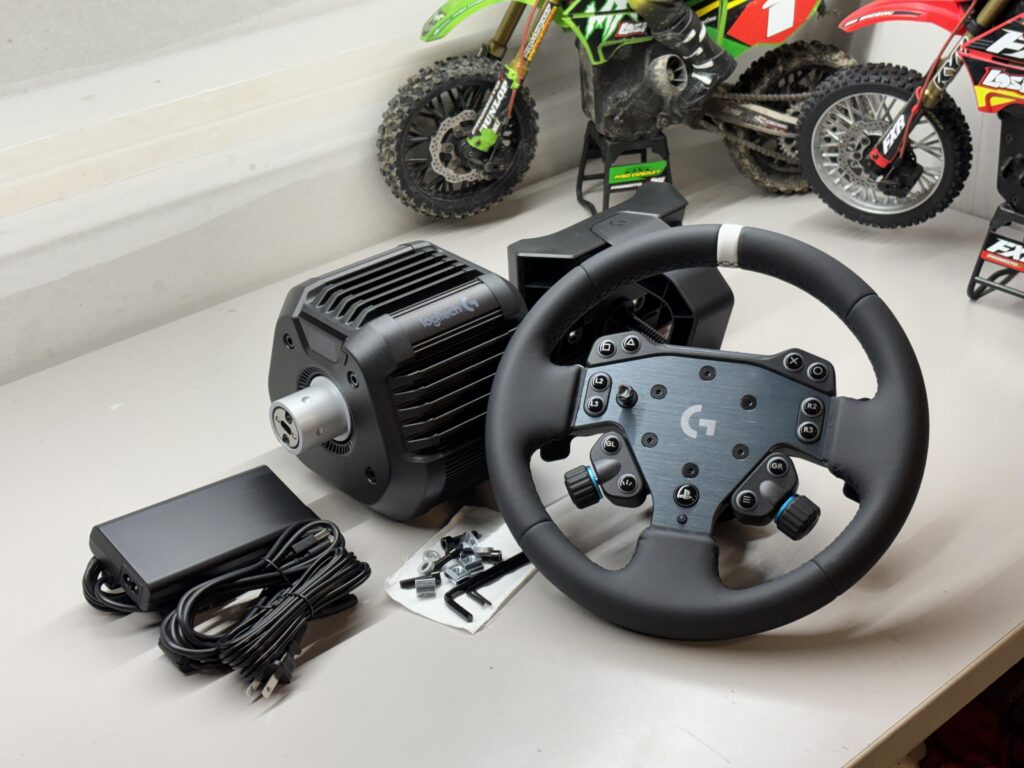
TrueForce is what makes the 8 Nm worth having, though. Grabs a second data stream from the game – engine vibrations, tyre slip across different surfaces, road texture – and stacks it on top of the normal FFB signal. Few laps of Spa in iRacing and you can feel each individual kerb strip at La Source, which is a level of texture I wasn’t expecting at this price. My Moza R9 test unit couldn’t replicate that, and the Fanatec CSL DD at stock settings was miles off.
I’ll trade a couple of newton-metres for that kind of granularity, happily. It’s a playable device and designed for you to have fun, quickly and without much of anything getting in the way.
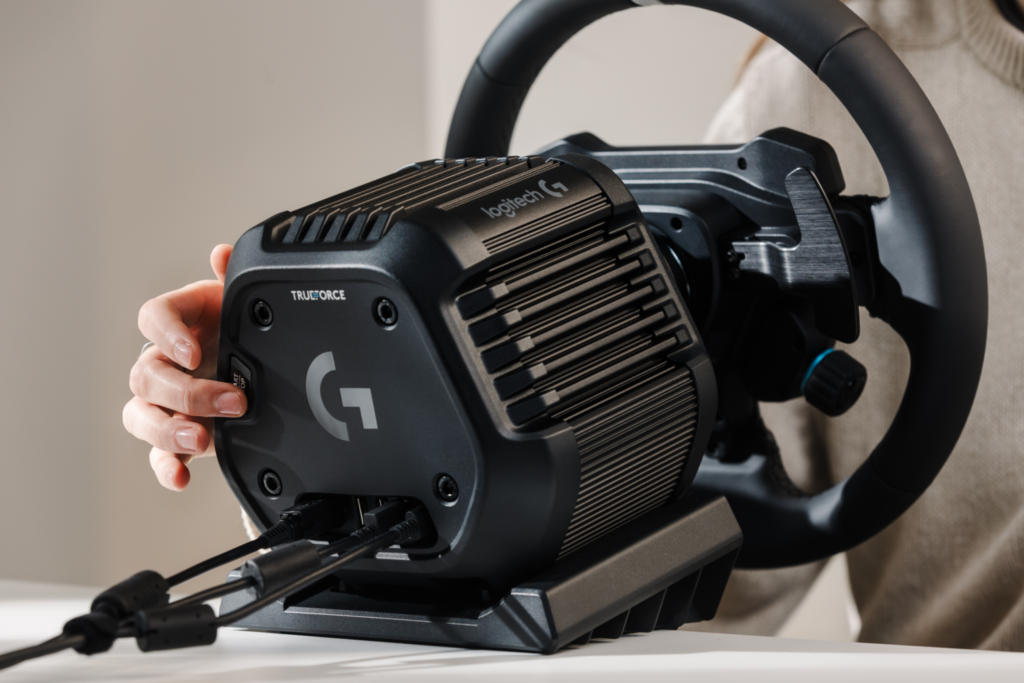
Boosted Media’s lot called the FFB “clinical” and I reckon that’s spot on. Fanatec’s CSL DD has this slightly warmer quality to its force feedback – difficult to put into words, but swap between the two back to back and you’ll clock it straight away. The RS50 is crisper, more precise, perhaps a touch sterile if you’re being picky. Plenty of people would prefer that clean signal to Fanatec’s organic warmth, mind you – it’s really just a matter of taste.
Right, G HUB – our elephant in the room. Folk who lived through the G29 and G923 era won’t have forgotten the grief, and fair enough. On the RS50 though – and I know this sounds mad – it’s been completely fine for me. FFB strength, spring rate, damper, all adjustable per game. Made an iRacing profile and a separate one for ACC, both saved without fuss, firmware updated first go. Not as slick as Fanatec’s FanaLab (bit cluttered), but it works and stays out of the way once your profiles are dialled in.
Ran a two-hour endurance practice at Bathurst and the motor housing got warm – not hot, just warm to the touch. Your normal half-hour to hour-long stint won’t bother it in the slightest, though longer endurance sessions might push it harder, but nothing I threw at it caused thermal throttling or FFB drop-off.
Issues and Things to Know
I keep banging on about the proprietary QR and I won’t apologise for it. Had Logitech gone with something open – even just licensed Fanatec’s QR2 – this review would be a lot shorter and a lot more enthusiastic. Instead you’re gambling that Logitech ship enough wheels fast enough to keep you interested, and right now the only wheel you can buy is the RS.
G HUB – said it before, I’ll say it again, been fine for me on the RS50. But have a browse of r/simracing and you’ll find folk who’ve had firmware updates brick their settings, or profiles that won’t load after an update. Logitech’s software folk have sorted a lot of that out since the G29 era, credit where it’s due, but the stink lingers.
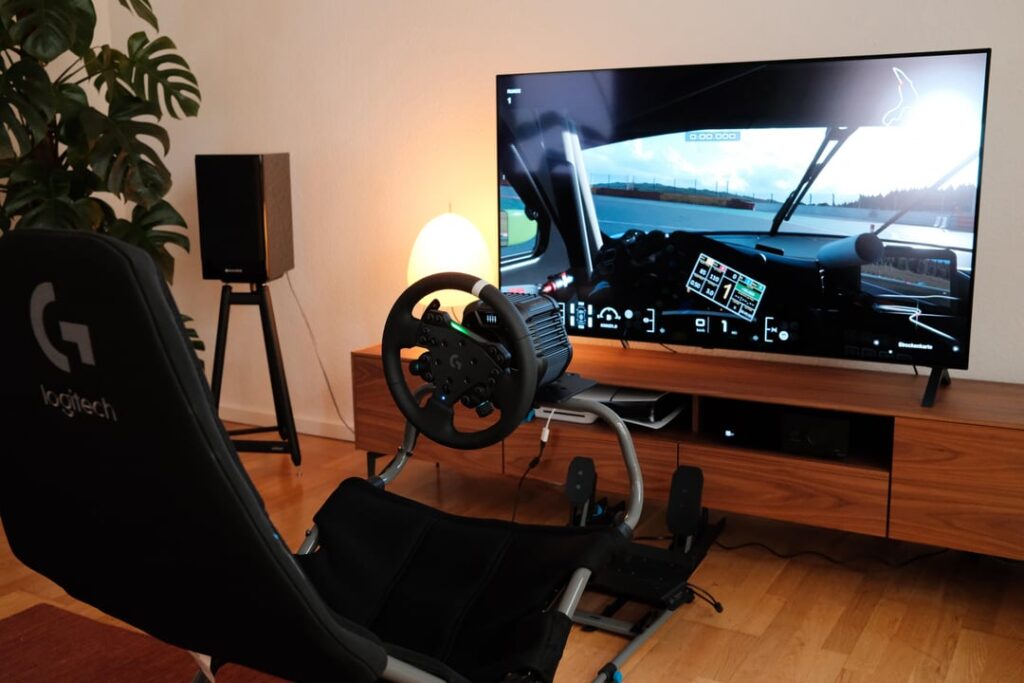
The RS50’s ecosystem is brand new – no aftermarket mods, no community profile packs, barely any third-party accessories yet. Compare that to Fanatec where you can buy Acelith wheel covers, custom QR adapters, third-party button boxes, years of community stuff built up around it. Moza too, to a lesser extent. Tinkerers who live for swapping bits and chasing upgrades will find Logitech’s cupboard pretty bare right now.
How It Compares
Moza R9 V3 ($329, 9 Nm): More torque, twenty quid cheaper. On paper the R9’s got this, I won’t pretend otherwise – but it’s PC only, no PlayStation, no Xbox. If iRacing on PC is your entire sim life, the R9 makes more sense pound for pound. You do lose TrueForce and the OLED, mind. Sat behind the wheel, that haptic detail counted for more than one extra newton-metre in my testing.
Fanatec CSL DD ($350ish, 5-8 Nm): Closest head-to-head fight. I’ve covered the full Fanatec lineup in the Fanatec buyer’s guide and the ecosystem’s massive – dozens of wheels, pedals, the lot. You’ll need the boost kit to match 8 Nm though, and that bumps the price up. Plus Fanatec’s firmware update process is, shall we say, character-building (ask anyone who’s been through it). The RS50 wins on plug-and-play simplicity and TrueForce; Fanatec wins on upgrade path and wheel choice.
Thrustmaster T598 ($549.99 bundle, 5 Nm): Two hundred bucks more for three fewer newton-metres – the maths really don’t add up. I’ve used Thrustmaster gear on and off for years and their ecosystem’s solid, but the maths don’t work. RS50 bundle at $699 gives you more torque, TrueForce, and an OLED for only $150 more than the T598. Hard to justify unless you’re already deep in Thrustmaster’s ecosystem with pedals and rims you don’t want to replace.
Moza R12 V1 ($349, 12 Nm): Same price, 50% more torque. On the spec sheet Moza wipe the floor with Logitech, but once again – PC only, no console at all. And the R12’s base-only, so once you’ve added a Moza wheel ($200+) and pedals ($150+) your total system cost blows past the RS50 bundle price. Pure PC racers chasing maximum grunt per dollar? Moza’s your brand, full stop – but the second you add a PS5 or Xbox into the mix, Logitech’s tri-platform trick makes the R12 irrelevant.
Who Should Buy This
Console racers, this is your wheelbase. PlayStation, Xbox, PC – all from one box at $349, which nobody else at this price can match. Fanatec sort of manage tri-platform if you buy separate hubs, but the cost spirals fast and the setup’s way more faffy.
Coming from a G29 or G923? Dead obvious upgrade. Gear-driven to direct drive is night and day – I remember my first time on a DD base, sat there thinking “where’s this been my whole life?” Staying in the Logitech ecosystem means your G HUB profiles carry across too, which saves a fair bit of faffing about.
If you’re PC-only and raw torque is what you’re after, the RS50 isn’t the play. Moza’s R9 or R12 will chuck more torque at you for the same money or less. You won’t get TrueForce or the OLED, and build quality’s a notch below in my opinion, but the power-per-pound maths land squarely in Moza’s favour. Full rundown of their range in the Moza Racing buyer’s guide.
Pros
- TrueForce haptic layer adds genuine detail that competitors at this price don’t match
- Tri-platform support (PC, PS5, Xbox) – rare at $349
- OLED display for on-the-fly adjustments without alt-tabbing
- Build quality feels above its price point
- Plug-and-play simplicity – had it running in under 10 minutes
- USB pedal connection means no lock-in for third-party pedals
Cons
- Proprietary quick release – locked into Logitech wheels only
- 8 Nm is competitive but undercut by Moza R9 (9 Nm, $329) and R12 (12 Nm, $349) on PC
- Brand new ecosystem with limited wheel options at launch
- G HUB software carries legacy reputation baggage
- No boost kit option to increase torque later
Racing Cockpits Buyer’s Guide

Best VR Headsets for Flight Simulation
Fanatec ClubSport Steering Wheel GT3 for Xbox Review
Simagic Sim Racing: The Complete Buyer’s Guide (2026)
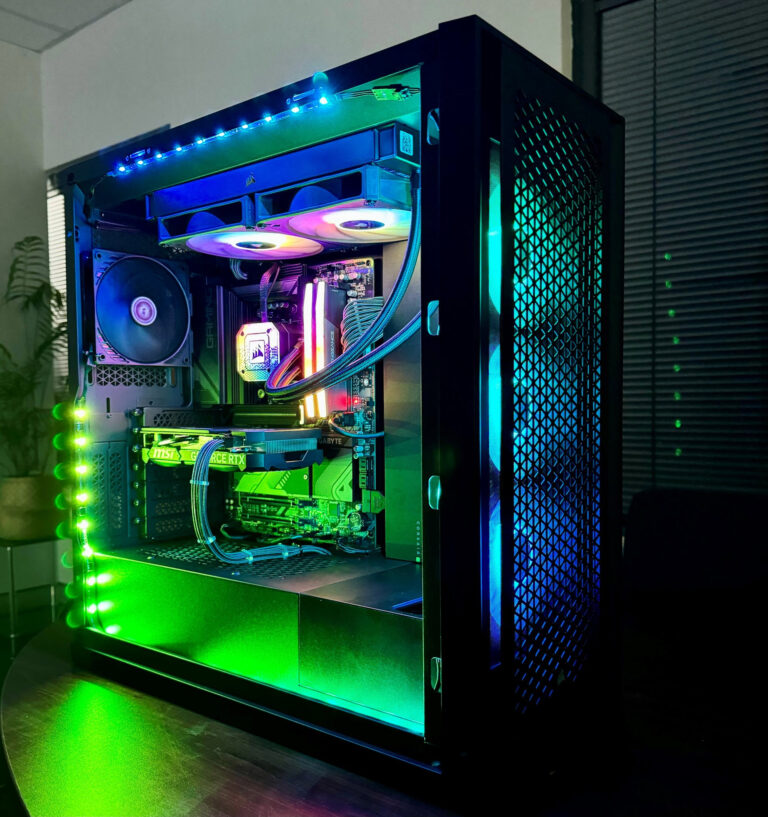
Corsair for Sim Racers: Ecosystem Buyers Guide 2026
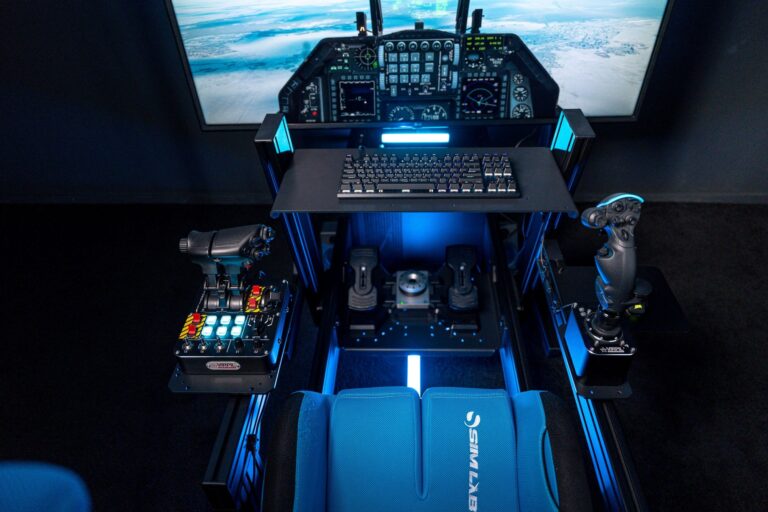
Flight Sim Gear for Sim Racers: The Complete Buyer’s Guide (2026)
Topic: Direct Drive Wheels