
I’m a sim racer and amateur racer with a passion for Motorsport, good racecraft and the technical and setup aspect of sim racing.
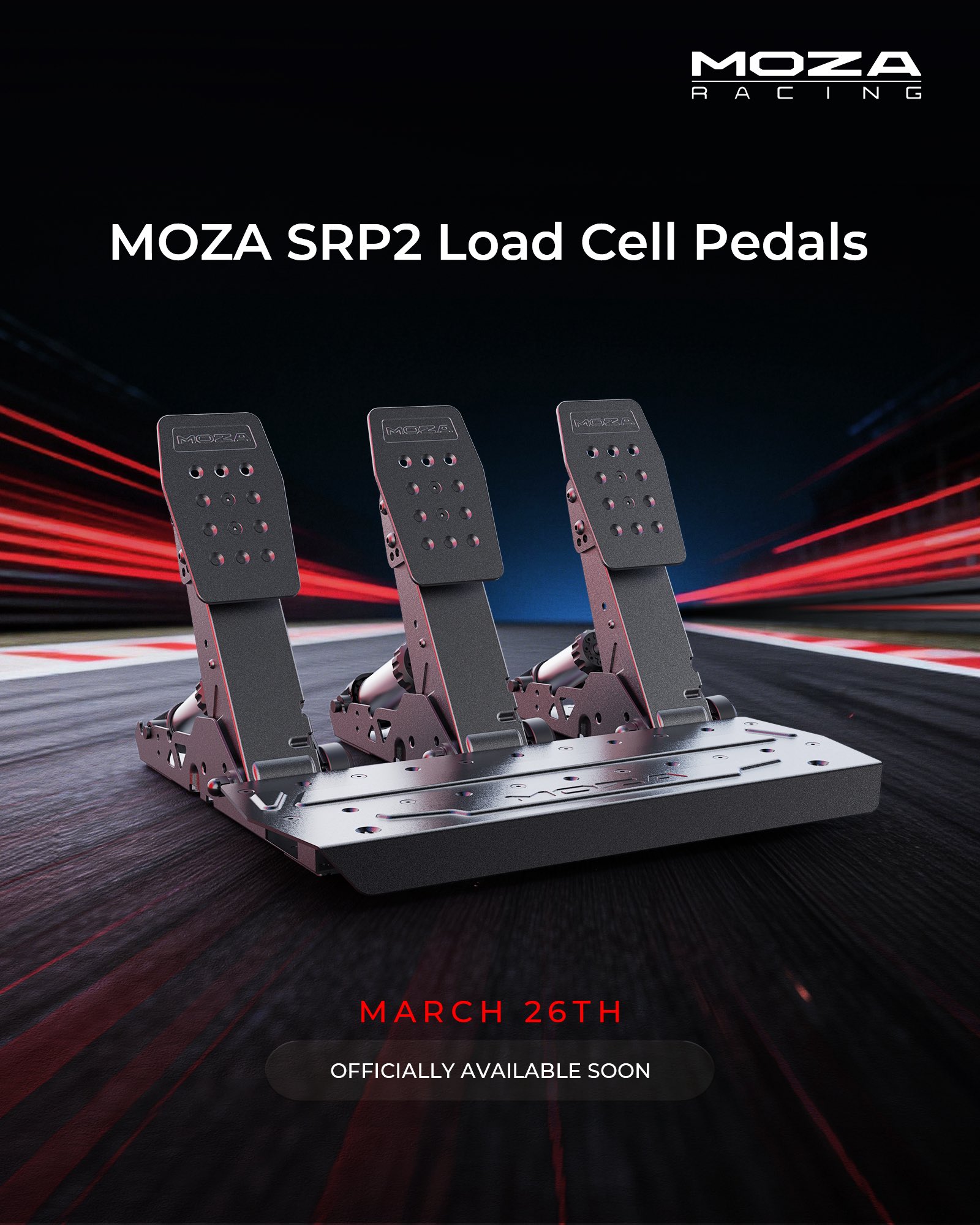
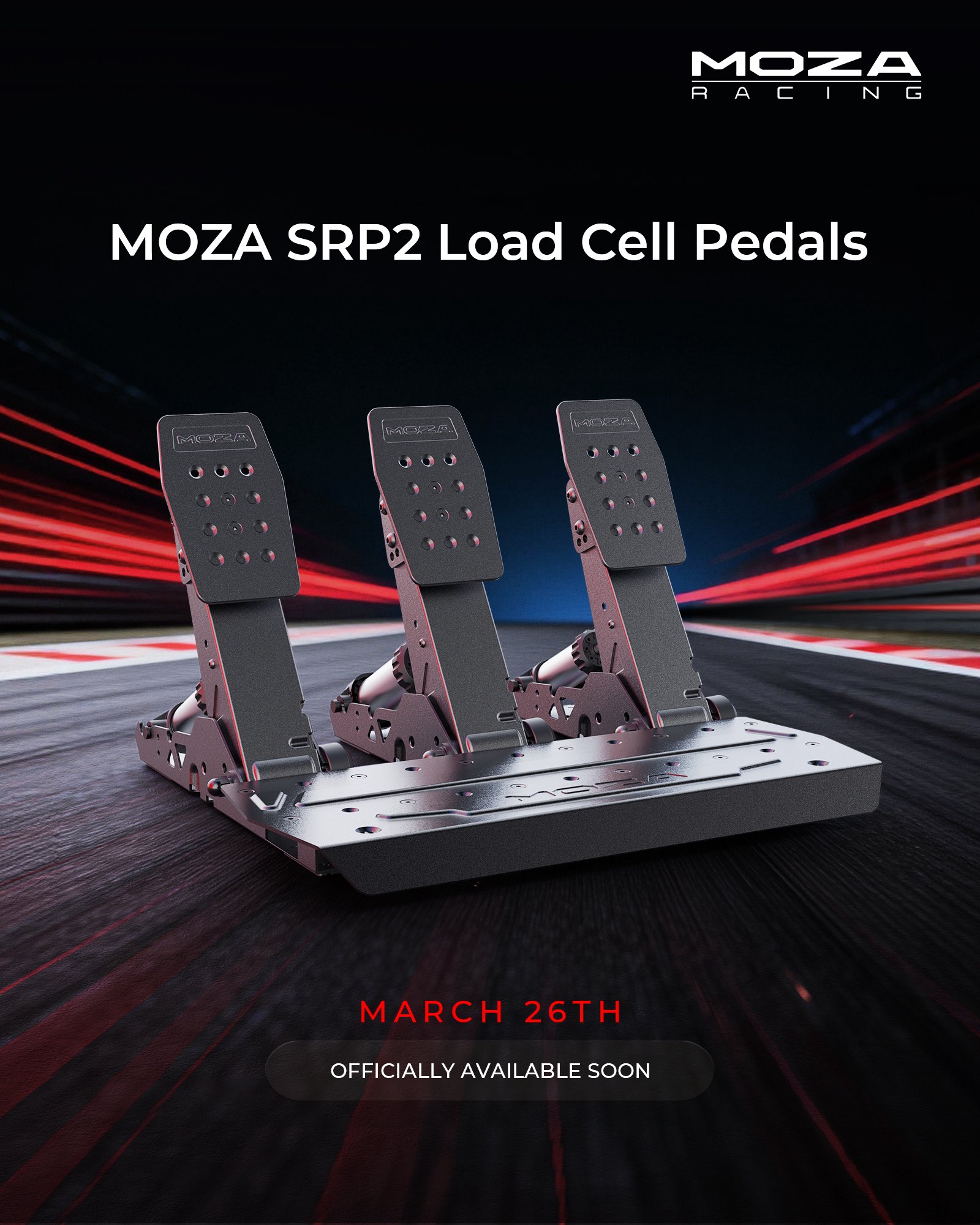
The MOZA SRP2 is a £139 load cell pedal set that fixes nearly everything I didn’t like about the original SR-P. It’s heavier, stiffer, and has a proper hydraulic preload damper instead of the limp spring stack that made the first version feel like a toy under hard braking. At this price – with this level of adjustability built in – it’s the budget pedal set I’d recommend right now.
SRP2 Technical Specifications
| Price | $149 USD / £139 GBP / €159 EUR |
| Pedal Count | 2 (throttle + brake). Clutch sold separately ($45.90) |
| Brake Sensor | Dual: load cell + position (angle) sensor |
| Brake Damper | Hydraulic with adjustable preload |
| Frame Material | Steel frame, aluminium pedal plates |
| Throttle Sensor | Hall-effect angle sensor |
| Connectivity | USB-B (direct to PC). RJ11 for pedal connections |
| Platform | PC only |
| Software | MOZA Pit House (v1.3.6.27+ required) |
| Pedal Adjustment | Height, spacing, angle, brake preload, software curves |
| Base Plate | Steel, included. Multiple mounting hole patterns |
| Optional Accessories | Clutch pedal ($45.90), rear support bracket ($29) |
Two specs matter here more than any others. The hydraulic damper with adjustable preload is new – the original SR-P used springs and a rubber grommet. And the dual brake sensor (load cell plus angle sensor) carries over from the SR-P, but with a stiffer housing around it this time. More on that in a moment.
Compatibility
PC only. No PlayStation, no Xbox. Connects via USB-B directly to your PC – no need for a MOZA wheelbase in the chain. Each pedal links to the control box with RJ11 cables (the same phone-line connectors as the original SR-P). If you’re running a Fanatec base with these pedals, or a Simucube, or anything else – works fine. They’re a standalone USB device.
Software is MOZA Pit House, which you’ll want version 1.3.6.27 or later for SRP2 support. If you’re already in the MOZA ecosystem, Pit House manages your wheelbase and pedals from one app. If you’re mixing brands, Pit House still handles calibration and curve editing for the pedals independently.
Build Quality and First Impressions
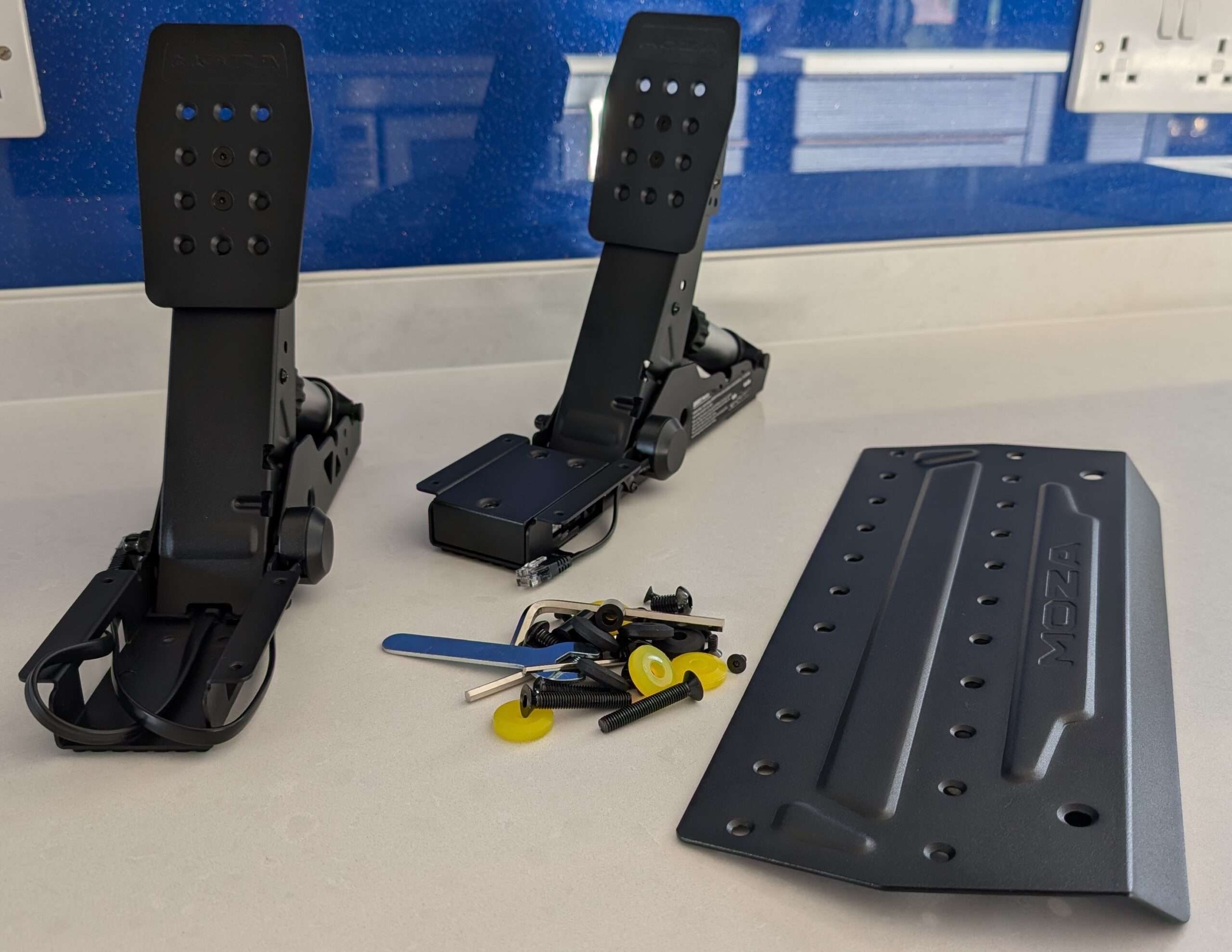
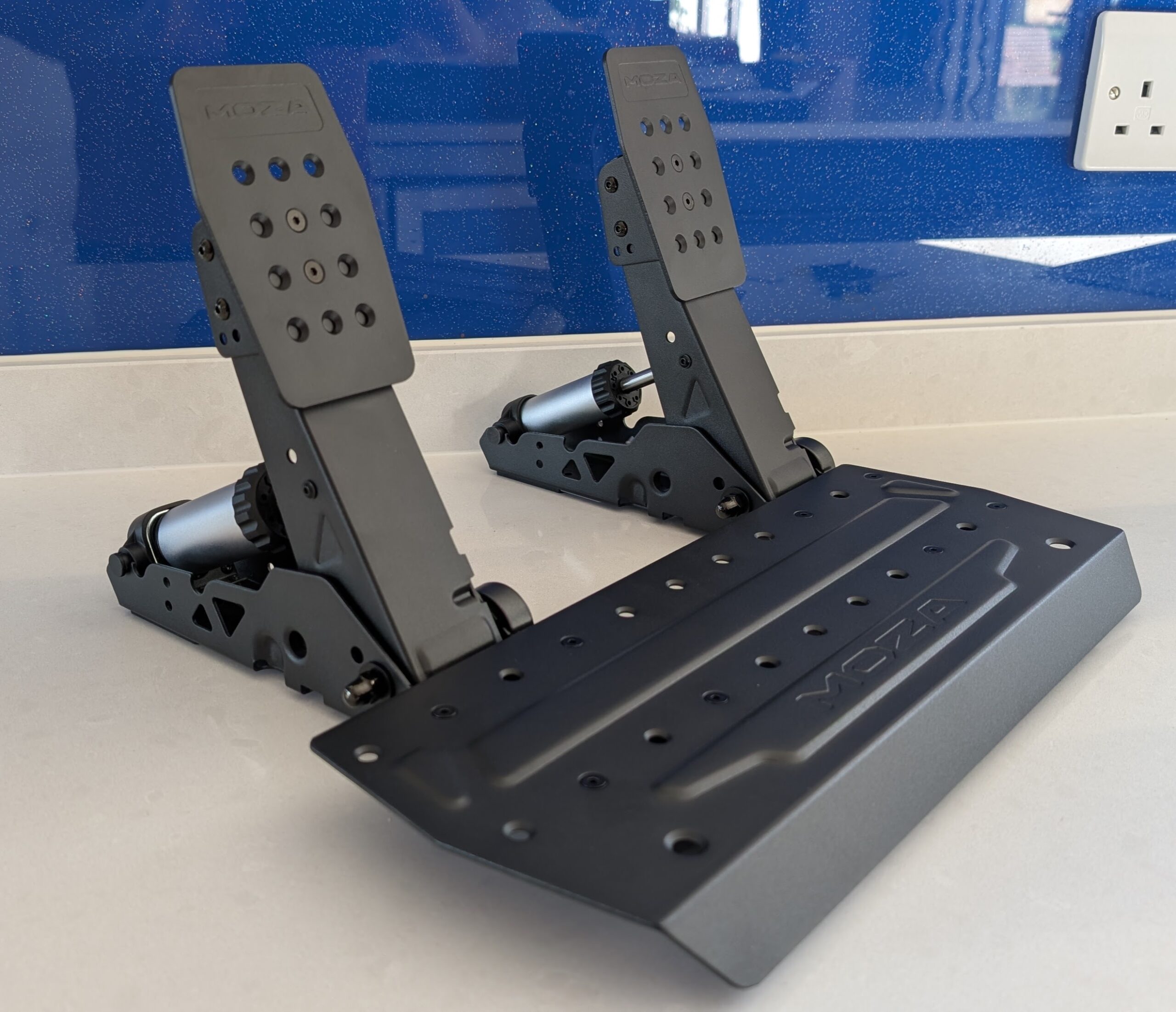
Pick them up and you notice the weight straight away. The SR-P felt light – not flimsy exactly, but light enough that I worried about it sliding on a desk setup. The SRP2 has proper mass to it. Steel frame, aluminium pedal plates, chunky pivot points. Nothing spectacular or overly complicated in the design, but the finish is clean and everything feels well put together.
Assembly took about ten minutes. Both pedals slot onto the base plate, you bolt them down at your preferred spacing, run the RJ11 cables into the control box, and plug in USB. Zero faff. The base plate itself has rows of mounting holes – enough options to get the spacing right for any foot size or rig configuration.
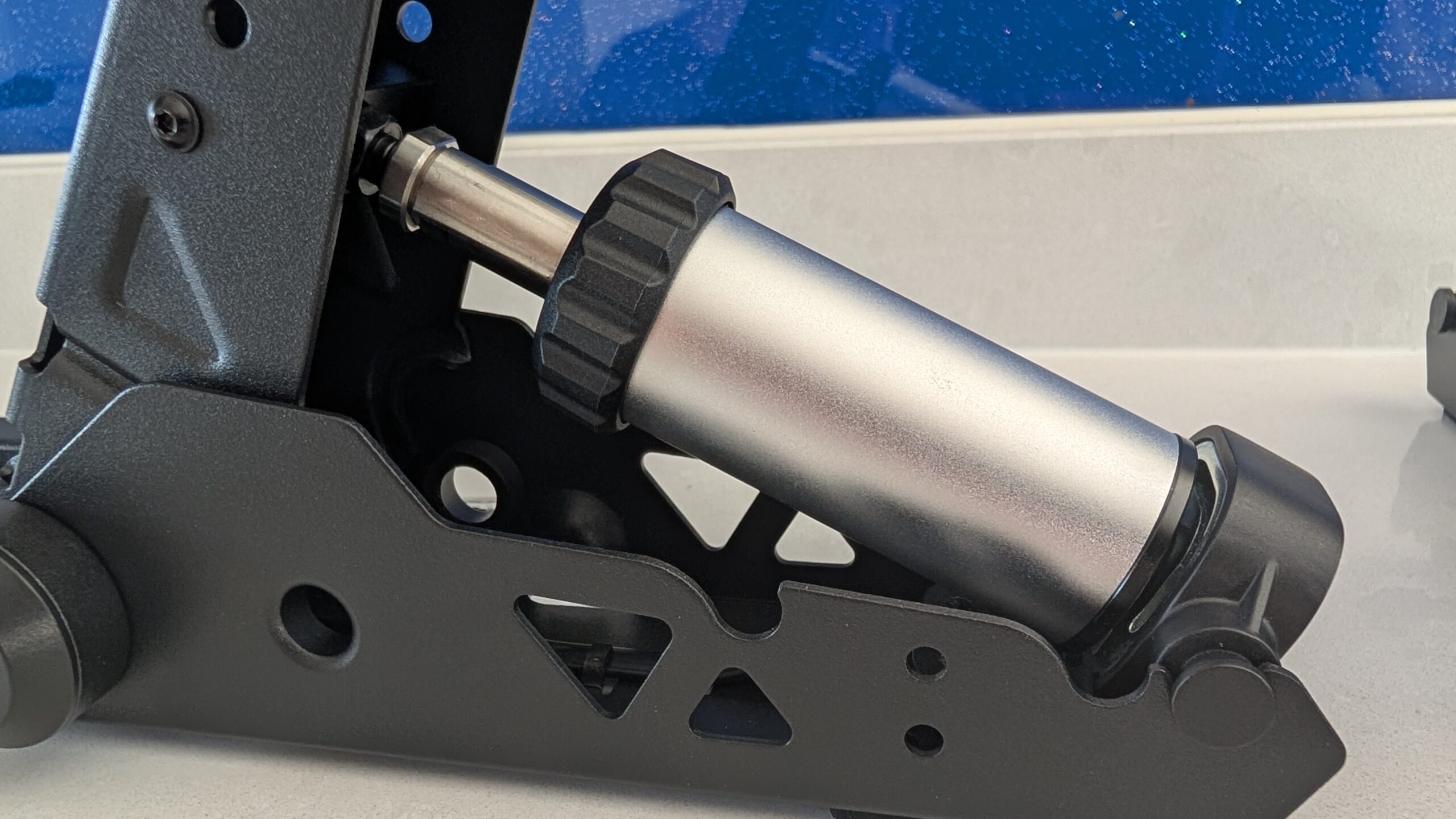
The headline upgrade is sitting right there behind the brake pedal. A proper hydraulic damper with an adjustable preload knob. Turn it and the brake resistance changes. No spring swapping. No skateboard bushing mods. No guessing which colour spring is the stiffest one. Just twist the knob until it feels right.
Performance
Here’s the thing about the original SR-P. John Munro at Traxion put it well – by the time you reached the damper and really began to feel the firmer brake, you were already fighting lock-ups. The load cell engagement came too late in the pedal travel. And Ian Korf over at You Suck At Racing went further: he ripped the spring out entirely and replaced it with skateboard bushings to get a brake that didn’t feel like mush.
The SRP2 fixes that. The hydraulic damper gives you resistance from much earlier in the travel. I can lean into the brakes with real force and the pedal pushes back in a way the SR-P never did. Smooth, progressive, firm. Not CRP2-firm – that’s a different tier with its 200kg load cell and aerospace aluminium. But noticeably, meaningfully stiffer than before.
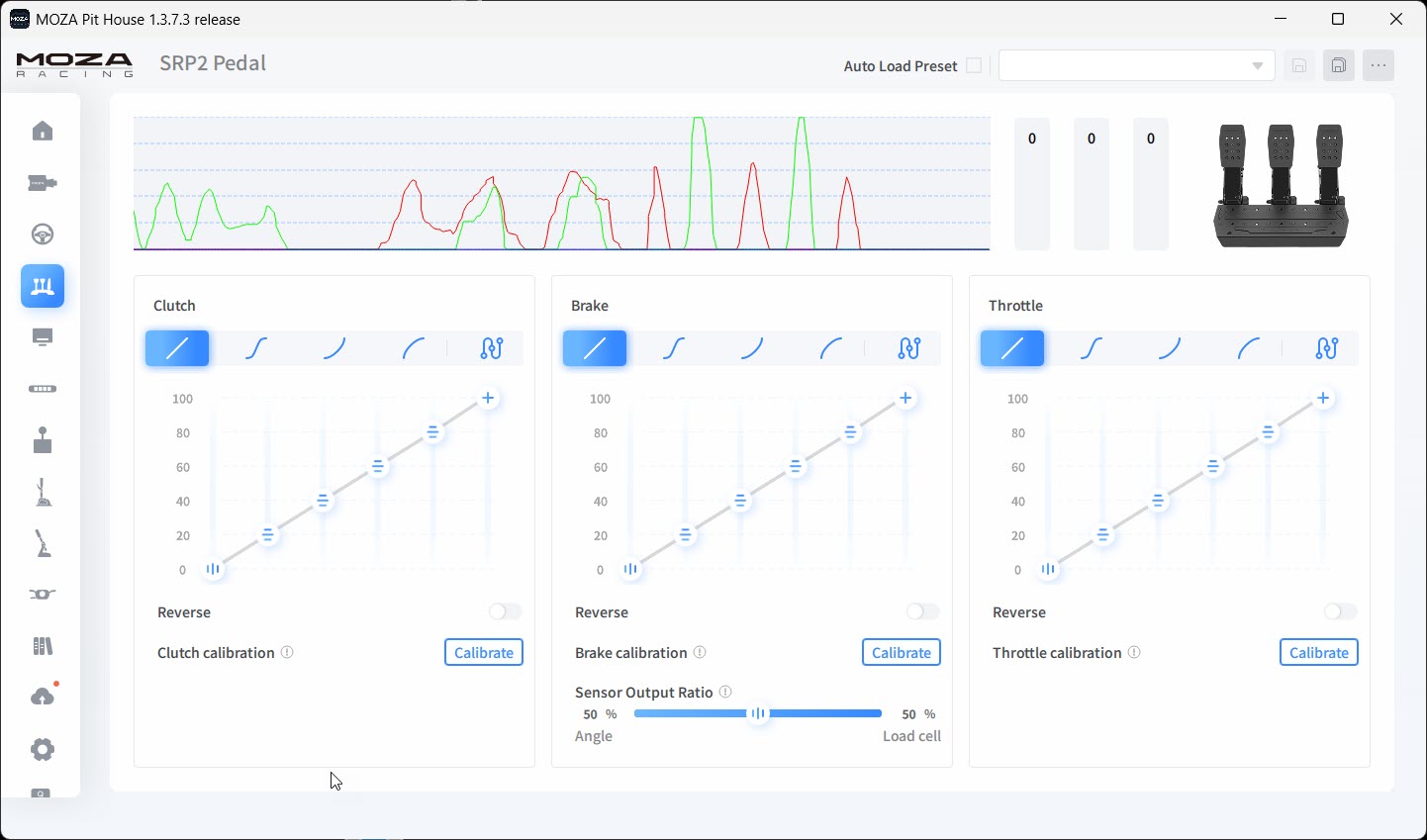
The dual sensor system is worth explaining. The brake has both an angle sensor and a load cell. Pit House lets you blend between them – a slider that goes from 100% angle on one end to 100% load cell on the other. Default is 50/50. I pushed it to about 80% load cell after a few sessions. At that ratio, light braking still has some travel-based feel (which helps with trail braking) and hard braking is all pressure. Felt right for iRacing and ACC.
One thing Ian Korf flagged about the SR-P: the default Pit House setting was 100% pedal travel and 0% load cell. Why sell a load cell pedal with the load cell turned off by default? Mad. I haven’t verified whether the SRP2 ships with better defaults, but check your Pit House settings either way. Takes two clicks to fix.
Throttle pedal is straightforward. Hall-effect sensor, smooth travel, no dead zones. Consistent. Nothing to complain about, nothing to write home about either. Does the job.
Issues and Things to Know
PC only. If you need console support, look elsewhere.
You’ll need the beta version of Pit House at launch (v1.3.6.27 with beta code “SRP 2”). MOZA will presumably roll SRP2 support into the stable release soon, but day-one buyers are on beta software. Not ideal, but not unusual for MOZA launches.
The clutch isn’t included. $45.90 extra if you want it. Most sim racers run two pedals anyway, but if you’re driving road cars or doing hill starts in truck sims, budget for three.
No inverted mounting option. The CRP2 supports inverted mounting – the SRP2 doesn’t. Desktop and rig-mounted only, pedals on the floor.
How It Compares
The Simagic P500 lands at exactly the same $149. CNC-machined aluminium, 100kg load cell, solid build. It’s the most direct competitor. The P500 is a more premium-feeling pedal if you’re comparing materials – full aluminium body versus the SRP2’s steel frame. But the SRP2 has the hydraulic damper and the dual-sensor blend, which give you more tuning options out of the box. Both are good at this price. Comes down to whether you value materials or adjustability.
Fanatec’s CSL Pedals plus the Load Cell Kit runs about $180-200 depending on region. Works with PlayStation and Xbox – that’s the big differentiator. If you need console support, Fanatec wins by default. If you’re PC-only, the SRP2 is cheaper and arguably a better brake feel.
Stepping up to the MOZA CRP2 costs roughly three times as much. Aerospace aluminium, carbon fibre heel plate, 200kg load cell, inverted mounting, 1,764 brake adjustment combinations. Different league. The SRP2 edges a bit closer to the CRP2 in feel compared to the old SR-P – but from a design and engineering standpoint, the gap is still wide. Worth the jump if you’re on a dedicated rig and want the best MOZA pedal. Overkill for a desk setup.
Who Should Buy the SRP2
Budget rig builders. Desktop sim racers. Anyone upgrading from potentiometer pedals and wanting their first load cell set without spending more than £150. If you’re already in the MOZA ecosystem with an R5 or R9 base, this is the obvious pedal pairing.
Coming from the original SR-P? Worth the upgrade for the hydraulic damper alone. No more swapping springs, no more modding with skateboard bushings, no more guessing which colour combination gives you the firmest brake. The adjustability is all built in now.
If you need console support – skip it. If you want inverted mounting or a truly high-end brake feel, look at the CRP2 or the MOZA mBooster active pedal. For everyone else at this price point, the SRP2 is the one to beat.
Pros
- Hydraulic preload damper is a genuine upgrade – adjustable brake feel without mods or spring swaps
- Dual brake sensor (load cell + angle) with software blending gives proper control over light and heavy braking
- £139 with a steel base plate, USB connectivity, and extensive physical adjustability
- Dead simple assembly and works as standalone USB device with any wheelbase brand
Cons
- PC only – no PlayStation or Xbox support at all
- Clutch pedal is an extra £46 – for a three-pedal set you’re closer to £185
- Requires beta Pit House software at launch – stable release pending
Pricing and Where to Buy
$149 USD, £139 GBP, or €159 EUR for the two-pedal set. Clutch add-on is $45.90. Rear support bracket is $29 if you want extra stability on a rig mount. Available now from MOZA’s online store – launched 26 March 2026. Regional store availability may vary at launch.
MOZA News
The SRP2 launched alongside the Lamborghini Revuelto sim wheel ($399) on the same day. MOZA has been busy – the R21 Ultra and R25 Ultra wheelbases arrived in late 2025, the Porsche Mission R wheel at CES 2026, and an AI coaching system debuted at GDC 2026. They’re pushing into every tier of the market simultaneously. The SRP2 slots in as their entry-level pedal refresh while the CRP2 and mBooster handle the mid and high end.
Related Posts
Racing Cockpits Buyer’s Guide
Best VR Headsets for Flight Simulation
Fanatec ClubSport Steering Wheel GT3 for Xbox Review
Simagic Sim Racing: The Complete Buyer’s Guide (2026)
Corsair for Sim Racers: Ecosystem Buyers Guide 2026