
I’m a sim racer and amateur racer with a passion for Motorsport, good racecraft and the technical and setup aspect of sim racing.
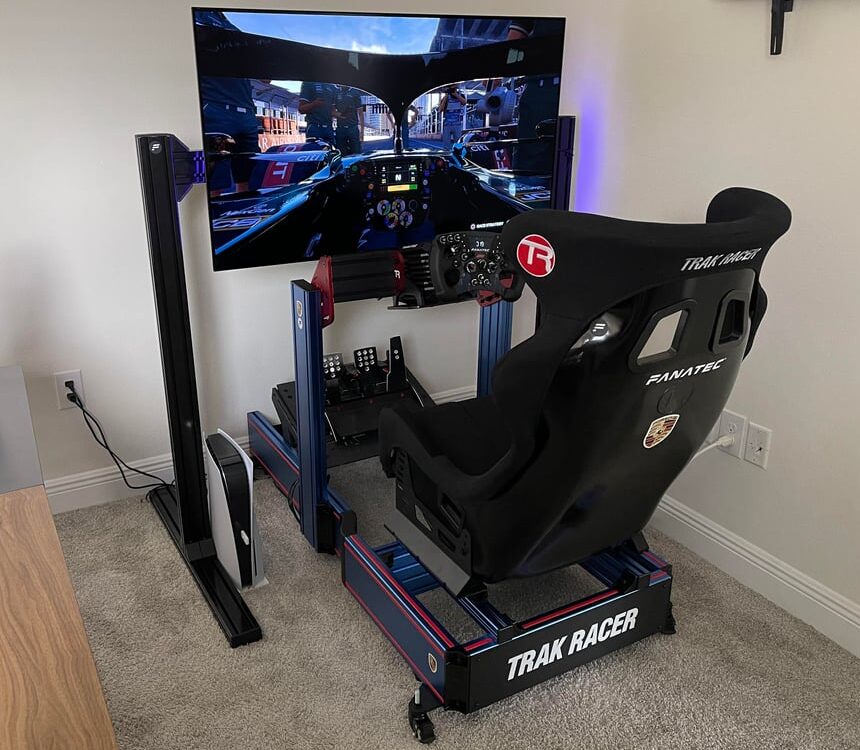
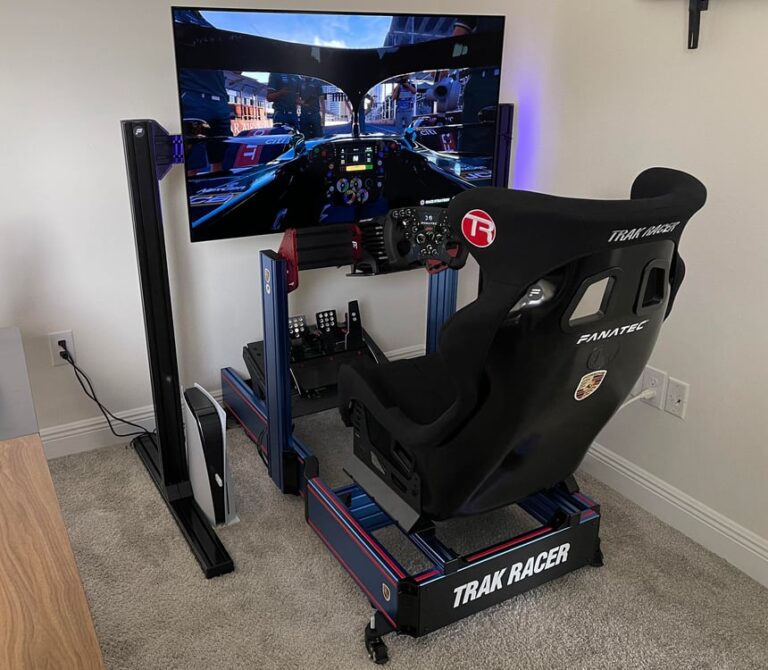
Featured Image: A nicely built sim racing setup with a PS5 from u/Pikalov001
If you own a PlayStation and you’re looking to get into sim racing, you’re in for a brilliant time with Gran Turismo 7. In today’s article we’re going to take a look at console compatibility, because for beginners it isn’t as straightforward as it should be.
Whilst PC users can basically mix any wheelbase with any pedals from any brand, PlayStation racers are locked into specific ecosystems. Your wheelbase, steering wheel, and pedals must come from the same manufacturer. It’s a frustrating limitation, but that’s how Sony’s security requirements work.
Table of Contents
- The PlayStation Compatibility Problem
- Entry Level: The £200-300 Sweet Spot
- Mid-Range Direct Drive: The GT DD Pro Revelation
- High-End Options: £1,000+ Territory
- Complete Setup Recommendations by Budget
- The Ecosystem Lock-In Reality
- Gran Turismo 7 Specific Considerations
- My Recommended Starting Point
- Final Thoughts
- Advanced Options: Compatibility Adapters
Choosing your first wheelbase brand commits you to that ecosystem for everything else. There are exceptions – Fanatec’s got a clever workaround I’ll cover – but the general rule is brand loyalty or nothing.
Latest Sim Racing Deals on Amazon
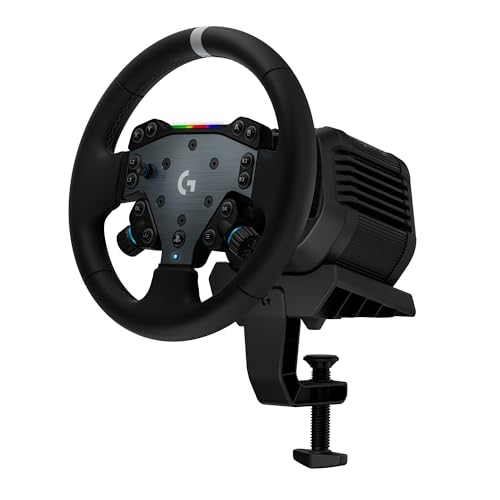
Logitech G RS50 System – 8 Nm Direct Drive with Round Wheel
- 8 Nm Direct Drive peak torque with TRUEFORCE feedback
- RS Wheel Hub with 13 console-specific buttons
- 11-inch round wheel with silicone leather grip
- Compatible with PS5, PS4, and Windows 10/11
The PlayStation Compatibility Problem
PlayStation requires a security chip inside the wheel base. Without it, your wheel simply won’t connect to the console. It’s a licensing thing. Simple as that.

For Logitech and Thrustmaster, this is all straightforward – their PlayStation wheels are officially licensed and work immediately. The G29 connects to your PS5, and you’re racing. Job done.
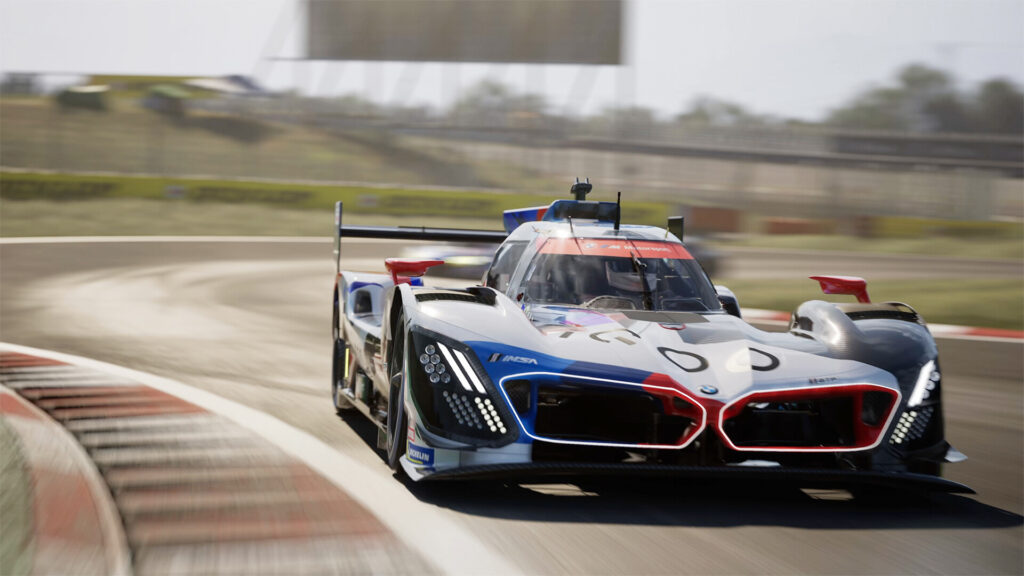
Fanatec’s system is more nuanced. Their wheelbases carry a “PS Compatible” tag, whilst steering wheels have a “PS Ready” tag. The PS Ready wheel only works when mounted to a PS Compatible base. It’s a two-part system, basically.
However: Fanatec’s GT DD Pro wheelbase (which is PlayStation compatible) can work with BOTH PlayStation and Xbox if you mount an Xbox-compatible Fanatec wheel to it.
Playstation / PS5 Compatible Fanatec Gear
Entry Level: The £200-300 Sweet Spot
For someone getting started with PlayStation sim racing, the Logitech G29 remains the default recommendation for good reason. It’s been around since 2015, which means you can find used examples on Facebook Marketplace for around £100-150 if you’re patient.
New, it’s currently £200 which includes the wheelbase, a 10.24-inch steering wheel with leather cover, and a three-pedal set. That’s everything you need for Gran Turismo 7. The force feedback uses dual motors with helical gearing, so it’s smooth and reasonably quiet.
The G923 is Logitech’s newer version with their Trueforce technology. It integrates game audio into the force feedback, which sounds gimmicky but genuinely enhances GT7. An extra £50-100 over the G29, depending on sales.
Thrustmaster offers the T150 and T248 in this price bracket. The T150 uses plastic construction that feels cheaper than the Logitech, whilst the T248 at £270 is more competitive. Both are reasonable options if you find them on offer.
Latest Sim Racing Cockpit Deals on Amazon

Next Level Racing GTtrack Simulator Cockpit
- Designed for professionals and serious sim racers
- Fully adjustable wheel, pedal and gear shifter positions
- Pre-drilled for Thrustmaster, Logitech, and Fanatec
- Built with rigidity to support direct drive wheels
My drive-by opinion: buy a used G29 for £100 if you’re uncertain about the hobby. If you’re committed from the start, stretch to the G923 new for the Trueforce feedback. The T150 is fine but feels like a toy compared to the Logitech metal construction. I bought my G923 on eBay and it’s safely stored in my garage, just incase.
Mid-Range Direct Drive: The GT DD Pro Revelation
This is where things get interesting for PlayStation racers. The Fanatec GT DD Pro wheelbase was developed in collaboration with Polyphony Digital specifically for Gran Turismo 7. It’s a direct drive system delivering 5Nm of torque (8Nm with the optional Boost Kit 180) – which is considerably more nuanced on the FFB side than any belt or gear-driven wheelbase.
Current pricing sits around £600-700 for the base unit, though Fanatec’s Ready2Race bundles often include wheels and pedals for £1,140. The bundle includes the Porsche Vision GT wheel (310mm diameter) and CSL Pedals with the Boost Kit 180.
The GT DD Pro base is PlayStation compatible regardless of which Fanatec wheel you mount. But if you mount an Xbox-compatible Fanatec wheel, the entire setup works on both PlayStation AND Xbox. That’s exceptional value for anyone with both consoles or planning to switch platforms later.
Latest Sim Racing Deals on Amazon
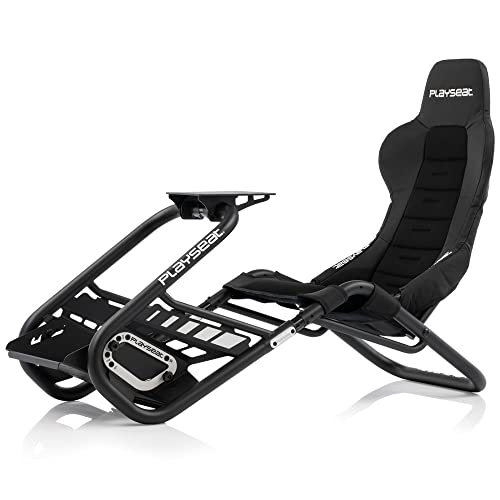
Playseat Trophy High Performance Racing Cockpit
- ActiFit breathable seating keeps you cool during long races
- Fully adjustable bucket seat for drivers 120-220 cm
- Full Direct Drive support for PC and console
- Lightweight frameless design at only 16 kg (33 lbs)
Compare this to Thrustmaster’s T598 at £450-500, which only offers PlayStation compatibility. The T598 uses direct axial drive technology rather than true direct drive, which is marketing speak for “not quite as good but still better than belt-driven.” It’s decent kit, but the GT DD Pro offers better long-term flexibility.
The 11-year-old Thrustmaster T300 (released August 2014) still appears in recommendations online, priced around £500 new. Don’t buy it new. If you can find one used for £200, fine. But paying £500 for decade-old belt-driven technology makes no sense when the GT DD Pro exists.
My view: the GT DD Pro is the price-performance sweet spot for PlayStation sim racing. Direct drive feedback at £700, dual-console capability if needed, and proper upgrade paths to better Fanatec wheels and pedals later. The ecosystem lock-in feels less restrictive when you’re in Fanatec’s ecosystem.
High-End Options: £1,000+ Territory
Once you’re spending over £1,000, two wheelbase options dominate: Fanatec’s Clubsport DD Plus and Logitech’s G Pro direct drive.
The Clubsport DD Plus delivers exceptional force feedback with more torque headroom than the GT DD Pro. It’s PlayStation compatible by default, and like the GT DD Pro, works on Xbox with Xbox-compatible Fanatec wheels. The build quality is noticeably better – all-metal construction, smoother force feedback transitions, less mechanical noise.
Logitech’s G Pro runs about £1,000 for the wheelbase alone. It features their Trueforce technology integrated throughout, which provides more detailed road surface feedback than standard force feedback systems. The construction quality is brilliant – precision bearings, zero play in the steering column, professional-grade electronics.
Latest Sim Racing Deals on Amazon
Logitech G RS50 System – 8 Nm Direct Drive with Round Wheel
- 8 Nm Direct Drive peak torque with TRUEFORCE feedback
- RS Wheel Hub with 13 console-specific buttons
- 11-inch round wheel with silicone leather grip
- Compatible with PS5, PS4, and Windows 10/11
At this price point, you’re committed to sim racing as a serious hobby. If you’re uncertain, start with the GT DD Pro. The high-end wheelbases provide incrementally better force feedback, but the jump from belt-driven to direct drive (£200 to £700) is more dramatic than direct drive to premium direct drive (£700 to £1,000+).
What I think: the GT DD Pro provides 90% of the experience for 60% of the cost. The Clubsport DD Plus is worth it if you’re running endurance races and need that extra feedback fidelity. The Logitech G Pro appeals to people already invested in Logitech’s ecosystem.
Complete Setup Recommendations by Budget
Let’s talk complete setups, because buying a wheelbase alone leaves you with an expensive paperweight, and most PS5 racers just want to plug and play.
Budget Setup: £300-500 Total
- Wheel: Logitech G29 (£200 new, £100 used)
- Mounting: Desk clamp (included) or Playseat Challenge (£200)
- Display: Your existing TV or monitor
Latest Sim Racing Deals on Amazon

Logitech G29 Driving Force Racing Wheel
- 900-degree lock-to-lock rotation for realistic steering
- Dual-motor force feedback with helical gearing
- Hand-stitched leather wheel cover and stainless steel pedals
- Compatible with PS5, PS4, PC, and Mac
This setup gets you racing immediately. The G29’s desk clamps work surprisingly well on sturdy desks. The Playseat Challenge folds away when not in use, which matters if you’re in a smaller space.
Total investment: £300-400.
Mid-Range Setup: £800-1,200
- Wheelbase: Fanatec GT DD Pro (£700)
- Wheel: Included in Ready2Race bundle
- Pedals: Fanatec CSL Pedals with Load Cell Kit (£180)
- Cockpit: OpenWheeler GEN3 (£350) or sim-lab rig (£500+)
The critical upgrade here is the load cell brake pedal. Braking by pressure rather than distance dramatically improves your consistency lap by lap. The OpenWheeler provides adjustable mounting for the direct drive forces without requiring a dedicated room. Total: £1,230-1,380.
Premium Setup: £2,000+
- Wheelbase: Fanatec Clubsport DD Plus (£1,000)
- Wheel: Fanatec wheel of choice (£300-600)
- Pedals: Heusinkveld Sprint (£600) or Fanatec ClubSport V3 (£350)
- Cockpit: Next Level Racing GTtrack (£1,000) or Sim-Lab GT1 Evo (£650)
- Display: Triple 27″ monitors (£600-900) or single 49″ ultrawide (£800+)
Latest Sim Racing Cockpit Deals on Amazon
Next Level Racing GTtrack Simulator Cockpit
- Designed for professionals and serious sim racers
- Fully adjustable wheel, pedal and gear shifter positions
- Pre-drilled for Thrustmaster, Logitech, and Fanatec
- Built with rigidity to support direct drive wheels
This is endgame territory for PlayStation sim racing. The Clubsport DD Plus provides feedback fidelity that reveals every kerb strike and tyre slip. Heusinkveld pedals use hydraulic load cells that genuinely feel like real brake pedals. The sturdy cockpit prevents any flex during hard braking. Total investment: £2,500-3,500.
Frankly, most PlayStation racers would be better served investing that money in wheel time and setup practice rather than chasing the last 5% of hardware fidelity.
The Ecosystem Lock-In Reality
Once you buy into a brand’s wheelbase, you’re committed to that ecosystem for all future upgrades. Fancy better pedals? They need to be the same brand. Want a different steering wheel? Same brand…
This is why the GT DD Pro makes strategic sense. Fanatec’s ecosystem offers the widest range of upgrade paths – load cell pedals, hydraulic pedals, GT-style wheels, Formula-style wheels, shifters, handbrakes. You can start with the £700 bundle and progressively upgrade components as your skills and budget allow.
Logitech’s ecosystem is more limited. The G29/G923 works brilliantly at entry level, but there’s no meaningful upgrade path except jumping to the G Pro at £1,000. You can add the Logitech shifter for £55, but that’s where the ecosystem ends.
Thrustmaster sits somewhere between. They offer various wheel rims and the TH8A shifter, but the pedal upgrade options are limited compared to Fanatec.
My recommendation: if you’re spending under £300 and unsure about the hobby, buy Logitech. If you’re committed to sim racing and can stretch to £700, buy Fanatec. The ecosystem lock-in feels less restrictive when you’re in the ecosystem with the most upgrade options.
Gran Turismo 7 Specific Considerations
The GT DD Pro was literally co-developed with Polyphony Digital for Gran Turismo 7. The force feedback profile is optimised for GT7’s physics engine. The steering wheel encoders are mapped to GT7’s quick-access controls – traction control, brake balance, and fuel mapping.
Does this mean other wheels don’t work well? Not at all. The Logitech G923’s Trueforce technology enhances GT7 beautifully, providing more detailed road surface feedback than standard force feedback. The Thrustmaster T-GT II is also officially licensed for Gran Turismo.
But the GT DD Pro’s integration goes deeper. The force feedback doesn’t just simulate steering forces – it communicates weight transfer, tyre slip angles, suspension compression. You feel when the rear tyres are about to break loose before it happens. That’s enormously useful for avoiding costly mistakes in daily race lobbies.
Any decent wheelbase improves your GT7 laptimes compared to a controller. The jump from controller to G29 is massive. The jump from G29 to GT DD Pro is massive. The jump from GT DD Pro to Clubsport DD Plus is incrementally beneficial but not a huge leap – it’s the DD wheelbase and loadcell pedals in a proper rig that get you where you need to be.
Spend money on the wheelbase and pedals first. When I got started I spent time learning proper racing lines and brake points second. The display and cockpit can wait.
My Recommended Starting Point
For most PlayStation owners getting into sim racing, I’d recommend starting with the Logitech G29. It’s proven kit, widely available, and you can sell it easily if sim racing doesn’t stick. The current Amazon pricing sits at £200 with frequent sales bringing it down to £170-180.
The G29 includes everything needed to start racing properly. The 900-degree rotation means you’re turning the wheel hand-over-hand on wide corners, exactly like a real car. The dual-motor force feedback communicates kerb strikes and tyre slip reasonably well for an entry-level system.

What you’re not getting compared to direct drive systems: the force feedback has more latency, less detail in subtle weight transfers, and a noticeable center “notch” where the gears mesh. But for £200, it’s exceptional value.
I’m pretty sure I’d recommend buying this used for £100-120 if you can find one in good condition. Facebook Marketplace and eBay always have multiple listings. The G29 has been sold in huge numbers since 2015, so availability is excellent.
Final Thoughts
PlayStation sim racing requires more careful planning than PC sim racing due to ecosystem lock-in. You can’t mix brands, can’t easily upgrade individual components, and you’re restricted to officially licensed equipment. It’s all a bit annoying; like trying to keep a track of Sony vs Marvel licensing!
My view on the progression: start with a used G29 for £100 to learn if sim racing appeals. If you’re hooked after three months, sell it for £90 (minimal loss) and upgrade to the GT DD Pro bundle at £700. The direct drive experience is a revelation, and Fanatec’s ecosystem provides genuine upgrade paths for pedals and wheels as your skills develop.
Skip the T300/TMX entirely unless you find them used at £150-200. The 10-year-old belt-driven technology doesn’t justify current £500 pricing, actually it’s pretty mad these things are still on the market; avoid. The money saved by buying used entry kit or stretched to direct drive provides better value.
Pro tip: Whatever you do, always write down your force feedback settings for each car in Gran Turismo 7. The default settings rarely work optimally for specific vehicle types. My Gr.4 cars use completely different force feedback strength compared to road cars.
Now get racing. See you on track.
Advanced Options: Compatibility Adapters
As an aside, there’s a small industry of compatibility adapters that promise to let you use any wheelbase on PlayStation.

Brook Raslution 2 Racing Wheel Converter Ras1ution 2 for PS5
The most common adapter is the Brook RAS1UTION2. It costs around £80 and claims to make Moza, Cammus, Fanatec, Thrustmaster, and Logitech wheels work on PS5, PS4, and Switch. Technically, it does work.
Latest Sim Racing Deals on Amazon

Brook Ras1ution 2 Racing Wheel Converter
- Use any racing wheel on PS5, PS4, PS3, and Switch
- OLED display with easy-to-use interface
- Adjustable steering angle and force feedback
- Mobile app configuration via iOS/Android
The adapter emulates a Logitech G29 to trick the PlayStation into accepting your wheel. This introduces a fundamental problem: your direct drive wheelbase is now pretending to be a £200 belt-driven wheel. The force feedback is processed through G29’s limitations, which means you lose roughly 50% of the FFB strength and most of the detail. You’re also breaking the terms of use on the hardware.
The DriveHub Alternative
DriveHub is another adapter that supports multiple consoles. It has one weird for wheels that aren’t natively PS4/PS5 compatible, you need to plug in a licensed PS4 controller (like a HORI Mini-Pad) to authenticate the wheel. It’s a bit like the old cartridge console days when you needed adapters to play cartridges that had been licensed for a foreign country.
So your setup becomes: DriveHub connected to PS5, your wheelbase connected to DriveHub, and a PS4 controller also connected to DriveHub. It works, but it’s inelegant. And there are reports of input lag, though users can’t agree on whether it’s noticeable or not.
The claimed response time is under 2 milliseconds, which should be imperceptible. But real-world experience varies wildly depending on firmware versions, specific wheel models, and even which Gran Turismo 7 update you’re running. This isn;t for me, at all.
The Warranty and Terms of Service Question
None of these adapters are officially sanctioned by Sony. They exist in a grey area where Sony doesn’t explicitly prohibit them but also provides zero support. More importantly, using an adapter could potentially void your console or wheel warranty (hence my comment about terms of service!).
Sony could, theoretically, detect adapter use and restrict account features, though I’ve not seen evidence of this happening in practice. The bigger risk is firmware updates breaking adapter compatibility, leaving you unable to race until the adapter manufacturer releases an update.
So all of this comes with a warning: console updates can break game adapters. Game patches can stop wheels working. Adapter manufacturers then scramble to release firmware fixes. You’re always one update away from bricked equipment.
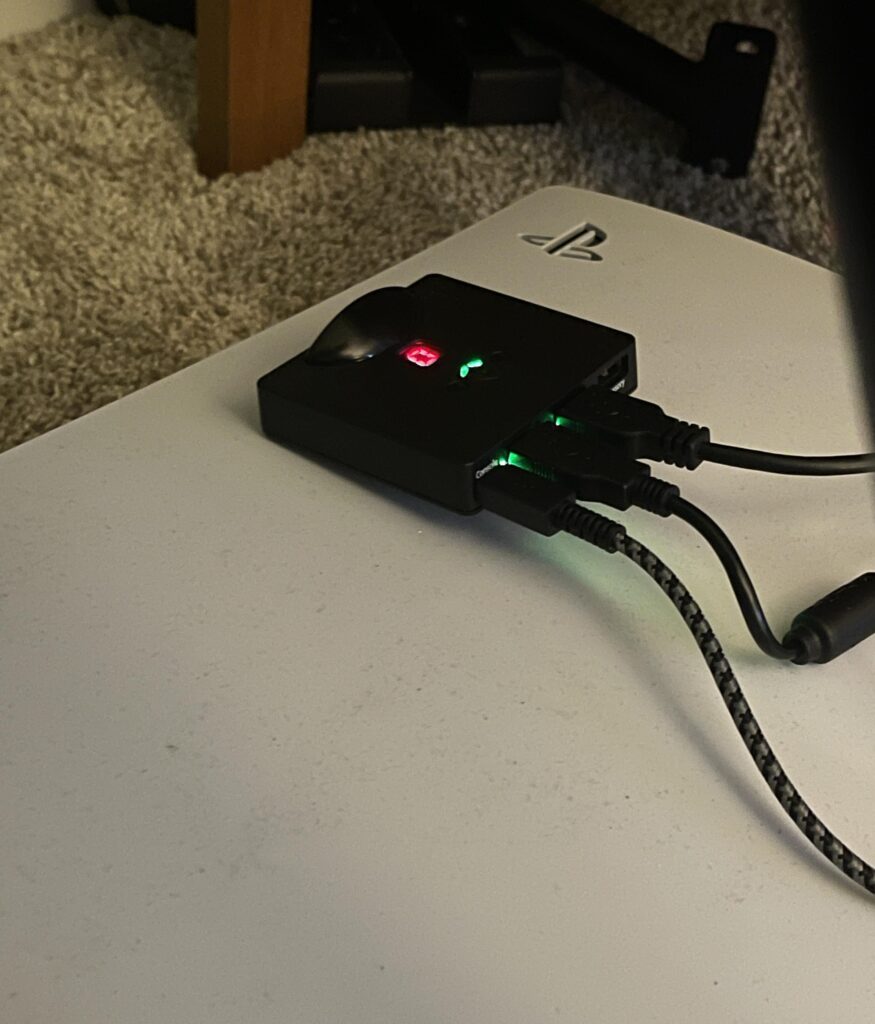
“Not perfect” does not sound ideal.
Related Articles
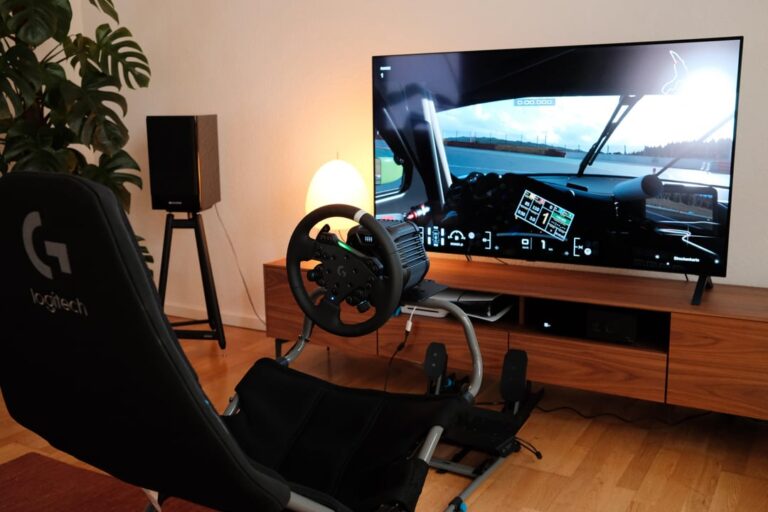
Logitech RS50 Settings for PlayStation & Xbox (Every Supported Game
Best Xbox Steering Wheels: Buyer’s Guide
PlayStation PS5 Sim Racing: Buyers Guide for Console Owners

Console Sim Racing: The Complete Guide
Best PS5 Steering Wheels in 2026: Budget, Mid-Range and Direct Drive
Topic: Console Sim Racing