

I’m a sim racer and amateur racer with a passion for Motorsport, good racecraft and the technical and setup aspect of sim racing.
Basically, Fanatec pedals have never been the strong point of a Fanatec setup. My first were the CSL Pedals (V1), and they were OK until I upgraded to the Heusinkveld Sprints. Heusinkveld taught me what pedals are, not Fanatec, sadly. They did teach me what good direct drive is, so it’s not a complete loss. I write this with limited understanding of the new pedal set, the Podium Pedals family.
So far, the two-pedal Podium Pedals Formula is the only set in the family that has definitely gone on sale. It first sold on 25 June 2026, and it keeps selling out. On 10 October, fanatec.com shows it as “Currently Unavailable”, and the three-pedal Podium Pedals still isn’t on sale at all, with Fanatec’s page saying preorders open soon and shipping in autumn 2026. The Formula is £626 in the UK, $699.99 in the US and €699.95 in Europe. Most of the reviews agree the Formula is the best set of pedals Fanatec has made. The catch is that it’s a lot of money for two pedals with no haptics.
Are they worth it? Yes, for anyone on PlayStation or Xbox, or with a Fanatec base already on the rig. On console the pedals have to run through one anyway. They plug straight into the base and keep their settings when you move from PC to console. On PC it’s more of a maybe, because the same money goes further elsewhere, and not much more gets you a single active pedal. Today we’re taking a closer look at what you get for the money, how the brake works and how to get hold of a set.
Quick Navigation
Jump straight to what you’re after:
What you get |
The brake and the Compression Control System |
The throttle, the carbon and the build |
Mounting and connecting them |
How they compare |
How to order them (and the discount code) |
Who should buy them |
Final thoughts
Fanatec discount code: use SIMRACINGCOCKPIT5 at checkout for 5% off at fanatec.com.
What you get
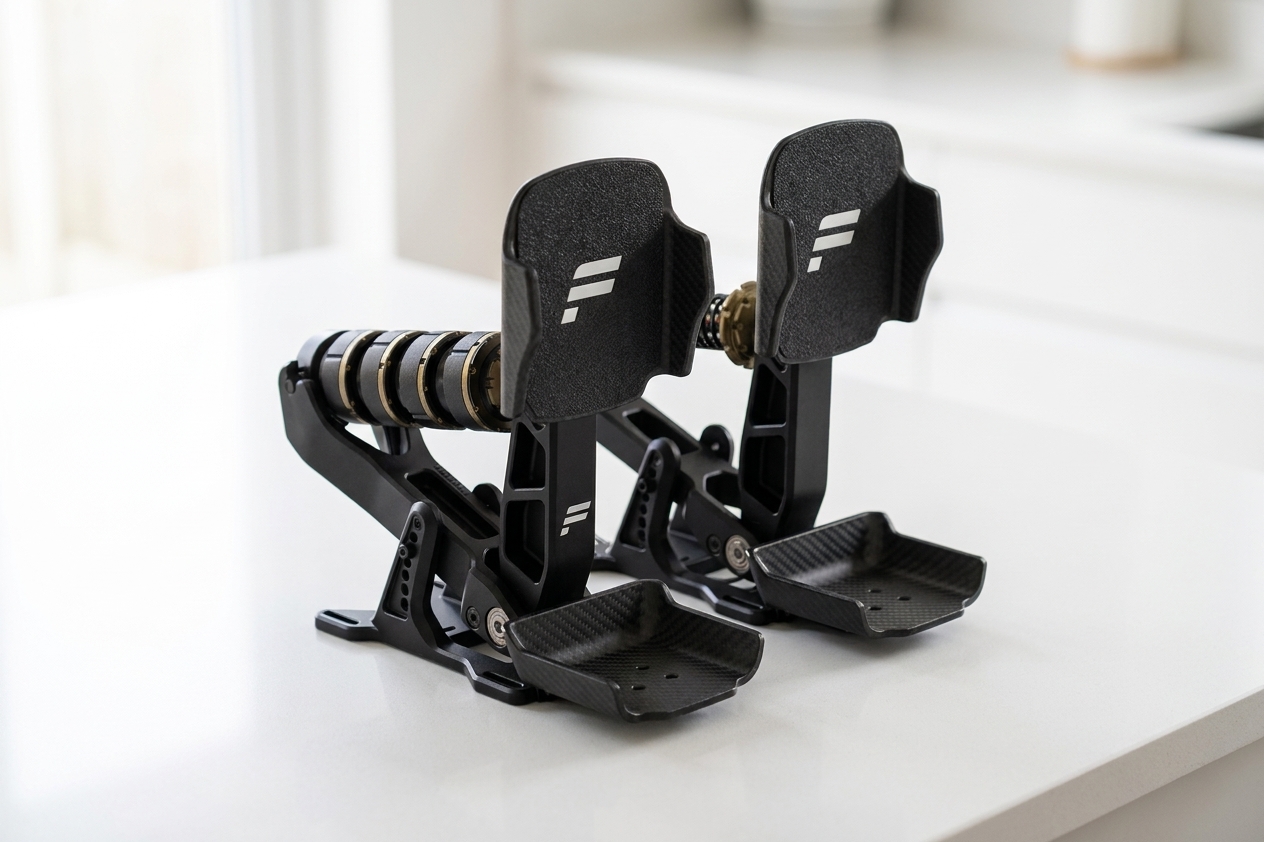
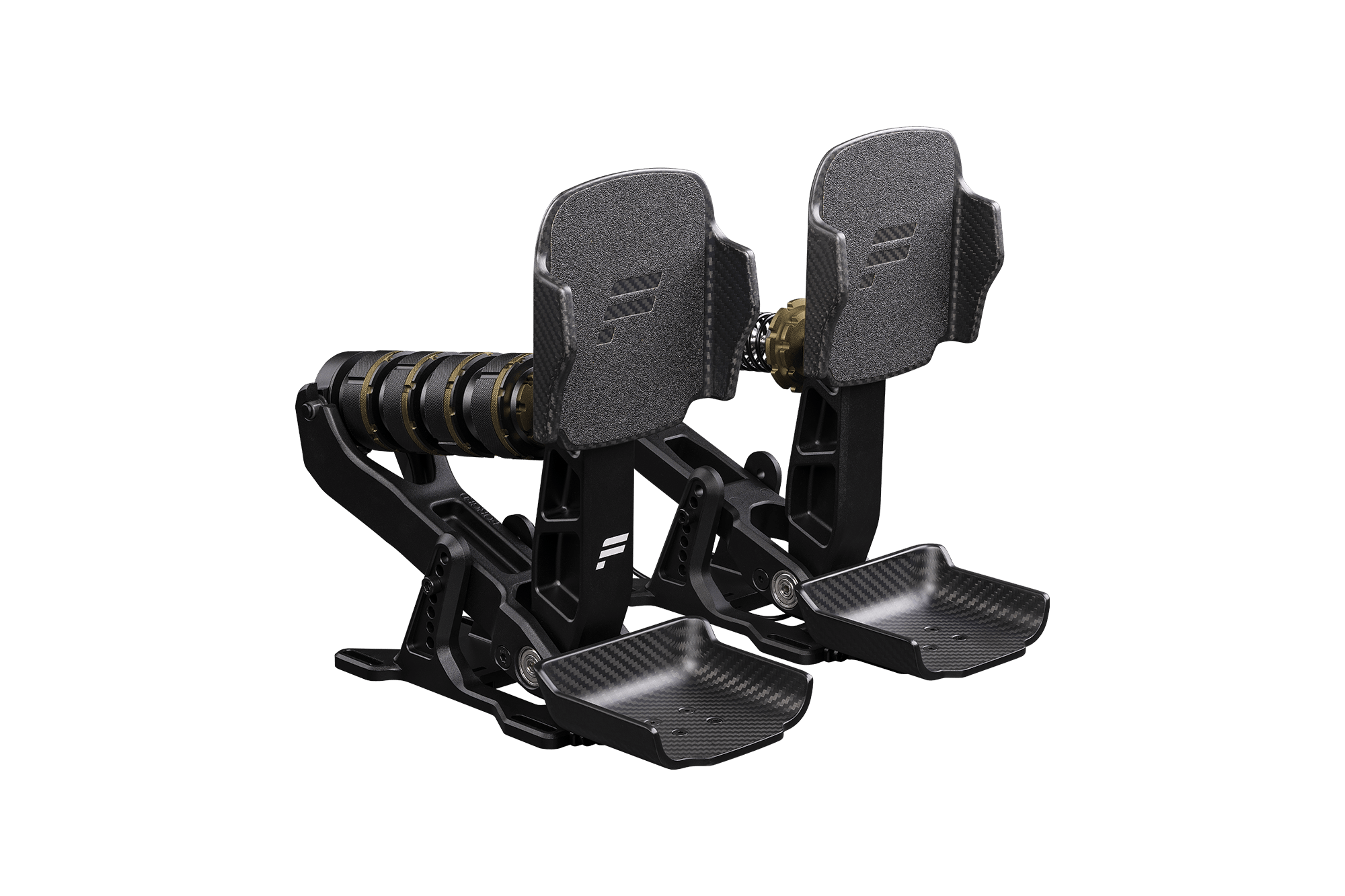
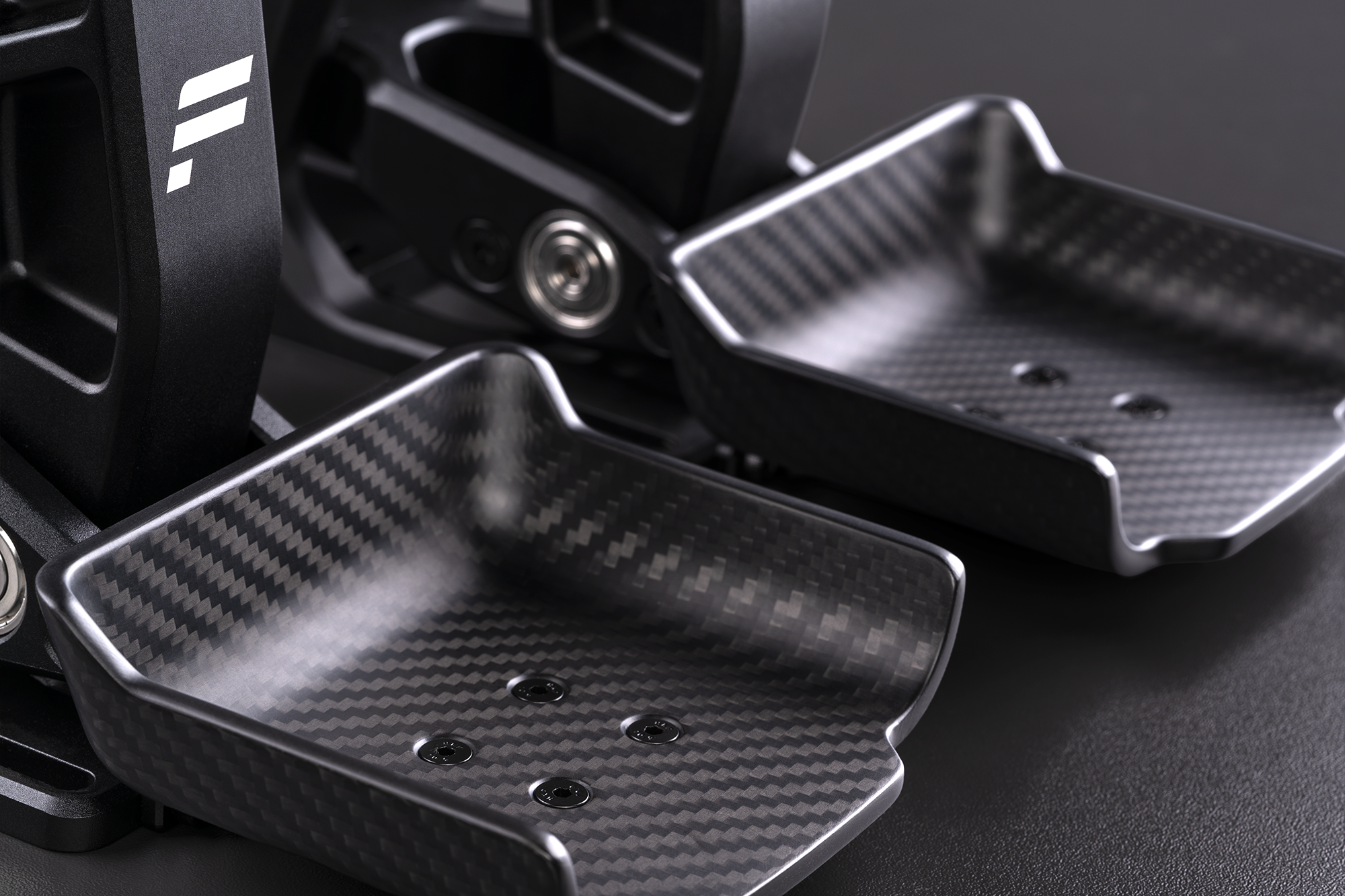
The Podium Pedals family comes in three configurations. The three-pedal Podium Pedals has GT-style aluminium pedal plates and a clutch. The Podium Pedals Formula is two pedals, with carbon fibre pedal plates and heel cups. The Podium Pedals Sport is also two pedals, this time with the GT-style aluminium plates, at $599.99 / €599.95. On 10 October Fanatec had the Formula and the three-pedal set at exactly the same price, $699.99 / €699.95, which means the Formula gets you a throttle and brake for the price of the set with the clutch.
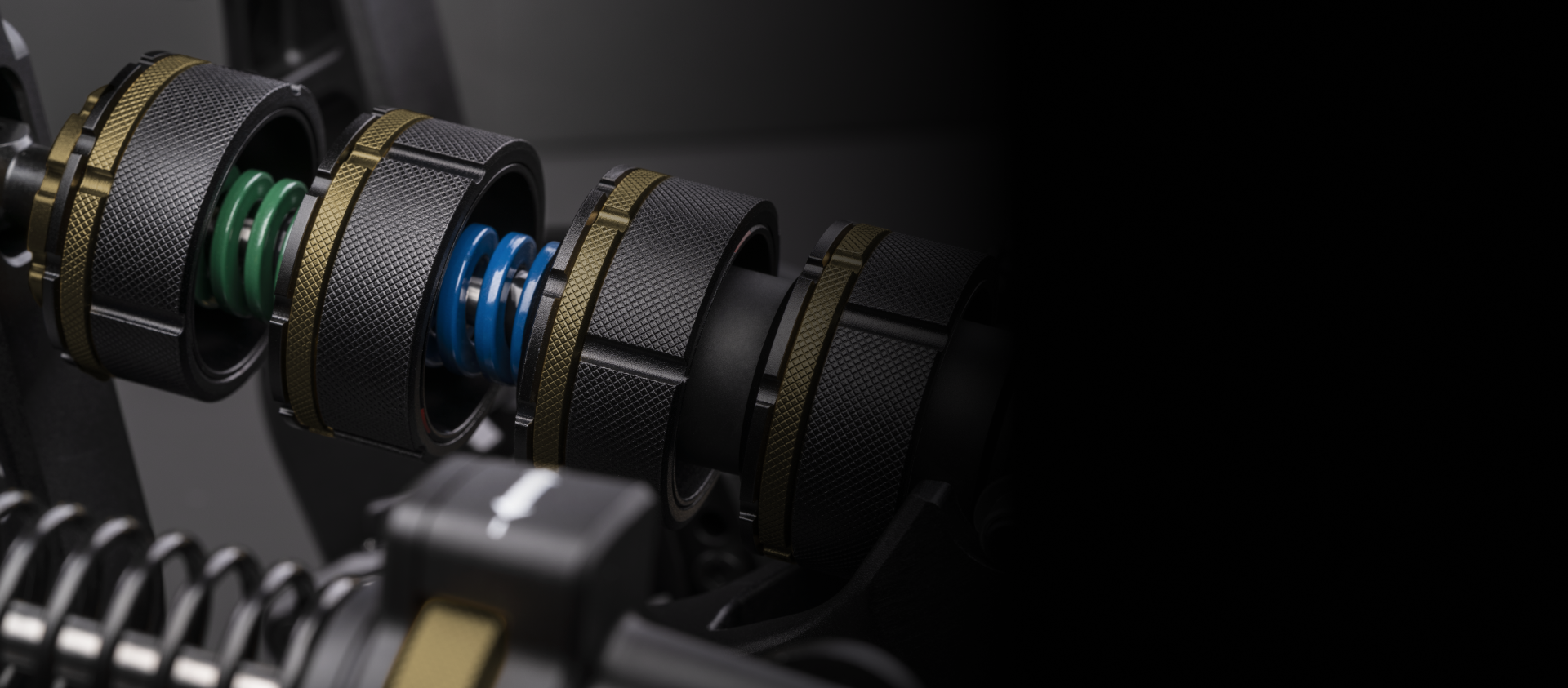
The Podium Pedals Formula’s brake uses a load cell rated at over 200 kg and calibrated for 150 kg at the pedal plate. A load cell measures force, not travel. The pedal arm and the mid arm are forged aluminium, and the pedal plates and heel cups are carbon fibre. In the box you get four elastomers and four springs, and two of the springs are blue (softer) and two are green (softest). Fanatec’s quick start guide has a chart of which ones to combine for road cars, GT and rally cars, and prototype and formula cars.
| Specification | Value |
|---|---|
| Pedals | 2 (throttle + brake) – “Formula” set |
| Brake sensor | Load cell rated over 200 kg, calibrated for 150 kg at the pedal plate |
| Brake adjustment | Compression Control System – tool-free threaded cups, springs + elastomers |
| Throttle sensor | Hall sensor, factory-calibrated; about 20 mm of travel adjustment |
| Materials | Forged aluminium pedal arm and mid arm, carbon-fibre pedal plates and heel cups |
| Connection | USB-C (PC) or RJ12 to a Fanatec wheelbase – both can stay connected |
| Platforms | PC; PlayStation via a PlayStation-licensed Fanatec base; Xbox via a Fanatec base and an Xbox-licensed wheel |
| Onboard memory | Yes – your brake curves carry from PC to console |
The brake and the Compression Control System
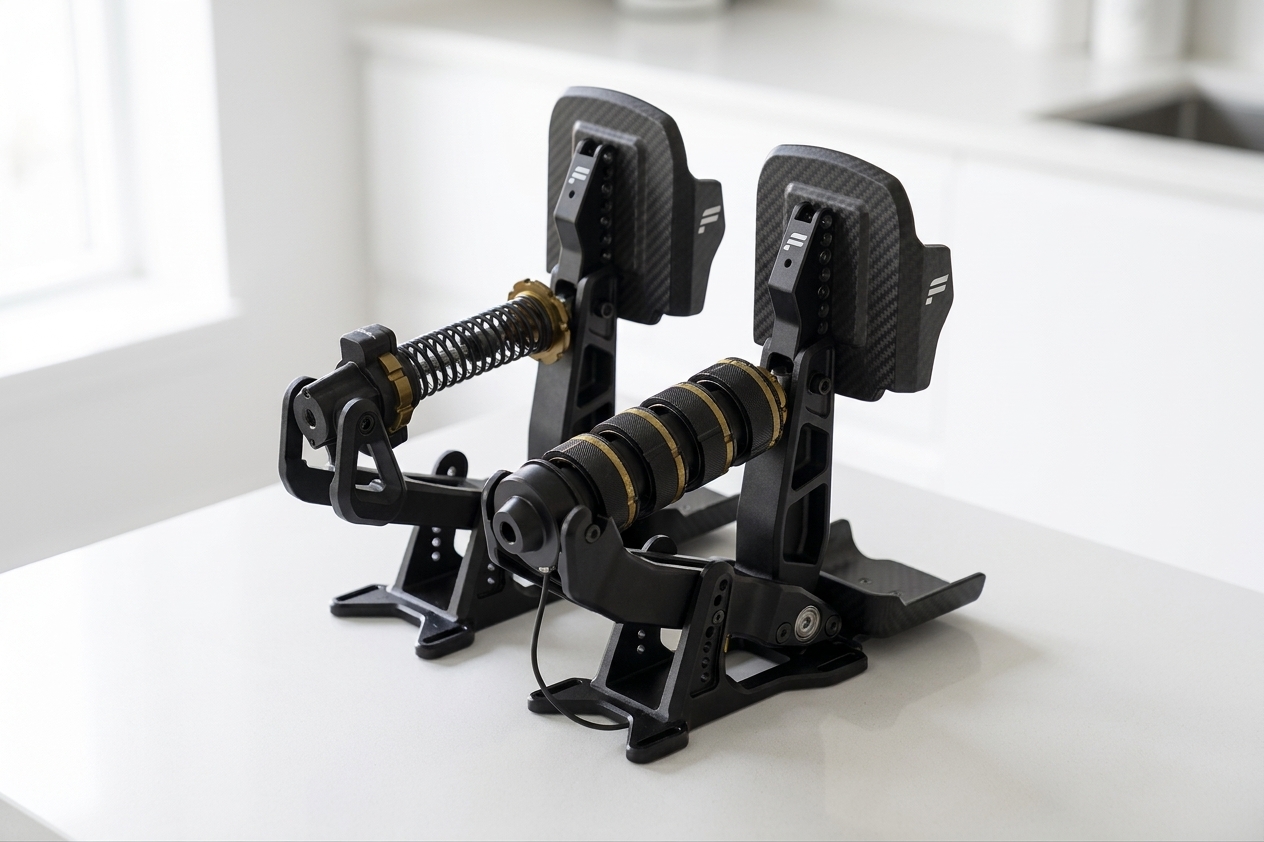
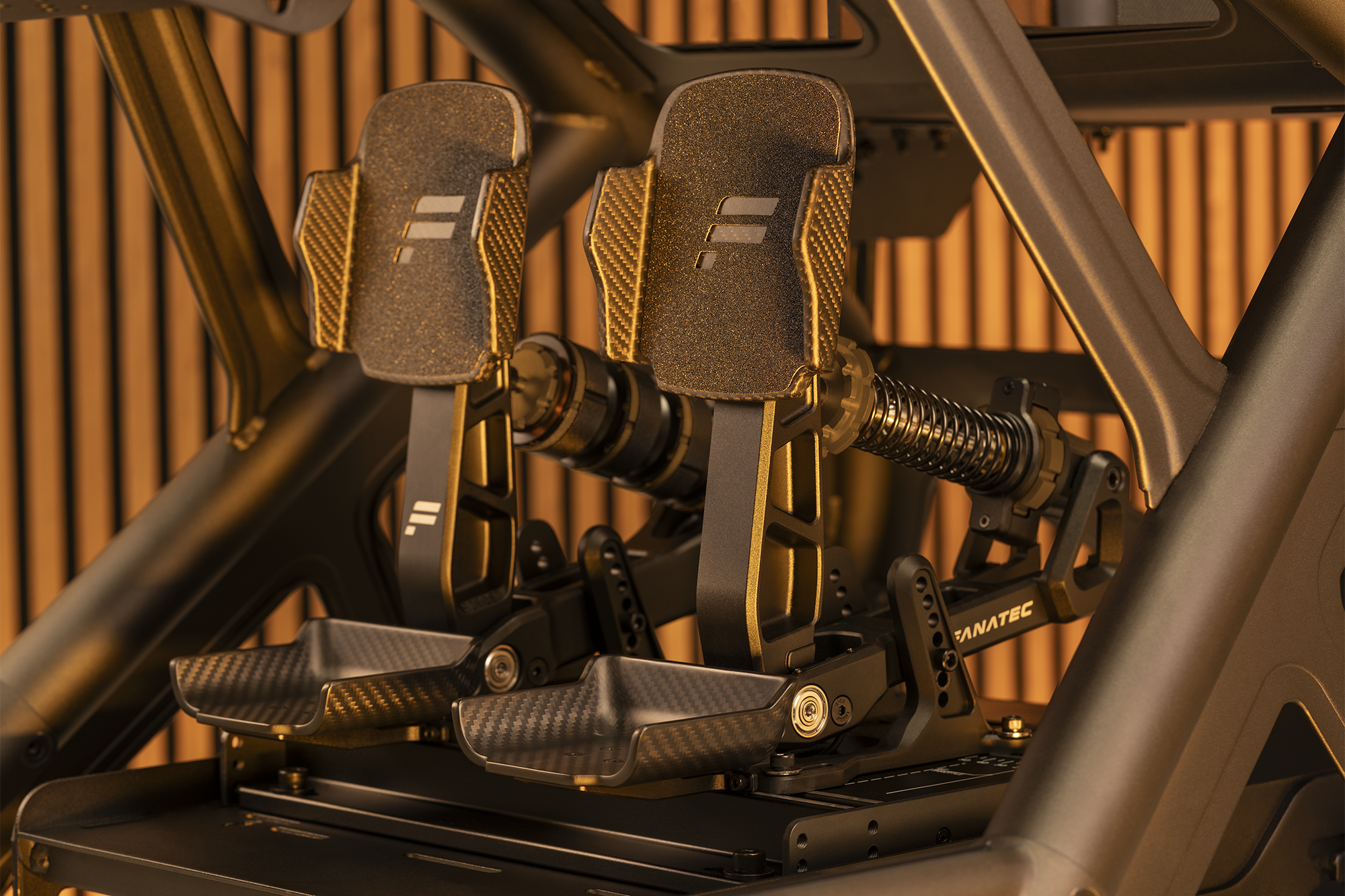
The brake on the Podium Pedals Formula is built around Fanatec’s Compression Control System. That’s a row of threaded cups, each holding a spring or an elastomer, and you adjust them by hand. Wind the cups fully open and you get long, soft travel, which Fanatec says is good for simulating a road car. Close them fully and there’s no travel at all; Fanatec says it feels “like pressing on a brick wall”, which it likens to the brake pedal in some race cars.
The cups also act as limiters. They stop the elastomers being squashed beyond their rated range, which Fanatec says keeps the feel consistent and makes the parts last. Set the cups at staggered positions and the brake stiffens in stages, so you can go from a linear pedal to a progressive one. None of it needs tools, although there are two cup assist tools in the box for when a cup or a locking ring gets stuck.
Once it’s dialled in, the brake builds pressure smoothly and the braking points stay consistent, which keeps trail braking under control. When I drove the Radical SR3, my max brake pressure was about 85 kg. The Formula is calibrated for 150 kg at the pedal plate, so you won’t run out of brake.
Getting the brake there takes some trial and error with the springs, the elastomers and the cup positions. On Fanatec’s US store, owners rate the setup and ease of use at 3.9 out of 5, against 4.3 overall. Start from Fanatec’s chart for the kind of car you drive and work from there. After that, it’s down to the curves and dead zones in the Fanatec App.
When you’ve changed the curves, click “Save permanently” in the Fanatec App. That writes them to the pedals’ memory, so they carry over to the Tuning Menu and to your console. If the base doesn’t see the pedals at all, update the base firmware in the Fanatec App on a PC.
The throttle, the carbon and the build
The throttle on the Podium Pedals Formula is diecast and CNC-machined aluminium, with a Hall sensor that’s calibrated individually at the factory. Fanatec made the resistance firm on purpose, to give you more control. Travel and preload both adjust without tools, and there’s about 20 mm of travel adjustment to play with. The spare springs in the box are brake springs, so for a lighter throttle you’d use the preload adjustment.
You can set the height of the carbon fibre pedal plates and the heel cup distance as well.
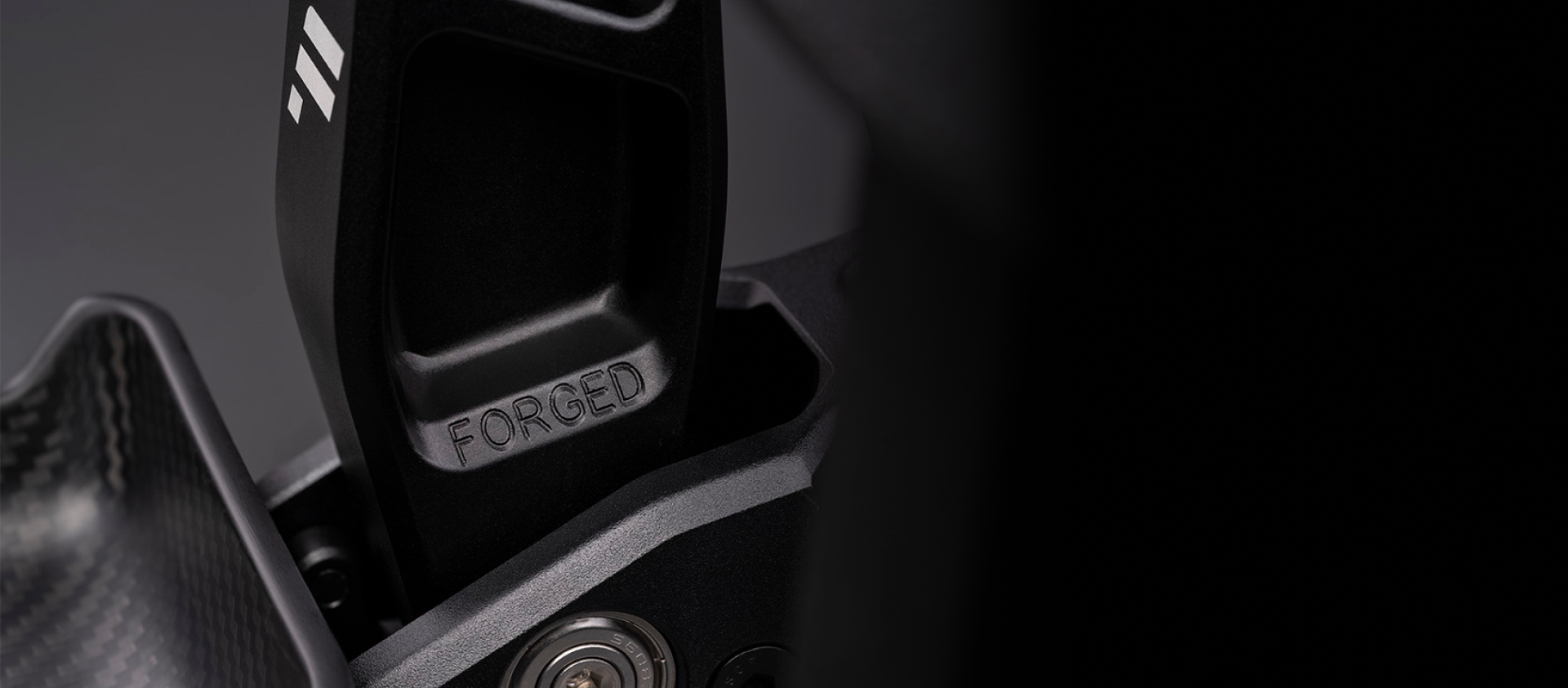
At this price the small flaws stand out, and the main one is the bolts. Some owners on Fanatec’s own store say the factory ones felt glued in, and one damaged the heads trying to move them. Fanatec does put a soft threadlock on the pedal plate bolts at the factory, and its guide warns against excessive force. Use the 2.5 mm Allen key from the box and turn it with steady torque.
Mounting and connecting them
The Podium Pedals Formula needs a stiff rig under it. You’ll be pushing hard on the brake, and a rig that flexes when you do wastes what the load cell gives you. Fanatec’s own rule is to mount the pedal modules only to a solid metallic plate, and it warns that wood or plastic may damage the product. You can hard-mount them to a pedal deck, to aluminium profile with M6 T-nuts (not included), or to Fanatec’s ClubSport GT Cockpit. If you’re on a flimsy fold-up frame, I’d spend the money on a proper cockpit first.
You probably don’t need Fanatec’s separate Podium Pedals Mounting Plate and Heel Rest, which was £179 / $199.99 on Fanatec’s UK and US stores on 10 October. Each Formula pedal hard-mounts on its own to a rigid rig, and can be mounted inverted if that’s how your rig is laid out. The Formula’s carbon heel cups already do the heel rest’s job, so the plate is hard to justify on this set. If your rig is the weak point, our guide to the best sim racing cockpits has the options, and there are a few in the table below.
On PC, the Formula plugs into USB-C through its control box and runs alongside any wheelbase, a Simucube or a MOZA included, so you’re not tied to a Fanatec base. On console you are, though. PlayStation needs a PlayStation-licensed Fanatec base, and Xbox needs a Fanatec base with an Xbox-licensed wheel, so the pedals won’t work on either console on their own. You can leave the RJ12 and USB-C cables connected at the same time. The pedals prioritise the base, and if you power the base off they hand over to the PC so you can use the Fanatec App.
How they compare
The obvious comparison is Fanatec’s own ClubSport Pedals V3, which has a 90 kg load cell. The Podium Pedals Formula steps up to a load cell rated over 200 kg, adds forged aluminium and carbon, and brings the Compression Control System with it. Going by Fanatec’s prices on 10 October, the gap was £346 in the UK (£626 against £279.99) and $270 in the US. For a lot of people the ClubSport Pedals V3, or a set of CSL Pedals LC at $239.98, is plenty.
Outside Fanatec, the MOZA CRP2 is two pedals with a 200 kg load cell for $369, and the clutch is a separate $99 pedal. It’s worth a look if you don’t need your pedals to work on console through a Fanatec base. The Heusinkveld Sprints, the set I moved to from my CSL Pedals (V1), are $585 as a two-pedal set. For more money again, there are active pedals. An active pedal has a motor driving it, so it can push back at your foot for ABS or a lock-up. The Simucube ActivePedal Pro is €1,402, and the MOZA mBooster is $759 on its own or $949 with the CRP2 throttle. Both can simulate ABS and traction control, which a passive load cell can’t. So the Formula is very good, but it can’t do either of those. To be fair, the two active pedals cost more, and the mBooster’s $759 doesn’t include a throttle.
How to order them (and the discount code)
Getting hold of a Podium Pedals Formula hasn’t been easy. The first run sold out in about seven minutes in June, and a larger batch went on sale on 19 August. By 10 October, fanatec.com was showing it as “Currently Unavailable” again in both the US and the UK.
Head to the Podium Pedals Formula product page, and if it’s out of stock, use “Notify Me When In Stock” to get an email when the next batch lands. The Fanatec code is in the blue box near the top. If you’d rather wait for a better price, the Fanatec hub page has the current deals. Our Black Friday forecast covers what Fanatec might discount in November, and the ClubSport Pedals V3 is the set we expect to come down.
The three-pedal Podium Pedals is still on its way. Fanatec put the delay down to manufacturing challenges with the clutch pedal, and in August it gave October as the date. When we checked on 10 October, preorders still hadn’t opened. The clutch will also be sold separately for the Formula, and Fanatec lists it as coming soon. The Podium Pedals Sport was announced in August for the end of September. Its page still says that, but the Sport isn’t in Fanatec’s pedal listing, so check before you count on it. As for haptics, the pedals have what Fanatec calls “haptic mounts for future expansion”, but it doesn’t offer a haptic module of its own yet, and there’s no price or date for one.
Pros
- A forged aluminium brake arm, with carbon fibre pedal plates and heel cups.
- The Compression Control System adjusts without tools, covers a huge range and stops the elastomers being over-compressed, so they last.
- A firm throttle, with travel and preload you can adjust without reaching for a tool.
- Curves are saved on the pedals, so your settings work on console through a Fanatec base.
Cons
- $699.99 / €699.95 for two pedals, which is the same price as the three-pedal set.
- Setup takes time, with trial and error on the springs, the elastomers and the cups.
- Factory-threadlocked bolts that are easy to damage if you force them.
- Showing as unavailable on fanatec.com in the US and the UK on 10 October 2026.
Who should buy them
Buy the Podium Pedals Formula if you’re already on a Fanatec wheelbase and want to step up from a ClubSport or CSL brake. They also make sense if you race on a console through a Fanatec base and want more than the pedals you have now. The Formula’s brake has a lot of adjustment to play with as well, so it suits anyone who likes tinkering.
Look elsewhere if you’re purely on PC and want an active pedal. If you’re on a budget, a good load cell set costs about a third of the money. And if you fancy the challenge, our DIY load cell pedal guide shows you how to build your own for less.
Final thoughts
Wherever you race, make sure the Podium Pedals Formula goes on something solid, and give yourself some time with the springs.
If you’ve made up your mind, set the restock alert and be quick when the email lands, because the first batch went in about seven minutes. I’ll see you out on track!
Related Articles
MOZA SRP2 Pedals Review: The Budget Load Cell Set to Beat
How to: Make Load Cell Pedals with Your 3D Printer
Moza mBooster Review: My New Favourite Brake Pedal
MOZA CRP2 Pedals: Reviewing Moza’s V2 Flagship Pedal Set
Check out this DIY “Simucube” ActivePedal
SIMAGIC P-HPR – Everything You Need to Know about this Haptic Pedal Device
Topic: Sim Racing Pedals