

I’m a sim racer and amateur racer with a passion for Motorsport, good racecraft and the technical and setup aspect of sim racing.
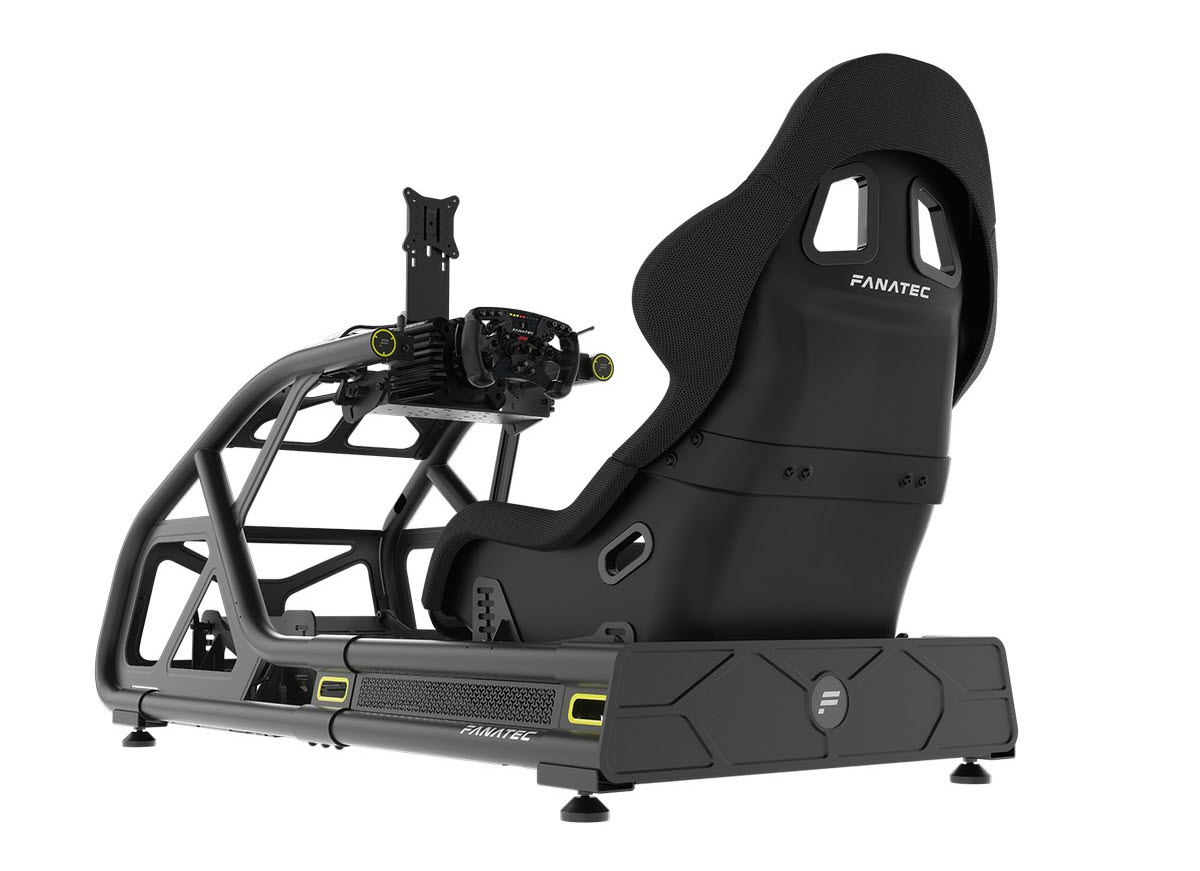
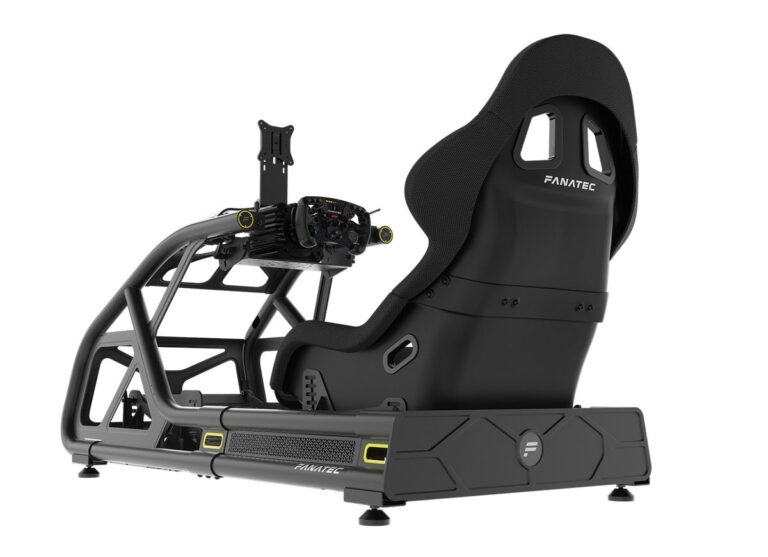
Image: Fanatec Clubsport GT Racing Sim Cockpit
If you’re planning to buy or build an F1 sim racing cockpit but you’re not quite sure where to start, this definitive guide will provide you with all the information you need to make an informed choice. Just as there are many motorsport disciplines in real life, so too are there many shapes and styles of sim racing cockpits and seats on the market to accommodate different forms of driving.
I’ve refreshed this guide with the latest pricing and added some brilliant new options from PlaySeat that have been getting rave reviews from the community. The Formula Intelligence F1 Edition in particular, is a proper bit of kit if you’re after the ultimate F1 experience.
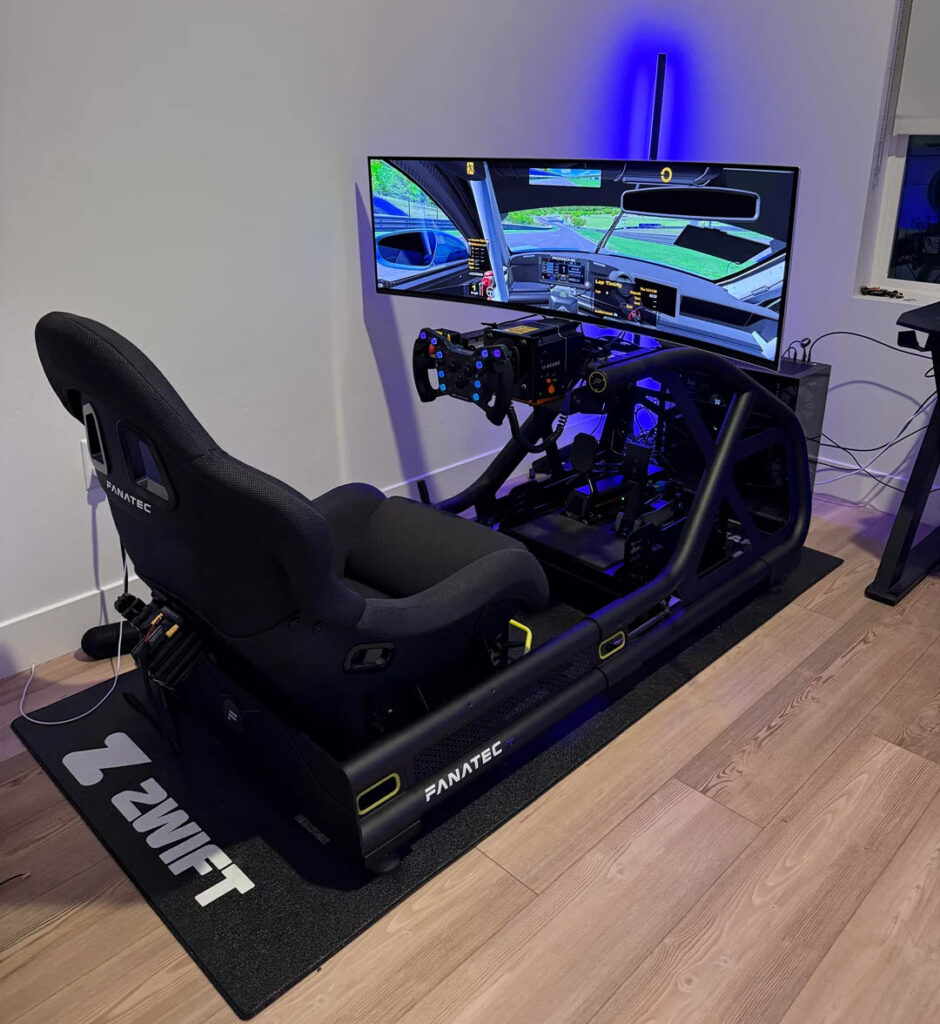
I’d like to preface this guide by stating that no matter what type of F1 cockpit you use, it’s essential to check if your racing hardware – i.e., your wheelbase, pedal set, etc. – is compatible with the solution you choose. It very likely is, especially with the established manufacturers like PlaySeat, Treq and SimXPro options.
Always check the fine print to confirm compatibility with your pedal set and F1 steering wheel (and DD wheelbase for that matter).
Quick Navigation:
Quick Recs · F1 Simulator Choices · All-in-One Cockpits · PlaySeat Formula · ASR Chassis · SimXPro FR · Price Comparison · TREQ Formula · Alpine F1 · OverPower OP · Other Cockpits · SimXPro + Sparco · SimXPro XFR · DIY Cockpits · Final Thoughts
Quick Recommendations
After testing dozens of F1 cockpits over the years, here’s what I’d buy with my own money at different price points:
Now let’s dive into the details of each option and what makes them special.
What choices do I have for an F1 Simulator?
The main difference between F1 cockpits and seats compared to more conventional sim racing rigs is their sloped driving position, which replicates how real F1 drivers sit in their cars. Therefore, choosing the proper cockpit and seat for your F1 needs will significantly impact the authenticity of your experience in a racing simulator.
Whether you buy a bundled package that includes a seat and cockpit as an all-in-one unit or purchase these items individually, it’s essential to pay attention to a few crucial factors when putting an F1 rig together.
If you’re looking for the quickest and easiest way to get into F1 sim racing, all-in-one cockpits are probably the best choice. Most, if not all, of the recommendations I’ve made below, offer fantastic realism, rigidity, and a lot of hardware compatibility, but you’re somewhat limited to its design features, and there may not be much room for expansion depending on the model you buy.

However, if you’d like something more bespoke, and if you’ve got the time (and patience!) to build your own DIY cockpit, then the design and expansion possibilities are essentially endless. You can construct an aluminium profile frame, make the entire thing out of wood, or use a combination of materials to piece your rig together, and then you can choose the perfect F1 seat to slot into your design.
As for pricing, it’s not all that easy to say which solution offers the most value for money. Some all-in-ones at the lower end of the spectrum are very affordable, but they may lack the ability to handle the forces of some direct drive wheelbases or load cell pedals. On the flip side of that, high-quality all-in-ones can carry a hefty price tag, but you can guarantee the rock-solid mounting necessary for powerful hardware. With DIY solutions, it’s all down to which materials you select for your build. If you want to save money, sometimes DIY is the way to go, so long as you’re careful about design choices and don’t worry too much about appearances. Conversely, if you decide to utilise the strongest materials and opt for lavish decorations, your DIY build could become the biggest money pit you can imagine!
All-in-one F1 sim racing cockpits
When you just want to mount your hardware and get on with driving, all-in-one F1 cockpits are the answer, but then comes the decision of which one to buy. Well, as I mentioned earlier, there is a fair amount of choice in this market segment nowadays, and all brands and even models have distinct attributes. As with all sim racing cockpits, things to look for include build quality, strength, and rigidity. Plus, keep in mind the available space you have, how powerful your equipment is, and how much you want to spend.
Here is my recommended selection of F1 cockpits, listed according to price in ascending order.
PlaySeat Formula Series
Let me start with what I consider the best entry point into proper F1 sim racing – the PlaySeat Formula series. Having spent considerable time in both the standard Formula and the new Intelligence edition, these offer brilliant value at their respective price points.
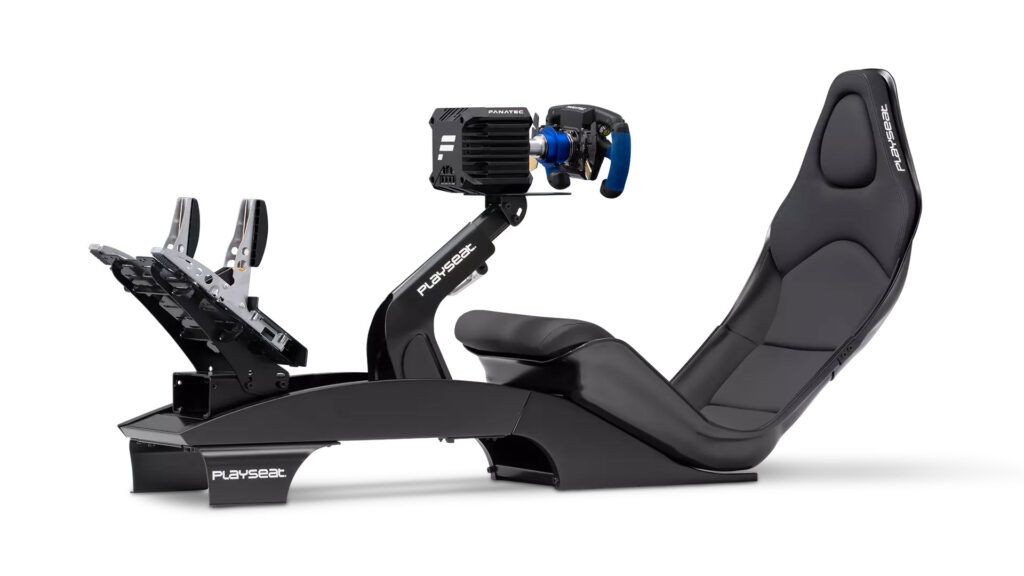
PlaySeat Formula Standard (Black/Red)
At £899 (or $1099), the standard PlaySeat Formula delivers exactly what you need for authentic F1 sim racing. The powder-coated steel framework is rock solid – I’ve had mine paired with a Simucube 2 Pro (25Nm) for over a year with zero flex issues. The driving position is spot on, replicating that low-slung F1 seating position that makes all the difference when you’re attacking Eau Rouge.
What I particularly appreciate is the adjustability – it genuinely accommodates drivers from 4′ to 7′ tall, and the 300lb weight capacity means it’s built to last. Both the black and red versions are identical in terms of build quality, so choose based on your setup’s aesthetic.
PlaySeat Formula Intelligence – F1® Edition
Now, if you want to go all-in, the Formula Intelligence F1 Edition at £2049 ($2499) is something special. This isn’t just marketing fluff – it’s the same cockpit used by Max Verstappen, Charles Leclerc, and Valtteri Bottas for their home training. The reinforced tubular frame handles the most powerful direct drive systems without breaking a sweat.
The official F1 branding is a nice touch, but what really sets it apart is the enhanced adjustability and premium materials. After a 6-hour endurance race, you’ll appreciate the difference in comfort and support. Yes, it’s pricey, but if you’re serious about F1 sim racing, this is as close as you’ll get to the real thing without an FIA license.
Advanced Sim Racing (ASR) Chassis
Advanced Sim Racing have built a solid reputation in the community, and for good reason. Their aluminum profile chassis are properly engineered with zero flex in mind. While their F-Pro and F-Aero models seem to have been discontinued or renamed, their current lineup still offers excellent options for F1 sim racing.
ASR 3 Chassis
Starting at just £295 ($359), the ASR 3 is brilliant value for money. Don’t let the “mid-range” designation fool you – this 3″ aluminium profile chassis is more than capable of handling belt-driven and direct drive wheelbases up to about 15Nm without any drama. The Canadian-sourced aluminium is top quality, and the powder coat finish looks the business.
ASR 4 Chassis
The ASR 4 takes things up a notch with its 4.5″ aluminium base. Currently on sale at £594 ($722), down from £699 ($849), it’s a proper bargain. The Generation 2 improvements include a redesigned wheel deck with better adjustability and their new aluminium pedal tray that accommodates pretty much any pedal set on the market. If you’re running a powerful DD wheelbase, this is the sweet spot in their range.
ASR Pro Chassis
At the top of the range sits the ASR Pro at £945 ($1149). This beast handles 30Nm+ wheelbases without breaking a sweat. What sets it apart is the quick adjustment system – you can dial in your perfect driving position in minutes rather than hours. I’ve seen these paired with Simucube Ultimate systems and hydraulic pedals, and there’s zero flex even under the most aggressive driving.
Note on ASR F-Pro and F-Aero: While these specific models were mentioned in earlier versions of this guide, they don’t appear to be currently available. ASR may have consolidated their formula-specific offerings into its main chassis line with formula seating options. I’d recommend contacting ASR directly if you’re specifically after their formula-focused designs.
SimXPro® FR (LusoMotors 2S Seat Optional)
For those of you committed to sim racing and happen to be looking for a very complete F1 sim rig, check out the SimXPro® FR. Expertly engineered using European aluminum extrusion profiles, this bundle promises both durability and comfort.

Key Features:
- European Aluminium Profile: The SimXPro® FR rig, built with European 4040, 4080, and 40120 aluminium extrusion profiles, promises durability and a stable racing experience.
- Comfortable Double Shell Formula Seat: The optional LusoMotors MK-8 2S Formula seat, designed with a double shell construction, ensures a comfortable racing session, even for extended periods. This could probably double as a kart sim and be barely noticeable.
- Customizable Seating: Catering to different body types, there are two seat sizes available along with various padding options, offering a personalised racing experience.
Specifications:
- Base Frame Dimensions: 1300x580x650mm
- Weight: 38kg (Sim rig), 4-10kg (Seat)
- Seat Sizes: Standard (35 cm) and XL (41 cm)
- Seat Finish: Choose between Gloss Black Finish or LineX Coating
Compatibility:
The SimXPro® FR rig is compatible with standard Direct Drive (DD) systems, Thrustmaster, and Fanatec loadcell pedals. While it’s essential to check compatibility before purchasing peripherals, almost all retailers will list compatible wheels and pedals. The LusoMotors MK-8 2S seat is designed to work with most racing harnesses if you fancy adding one of those too. And price-wise – to be completely fair, that looks reasonable to me.
Price: £540 ($657) (Incl. VAT, Original Price £657/$800)
For a comprehensive sim racing experience, ensure your setup is complemented with the best gear. Check out other products like the Cube Controls SP01 Formula Pedals or the Simucube 2 Pro Direct Drive System. That would be one awesome F1 setup.
F1 Cockpit Price Comparison
Let’s break down your options by budget. I’ve organised these into three clear tiers to help you find the right balance between performance and price:
Budget Champions (Under £600/$750)
Perfect for getting started with proper F1 sim racing without emptying your bank account:
Sweet Spot (£600-£1000 / $750-$1200)
This is where you get 90% of the premium experience. These cockpits handle serious hardware without compromise:
No Compromise (£1000+ / $1200+)
For those who want the absolute best. These are the cockpits you’ll find in professional training facilities:
TREQ FORMULA Rig
At a very reasonable €525 (about £450), it’s impossible to ignore this aluminium profile rig from TREQ:

Built in 8020 profile and custom brackets, this rig offers compatibility with all Logitech, Thrustmaster, Fanatec and Accuforce wheels. It’s highly adjustable and overall a really versatile, reasonably priced entry-level F1 cockpit.
I think these will be the most popular F1 sim rigs through to 2025 but we shall see!

Alpine Racing F1 Rig
Presenting the Alpine Racing TRX, an elite racing simulator, birthed from the collaborative efforts of Trak Racer and the Alpine F1 Team. Originating from Australia’s finest engineering and design, this simulator has been moulded with insights from seasoned F1 engineers and pro sim racers. Since its inception in 2008, Trak Racer has forged a name in developing racing cockpits and has been honoured as the Official Simulator Supplier to the Alpine F1 Team and Airbus Aircraft among others.

The Alpine Racing TRX stands out for its malleability. Users can switch between a Formula or GT seating style (or find something comfortable in between). This F1 sim rig comes supplied with a seat slider, seat brackets, and features handy adjustable slides for the wheel and pedal mounts.
The wheel mounting assembly is versatile enough to bring compatibility with wheelbases including, Simucube 2, Fanatec, VRS, Logitech, and Thrustmaster. Furthermore, the product is equipped with Fanatec Side Mounting compatibility as a standard feature.
Built with a sturdy 2″ steel frame, the Alpine Racing TRX assures stability, particularly during high-stakes gaming encounters. It can withstand up to 180 kg of braking force without any flex. The pre-drilled pedal plate facilitates the attachment of the majority of sim racing pedals on the market today. Trak Racer supports the product’s robustness with a generous 5-year frame warranty, a testament to their belief in its craftsmanship.
OverPower OP Formula
Finnish company Overpower.gg has an array of standard and Formula-style cockpits, all made and designed in Finland from environmentally friendly materials. Their rigs really stand out as an escape from the standard “8020” style aluminium extrusion is barely used. This is, however, is a highly versatile and solid F1 sim rig. We’ve done the testing – these things are stiffer and lighter than the Aluminium profile. Just like when Carbon entered the F1 scene, nobody in F1 believed the Carbon tub will hold together. Challenge those conventions! My rig weighs a ton, it’d be nice to have something lighter – in any case, we’ll see as we’re expecting one for review.

As you can see, there’s a minimalism to the design which is really appealing, but don’t let that fool you – this Formula rig is strong and incredibly stiff. It’s compatible with all of the best-known sim pedals and direct-drive wheels. It comes with a thick neoprene cushion which serves as an ergonomic elastic base, very much like a real F1 seat. Minimal, light but strong.
Overpower offers variations of this design at varying price ranges and the OP Child Formula is an F1 cockpit for kids. What’s really nice about Overpower is that they will work with you to customise the finish of your rig to match the surroundings. These really take a nice approach and are highly worthy of an addition to our list. Take a look.
Other Notable F1 Cockpits
There are several other excellent options worth considering, particularly from specialist manufacturers:
Sabelt P-Series
Sabelt have brought their motorsport expertise to sim racing with impressive results. The P97 (starting at £900/$1099) and P99 (£860/$1049, down from £1104/$1345) both offer that authentic F1 seating position with Italian build quality. The new P99 EVO I at £820/$999 is particularly interesting – it’s their flagship formula cockpit with some clever design touches.
SimXPro® XFR + Sparco GP Bundle
The SimXPro® XFR + Sparco GP Bundle is a recent addition to the SimXPro® range. This bundle combines the SimXPro® Custom seat brackets with the Sparco® GP Formula seat, aiming to offer a balance of comfort and adaptability for sim racing enthusiasts.

Constructed with hardened steel, the bundle comes with a Sparco® GP Formula seat and offers adjustable features such as the pedal tray, seat brackets, and feet brackets. It’s designed to be compatible with various Sparco® seats, although specific seats might be required for an ideal fit.
SimXPro® XFR
For sim racing enthusiasts demanding precision and durability, this European 4040, 4080, and 40120 aluminum extrusion profile SimXPro® XFR ensures a flex free, enclosed and immersive F1 racing experience. The sleek design of the SimXPro® FR Cockpit really stands out, with the deep black power coating adding a very nice lustre to the finish.

The rig’s meticulous engineering promises both aesthetics and functionality, making it a prime choice for serious racers – the manufacturer has clearly chosen some very thick Aluminium profile – there isn’t a direct drive wheel or pedal on Earth that would be too much for this design.

Specifications:
Dimensions: 1300x580x650mm
Weight: 38kg
Compatibility:
The SimXPro® FR is designed to seamlessly integrate with standard Direct Drive (DD) systems, Thrustmaster, and Fanatec loadcell pedals. Always verify compatibility with your gear, which is almost always summarised on the retailer’s product page – while pedals and wheelbases don’t share a standard mounting template – the variations are frankly, extremely familiar to the sim rig manufacturers
DIY F1 Cockpits
If you’re reading this segment, then it’s safe to say you’re ready to get your hands dirty and build something unique. This method obviously takes a lot more planning, but the rewards may be worth it if you’re willing to put in the effort.
Open Sim Rigs
A quick search on Google will show you various ways people have built sim rigs from all sorts of materials. However, it can sometimes be hard to imagine how it was put together from what we see in pictures. For this reason, I think one of the best ways to start a DIY rig is with a set of blueprints such as those found on the Open Sim Rigs (OSR) website. You’ll find a collection of rig designs and build instructions, as well as a complete list of the parts needed to construct a DIY frame.

Having a solid foundation will ensure maximum strength and rigidity for your rig, and from there, you can customise it however you like. Some of the best examples of F1 rigs I found on OSR include plans for a SUPER SPORT F1 RIG – 40 SERIES and a SUPER SPORT FORMULA – 8020 – 40 OR 15 SERIES. I highly recommend browsing through the collection to find the best solution for your needs and checking out the blog section, which is full of valuable tips for building a DIY cockpit.

True DIY
If you’re confident enough in your handyman abilities, maybe a set of IKEA-Esque instructions is considered cheating. In that case, your best route will be to put your design skills to the test and draw up your own plans. There are plenty of examples of people who have done exactly that, and some of the results are simply stunning.

For some inspiration, have a look at this Mercedes F1 sim cockpit built entirely from wood. Of course, if you’ve got the time, patience, and budget, there’s nothing to stop you from replicating an entire F1 car chassis to add another layer of immersion to your sim racing.
While planning your DIY cockpit, keep in mind to provide strong mounting points for your wheel and pedals or any other hardware you may have and remember that you will need to integrate a seat into the design. Monitors are another consideration unless you plan to go down the VR route.
Final Thoughts
Choosing the right F1 cockpit comes down to three main factors: budget, available space, and how serious you are about sim racing. If you’re just getting started, the PlaySeat Formula or ASR 3 offer brilliant value without compromising on the essential F1 driving position. For those ready to invest in a long-term solution, the PlaySeat Formula Intelligence or ASR Pro deliver professional-grade performance that’ll handle whatever you throw at them.
Remember, the cockpit is just one part of the equation. Factor in your wheel, pedals, and display setup when budgeting. And don’t forget – even the best cockpit won’t make you faster, but it will make those long practice sessions more comfortable and immersive.
Happy racing, and may your lap times always improve!
Related posts
Sim-Lab P1-X Pro Cockpit Review: First Impressions
The Best Sim Racing Cockpits: Our Ultimate Rig Comparison
What are the Best F1 Cockpits for Formula Sim Racing?
Testing the RSR-21 Cockpit from Rock Solid Rigs
How to Build the Cheapest Racing Simulator Cockpit
Topic: Sim Racing Cockpits