

I’m a sim racer and amateur racer with a passion for Motorsport, good racecraft and the technical and setup aspect of sim racing.
Building a rig specifically for F1 is a different job to building a general sim setup. You’re after three things a normal GT rig doesn’t prioritise: a reclined, legs-up driving position, a small formula-style wheel, and a proper load-cell brake. Get those right and an F1 car feels electric. Get them wrong and you’ll never quite settle. I’ve built rigs at every budget, so here’s exactly what to order, component by component, across three sensible price points – and where to go deep on each part.
Quick Navigation
Jump to what you need:
What makes an F1 build different |
The cockpit |
Wheelbase and wheel |
Pedals |
The PC |
Screen or VR |
Three F1 builds
What makes an F1 build different
A GT rig sits you fairly upright with a 300mm round wheel. An F1 rig is the opposite: you’re laid back with your legs up in front of you, gripping a small flat-bottom formula wheel, braking hard into a load cell. That reclined position isn’t a gimmick – it changes how you brace against braking forces and where your arms sit, and once you’ve driven a formula car in it you can’t go back to a chair.
So three parts matter more than anything else for F1: the cockpit (does it give you that reclined position), the wheel (small formula rim, not a big GT one), and the pedals (a load-cell brake you push against, since F1 braking is all about pressure, not travel). Everything else – base, PC, screen – is shared with any sim rig. Let’s take them in order.
The cockpit: this is where F1 lives
If you only get one thing right, make it the cockpit, because the driving position is the bit that makes an F1 car feel like an F1 car. Playseat has leaned into this harder than anyone, and their formula rigs nail the reclined position out of the box. Three of them suit F1 specifically, and they ladder neatly by budget.
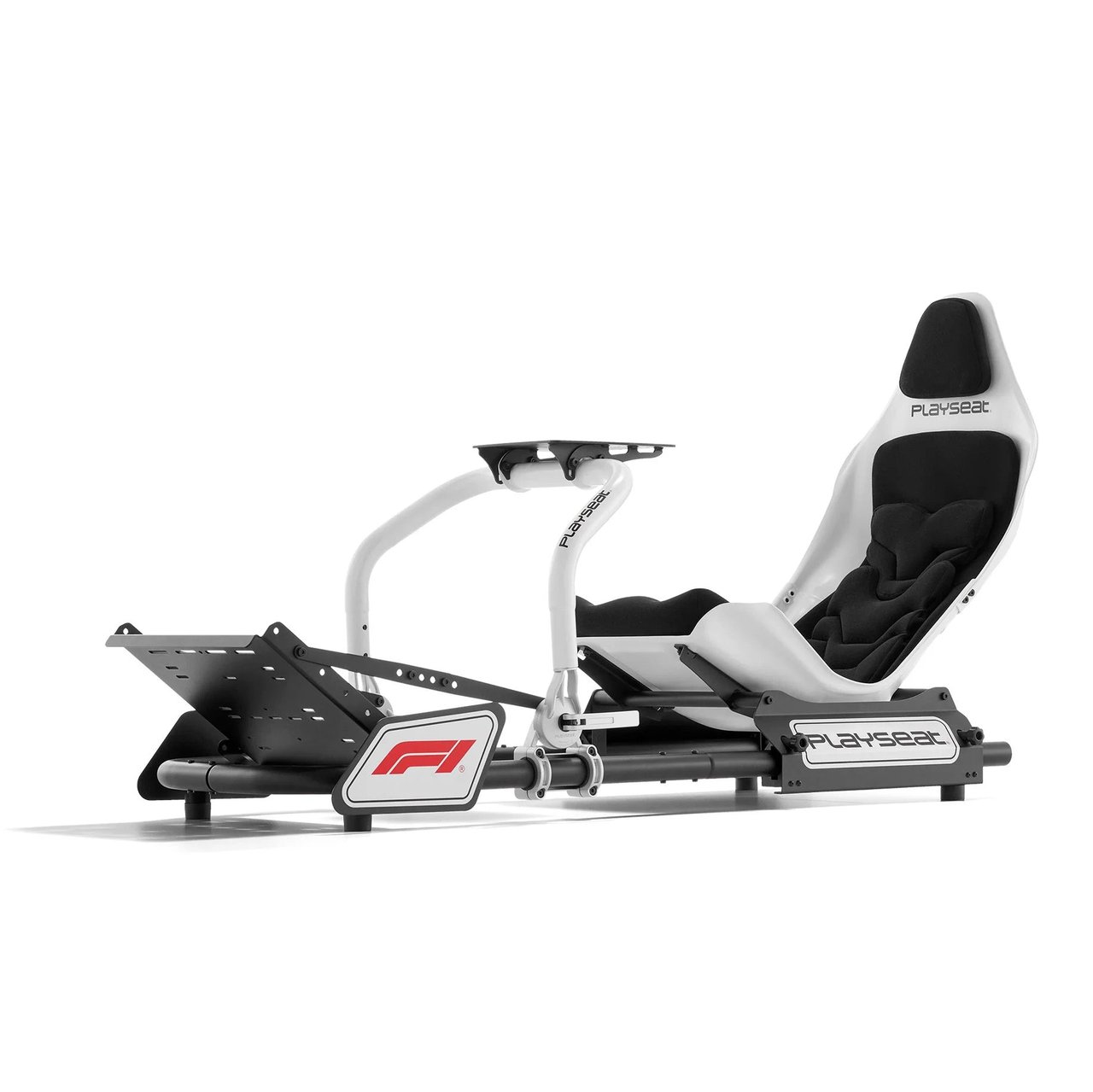
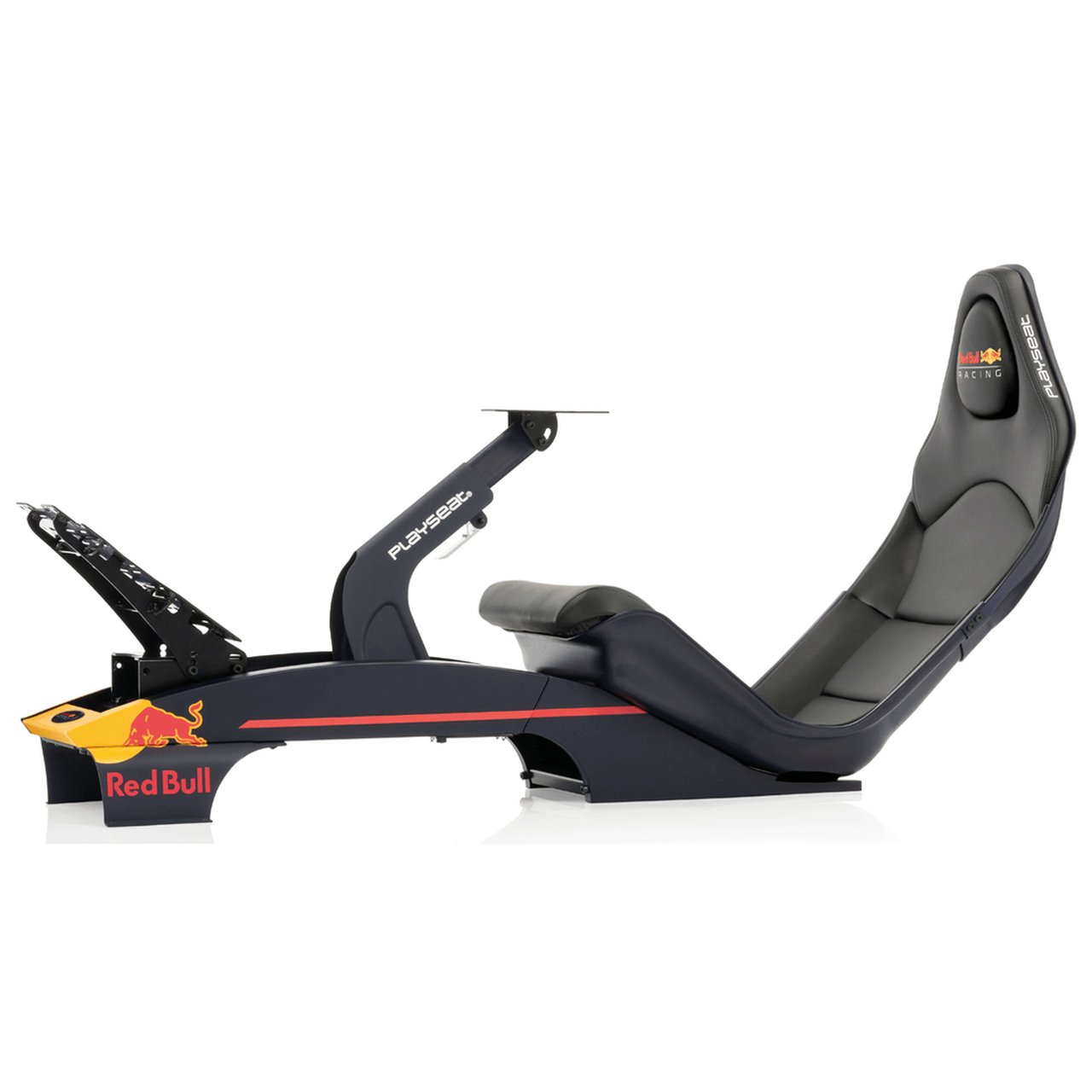
The Playseat Evolution PRO (around GBP 430 / $499) is the entry point – a foldable formula-friendly seat that gets you reclined without taking over the room. Step up to the Playseat Formula Instinct – F1 Edition (around GBP 650 / $749) and you get a proper aluminium F1-position cockpit with the X-Adapt wheel mount and a fully adjustable pedal plate – this is the sweet spot for most F1 builds. At the top, the Playseat PRO Formula Red Bull (around GBP 1,300 / $1,499) is the reclined, low-slung rig Max Verstappen uses at home, with the ForceLock system holding everything rock-solid under heavy braking.
One cockpit our readers consistently rave about, and worth calling out here, is the Fanatec ClubSport GT Cockpit – the tubular steel one. It is not a dedicated formula rig like the Playseats above; it is a do-it-all steel-tube cockpit that reclines far enough for a proper F1 position and is built like a tank. It swallows any big direct drive base without a hint of flex, the seat and pedal deck adjust for miles, and it feels permanent in a way folding rigs do not. If you want one cockpit that nails F1 and does GT and everything else just as happily, this is the one people keep coming back to. It is around GBP 800 / $1,000.
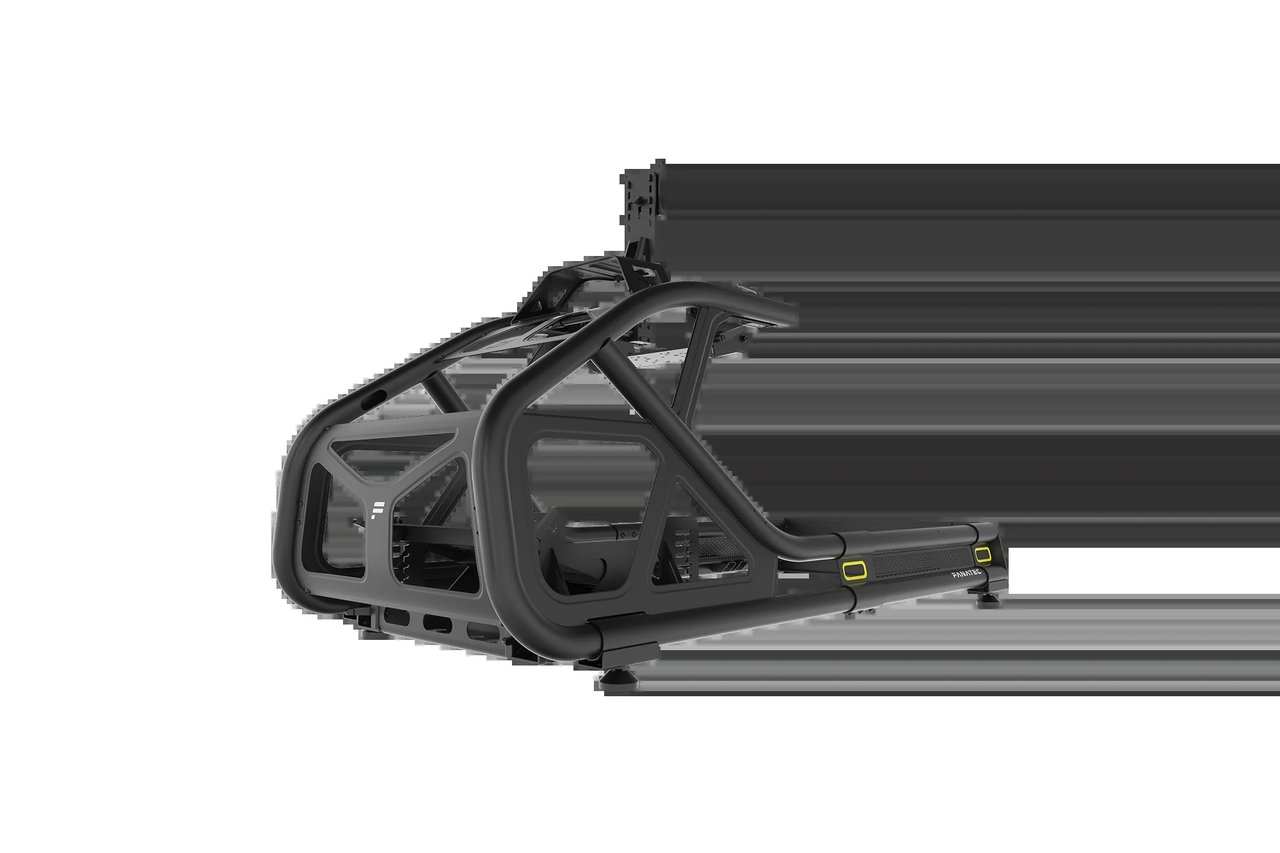
Check the current price of the Fanatec ClubSport GT Cockpit.
If you’d rather go aluminium-profile (more rigid, more adjustable, takes a big direct drive base without flex), that’s the route up from the Playseat rigs – I cover the trade-offs in the sim racing seat and cockpit guide. But for most people building specifically for F1, a Playseat formula rig is the quickest way to the right position.
Wheelbase and wheel: the heart of the feel
The wheelbase is what generates the force feedback, and for F1 you want a direct drive base – the detail through a fast corner is night and day versus an old belt or gear wheel. You don’t need monster torque: 8Nm is plenty for a formula car, and 8-12Nm is the sweet spot. Moza’s R9, Fanatec’s ClubSport DD, and Simagic’s Alpha Mini all live in this band. The entry-level R5 (5.5Nm) and the base CSL DD (5Nm native) sit below it, though the CSL DD reaches 8Nm if you add Fanatec’s separately-sold Boost Kit 180. Spend up to a Simucube, Asetek or Fanatec Podium base only if you’re chasing the last few percent.
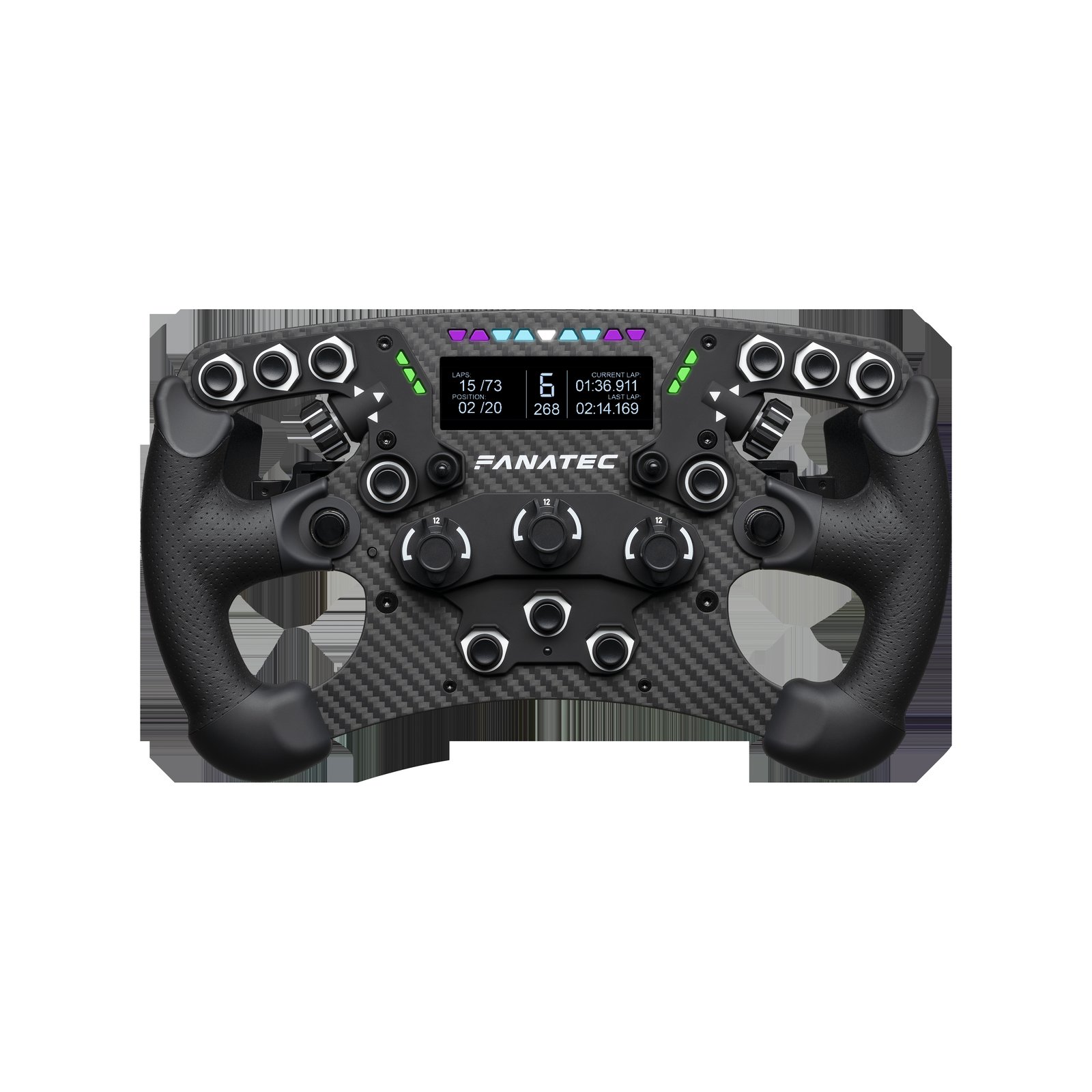
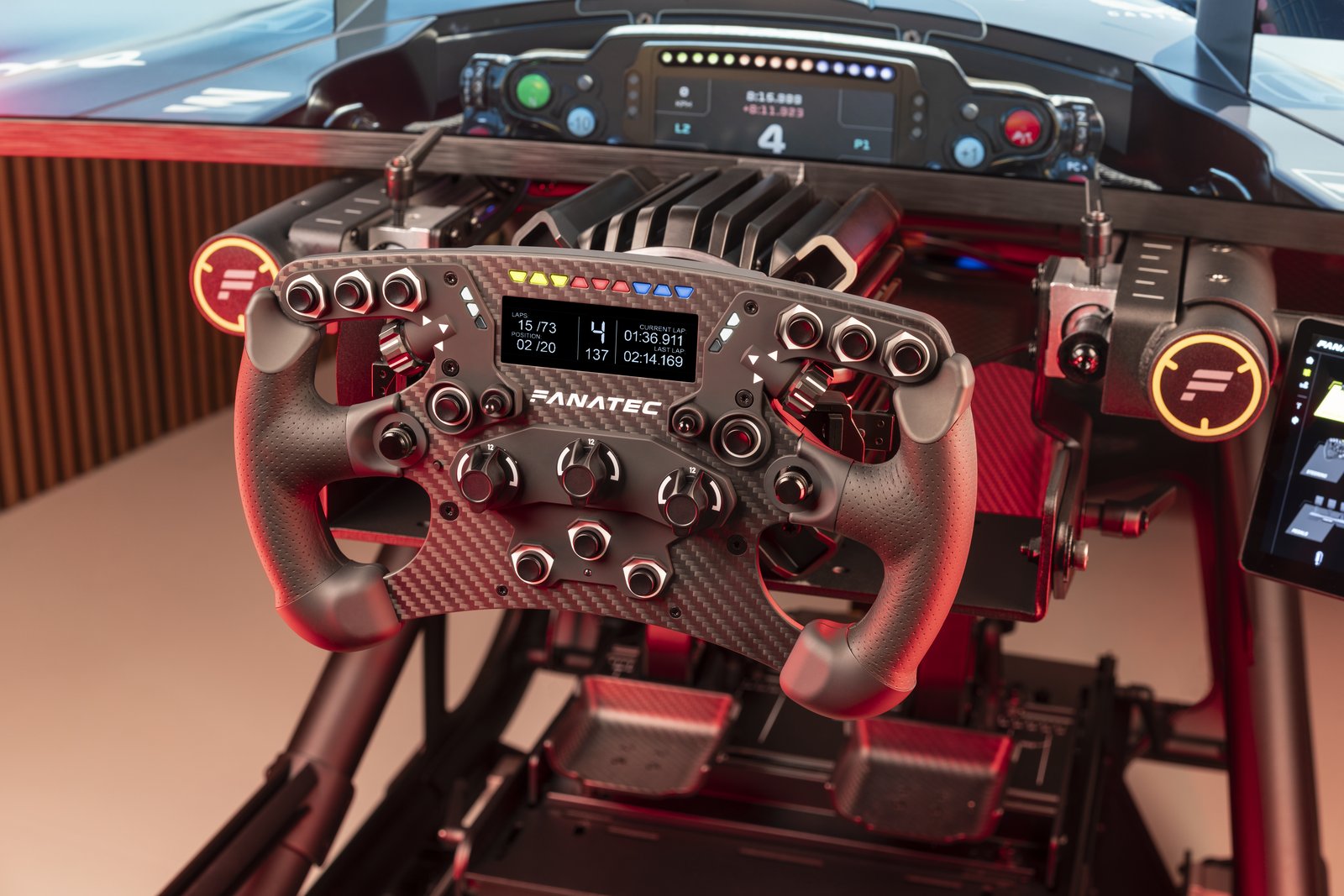
Then the wheel itself, which for F1 means a small flat-bottom formula rim with the thumb encoders and a funky switch you need for mid-race changes – brake bias, diff, ERS. The best F1 wheels guide walks through every option from the budget Simagic GT NEO up to the Fanatec ClubSport Formula V3 and the premium boutique wheels, and the direct drive wheels guide covers the bases that sit behind them. Pair a DD base in your budget with a formula wheel that fits it, and you’re most of the way there.
Pedals: the load-cell brake matters most
F1 braking is about pressure, not how far you push – real drivers stand on the pedal with serious force. So a load-cell brake is the upgrade that does most for your lap times in a formula car. You squeeze to a target pressure rather than guessing a position, and your braking gets repeatable fast.
Moza’s CRP, Fanatec’s CSL and ClubSport pedals, and Heusinkveld’s Sprint all give you a proper load cell at sensible money, with Heusinkveld’s Ultimate+ and Asetek’s sets at the top end. The full rundown is in the sim racing pedals guide. One practical heads-up once it’s all bolted to a rig: if the pedal axis ever flickers or drops out, that’s almost always electrical noise from the base, not a fault – the pedal flicker fix sorts it.
The PC: what drives the lot
F1 sims aren’t the most demanding games out there on a flat screen, but they get hungry fast in VR or on triples, and a smooth, consistent frame rate matters more than raw eye-candy when you’re judging braking points. A mid-range card handles a single high-refresh screen comfortably; VR and triple monitors are where you need to step up.
Rather than repeat it all here, our sim racing PC guide and the graphics card guide spell out exactly what to buy for each screen setup. Match the card to how you’re going to play, not to a benchmark chart.
Screen or VR
You’ve two routes for the view. A single ultrawide or a triple-monitor wall is the simple, reliable option and looks great. But for F1 specifically – cockpit so low, walls so close, judging apexes by feel – VR is the most immersive way to drive there is, and I’d take a good headset over triples most days. The catch is it costs more GPU, so factor that into the PC. Our VR headset guide covers what’s worth buying. And whatever you land on, the sim racing games – the official F1 titles, iRacing, Le Mans Ultimate – all reward a proper formula setup.
Three F1 builds to copy
Here’s how it comes together at three budgets. Treat these as starting points – swap any component for the equivalent in your preferred brand.
Entry F1 build (around GBP 900-1,200)
- Cockpit: Playseat Formula Instinct – around GBP 430
- Base and wheel: an entry direct drive base with a budget formula rim – the direct drive wheels guide and F1 wheels guide have the picks (the Simagic GT NEO is the budget formula wheel at around GBP 246), or take the Logitech route below
- Pedals: an entry load-cell set – see the pedals guide
- PC and screen: a mid-range card and a 1440p monitor – the GPU guide and PC guide
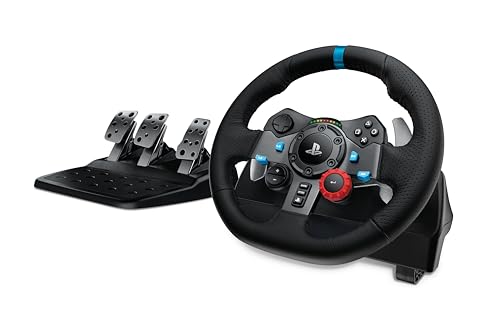
Logitech G29 Driving Force Wheel + Pedals
Mid F1 build (around GBP 2,500) – the sweet spot
- Cockpit: Playseat Formula Instinct – F1 Edition – around GBP 650
- Base: Moza R12 V2 (12Nm) – around GBP 380 (or a Fanatec ClubSport DD)
- Wheel: Fanatec ClubSport Formula V3 – around GBP 330 (or the Moza FSR2)
- Pedals: Heusinkveld Sprint – around GBP 730
- PC and screen: an RTX 5070-class card with an ultrawide or entry VR – GPU guide and VR guide
Dream F1 build (GBP 6,000+)
- Cockpit: Playseat Formula Instinct – around GBP 1,300 (or the Fanatec ClubSport GT Cockpit at around GBP 800 for the steel-tube route)
- Base and wheel: a high-end DD base and premium formula wheel – the direct drive wheels guide and F1 wheels guide
- Pedals: Heusinkveld Ultimate+ or Asetek – see the pedals guide
- PC and screen: a flagship GPU with a Pimax Crystal or triple screens – GPU guide and VR guide
Get the cockpit, wheel and pedals right for F1 and the rest falls into place. Start where your budget sits, buy the best base and load-cell brake you can, and you’ll have a rig that makes a formula car feel properly alive. Each component guide linked above goes deeper when you’re ready to order.
Related guides
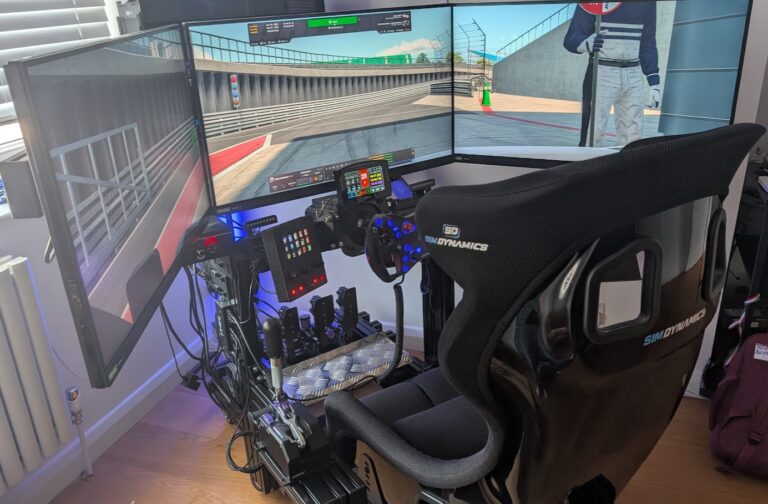
How to Set Up Triple Screens in Le Mans Ultimate (LMU)
iRacing VR Settings (2026): Meta Quest 3, PSVR2, Pimax and Valve Index
Assetto Corsa VR Settings 2026: Pimax, Quest 3, PSVR2 & More

Forza Horizon 5 Wheel Settings: FFB for Logitech, Thrustmaster and Moza

EA SPORTS WRC Fanatec Settings for the CSL DD and ClubSport DD+