

I’m a sim racer and amateur racer with a passion for Motorsport, good racecraft and the technical and setup aspect of sim racing.
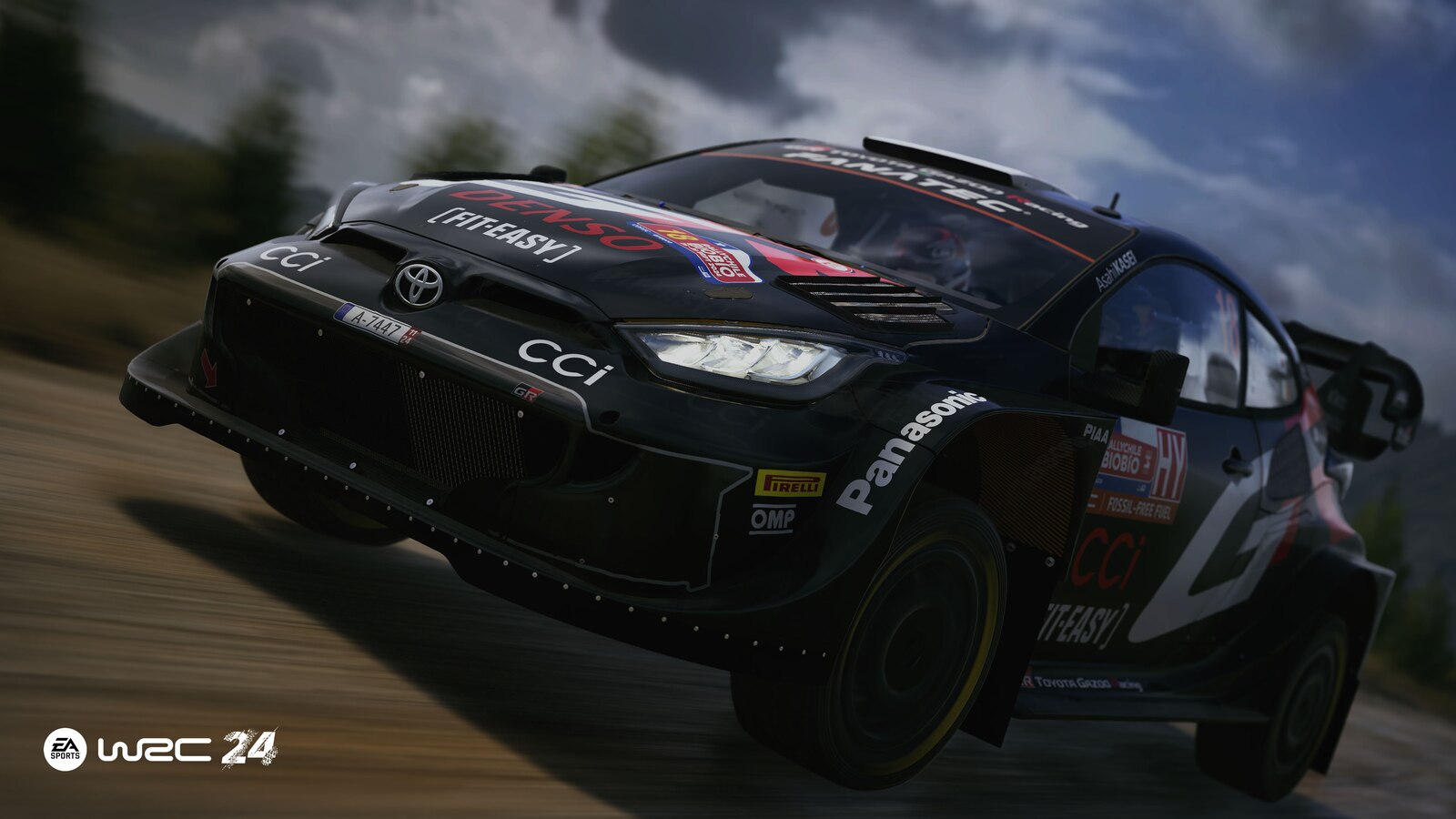
Featured image: a classic rally car on an asphalt mountain stage in EA SPORTS WRC (Image: EA SPORTS)
If you’ve got EA SPORTS WRC on PC with a wheel, you’ll want somewhere sensible to start the force feedback (FFB) for your base. Asetek and Logitech publish their own settings for the game, RALLY Technical made an R9 setup video that Moza backed, and for Fanatec there are owners’ profiles. I’ve put them together one brand at a time, in the order you’d set them, with your wheel’s software first and then the game.
Quick Navigation
Jump directly to what you’re looking for:
EA WRC’s FFB menu |
Fanatec |
Moza |
Logitech |
Asetek |
Fine-tuning
EA WRC’s force feedback settings
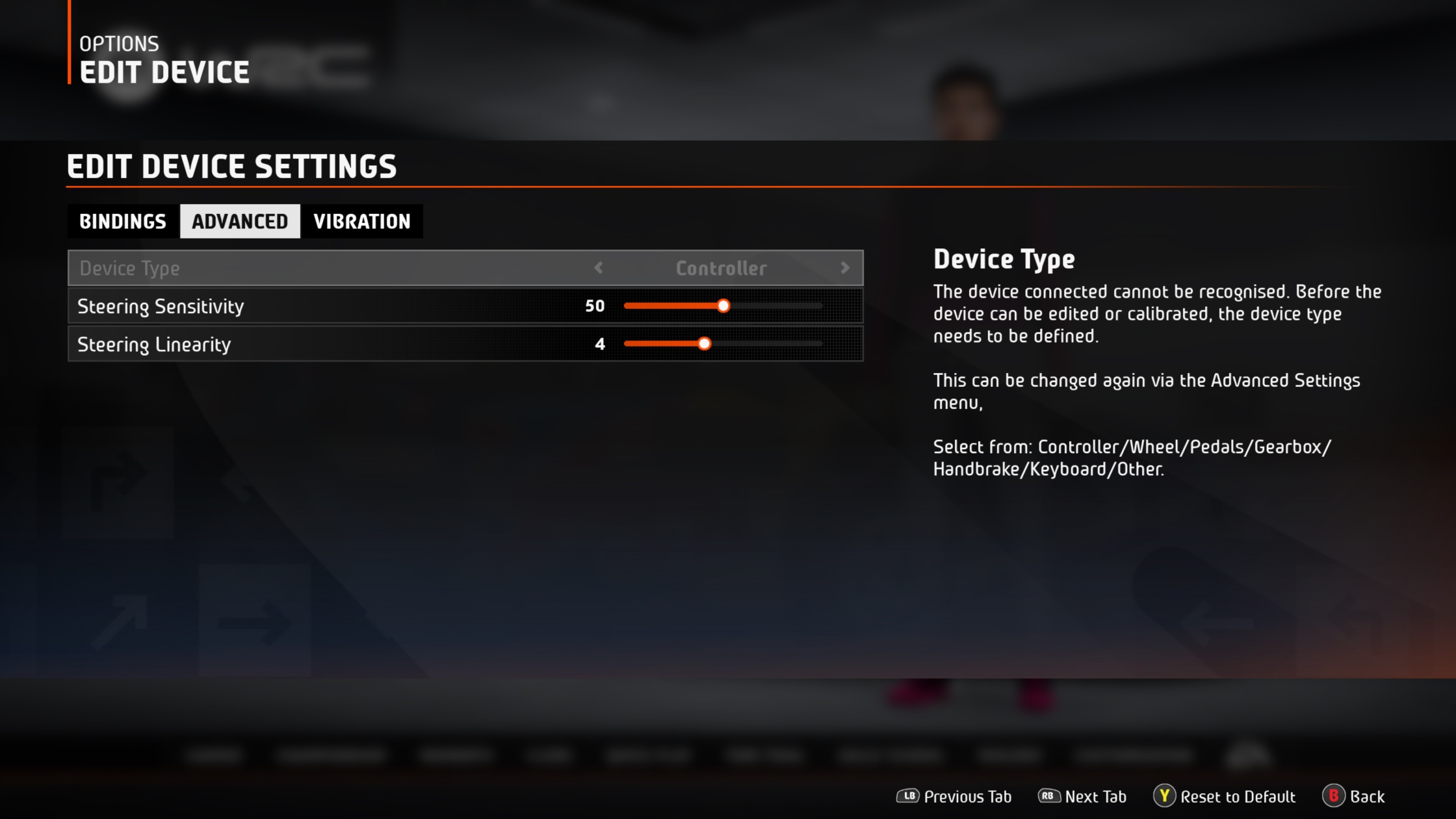
From the main menu, press F1 to open Options and Extras > Controls > Edit Device on your wheelbase. Start on the Advanced tab and set Device Type to Wheel before anything else, which the RALLY Technical channel calls “very important”. The force feedback sliders are on the Vibration tab.
There’s no master strength slider on PC, which leaves Self Aligning Torque to set the overall force you feel through the wheel. Wheel Friction controls the weight of the wheel and Tyre Friction changes how much of the understeer effect you feel, and the two work together. EA says Suspension, Tyre Slip, Engine and Collision each set the strength of their own effect. Soft Lock is switched on in the Advanced tab (there’s a Soft Lock slider on the Vibration tab too), and with it on, the game matches the wheel’s rotation to the car you’re driving.
EA SPORTS WRC’s last update was version 2.3.1, on 25 March 2025, and Codemasters announced on 30 April 2025 that development had ended. No patch has changed any of these values since. The values here are for PC; the Xbox version has no Wheel Friction or Tyre Friction sliders. Simucube, Simagic and Thrustmaster haven’t published any EA WRC values, so those three brands aren’t covered here.
Fanatec settings
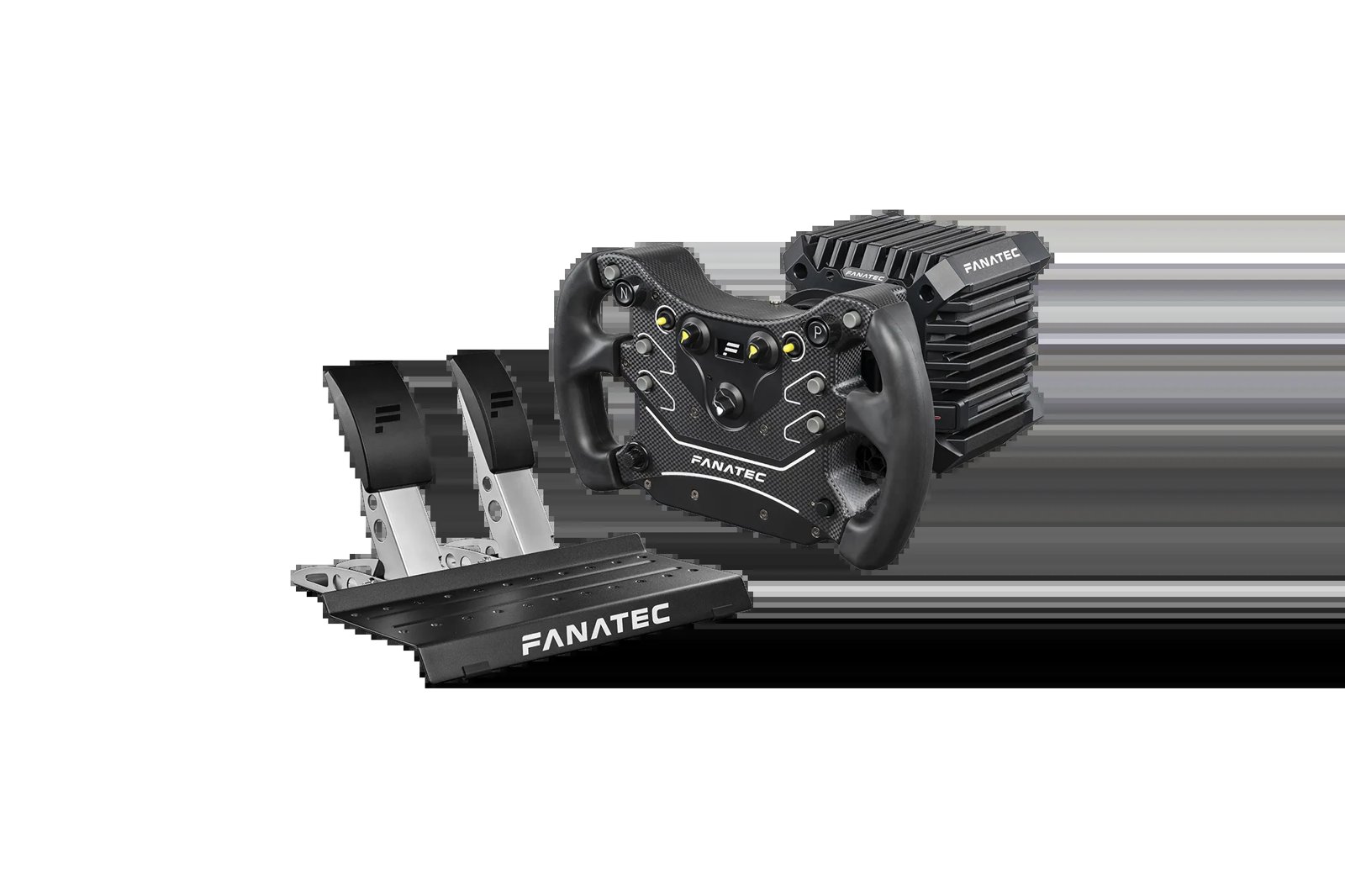
Fanatec hasn’t published settings for EA WRC (the staff baseline on its forum was written for WRC Generations), so the two lists here are owners’ profiles from the same forum. The first is Gregg Domain’s CSL DD 8 Nm settings on PC, the final version he posted in November 2023. The second is mikeus m’s ClubSport DD+ settings from April 2025. The tuning menu is covered in our Fanatec guide. If you race on a round rim, the EA WRC Fanatec settings page adds Stefan Mortimer’s CSL DD settings from Gregg Domain’s thread, with Sensitivity (SEN) at 900.
Gregg Domain posted these for his CSL DD:
- In the Fanatec tuning menu:
- Sensitivity (SEN): 480 (for his McLaren GT3 V2 rim; he’d lean towards Auto on a round rim)
- Force Feedback Strength (FFB): 100
- FFS: Peak (the CSL DD’s Peak/Linear switch)
- Natural Damper (NDP): Off
- Natural Friction (NFR): Off
- Natural Inertia (NIN): Off
- FFB Interpolation Filter (INT): 1
- Force Effect Intensity (FEI): 80
- Force Effect Strength (FOR): 100
- Spring Effect Strength (SPR): Off
- Damper Effect Strength (DPR): 100
- In EA WRC (Vibration tab):
- Self Aligning Torque: 62
- Wheel Friction: 38
- Tyre Friction: 18
- Suspension: 100
- Tyre Slip: 95
- Engine: 100
- Collision: 50
- Soft Lock: 65
- Steering Centre Force: On
- Steering Centre Force Scale: 40
On his ClubSport DD+, mikeus m runs these:
- In the Fanatec tuning menu:
- Sensitivity (SEN): 560 (for the modern cars)
- Force Feedback Strength (FFB): 100
- Natural Damper (NDP): 14
- Natural Friction (NFR): 23
- Natural Inertia (NIN): 5
- FFB Interpolation Filter (INT): 3
- Force Effect Intensity (FEI): 100
- Force Effect Strength (FOR): 100
- Spring Effect Strength (SPR): 30
- Damper Effect Strength (DPR): Off
- In EA WRC (Vibration tab):
- Self Aligning Torque: 25
- Wheel Friction: 95
- Tyre Friction: 63
- Suspension: 40
- Tyre Slip: 58
- Engine: 65
- Collision: 60
- Soft Lock: 52
- Steering Centre Force Scale: 20
The two profiles are a long way apart on the friction sliders, with the CSL DD on Wheel Friction 38 and Tyre Friction 18 where the ClubSport DD+ runs 95 and 63. The ClubSport DD+ is the stronger base, and it runs far less Self Aligning Torque (25 against 62).
Fanatec discount code: use SIMRACINGCOCKPIT5 at checkout for 5% off at fanatec.com.
Moza settings
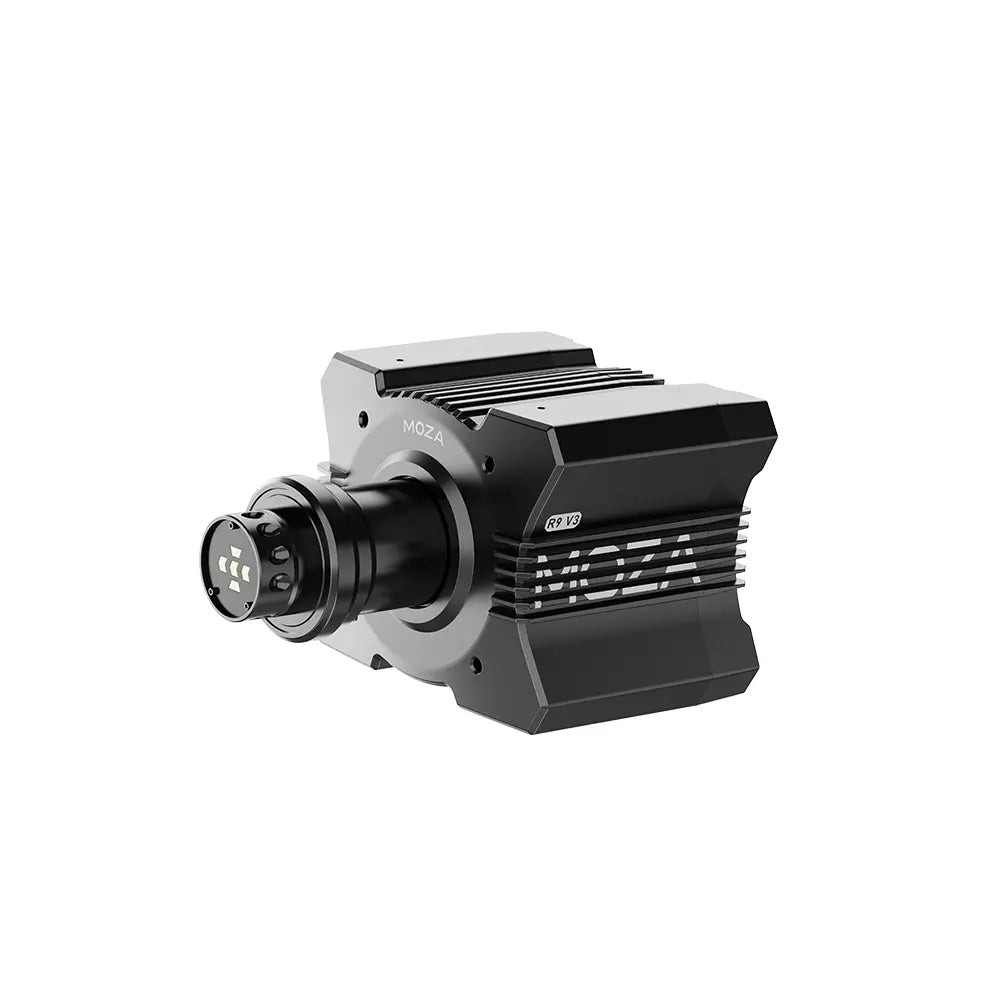
Since v2.1.5 in October 2024, Moza’s R3, R5, R9, R12, R16 and R21 bases have been natively supported on PC. Before that, you had to add Moza’s device IDs to a game file by hand.
Pit House has an EA SPORTS WRC preset built in, but Moza hasn’t published a value sheet of its own. The settings below come from RALLY Technical’s video on the Moza R9, which the channel made at Moza’s invitation. For the rest of Pit House, there’s our Moza guide. The EA WRC Moza settings page gives RALLY Technical’s reason for keeping Wheel Spring Strength off in a game that has its own force feedback.
Start in Pit House with these settings on the Moza R9:
- Basic Settings:
- Game Force Feedback Intensity: 100%
- Wheel Spring Strength: 0% (off)
- Wheel Damper: 20%
- Maximum Steering Angle: kept in sync with the limit angle (the game’s Soft Lock sets the lock per car)
- Advanced Settings:
- Force Feedback Reversal: Off
- Maximum Output Torque Limit: 100%
- Hands-off Protection: On
- Wheel Friction: 50%
- Speed-dependent Damping: Off (in EA WRC it carried extra damping into slow corners)
- FFB Effect Equalizer and Base FFB Curve:
- 100 Hz band: 0
- Base FFB Curve: linear
Then set these in EA WRC:
- Vibration tab:
- Vibration and Feedback: On
- Self Aligning Torque: 51 (49-53 is fine)
- Suspension: 100
- Tyre Slip: 90
- Collision: 100
- Steering Centre Force: Off
- Advanced tab:
- Device Type: Wheel
- Steering Linearity: 0
- Degrees of rotation: 1,120°
- Soft Lock: On
Alternative approach for Moza
Team O’Neil Rally School‘s instructor, Jamie Beliveau, sets up the school’s R9 differently, fixing the steering angle in Pit House because he finds 540° more realistic for rally driving:
- Maximum Steering Angle: 540° in Pit House
- Wheel Damper: 15% in front- and rear-wheel-drive cars, higher in four-wheel drive
- Natural Inertia: 150%
Logitech settings
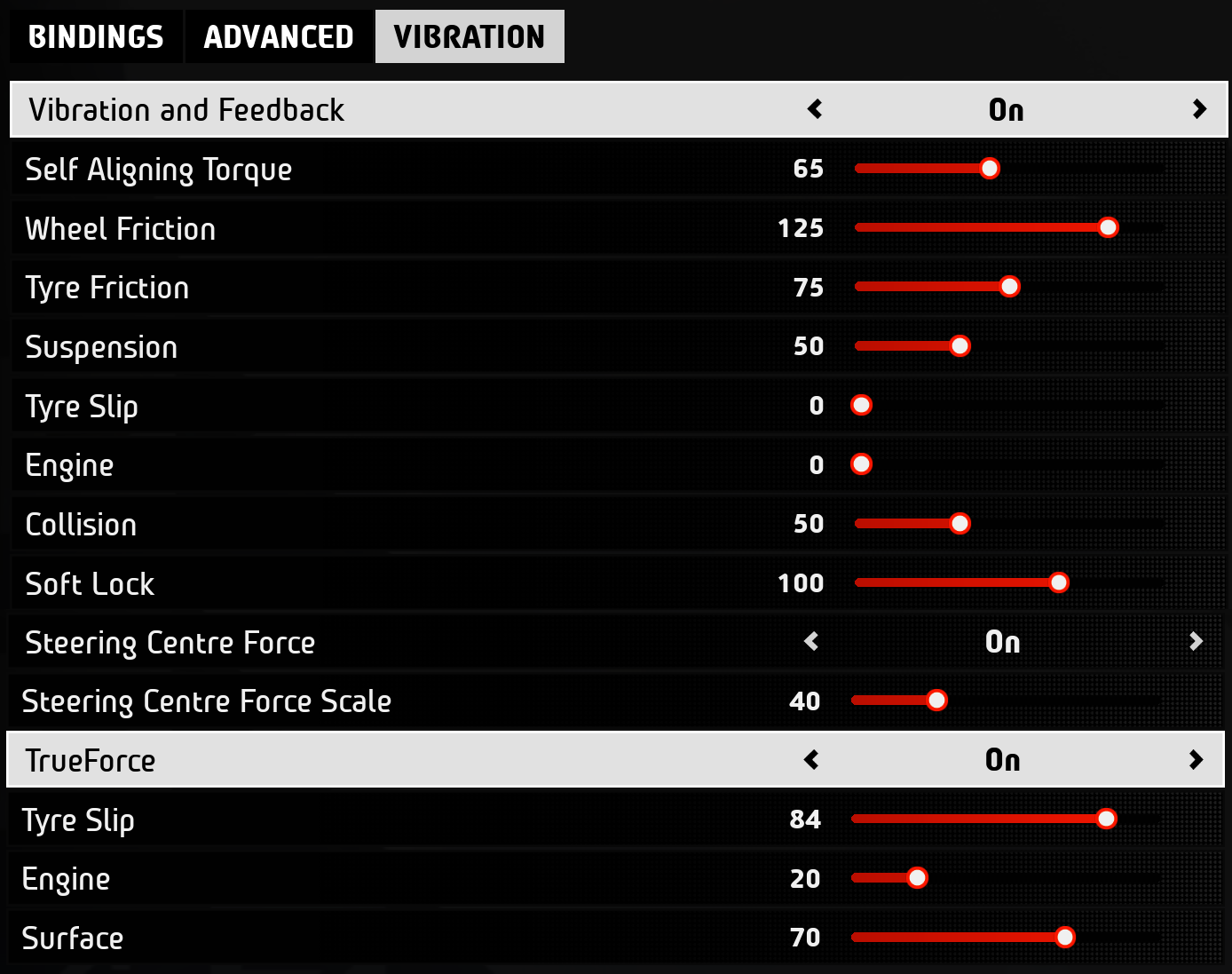
Logitech’s support pages carry EA WRC settings for the RS50, with the G HUB values and a screenshot of the game’s Vibration tab, TrueForce sliders included. For the PRO Racing Wheel there are G HUB settings only. Logitech doesn’t publish EA WRC values for the G923, G29 or G920.
Set up the Logitech RS50 in G HUB first, then EA WRC:
- In G HUB:
- Compatibility Mode: PRO
- FFB Filter: 5
- Dampener: 60
- TF Audio: 30
- Angle: 1080°
- In EA WRC (Vibration tab):
- Vibration and Feedback: On
- Self Aligning Torque: 65
- Wheel Friction: 125
- Tyre Friction: 75
- Suspension: 50
- Tyre Slip: 0
- Engine: 0
- Collision: 50
- Soft Lock: 100
- Steering Centre Force: On
- Steering Centre Force Scale: 40
- TrueForce: On
- Tyre Slip: 84
- Engine: 20
- Surface: 70
For the Logitech PRO Racing Wheel, Logitech lists these G HUB settings:
- Compatibility Mode: PRO
- FFB Filter: 8
- Dampener: 15
- TF Audio: 100
- Angle: 1080°
Asetek settings
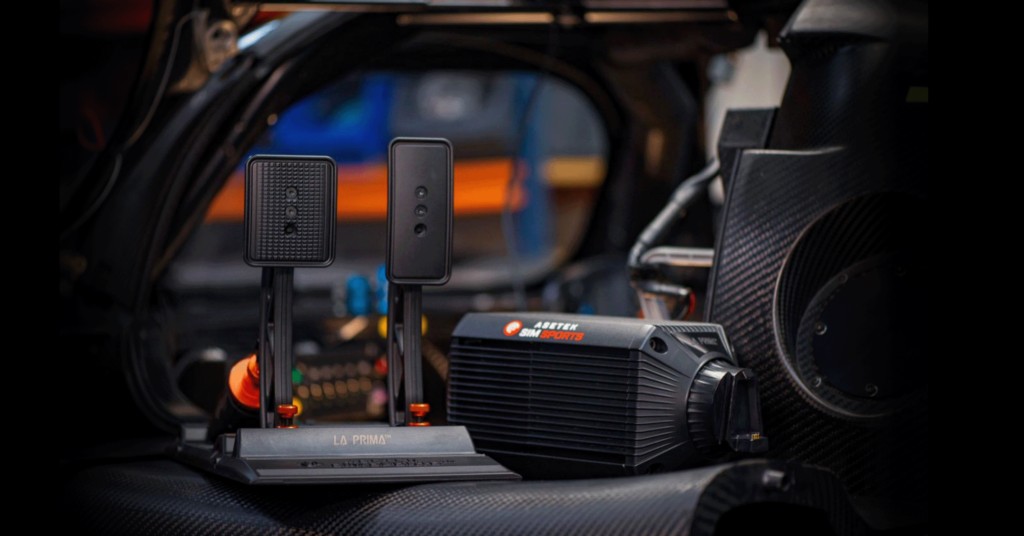
Asetek’s EA WRC guide (updated 28 August 2026) has a RaceHub preset for each base. Download yours, go to Wheelbase > Force Feedback Settings, click the three dots next to Preset, choose Import as new, pick the EA Sports WRC preset and click Save to wheelbase. Then, with the game closed, head to RaceHub > Settings > Game Setup > EA Sports WRC and click FFB, which installs the plugin that enables force feedback. Finish by ticking Input Port 20777 and clicking Save Config. In the game, Self Aligning Torque is the only value that changes from base to base, from 80% on the 5.5 Nm Initium down to 36% on the La Prima+, Forte and Invicta.
Set the Vibration tab for your base like this:
- Self Aligning Torque:
- Invicta (27 Nm): 36%
- Forte (18 Nm): 36%
- La Prima+ (16 Nm): 36%
- La Prima (12 Nm): 42%
- Initium+ (8 Nm): 67%
- Initium (5.5 Nm): 80%
- Wheel Friction: 0
- Tyre Friction: 10
- Suspension: 100
- Tyre Slip: 100
- Engine: 25
- Collision: 10
- Soft Lock: 80
- Steering Centre Force: On
- Steering Centre Force Scale: 0
Fine-tuning
If something still doesn’t feel right after that, these are the fixes from the same forum threads, videos and guides:
- If the wheel feels heavy and overdamped on tarmac, lower Tyre Friction, which is what Gregg Domain did on his CSL DD.
- When the whole wheel is too strong or too weak, raise or lower Self Aligning Torque.
- If there’s too much vibration overall, bring Suspension down; mikeus m found it acts as the master gain for most of the vibration effects.
- When the wheel snaps back to centre as you press reset, lower Steering Centre Force Scale; that’s the only moment it acts (Alessandro Gortan recommends 50 or below on an 8 Nm base, and Asetek sets it to 0).
- If a Moza base feels heavy into slow corners after a fast straight, turn Speed-dependent Damping off in Pit House, as RALLY Technical does.
- When the steering lock is wrong for the car you’re in, switch Soft Lock on in the Advanced tab with the wheel calibrated, and set the degrees of rotation at or above the car with the most lock (RALLY Technical sets 1,120°, the highest of any car in the game).
- If the wheel oscillates violently on the start line after you recalibrate, redo the calibration and follow the on-screen steps exactly, turning to full lock and then to 90° rather than back to centre (Stefan Mortimer’s fix on the Fanatec forum).
For the rest of your wheel’s settings, the direct drive wheel settings guide goes brand by brand, and its Settings Finder covers EA WRC alongside the other sims. If you fancy something else to drive, there’s our best rally games guide. Good luck and let me know how you get on in the comments!
Related Articles
Best Pimax VR Settings for F1 25 in 2026: A Damage-Control Guide
Best Pimax VR Settings for Le Mans Ultimate in 2026
Best Pimax VR Settings for Automobilista 2 in 2026
Best Pimax VR Settings for Assetto Corsa in 2026
iRacing VR Settings (2026): Meta Quest 3, PSVR2, Pimax and Valve Index
Assetto Corsa VR Settings 2026: Pimax, Quest 3, PSVR2 & More
Topic: Direct Drive Wheel Settings